




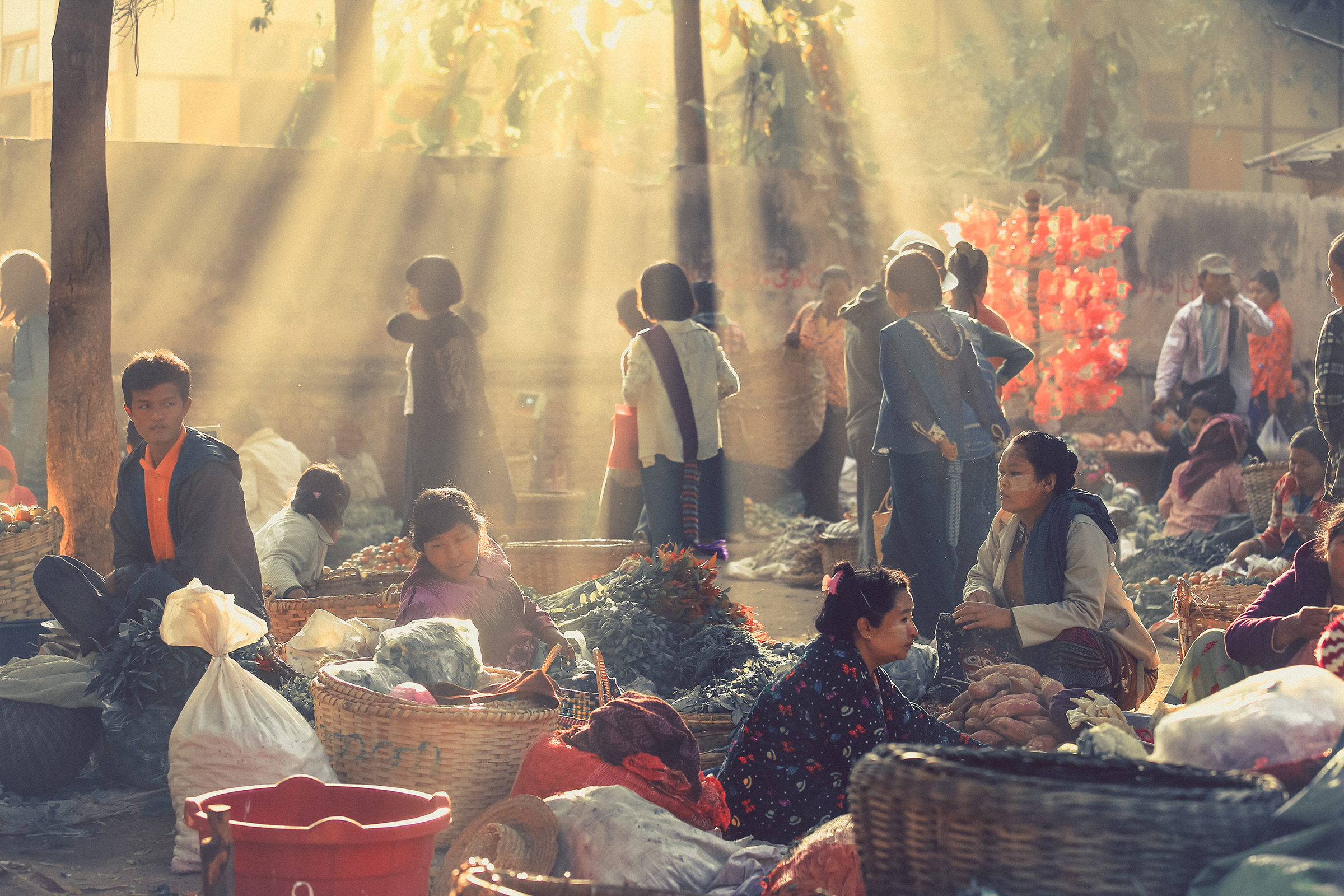
The Price of Party Going
Why Frequent Socializing is Bad for the Poor
What do droughts, food price spikes, and weddings have in common? They all have the potential to drive poor people further into poverty. A new IFPRI discussion paper reveals that frequent socializing is an unexpected reason why the health of children in impoverished rural China has improved little in past decades despite rapid annual income growth.
IFPRI Alumna Wins Yara Prize for an African Green Revolution
Dr. Eleni Gabre-Madhin Tapped for Founding Ethiopia Commodities Exchange
Two women making great strides in reducing hunger and poverty in Africa—both of whom have ties to IFPRI— were tapped today as recipients of a prestigious, Africa-focused prize.
Cash Transfers, Behavioral Changes, and Cognitive Development in Early Childhood
3ie-IFPRI Seminar Series Continues
The third International Initiative for Impact Evaluation (3ie) and IFPRI Impact Evaluation Seminar will be webcast live on September 6. Renos Vakis of the World Bank will speak about lessons from a randomized experiment on cash transfers and childhood development in rural Nicaragua. Shareen Joshi of Georgetown University will act as discussant.
Always a Bachelor, Never a Groom
Study Looks at Economic Consequences of Too Many Men in 1960s Taiwan
What happens when there are too many men (and not enough women)? They become entrepreneurs, work harder and longer, and save more. That’s what two researchers revealed in a new IFPRI study on the economic impact of too many marriage-eligible men in 1960s Taiwan.
Water Management Solutions for Sub-Saharan Africa and South Asia
New Mapping Tool Reveals 'Best Bet' Irrigation Options
The drought that parched the US corn belt this summer highlighted the devastating impact of scant rain on food production. For smallholder farmers in semi-arid areas of Sub-Saharan Africa and South Asia, where rain is rare or unpredictable—especially due to climate change—the challenge of watering crops is constant.
How to Secure Food for the World
A series of natural disasters in several food producing countries have lowered current and future production forecasts and driven up prices of many staples central to the global agricultural market. Much of the United States is experiencing the worst drought since the 1950s. About 75 percent of the corn and soybean production in the US is being affected by drought “considered severe or greater”, as reported by the Economic Research Service of the US Department of Agriculture.
Food Security and the Arab Awakening
IFPRI Experts Discuss Food Security-Conflict Link
The roots of the “Arab Awakening” run deep. Several factors—political, economic, and sociological—led to the popular uprisings that erupted throughout the Middle East and Northern Africa this decade. Key among these factors was high and volatile food prices.
The Impact of Rural-Urban Migration on Children Left Behind
Effects are Positive--but Fleeting
China’s cities are attracting rural residents in droves. Since the 1990s, the number of Chinese migrating to urban centers from the countryside to find jobs has spiked. According to estimates, some 79 million rural residents migrated to cities in 2000, up from 20 million in 1990 and 45 million in 1995. The reasons for this movement are complex—but include the relaxation of the household registration system, or hukou, which categorizes residents as either urban or rural.
Facilitating Long-term Investments in Agricultural Technology
After decades of declining food prices, recent food, fuel and financial crises have ushered in a new reality. As outlined in the International Food Policy Research Institute’s (IFPRI) 2011 Global Food Policy Report, food prices rose dramatically in 2007-08 and then again in 2010-11.
Strategies for African Agriculture
The new book Strategies and Priorities for African Agriculture, Economywide Perspectives from Country Studies builds on and adds to knowledge about why Africa has enjoyed ongoing economic stability, sustained economic growth, and improved governance since 2000.