

Research Webinar Series: School-based Interventions in the 21st Century: Evidence Gaps and Future Directions
-
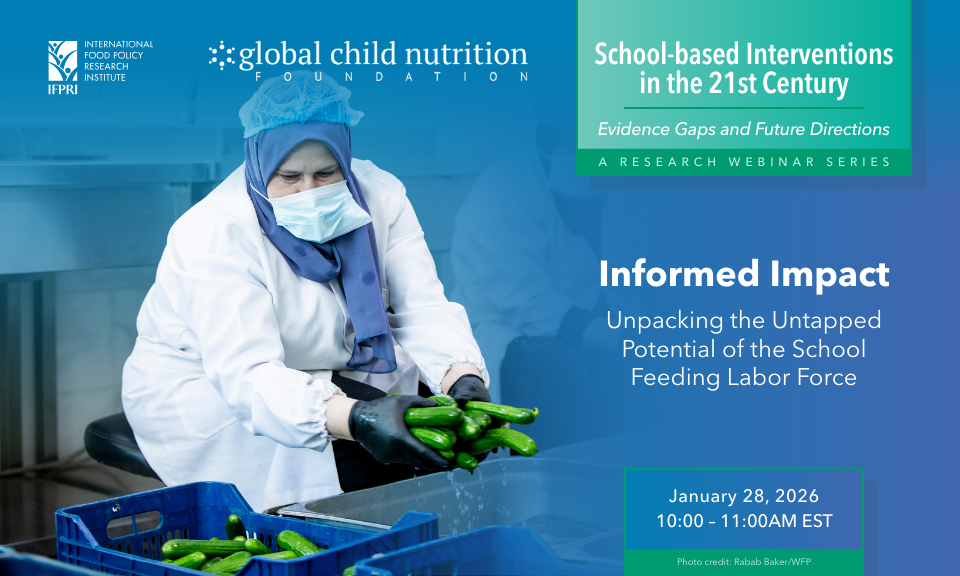
Evidence-Informed Impact: Unpacking the Untapped Potential of the School Feeding Labor Force
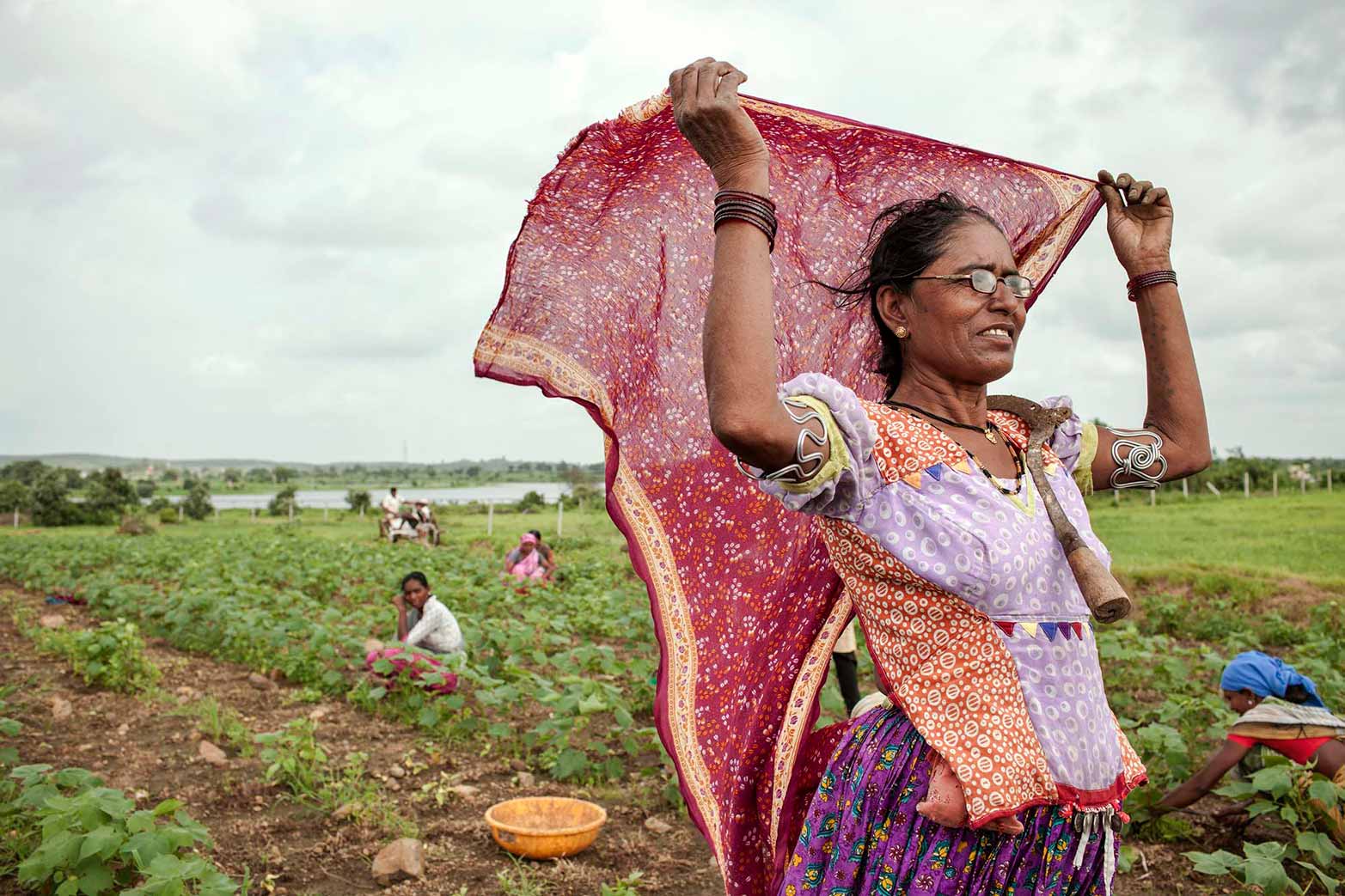
School meal programs can be powerful engines for job creation and local economic development. Many models intentionally prioritize employment for groups that face systemic barriers to entering the labor market, such as women, youth and people with disabilities. Yet despite their potential, there remains a significant evidence gap around how different program designs impact employment…
-
Increasing effectiveness of school meals in humanitarian settings: Situation & Context Analysis
In 2024, more than 473 million children — nearly one in six worldwide — lived in areas affected by conflict, exposing them to heightened risks of disrupted education, malnutrition, and loss of essential services. According to data from the Global Survey of School Meal Programs , 17% of programs globally were impacted by conflict in…
-
The Economy-wide Impacts of School Meal Programs in Ghana and Malawi
This webinar will explore the latest global evidence on how school feeding programs drive broad-based returns: boosting education, enhancing health outcomes, supporting local agriculture, and strengthening national development as a follow-up to episode 1 of this series. The session will showcase research from Malawi and Ghana, evaluating the economy-wide impacts of both nation’s national school…
-
Home-Grown School Feeding (HGSF): Evaluating the Impacts of HGSF Procurement and Delivery Models
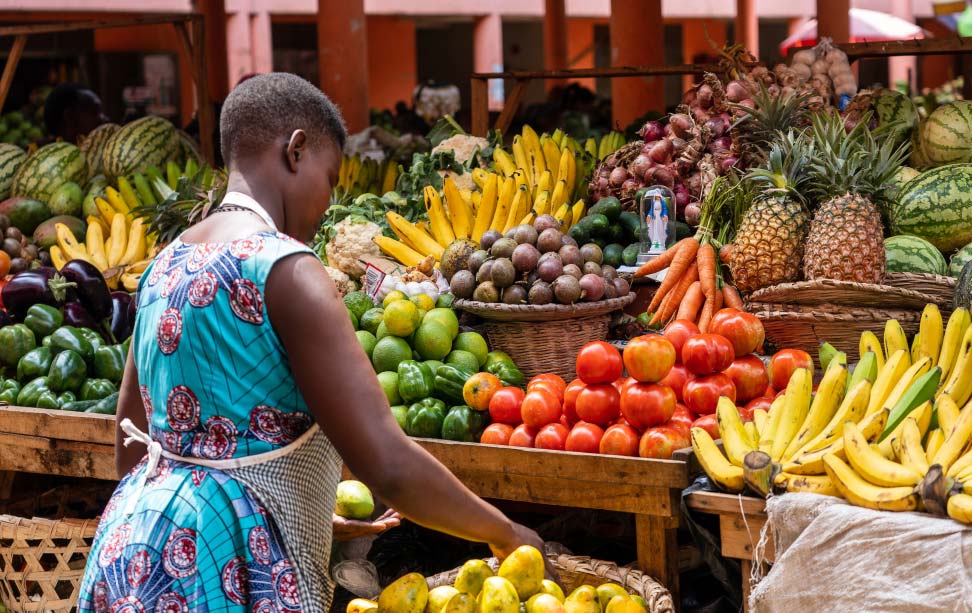
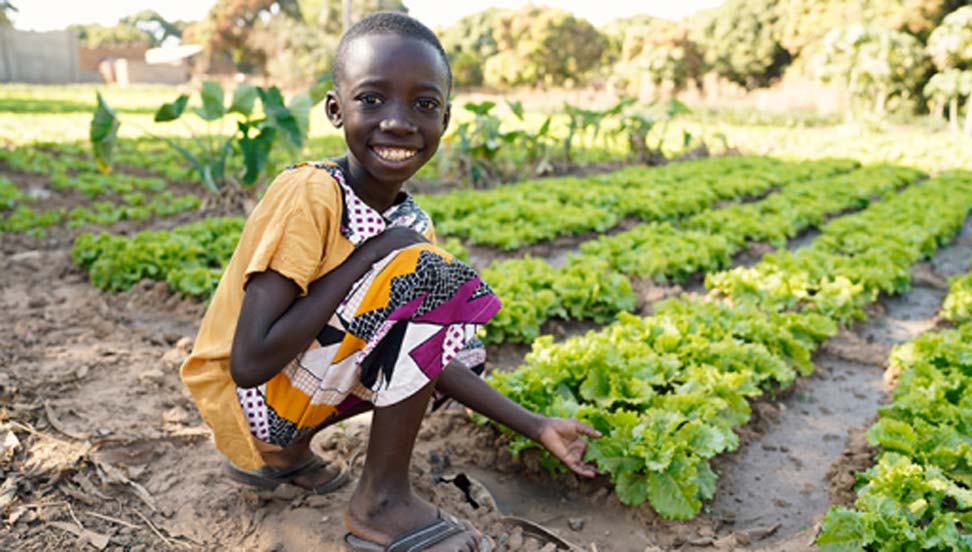
Home-Grown School Feeding (HGSF) has the potential to transform food systems, strengthen rural economies, and improve child nutrition. This webinar examines emerging evidence on the impacts of HGSF approaches, from local sourcing strategies to multisectoral coordination, with a focus on research from Gambia’s HGSF program and government insights and perspectives from Cambodia’s HGSF model. Speakers…
-
What’s on the Menu? Collecting high-quality data to inform school menu decision-making
The double burden of malnutrition (DBM) – the coexistence of undernutrition and overweight/obesity – poses a critical global health challenge, particularly for children and adolescents. School meal programs offer an opportunity to address the DBM by providing nutritious meals that support growth, development, and lifelong health. However, limited school meal quality data hinders effective, nutritionally-tailored…
-
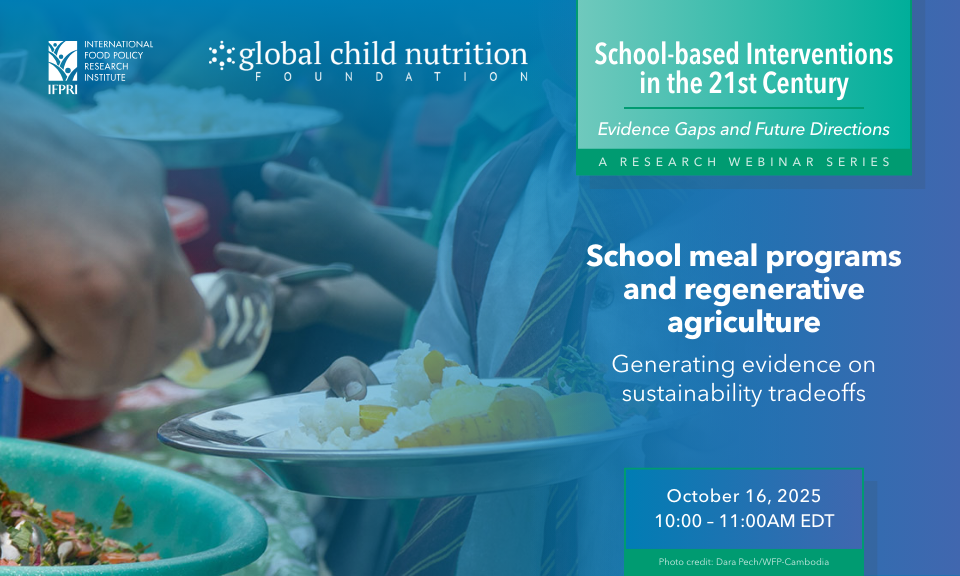
School meal programs and regenerative agriculture: Generating evidence on sustainability tradeoffs
Can school meals serve both children and the planet? This webinar will explore how school meal programs intersect with regenerative agriculture, unpacking the environmental, economic, and social tradeoffs of scaling sustainable feeding models. Drawing on global initiatives, including Brazil’s national school feeding program, this session will highlight existing evidence and persistent gaps on the sustainability…
-
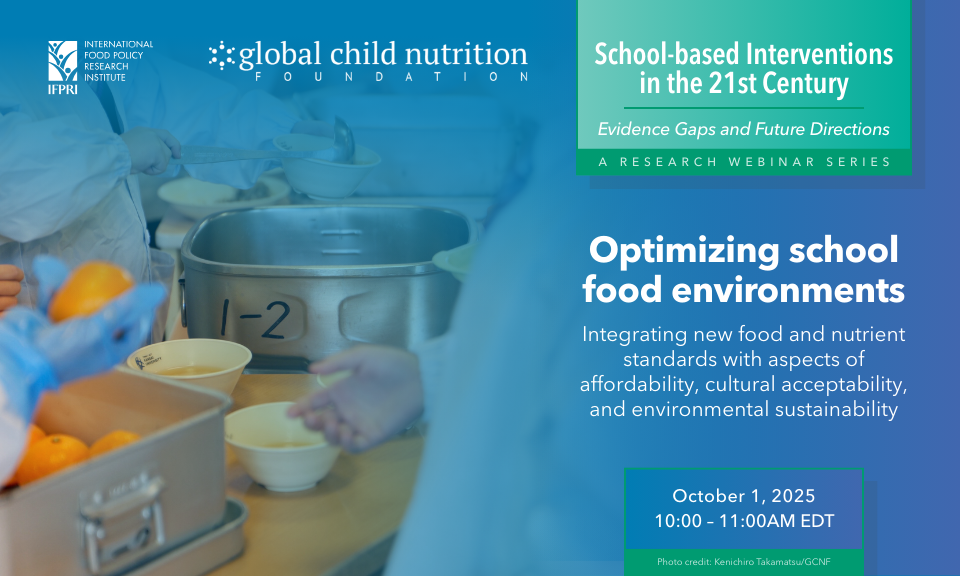
Optimizing school food environments: Integrating new food and nutrient standards with aspects of affordability, cultural acceptability and environmental sustainability
School food environments encompass every way children encounter food in or around school- from the meals on their plates and the messages on classroom walls to the snacks sold at kiosks and ads for sugary drinks just outside school gates. A truly healthy environment maximizes exposure to nutritious options and positive eating cues. Balancing nutritional…
-

The Economy-wide Impacts of School Meal Programs: Generating evidence on return on investment
This webinar will explore the latest global evidence on how school feeding programs drive broad-based returns: boosting education, enhancing health outcomes, supporting local agriculture, and strengthening national development. The session will explore new findings from a randomized control trial (RCT), evaluating the longer-term economic impacts of Ghana’s national school feeding program, and ways this methodology…