




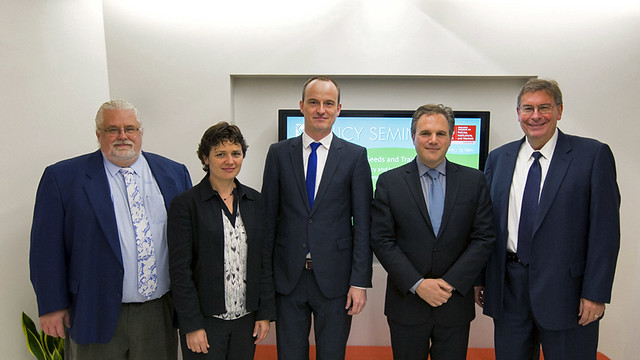
Speakers:
- John C. Keyser, senior agriculture trade economist, the World Bank (Video | Presentation)
- Saharah Moon Chapotin, deputy assistant to the administrator, USAID Bureau for Food Security (Video | Presentation)
- Ido Verhagen, executive director, Access to Seeds Foundation (Video | Presentation)
- Discussion Video
Moderator:
- David Spielman, senior research fellow, IFPRI
Chair:
- Mark Rosegrant, director of the environment and production technology division, IFPRI (Video)
Improved seeds and traits are central to many developing countries’ national strategies for agricultural development and economic growth. Some developing countries have made considerable progress in this area by reforming seed market regulations, encouraging regional regulatory harmonization, reducing state intervention around seed pricing, and encouraging private investment in seed markets. Nevertheless, many countries still struggle to strike an appropriate balance between public- and private-sector roles in emerging seed market, while many private companies still struggle to generate value from seeds and traits in these markets.
This policy event explores recent efforts to increase the availability of improved seeds and traits to smallholders in developing countries, highlighted by a presentation of results from the recently released Access to Seeds Index (ATSI), a discussion around investments in seed market development by the United States Agency for International Development and the World Bank, and reflections from recent IFPRI research.