





Breastfeeding is an essential element in early childhood nutrition. Breast milk contains all the nutrients needed in a child’s first months, and breastfeeding yields broad health benefits for infants and later in life. Yet globally, fewer than half of infants under six months old are exclusively breastfed. Improving those numbers would make an enormous difference in children’s and public health.
World Breastfeeding Week 2025 (August 1-7) focuses on the theme, “Invest in breastfeeding, invest in the future,” promoting efforts to strengthen health systems and policies that support this critical practice. IFPRI research has identified important links between breastfeeding, maternal and child nutrition and care, and public health that can help guide effective breastfeeding policies and programs. This post explores insights from some of those recent IFPRI research efforts.
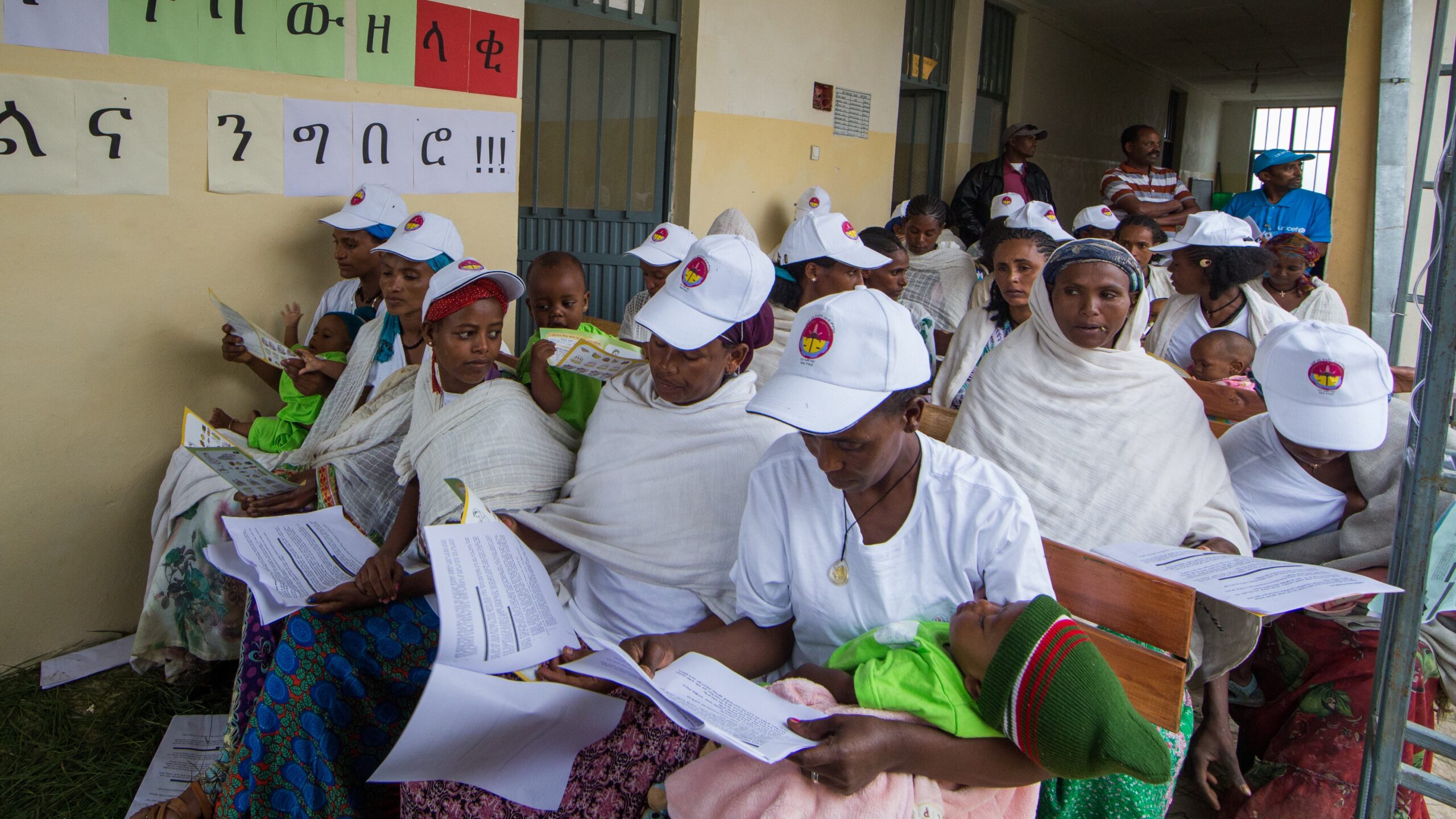
Wasting (low weight for age) is one of the most visible and life-threatening forms of malnutrition, a severe threat to children’s survival and development. A recent study in PLoS ONE co-authored by IFPRI’s Sunny Kim and colleagues assessed the association between wasting and breastfeeding practices among infants younger than six months old in Ethiopia. The researchers examined household survey data from a large feasibility and impact study of maternal nutrition interventions conducted in Ethiopia’s Somali region and the Southern Nations Nationalities and People’s Region (SNNPR), focusing on 895 infants and their mothers. The study found a high prevalence of wasting among the infants—16.5%—and that strengthening breastfeeding promotion and support may help reduce wasting in young children of this age.
Sunny Kim: “While the benefits of breastfeeding (initiated early and exclusively) for babies are extensive and well-documented, this study’s findings remind us of the continued efforts and resources needed to prevent grave illness and disease and maintain good child health.”
IFPRI’s research also examines the health system supports required for nutrition during pregnancy to benefit both mothers and babies. A recent study in the Journal of Global Health by IFPRI’s Phuong Nguyen, Sunny Kim, and colleagues assessed the effects of intensified maternal nutrition interventions during antenatal care (ANC) in Bangladesh, Burkina Faso, Ethiopia, and India.
The authors gauged the quality of nutrition services during ANC using information from impact evaluations, including health facility assessments, health care provider interviews, ANC observations, and client exit interviews. The study identified various ways to strengthen nutrition services during ANC, including counseling on early breastfeeding practices, in diverse low- and middle-income countries.
Sunny Kim: “Breastfeeding not only benefits babies but also mothers in multiple ways— promoting faster postpartum recovery, reducing chronic disease risks, and supporting mental and emotional well-being, not to mention the economic savings from forgoing infant formula and potential lower health care costs! However, women require quality health care services to educate and support them even early on during pregnancy. Investments must continually be made and sustained to deliver these essential services through the health care system in health facilities and community-based contacts.”
A study in Viet Nam by Phuong Nguyen and colleagues, published in the Annals of the New York Academy of Sciences, explored five dimensions of nurturing care (NC), including health, nutrition, safety/security, learning, and relationships. Using data from over 1,000 mother-child pairs in Viet Nam from 2011 to 2023, the study found important gaps in reaching full achievement in NC. Notably, only half of children were breastfed within one hour of birth and 60% were exclusively breastfed at six months.
Phuong Nguyen: “Breastfeeding is a critical practice in nurturing care which has long-lasting effects across health, nutrition, and cognitive development through childhood, adolescence, and beyond. Our study reinforces that investing early to promote and support breastfeeding —starting even before birth—is essential for building strong, resilient futures for children and families.”
These studies and other evidence from IFPRI’s nutrition research and partners underscore the critical importance of building enabling environments for maternal and child health. Breastfeeding’s many benefits for health and well-being must be supported by wide coverage of high-quality nutrition services starting during pregnancy. Yet more evidence is needed to identify gaps in services and in breastfeeding practices in many countries. Research can undergird efforts to create lasting support for promoting breastfeeding, maternal nutrition, and nurturing care to help ensure that all children have the best possible start in life and healthy futures.
Jennifer Johnson is a Communications Specialist with IFPRI’s Communications and Public Affairs Unit.
References:
Getachew B, Berhane Y, Dessie Y, Yallew WW, Berhane HY, Kim SS (2025) Association between wasting and inadequate breastfeeding practices among infants under six months in SNNPR and Somali regions of Ethiopia: A multilevel cross-sectional study. PLoS ONE 20(2): e0318323. https://doi.org/10.1371/journal.pone.0318323
Nguyen, Phuong Hong; Tran, Lan M.; Kachwaha, Shivani; Sanghvi, Tina; Mahmud, Zeba; Zafimanjaka, Maurice G.; Walissa, Tamirat; Ghosh, Sebanti; and Kim, Sunny S. 2025. Enhanced quality of nutrition services during antenatal care through interventions to improve maternal nutrition in Bangladesh, Burkina Faso, Ethiopia, and India. Journal of Global Health 15(04054): 1-12. https://doi.org/10.7189/jogh.15.04054
Tran, Lan Mai; Stein, Aryeh D.; Nguyen, Phuong Hong; Young, Melissa F.; and Ramakrishnan, Usha. 2025. Nurturing care in the first 10 years of life: Results from a Vietnamese longitudinal study. Annals of the New York Academy of Sciences 1545(1): 145-156. https://doi.org/10.1111/nyas.15297