





Second in a series of posts on IFPRI’s work on growth monitoring and promotion (GMP) supported by the Gates Foundation. Read the first post here.
Childhood obesity is a growing concern worldwide, affecting more than 35 million children under 5. Being overweight or obese in early childhood can lead to serious health problems that often persist into adulthood, including diabetes and cardiovascular disease. Predicting which children are likely to be overweight or obese later in childhood, combined with effective interventions, theoretically could help prevent these long-term consequences.
Accuracy is critical when screening children at risk for developing overweight and obesity. Mistakes can either miss those who need help or lead to unnecessary treatments and stress for families. Most research on the early detection of obesity has focused on older children, with far less attention given to those under 5.
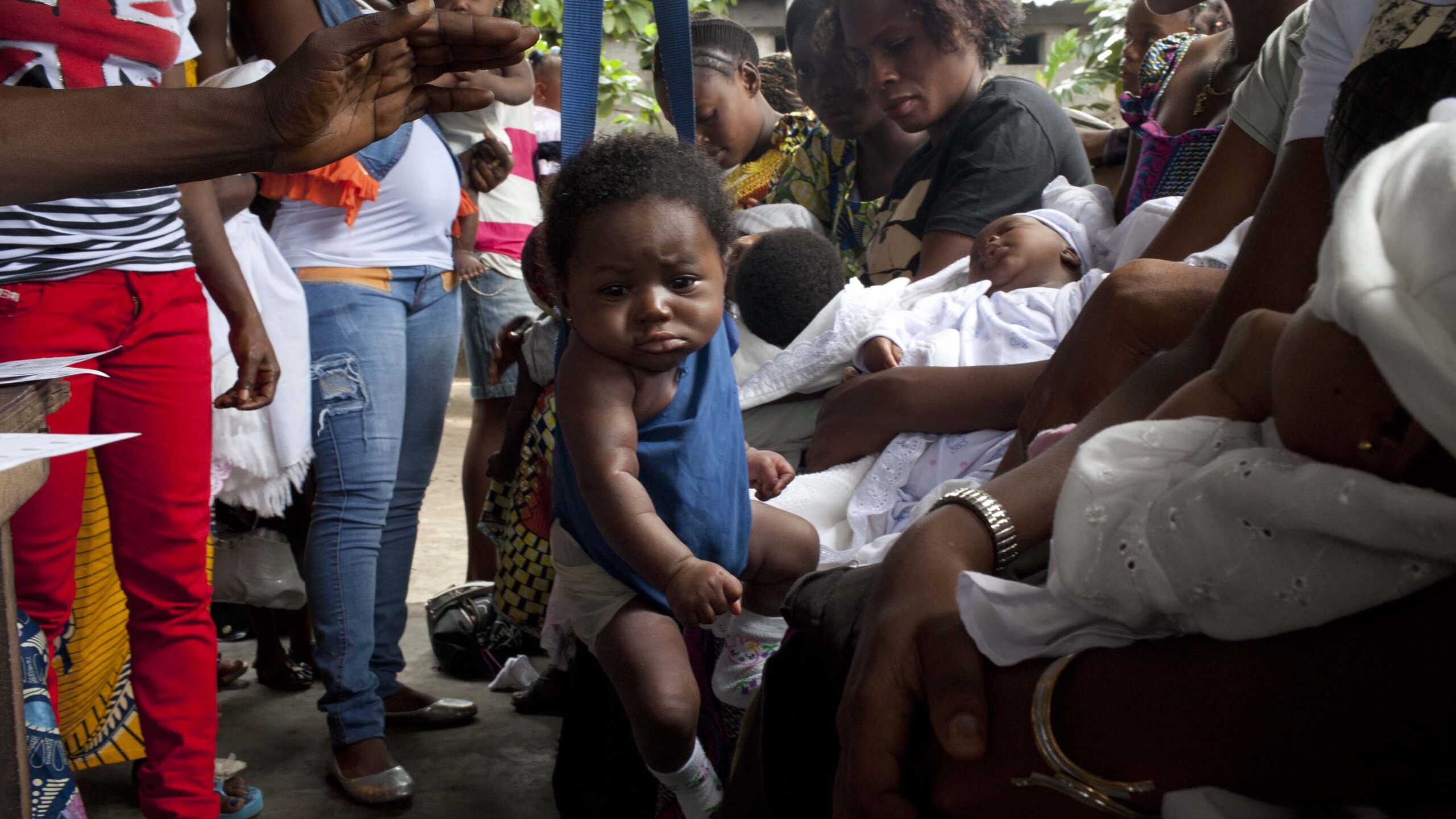
In most countries, anthropometric data such as height and weight are routinely collected from children starting at birth and during checkups as part of growth monitoring and promotion (GMP) activities. Could these measurements be used to predict which individual children may become overweight or obese later on? Researchers from IFPRI and the University of South Carolina explored this question in a recent systematic review. The short answer is: Not likely.
What the evidence says
Published in Advances in Nutrition, our review analyzed 14 studies that examined whether anthropometric data collected from children under 24 months could accurately predict overweight or obesity between the ages of 3 and 7 years. We found that although some models show promise, poor accuracy is a concern, as is the feasibility of implementing these models in practice.
Predictive models that relied on anthropometric data alone, such as weight-for-length z-scores or changes in body mass index (BMI), demonstrated limited predictive accuracy. These models correctly identified only 27%–67% of children who later became overweight, thus missing a large percentage of children who experienced unhealthy weight gain later in childhood. The models also had a false-positive result for 16% of children, meaning that 1 in 6 children who did not develop overweight or obesity were identified as being at high risk by the model. We therefore conclude that weight and height data alone are not sufficient to screen individual children for early childhood overweight and obesity.
The inclusion of additional predictors such as sociodemographic factors, clinical data, parental characteristics, and lifestyle factors improved accuracy. The proportion of correctly identified children increased to between 60% and 97%. False-positive results for these models ranged from a low 7% to an unacceptable 37% of children. Accuracy improved with longer assessment periods, shorter intervals between prediction and outcome measures, and the use of multiple data collection points. These more accurate models, however, were complex, and would be challenging to implement in routine GMP-like programs, especially in environments with limited resources.
An important finding of our analysis was that the accuracy of prediction models varied widely across studies. We could not pinpoint specific factors—such as the prevalence of obesity or other characteristics of the study location—that explained these differences. Five studies tested their models on a different group of children in the same study population (internal validation), and three tested them on different groups (external validation, a methodologically stronger method of validation). The internal tests produced similar results to the original models, while external tests showed substantial changes in accuracy. These changes were inconsistent, making it difficult to know how well a model would work in a new setting, thus indicating limited generalizability.
Where do we go from here?
The research on this subject has so far been conducted mostly in high-income countries, where the burden of childhood overweight and obesity is high. In low-income contexts, the prevalence of overweight and obesity is relatively low but rising. Importantly, many children in these environments suffer from linear growth faltering (i.e., they do not gain sufficient length, also resulting in lower weight), which may affect the accuracy of models predicting unhealthy weight. Our ongoing research will assess whether simple weight-based measures, which are routinely collected as part of growth monitoring and promotion in low- and middle-income countries, can predict which individual children will become overweight and obese later in childhood.
Further research in high-income settings is unlikely to yield useful, feasible, and sufficiently accurate predictive models. Investments in both high- and low-income settings should be made to create environments that prevent the development of overweight and obesity during early childhood and help support healthy weight trajectories through adulthood. These include policies that limit access to unhealthy foods, foster the development of healthy eating habits, and promote physical activity.
Morgan Boncyk is PhD candidate at the Arnold School of Public Health, University of South Carolina (USC); Jef L. Leroy is a Senior Research Fellow with IFPRI’s Nutrition, Diets, and Health (NDH) Unit; Rebecca Brander is an NDH Research Fellow; Leila M. Larson is a USC Assistant Professor of Public Health; Marie T. Ruel is an NDH Senior Research Fellow; Edward A. Frongillo is a USC Professor of Public Health and Director of Global Health Initiatives. Opinions are the authors’.
Reference:
Boncyk, Morgan; Leroy, Jef L.; Brander, Rebecca L.; Larson, Leila M.; Ruel, Marie T.; and Frongillo, Edward A. 2025. Accuracy of using weight and length in children under 24 months to screen for early childhood obesity: A systematic review. Advances in Nutrition 16(7): 100452. https://doi.org/10.1016/j.advnut.2025.100452