






The generative artificial intelligence (gen AI) revolution is not just digital—it is also physical. Data center complexes are expanding globally to meet rapidly increasing computing and data storage demands of generative AI (Figure 1). The extent of AI’s immense energy requirements is still largely unknown, but estimates indicate that by 2026, data centers could consume over 1,000 terawatt-hours (TWh) of electricity—more than doubling since 2022 and equivalent to Japan’s total power usage.
Figure 1

Currently, the United States and China lead the world in AI development, including physical infrastructure. Yet AI is in active use around the world. There is thus every reason to expect its physical footprint to geographically expand, including in low- and middle-income countries (LMICs). Building that will have an array of local impacts.
Some of these impacts will be positive. AI offers many useful agricultural tools, including smart irrigation, crop mapping, predictive analytics, policy analysis, and reuse of waste energy, and for climate-smart interventions like shock-responsive social protection. More robust gen AI infrastructure could help bring productivity benefits valued at $1 billion-$3 billion to African agriculture, and much more if overall effects on agrifood systems are considered.
Yet many impacts are negative, such as new stresses on electrical grids and overexploitation of scarce water resources. As AI infrastructure expands in LMICs, we must consider the tradeoffs of increased agricultural productivity with AI’s growing physical footprint and the increased risks of degrading natural resources vital to food systems.
Several large-scale data center projects are already underway in Africa. Nigeria, Kenya, and South Africa are expanding government cloud platforms to digitize public services, while improved internet access drives cloud adoption. Cassava Technologies, an African tech venture, is investing $500 million in AI compute across Africa, plus $750 million in partnership with Nvidia for an initiative to build “AI factories”—massive facilities encompassing all aspects of AI development—in South Africa and eventually Egypt, Morocco, Kenya, and Nigeria. Google recently announced a $10-15 billion investment in hyperscale data centers in Andhra Pradesh, India. Nigeria’s digital push includes diesel-reliant data centers like the MTN complex, projected to grow from 4.5 megawatts (MW) to 20 MW.
The expansion of data centers in LMICs risks straining energy and water supplies, degrading local environments, with limited local benefits—especially in areas with weak data infrastructure and high climate vulnerability.
Thirst for water and energy
Water
Every AI prompt taps into a cloud-based computer network, activating thousands of servers whose cooling systems utilize vast amounts of water. Massive, so-called hyperscale data centers can consume up to 22,000 cubic meters of potable water per day, rivaling the daily needs of tens of thousands of people.
In addition, data centers also have indirect water footprints from electricity generation and supply chains that are increasingly competing with agriculture and municipal use, reshaping water systems. For instance, there is the existing competition for water between hydroelectricity, the world’s largest source of renewable energy, and irrigation; adding AI infrastructure into this mix will likely lead to new problems. Also stressing water systems are upstream impacts from rare earth mineral mining, minerals essential to AI supply chains but linked to environmental degradation, water contamination, and competition with food systems.
Energy
Data centers are clustered to share resources and facilitate data transfer. Yet some data centers—particularly as hyperscale complexes grow—consume as much electricity as 50,000 homes. In LMICs with weak energy grids, continuously operating data centers can strain electrical infrastructure, diverting power from food system services like irrigation and cold storage.
Equity issues
The global expansion of AI is also increasing different forms of inequity. For example, Africa holds about 30% of the world’s critical mineral reserves essential for AI and electronics, yet receives only 10% of the global revenue generated from these resources. In Brazil, water-intensive facilities are being located in drought-prone cities, and AI-related water protests have erupted in Uruguay and Chile.
Local environmental impacts
Expanding data centers in LMICs also risks degrading local environments, while offering limited local benefits—especially in areas with weak data use infrastructures and climate vulnerabilities.
AI infrastructure—especially when powered by fossil fuels—impacts air, soil, and water with pollutants like nitrogen oxides, which damage crops by reducing yields and nutritional quality, especially in vulnerable communities. Facility noise and light pollution disrupt livestock and wildlife, and developers target lands in places like Kenya’s shrinking climate-suitable agricultural zones. India’s data center capacity, boosted by state incentives, will grow 40% in 2025 and consume 40-45 TWh by 2030. Farmland near Mumbai and Bengaluru is being converted, raising concerns about water depletion in already water-scarce regions like Chennai and Hyderabad.
Tradeoffs between digital expansion and land use
This rapid expansion of AI infrastructure results in economic and social dislocation for farmers and others in its path. It is already transforming farmland into industrial zones, notably in U.S. states like Virginia, Texas, Oregon, and Iowa, where it is altering landscapes and ecosystems. In the U.S., developers are increasingly targeting peri-urban or agricultural areas with weak zoning, driving opaque land transfers, rising land prices, and farmer displacement.
Similar patterns are emerging in LMICs. In Kenya, the planned Konza Technopolis—dubbed the “Silicon Savannah”—sparked land insecurity even before construction began. The government acquired 5,000 hectares with a 20,000-hectare buffer, displacing pastoralists from traditional grazing lands. Fraudulent and irregular land sales occurred despite local opposition, raising concerns about violations of free, prior, and informed consent (FPIC). In India, farmland reclassification for data center parks has similarly raised alarms over land loss and displacement.
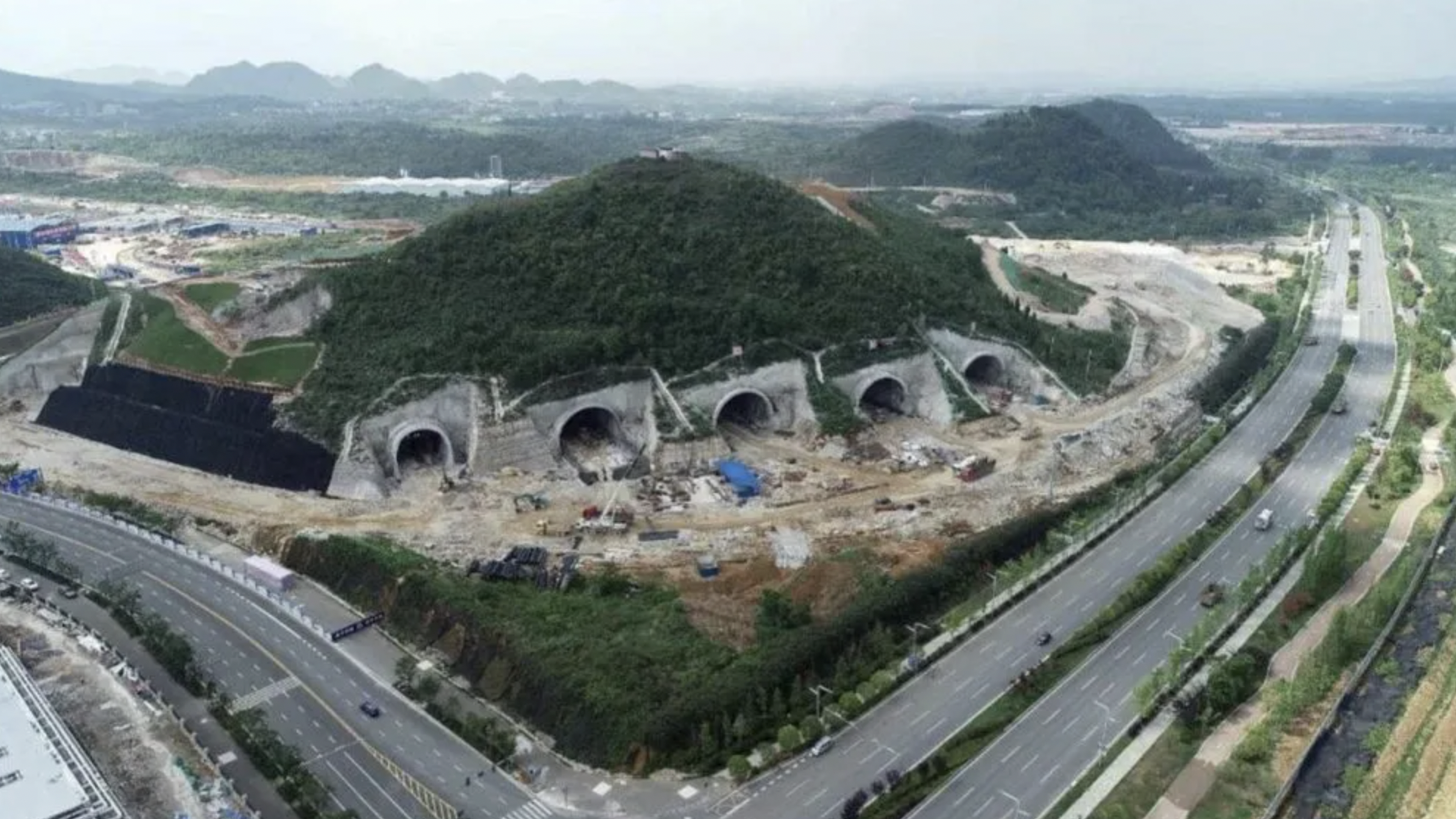
In China, AI-driven industrial expansion (Figure 2) risks repeating historical patterns of pollution—threatening farmland, water, and food safety. State-owned firms have invested in hyperscale data centers in Guizhou’s “Big Data Valley,” converting farmland and displacing farmers. In 2022, 72% of China’s computing capacity was located in severely water-scarce regions. The Eastern Data Western Computing (EDWC) strategy shifts data processing from coastal cities to inland provinces like Inner Mongolia and Gansu, where land is cheap but water is limited. Heavy metal pollution already affects 10% of China’s cropland, with Guizhou and Gansu among the worst-impacted. Local governments offer subsidies and tax breaks to tech firms, accelerating development in agro-pastoral transition zones already under ecological strain.
Figure 2

While much new energy is renewable, AI’s rapid growth risks slowing climate progress through increased reliance on fossil fuels, and intensifying competition for land and water with agriculture. Despite these pressures, some governments are accelerating growth through tax breaks and deregulation. For example, India’s LIFT policy (2024-2029) offers nominally-priced land to data center developers. These policies can weaken oversight and sideline land-use priorities. Weak regulation allows industry to outpace policy despite promotion of green infrastructure in countries like Brazil, the Philippines, and Nigeria.
Climate impacts
AI infrastructure’s constant demands for energy and water give it a larger environmental footprint than traditional manufacturing, making it a major contributor to greenhouse gas (GHG) emissions and climate change. Gen AI is fueling rapid cloud infrastructure expansion, with serious environmental consequences. Globally, the global carbon footprint of cloud servers now exceeds that of the airline industry, contributing an estimated 2.5-3.7% of global GHG emissions.
In the U.S., data centers emitted over 105 million tons of CO₂ in a single year—driven by AI growth and fossil-fueled electricity—resulting in a carbon intensity 48% higher than the national average. Although projections show 40% of data center demand will be met by renewables, the remaining 60% —largely from natural gas—could increase global carbon emissions by 215–220 million tons by 2030.
By 2027, AI is projected to compose 30% of cloud system demand, up from 14% in 2025, as nearly 90% of organizations—including traditional enterprises, Global 2000 companies, and sectors like telecom, retail, education, government, and banking—plan to increase cloud spending for AI.
Training large language models—the foundation for gen AI tools such as chatbots—is notoriously carbon-intensive. The process involves multiple stages of fine-tuning and retaining, each contributing to the expansion of rapid cloud infrastructure and associated emissions. For example, training models like Google’s BERT and OpenAI’s GPT-2 emitted over 283,996 kg of CO₂—roughly equivalent to the lifetime emissions of one automobile.
While the use of trained models for tasks like text generation, image creation, and search queries is less carbon-intensive per operation than training, its cumulative impact is significant due to billions of daily requests. In addition, many models are retrained frequently, sometimes hourly, adding to the emissions burden.
Tracking the full climate impact of digital operations is challenging. In 2023, U.S. data centers consumed around 176 TWh of electricity—more than New York State’s annual consumption of 139 TWh. Yet the true scale of impacts is obscured by a lack of reporting and hidden, behind-the-meter emissions from third-party energy sources. The GHG Protocol, which sets standards for measuring carbon emissions, lacks guidelines for reporting so-called Scope 3 Cloud emissions—that is, emissions an organization is indirectly responsible for. Tools like Cloud Carbon Footprint offer estimates limited by incomplete provider data and exclusion of hardware-related and task-specific emissions.
Finally, AI infrastructure is now a geopolitical force. The U.S. and China are reshaping land, energy, and regulation to scale AI—privately led in the U.S., state-directed in China—as part of their respective national security strategies. If poorly managed, this massive expansion could deepen resource inequities and strain food systems, especially in climate-vulnerable regions.
Our digital future: Balancing AI advances and sustainability
Despite all these issues, however, we must consider that AI also offers promising tools for agriculture, including smart irrigation, crop mapping, predictive analytics, policy analysis, waste energy reuse, and climate-smart interventions like shock-responsive social protection.
To realize such benefits and reduce their negative impacts, LMIC governments are working to balance complex tradeoffs between innovation and sustainability. For example, Blackstone’s $6 billion data center investment in Maharashtra raises questions of water use, even as the state promotes smart irrigation. Regional differences in climate and energy mix underscore the need for climate-sensitive planning.
Global accountability is advancing through ISO and EU standards that promote transparency. A $1 billion project in Kenya, backed by Microsoft, aims to cut emissions through geothermal use. Kenya and the African Union are seeking more sustainable digital infrastructure in the face of a digital sovereignty dilemma over foreign data center investment.
Sustainability in procurement, advanced cooling, standardized impact metrics, and effective zoning and regulation are being explored. Tools like carbon-aware scheduling in data centers show promise, but often lack hardware-specific detail or real-time grid data—an even larger constraint in LMICs. Detailed carbon attribution for these facilities remains largely theoretical. Broad adoption of household energy-saving technologies could meet all projected AI data center energy demand in the U.S. through 2029—offering a faster, cheaper, and cleaner alternative. LMICs face additional challenges: Limited access to renewables, limited financing, and weak policy frameworks.
Projects in LMICs should follow international standards and agreements—like FPIC, UNESCO, and OECD AI guidelines and the Climate Neutral Data Centre Pact—to guide AI infrastructure development. Just 30% of developing countries and only 12% of least developed countries have national AI strategies. Governments must be proactive in guiding smart, sustainable, and inclusive digital development.
We must ensure that generative AI contributes more than it consumes—the resilience of our food system depends on it
Amy Margolies is a Research Fellow with IFPRI’s Nutrition, Diets, and Health Unit. Opinions are the author’s.