





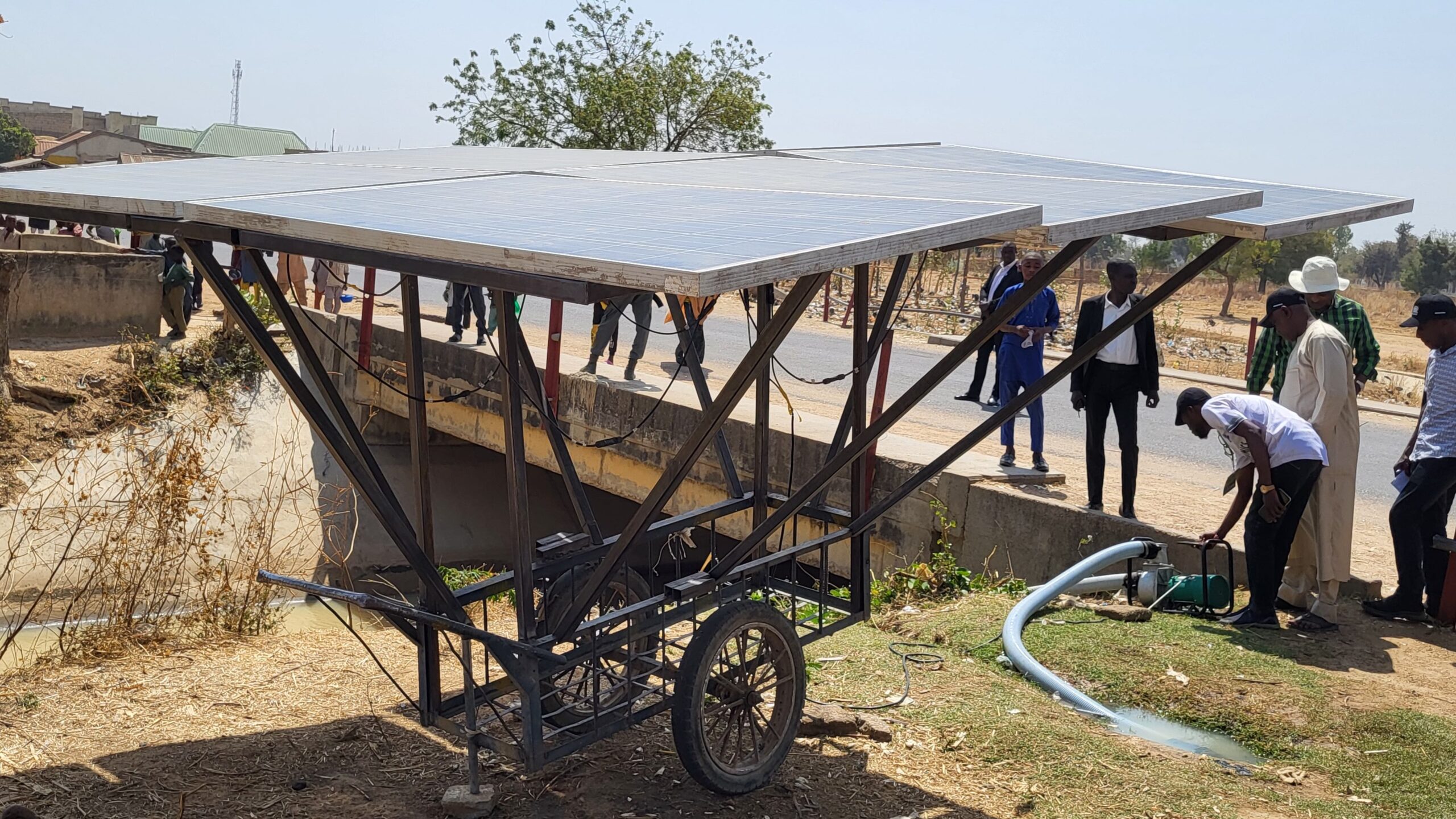
In Nigeria, rainfed agriculture supports over 90% of agricultural production. Yet—as in the rest of Africa— farmers using this approach face increasingly erratic rainfall, prolonged dry spells, and extreme weather events. Small-scale irrigation (SSI) has emerged as one of the most promising and potentially transformative solutions to this problem, reducing the uncertainty over rainfall while simultaneously unlocking agricultural productivity. Evidence suggests that SSI technologies significantly increase yields, extend growing seasons, and enable diversification into high-value crops, helping to alleviate poverty.
Despite its potential, adoption of SSI in Nigeria has remained strikingly low for a number of reasons, ranging from the costs of adopting new technologies to misguided policies. Most studies documenting these problems, however, focus either on demand-side factors (adoption constraints by farmers) or supply-side factors (market dysfunction for irrigation technologies). Often overlooked is the “missing middle” of enabling actors crucial to fostering SSI adoption, including government institutions, financial service providers, and private irrigation technology suppliers. Ideally, these intermediary actors can bridge existing gaps in irrigation supply and demand. Yet they face systemic bottlenecks, including fragmented policies, financing gaps, and distribution inefficiencies.
Using human-centered design to understand SSI bottlenecks
To identify those bottlenecks, we conducted a series of eight human-centered design (HCD) workshops with the three intermediary groups—government actors, financial institutions, and irrigation equipment supply companies—across the Nigerian states of Kano and Oyo and the Federal Capital Territory (FCT). HCD is a qualitative research approach to problem-solving that places the needs, experiences, and perspectives of people—e.g., users of a technology or participants in a system—at the center of the study process, collaborating on solutions by deeply understanding their contexts and goals. Using a structured three-phase HCD approach (Empathy, Define, and Ideation), participants in each workshop first shared lived experiences and challenges, then distilled these into root-cause problem statements, and finally brainstormed context-specific solutions.
The outcomes reveal both sobering constraints and opportunities for innovation that illuminate why SSI remains underutilized but also point to actionable strategies to unlock its potential.
Government: Moving from fragmentation to coordination
The Nigerian government’s recent agricultural policies recognize that while a growing agriculture sector is essential to reduce poverty and improve food security, low productivity remains a significant problem, as many farmers remain reluctant to adopt technologies such as irrigation and fertilizer that would improve yields. Yet the workshops showed how systemic barriers are constraining the government’s support for SSI.
Despite commitments to strengthening irrigation, as reflected in the National Irrigation Policy (2016) and the National Agricultural Technology and Innovation Policy (NATIP-2022-2027), government action on SSI remains fragmented. Ministries overseeing agriculture, water resources, environment, and planning often operate in silos. Mandates for water and agricultural development are dispersed across multiple ministries, agencies, and parastatals, most prominently the Federal Ministry of Agriculture and Food Security (FMAFS), the Federal Ministry of Water Resources and Sanitation (FMWR), and the River Basin Development Authorities (RBDAs). Each operates with limited horizontal integration or data exchange, producing policy incoherence and duplication of effort.
Budgetary limitations emerged as a second formidable barrier to SSI adoption. Most existing budgetary support for irrigation goes to funding large-scale dams and canals rather than farmer-centric micro-irrigation systems. In Oyo state, for instance, officials noted that limited public investment deters private co-financing, while the FCT participants said that unpredictable funding cycles complicate planning. A participant at the government stakeholders’ workshop held in June 2025 in Abuja (FCT) argued: “We need to stop treating irrigation as an expenditure and start seeing it as an investment.”
A third key challenge is that the government lacks critical data and information on water resources, weather, soil, and economics of different SSI technologies needed for informed decisions. In addition, Nigeria’s public extension system, the bridge between research, policy, and farm-level practice, is overstretched and under-resourced. With roughly one extension agent per 10,000 farmers in some states, many smallholders do not have access to any formal, reliable advice on agricultural practices. Many extension agents also lack training and expertise, an equally critical problem. This information gap severely limits the government’s ability to promote SSI adoption, deliver training, and support farmers with tailored advice.
Financial institutions: Improving farmer access to needed capital
While government agencies lay the groundwork for SSI adoption through policies, budgets, and institutional frameworks, SSI cannot scale without the active participation of banks and other financial actors to provide loans and other forms of support. Yet the workshops with finance participants showed that existing lending practices for SSI present serious obstacles for many willing farmers. Current loan products are not tailored to the needs of smallholders, failing to match the seasonal realities of agriculture. Standard monthly repayment schedules conflict with cash flows that remain low for much of the year, then expand dramatically during harvest season—making default more likely even among committed borrowers. “We have had farmers willing to take loans, but they simply cannot repay outside the harvest window,” noted one microfinance officer at the workshop in FCT.
In addition, many smallholders cannot meet traditional loan collateral standards—typically, holding land titles or other documents demonstrating property ownership. Without collateral or credit guarantees, lenders are reluctant to approve irrigation loans, especially for resource-poor farmers and women, who rarely hold land titles. One solution suggested was group-based or cooperative-based loans providing collective guarantees. This approach leverages social capital and peer pressure to improve repayment and can substitute for physical collateral.
Participants also pointed to a lack of effective demand from farmers. Few actively seek irrigation financing, partly due to a low awareness of financial products and skepticism about taking loans. The weak demand in turn dampens banks’ interest in developing tailored products. Participants suggested that extension services and NGOs could stimulate smallholder credit demand by working to increase their financial literacy and access to financial information systems.
Irrigation equipment suppliers: Removing barriers to technology
Equipment suppliers identified import barriers, bureaucratic delays, and currency volatility as chronic obstacles limiting the local availability of quality irrigation technologies and squeezing their profit margins. Their suggested solutions included simplifying customs checks for irrigation equipment, lowering or waiving import duties, and improving transparency in import protocols.
Since limited access to foreign exchange and currency market volatility are making imports expensive, participants suggested that irrigation equipment importers could request a special foreign exchange window or concession for certified importers from the Central Bank of Nigeria. Prioritized access to foreign exchange at stable rates would allow suppliers to plan and price their products more reliably. Alternatively, policies could target increasing domestic capacity, for example, through tax breaks for constructing local manufacturing plants or public-private partnerships to produce affordable equipment locally.
As in the other workshops, suppliers stressed that farmers’ awareness and technical knowledge of irrigation practices remain limited. Many farmers prefer traditional methods, uncertain of the benefits of change or how they might fare adopting new technologies. A supplier in Kano said, “Farmers often misuse equipment or abandon it after a single season because no one showed them how to maintain it.”
A related problem is the lack of after-sales support and repair services. When equipment breaks down, farmers have few options. “A broken pump in a village is effectively useless for months—by then the season is lost,”said one technician in FCT. Suppliers emphasized the need for local service networks, mobile repair teams, and robust warranties to sustain adoption. Without proper training and support, even high-quality irrigation tools can fail, undermining market trust that suppliers and customers depend on. Addressing this issue requires the development of better, more comprehensive business models that include extensive farmer outreach, demonstrations of technologies, and collaboration across government, extension, and after-sales services.
Towards a shared road map
A consistent message from the HCD workshops was that no single actor can scale SSI alone. Government provides the enabling environment, financial institutions unlock capital, and private suppliers deliver the technology. What has been missing is for these intermediaries to come and work together.
Intermediary players can accelerate scaling through breaking down silos, realigning incentives, and building trust. As noted by one participant in the FCT workshop, “Farmers cannot irrigate without equipment, they cannot buy equipment without finance, and finance does not flow without an enabling policy environment.” While the policy frameworks are in place, strong political will, institutional innovation, and collaborative action are required to make them work.
The decision support tools under development by IFPRI and the Aliko Dangote University of Science and Technology (ADUST) in Wudil, Kano, as part of the Irrigation Technology Suitability Mapping Tool project, aim to provide tailored evidence to each of the three intermediary actors and become a critical platform in fostering collaboration.
By integrating geospatial data, risk assessments, and farmer profiles in a systemic approach, this platform will aim to inform policy decisions, guide lending, and support supplier market planning—all within a shared, evidence-based frameworkcombining policy incentives, demand aggregation, and financial partnerships. The HCD mechanisms for diagnosing coordination failures and co-creating actionable solutions highlight how strengthening intermediation among intermediary actors can bridge the “missing middle” and enable inclusive, climate-resilient irrigation scaling in Nigeria. For example, bulk procurement programs and supplier-finance models could reduce costs and improve affordability. Stronger linkages between suppliers and financial institutions could also unlock bundled service models, where loans, equipment supply, installation, and maintenance are offered as integrated packages.
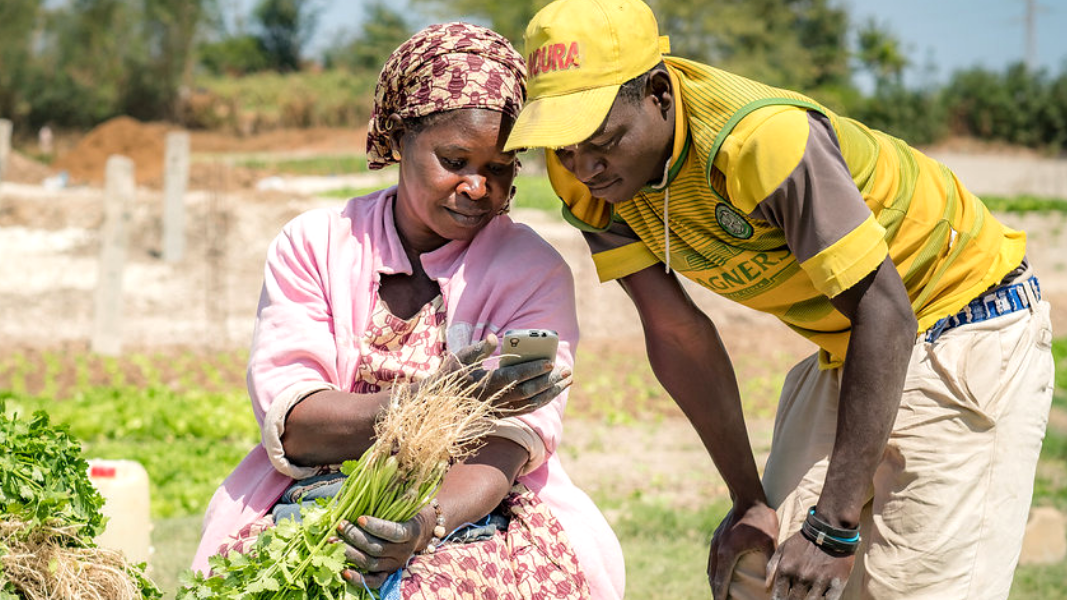
One solution endorsed in all the workshops was the creation of a centralized irrigation data platform, integrating information from multiple agencies and linking directly to decision-support tools. Another forward-looking idea from the FCT workshop was a youth-led digital extension program, deploying young graduates as digital irrigation advisors equipped with tablets leveraging the Irrigation Suitability Mapping Tool.
It is time to shift the conversation from “who is responsible” for low SSI adoption rates in Nigeria (and elsewhere in Africa) to “how we work together” to improve them. By focusing on this problem, Nigeria can unlock the full potential of small-scale irrigation not just as a productivity tool, but as a cornerstone of climate resilience, inclusive growth, and food security. The Irrigation Technology Suitability Mapping Tool, when paired with integrated interventions, will aim to offer a concrete pathway to make SSI accessible, sustainable, and inclusive, especially for women and youth who are often at the margins of existing programs.
Bedru Balana is a Research Fellow with IFPRI’s Natural Resources and Resilience (NRR) Unit; Abba Aminu is a Professor of Agricultural Economics at Bayero University, Kano, Nigeria; Musa T. Yakasai is a Professor of Agricultural Economics and Vice-Chancellor of Aliko Dangote University of Science and Technology (ADUST), Kano; Augustine Iraoya is a Research Analyst with IFPRI’s Development Strategies and Governance Unit; Claudia Ringler is NRR Director. This post is based on research that is not yet peer-reviewed. Opinions are the authors’.
This work was developed under the CGIAR Policy Innovations Program.