





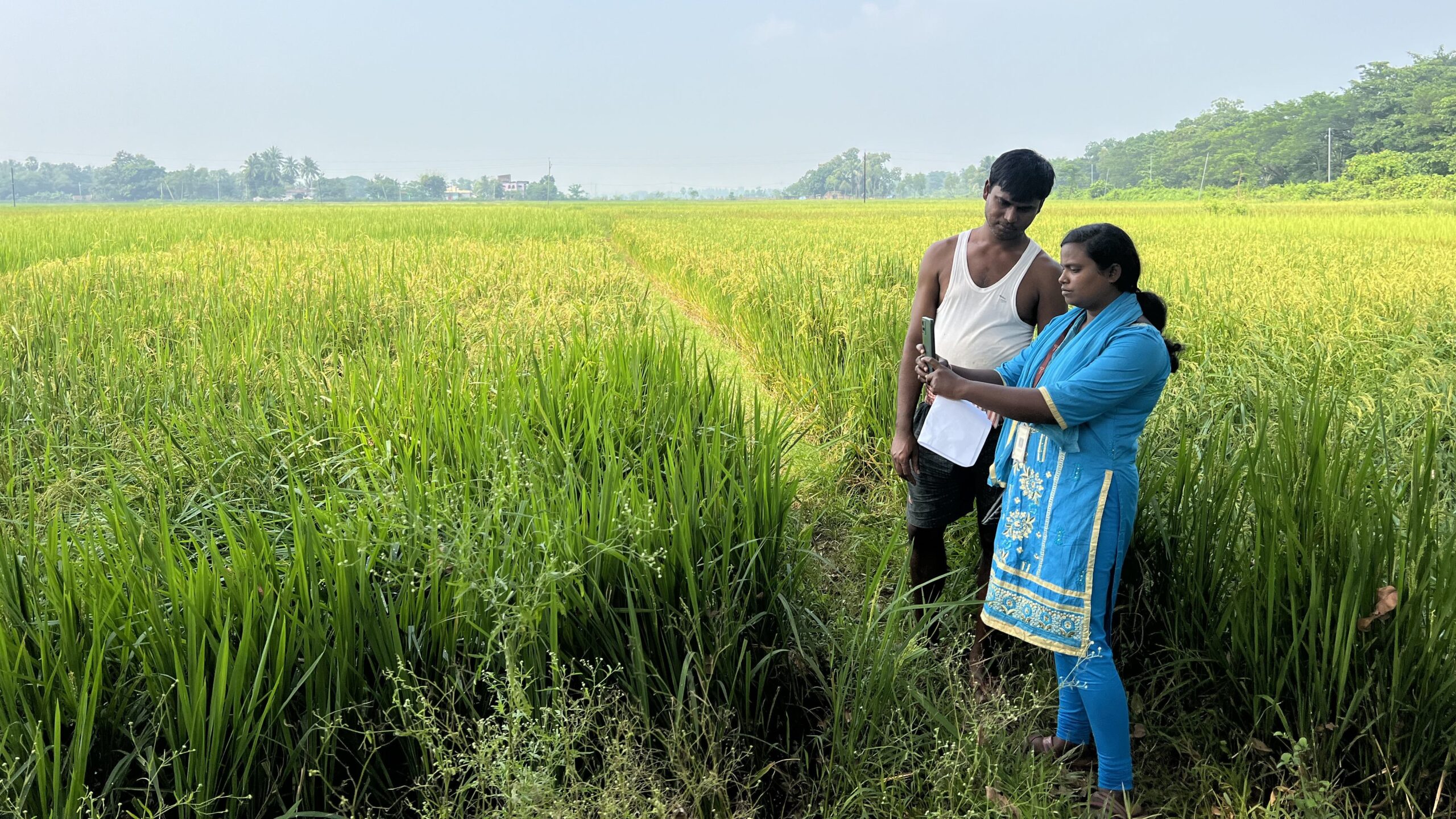
In the paddy fields of Odisha, India, many farmers cultivate land they do not own—and without land titles, they cannot use their fields as collateral for formal credit. Credit is important for farmers to be able to take risks and invest in profitable agricultural inputs and technologies. Sharecroppers often rely instead on informal, high-interest loans, with severe repercussions in case of non-repayment. This discourages farmers from investing, and can trap them into a cycle of low-risk, low-return agriculture.
Against this backdrop, the idea that the collateral requirements could be bypassed using satellite images—allowing financial institutions to assess creditworthiness by verifying what farmers grow instead of what they own—offered a potentially transformative solution.
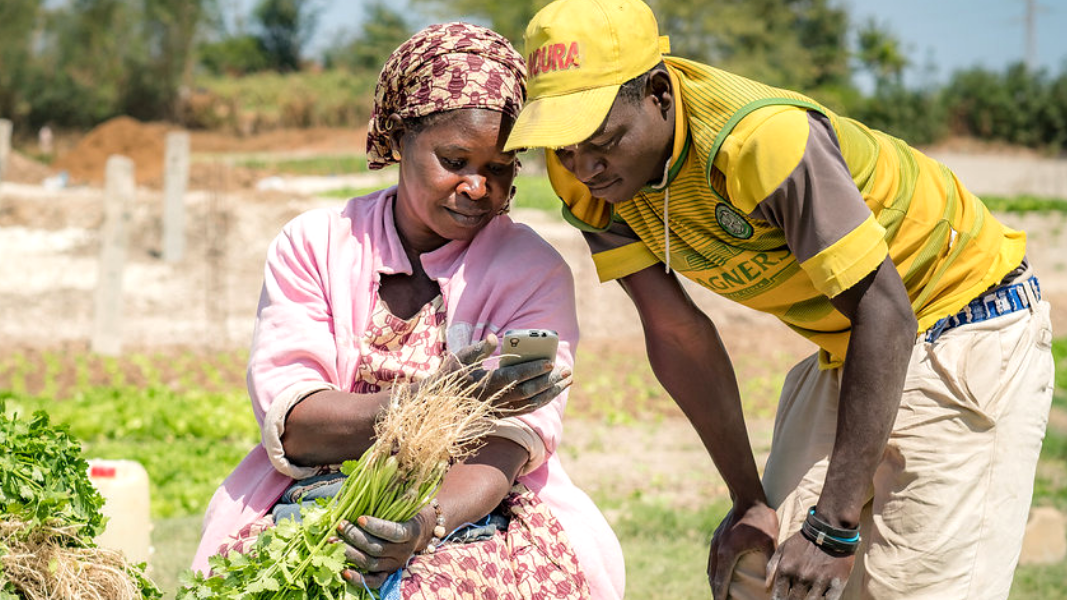
It all started with a seminar at the M.S. Swaminathan Research Foundation in Chennai in 2018. An IFPRI researcher presented findings from a formative evaluation of picture-based insurance in Haryana and Punjab states, a program that used smartphone pictures of insured plots to verify crop damage. Traditional insurance relies on proxies such as weather indices or average yields, which do not always provide adequate coverage and are often opaque to smallholders. Picture-based insurance offers a more transparent process with payouts linked to observed losses.
After the seminar, Samir Shah, Executive Vice-Chair of Dvara Holdings, a non-profit financial institution based in India, approached the researcher. He suggested that similar image-based innovations could help expand credit access for smallholder farmers. At the time, Dvara Holdings was in the process of establishing Dvara E-Registry, a social enterprise developing a digital farmer registry and farm analytics platform. That initial conversation led Dvara and IFPRI to explore how digital loans, underwritten using satellite imagery and linked with insurance, could reach farmers traditionally excluded from formal finance, and how research could validate and improve the approach.
With support from the Digital Credit Observatory, the team conducted a formative, gender-focused study of Dvara’s “KhetScore”—a digital analytics package aimed at smallholder farmers in Odisha that combines:
- Digitized farmer profiles verified with georeferenced smartphone pictures.
- Satellite imagery to assess cultivated area, soil moisture, nutrient status, and historical vegetation indices to determine past productivity.
- Picture-based insurance to reduce risks to loan repayment in case of visible crop damage.
This approach shifted lending dynamics by recognizing farmers based on what they grow rather than what they own. The formative study showed women were more willing to borrow when creditworthiness was determined based on satellite imagery of a farmer’s field rather than traditional credit scoring, and when insurance was included. These findings informed the International Initiative for Impact Evaluation (3ie) in their decision to fund a quantitative impact evaluation around a pilot of this innovative financial instrument.
For many sharecroppers, this was their first experience accessing formal credit. Farmers like Mamta expanded their production, invested in better inputs, increased their profits from agriculture, and repaid on schedules aligned with their seasonal income patterns. Her story mirrors others across Jajpur district, demonstrating how a research partnership can unlock larger-scale change.
Overcoming challenges: Turning crisis into opportunity
As the impact evaluation was set to launch, COVID-19 disrupted financial markets. The microfinance institution meant to issue KhetScore loans could not secure refinancing, putting both the research and farmers’ access to credit at risk.
But rather than pause, IFPRI and Dvara were able to obtain a rapid response grant from the CGIAR Platform for Big Data. The grant enabled them to create a joint loan guarantee fund—with IFPRI covering 25% and Dvara 75% of the risk—allowing 50 initial loans to move forward. Strong repayment and positive borrower testimonies then helped Dvara strengthen investor confidence and secure more financing.
At the same time, improved ground-truth data strengthened the KhetScore algorithm. During the pandemic, IFPRI and Dvara E-Registry, with funding from the Mahalanobis National Crop Forecast Centre (MNCFC), collected high-quality georeferenced data on yields, management practices, and visible crop characteristics from smartphone pictures taken of target crops in study fields. Dvara used these data to refine its algorithm, strengthen insurance design, and build trust with lenders—innovations that helped expand participation from 50 to 750 loans.
Evidence of impact
In 2021, Dvara and IFPRI launched the evaluation across 29 treatment villages being offered KhetScore loans with insurance and a comparable set of 29 control villages without access to these products.
In 2023, the findings from this impact evaluation were released, and they told a convincing story. KhetScore generated large gains in the uptake of formal credit and insurance, agricultural productivity, profits, empowerment, and mental well-being, particularly for women. Uptake of formal credit increased by about 20 percentage points. Receiving a KhetScore loan paired with insurance increased agricultural profits by roughly $102 in the Kharif (monsoon) season, and by $145 in the dry Rabi (winter) season—an annual gain of nearly $250, a significant amount for a smallholder household in Odisha. Farmers reported lower stress and easier repayment. Women gained more decision-making power over household finances.
With this evidence, Dvara secured additional funding from social investors and institutional lenders to expand lending both in Odisha and in other states. It established Farm Producer Organizations (FPOs) in its target areas and now provides loans to 15,000 smallholder farmers.
Next steps: Expanding knowledge and impact
The partnership continues to grow through three new research initiatives:
- Disentangling credit and insurance effects. With new funding from the Digital Credit Observatory, researchers are isolating the individual contributions of credit and insurance to productivity and well-being outcomes. This evidence will help refine product design and inform policymakers and financial institutions about the most effective ways to support smallholder farmers.
- Exploring gender and intrahousehold dynamics.Early findings suggested reduced stress in households and improved empowerment for women. A new study—supported by the CGIAR Gender Equality and Social Inclusion Accelerator and Cash Transfer and Intimate Partner Violence Research Collaborative—is examining if these financial products also lead to broader gender-differentiated impacts, including reductions in intimate partner violence. New data collected in 2025 will shed light on how financial interventions can contribute to both economic and social empowerment, providing critical insights for designing gender-sensitive agricultural finance programs.
- Evidence to drive scaling. The CGIAR Science Program on Scaling for Impact is supporting the expansion of the digital financial solution to an additional 35,000 farmers, reaching a total of 50,000 over the next three years, ensuring that scaling efforts remain evidence-based and farmer-centered.
This story illustrates how research, partnership, and timely innovation can catalyze large-scale meaningful change. A pilot with just 50 loans—supported by early evidence and risk-sharing—has evolved into a model now reaching thousands of farmers across India. In the fields of Odisha, farmers are already experiencing the difference, proving that research partnerships can truly make a difference.
Berber Kramer is a Senior Research Fellow with IFPRI’s Markets, Trade, and Institutions Unit based in Nairobi, Kenya; Shalini Roy is a Senior Research Fellow with IFPRI’s Poverty, Gender, and Inclusion Unit based in Washington, DC. This post references research that is not yet peer-reviewed. Opinions are the authors’.