





Environmental taxation—levying taxes on activities, inputs, or products that generate environmental harm—is a politically volatile issue. In 2024, farmer protests erupted across much of Europe, driven by participants who largely felt excluded from national and European Union green policy decisions, including reduced tax breaks on diesel inputs and taxes on nitrogen emissions. During the same year, New Zealand’s efforts to impose a livestock emissions tax stalled, partially due to significant farmer opposition and a change in government.
Yet, in November 2024, Denmark became the first country in the world to adopt a tax on livestock emissions—and without major, nationwide farmer protests. Among other factors, it achieved consensus through a concerted tripartite bargaining process between the government, agricultural groups, and environmental actors. Denmark’s experience offers lessons to other countries during a time when such national agreements are essential to address mounting climate impacts from, and on, agriculture.
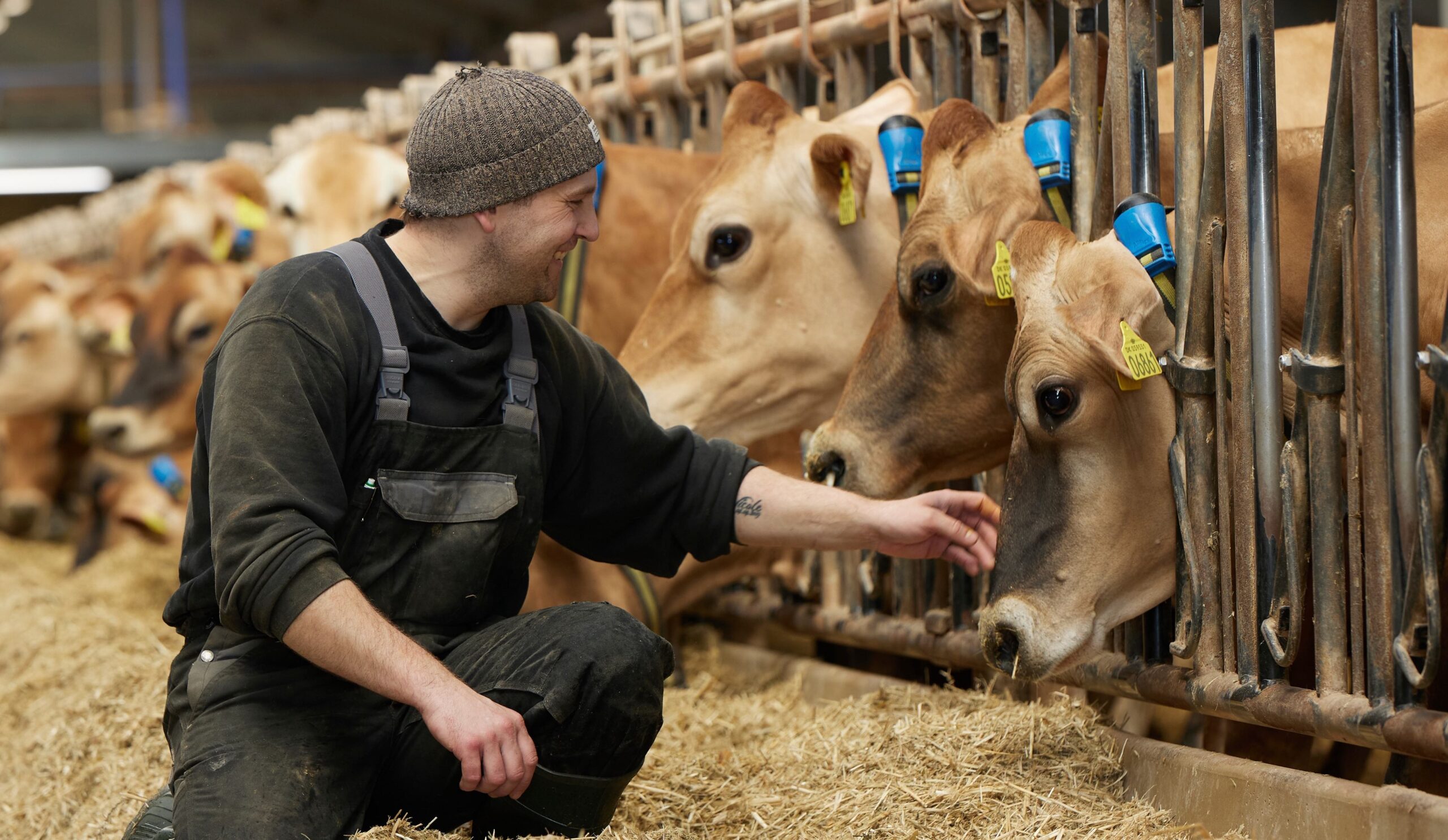
The tax is just one of the notable features of the Agreement on a Green Denmark, a collaborative framework to expand natural habitats, achieve cleaner water, and sustainably transform agriculture. The tax will start in 2030 at 16 euros per metric ton of greenhouse gas (GHG) emissions from livestock, rising to 40 euros per ton by 2035. These rates are inclusive of a 60% base reduction; in other words, 60% of a farm’s calculated emissions from livestock are tax-free, and the tax is applied to the remaining 40% of emissions. This is significant, given that pork and dairy jointly comprise the largest share of Denmark’s agricultural exports. Other provisions of the Agreement include setting aside 15% of today’s arable land for conversion into new forests and for the restoration of carbon-rich peatlands, and it also provides substantial funding for investment in plant-based foods.
The Agreement reinforced Denmark’s commitment to a larger environmental agenda. The country’s agriculture sector required a strong policy shift, given that it accounts for a quarter of Denmark’s GHG emissions—a figure predicted to rise to 39% by 2030 if the status quo continues. Existing laws had already established some benchmarks for addressing these challenges: the Danish Climate Law requires reducing overall GHG emissions by 70% by 2030 compared to 1990 levels. The government has also imposed taxes and green legislation on the transport and manufacturing sectors to achieve these ambitious goals.
Even amid such political circumstances, farmers might have collectively opposed the livestock emissions tax, which directly affects their livelihoods, and even derailed the agreement. How did Denmark achieve consensus on green policy when other governments have struggled to do so?
Factors of success
According to stakeholders close to the process, several factors were jointly key to the adoption of the Agreement.
First, there was strong political commitment at the highest levels. The government that came to power after the 2022 elections had campaigned on addressing the climate crisis and therefore had to deliver on its promises or risk political backlash.
Second, other industries already targeted with green legislation stressed that agriculture also needed to be pressured to contribute to the country’s climate goals. Media attention and youth activism on the environment maintained this pressure.
Third, the Agreement employed price signals and incentives to encourage transition. The use of base taxation, which naturally reduces farmers’ payments as they decrease their emissions over time, allows for a gradual rather than abrupt transition, and the earmarking of revenue for further investments in the agricultural sector ensures that all farmers ultimately benefit.
The fourth factor was likely the most consequential: inclusive stakeholder engagement across sectors, including farmers from the Agricultural and Food Council, environmental non-governmental organizations under the Danish Society for Nature Conservation, the Danish Food Federation NNF, Dansk Metal, Danish industry, and the National Association of Municipalities. In addition, multiple national ministries were involved in negotiations, including the ministries of food, climate, environment, economy, and taxation, which enhances government policy coherence at the implementation stage.
Reaching consensus
Historically, farmers and nature organizations have not always been aligned. This time, however, these organizations were given the space to discuss their collective concerns and a deadline to agree on policy provisions to address the climate crisis in Denmark. They met regularly over a period of nine months, often working very long nights, until they reached consensus.
A central question was how to impose green legislation and reduce emissions in agriculture while simultaneously maintaining productivity and jobs. Farmers ultimately accepted the tax on GHG emissions thanks to several incentives. These include the design of the tax measure, mentioned above, capping taxable emissions and reinvesting the proceeds in agricultural technology and innovation. After these negotiations were finalized in June 2024 under the Green Tripartite Agreement, the next step was gaining parliamentary approval. As the participating organizations largely mapped onto Denmark’s ideologically diverse party landscape, once parties understood that their main constituencies were in agreement, Parliament passed the measure in November 2024. The Green Left, Liberal Alliance, Conservative People’s Party, and the Social Liberal parties all provided support.
Next steps
The Agreement now faces its next hurdle: implementation. The Ministry of Green Transition established to oversee these efforts is staffed by civil servants from the various ministries that participated in the negotiation process. One of their tasks is to update the tax system to integrate farm-level administrative data to determine farmer taxes as well as rebates to those who also pursue land conversion strategies or grants for adopting low-emission technologies. In addition, decisions about land conversion have been delegated to 23 municipal councils that will work with both farmers and environmental organizations to decide where to buy up land for tree planting and rewetting peatlands, with a view towards reducing nitrogen emissions from fertilizer use. Each council has devised a plan for achieving this; these were formally adopted at the end of 2025. Reaching these goals will be challenging; for example, some family farmers may be reluctant to sell their land, and sales may lead to land price spikes that will need to be stabilized.
Local context, broad lessons
The approach of bringing potential reform opponents into negotiations was one key to success. This is a useful strategy in most political contexts. According to sources close to the process, farmers felt that it was “better to be at the table than on the menu,” especially as their livelihoods are some of the most endangered from the impacts of climate change. This underscores the value of ensuring that diverse viewpoints are legitimately included in policy processes to overcome political economy bottlenecks. As the chair of the Danish Agriculture and Food Council noted, “I’m proud of the agreement we entered into in June and I’m, of course, delighted that it has now been confirmed by a broad political majority that supports the agreement in its entirety, while also acknowledging its comprehensive scope and balanced approach.”
Some of the success in passing the Agreement may be unique to Denmark—attributable to the country’s policy processes and political institutions—making some of these achievements difficult to replicate in other countries or regions of the world. One of these is Denmark’s tradition of corporatism, in which both the government and large umbrella organizations frequently negotiate with each other to find consensus outcomes. In addition, Denmark’s parliamentary democracy, with parties elected proportionately, results in multiple political parties representing distinct interests; for decades, no party has been able to rule outright, necessitating the formation of coalitions and frequent compromise.
Beyond broad consultation, the other key takeaway from Denmark’s experience is the importance of designing policies that integrate incentives for potential opponents—carrots rather than sticks. Using price signals and targeted provisions to encourage green transition contrasted with perceived punitive efforts in countries such as the Netherlands, where there were binding nitrogen emission ceilings and mandatory herd reductions, with the threat of farm closures in the case of non-compliance.
The Danish approach undoubtedly required concessions on multiple sides, and some environmental groups have claimed the tax is more symbolic than transformative. Nevertheless, the case highlights that sometimes an imperfect compromise for all groups may be the only effective and politically feasible option for achieving complex policy goals.
Danielle Resnick is a Senior Research Fellow with IFPRI’s Markets, Trade, and Institutions (MTI) Unit and a Non-Resident Fellow with the Brookings Institution Global Economy and Development Program. Opinions are the author’s.