





AI-powered chatbots are emerging as a promising tool to deliver agricultural advice. Such AI-based advisory services can reach large numbers of farmers more cost-effectively than traditional extension services. They can almost instantly provide advice across more remote areas, translate technical terms into plain language, quickly adapt to local needs through feedback from users, and increase access to knowledge for marginalized groups. Yet this technology still faces many obstacles. For instance, users require access to reliable electricity and (mobile) internet, which are still unavailable in many of the world’s rural farming areas.
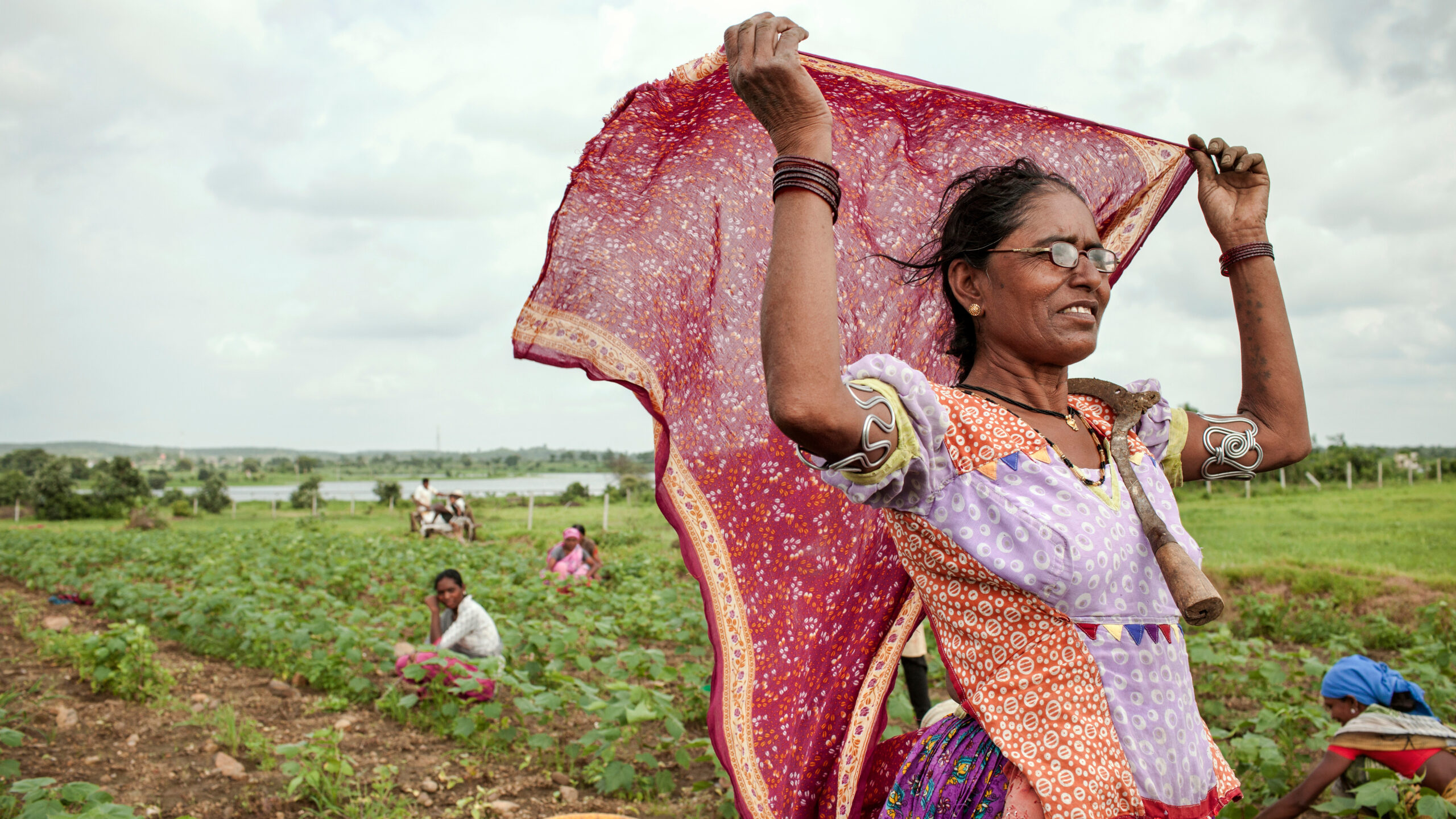
Another important problem is that chatbots risk reinforcing existing gender and social inequalities. The large language models (LLMs) underlying chatbots are trained on huge datasets captured from various internet sources, reflecting an array of cultural and social biases, misinformation, and other issues, and are developed and deployed by tech companies often unfamiliar with those problems or local contexts. If these issues are not accounted for, they can skew chatbot responses. In India, for example, women constitute a significant share of the agricultural workforce but face structural disadvantages in land ownership, information and credit access, and technology. Yet research suggests these inequalities may be reinforced by AI tools that are not designed with the goals of improving equity and justice.
To address this key issue, we analyzed how well the LLMs that power chatbots providing extension advice address the needs of women farmers in India, particularly in providing accurate, context-specific, and empowering information.
What we tested
To do this, we tested five LLMs that we accessed through the generative AI platform Amazon Bedrock —GPT-4o (developed by OpenAI), Claude 3.5 Sonnet (Anthropic), Llama 3.3 70B Instruct (Meta), Jamba 1.5 Large (A21 Labs), and Nova Pro 1.0 (Amazon)—using prompts with responses designed for use through WhatsApp, a platform widely used by farmers in India. We posed these questions to each LLM, recorded the responses, and analyzed how each model varied in clarity, accuracy, and attention to gender-related issues.
The questions were grouped under three dimensions—gender equality, gender responsiveness, and gender norms—to assess whether LLMs challenge or reinforce stereotypes, recognize women’s specific agricultural needs, and identify formal and informal barriers shaping women’s opportunities in agriculture (Box 1).
Box 1

This approach allowed us to assess not only whether LLMs promote gender equality in principle but also whether they provide practical, context-relevant advice to women farmers in India.
What we found
The responses from all five LLMs were in general agreement that being a good farmer or entrepreneur is not determined by gender. Claude’s answers emphasized that women have equal rights in India to own land, access loans, and join farm groups. Claudeand Llama also suggested specific programs that women farmers could explore for support.
The models, however, differed in how they addressed gender stereotypes related to comparative advantages. The GPT and Nova responses framed gender differences as complementary, arguing that women and men bring distinct but important strengths to farming and entrepreneurship. In contrast, Claude’s responses rejected the notion of any inherent advantage for men, for instance, noting that perceived physical differences can be offset through access to inputs, resources, and supportive networks.
Several models, moreover, included motivational messages in their responses. Claude advised, “Don’t let anyone tell you women can’t be business owners,” while Llama highlighted examples of successful women entrepreneurs in India and said, “You could be one too.” While these responses suggest that the LLMs incorporate gender equality as a value in responses, more generally they stopped short of reflecting more deeply on structural differences that can make it challenging for women to operate as farmers, including gender-differentiated barriers around access to land, credit, and agricultural resources and advice.
When prompted to address gendered challenges, such as workload reduction, rural credit, or crop choices, models provided varying levels of detail. GPT consistently gave the most specific answers, often naming relevant Indian organizations, technologies, and financial institutions. Claude and Llama also offered some India-focused examples, while Nova’s answers were informative but more general. However, when asked about technologies to reduce women’s workload, GPT, Claude, and Llama primarily recommended outdated manual tools such as hand weeders and basic seed planters, instead of more efficient, labor-saving options like power weeders and motorized sprayers.
Not all LLM responses fully recognized the everyday challenges women face—such as limited access to inputs, mobility constraints, and exclusion from decision-making. Only GPT, Claude, and Nova explicitly acknowledged these barriers, but even their responses tended to suggest solutions without addressing the structural barriers women may encounter in accessing them.
Most LLM responses recognized that informal rules and social norms can restrict women’s access to resources or decision-making. GPT provided the most comprehensive list of such barriers, while Claude misinterpreted the question, dismissing informal rules because they are “not legal.” Llama and Jamba explicitly recognized that men often have more access to resources and training, more connections and more opportunities to make decisions.
Some responses also included proactive advice—Claude encouraged women to learn about their rights, open bank accounts, apply for subsidies, and report misconduct through helplines. GPT stressed that women can succeed with determination and strategy, underscoring women’s freedom to choose their agricultural paths. These suggestions were promising, but would have a greater impact if paired with guidance that reflects the real-world obstacles women may face when trying to access credit, land titles, or government schemes.
Wide variations
Taken together, our findings show that while LLM responses broadly support women’s equality in agriculture in the Indian context, their depth, nuance, and contextual relevance vary widely. A closer examination highlights three key biases that limit the effectiveness of LLM-generated advisories.
First, gender stereotyping remains prevalent, with AI responses reinforcing traditional labor divisions—positioning women as planners and caretakers, while men are associated with physically intensive farm work. Research indicates that, given equal access to training and the proper technologies, women can perform all farming activities (FAO, 2023). Instead of perpetuating entrenched gender roles, AI-driven advisories should highlight skill-based, rather than gender-based, competencies in agriculture.
Second, LLMs lack nuance in addressing gendered barriers, often stating that women “can” access inputs and land without acknowledging persistent constraints such as land tenure insecurity, mobility restrictions, and exclusion from decision-making processes. While initiatives like Mahila Kisan Sashaktikaran Pariyojana (MKSP) or the Women Farmer Empowerment Project aim to increase women’s access to agricultural resources, the reality suggests that inequities remain pervasive. For example, among rural landowning households in India, women constitute barely 14% of landowners and own only about 11% of agricultural land. Effective AI-driven agricultural advisories must not only acknowledge these inequalities but also propose tangible solutions, such as facilitating women’s access to government schemes, promoting collective farming, and linking them to self-help groups for financial support.
Third, the LLMs assessed fail to account for shifting gender roles in agriculture, particularly in response to male outmigration and broader economic transformations. For example, in states like Bihar and Uttarakhand, male outmigration has sometimes left women in charge of farms, often engaging in mechanized farming and collective decision-making. Yet chatbot responses rarely reflect these dynamics. Studies from Bihar reveal that while women are stepping into managerial roles, they face challenges in accessing credit, training, and technology, making it crucial for AI-driven advisories to provide information on government-backed farm mechanization schemes and financial literacy programs. Chatbots should be designed to reflect this evolving reality and provide relevant, forward-looking advice.
Going forward
While AI-based advisory services hold great promise, they need refinement. To become genuine enablers of gender equity, they must:
- Eliminate gendered stereotypes by recognizing women’s capabilities across all farming activities, including mechanization, technology use, and financial decision-making.
- Acknowledge and address structural barriers, ensuring that advisory content provides realistic, actionable solutions rather than generic optimism.
- Incorporate context-specific, real-time, and gender-responsive recommendations, such as cooperative farming models, digital financial tools, and advanced farm technologies that cater to the evolving roles of women in agriculture.
By integrating these improvements, AI-powered advisory systems can move beyond generic encouragement and provide transformative knowledge that enhances women-farmers’ productivity and decision-making power.
AI chatbots hold promise as tools for democratizing agricultural advice, but they must be carefully designed to avoid reproducing bias. When LLMs eliminate stereotypes, acknowledge systemic barriers, and reflect evolving gender roles, they can provide women farmers with accurate, actionable, and empowering knowledge. Done right, AI-driven advisories could become catalysts for gender equity and agricultural transformation in India.
Marilia Magalhaes is a Senior Research Analyst with IFPRI’s Natural Resources and Resilience (NRR) Unit; Niyati Singaraju is a postdoctoral fellow in gender research with the Sustainable Impact Platform at the International Rice Research Institute, based in New Delhi; Jawoo Koo is an NRR Senior Research Fellow. This post is based on research that is not yet peer-reviewed. Opinions are the authors’.
Note on study limitations: This report assessed a “first reaction” of LLMs to questions related to women’s empowerment and gender equality. However, it does not assess how well LLMs handle follow-up questions, which could provide deeper insights into their ability to engage in nuanced discussions and adapt their responses based on context-specific challenges. A more comprehensive analysis would require testing iterative interactions to determine whether LLMs can refine their responses when probed further. These generic questions were developed to assess how LLMs are doing in general when answering questions related to women farmers in India; they do not capture the full range of regional variations, socio-cultural differences, and local policy environments. Effective chatbot solutions must be contextualized to specific farming communities, considering regional disparities in land ownership, market access, and extension services for women farmers. Future research should explore localized adaptations of AI-driven advisories to ensure that responses are both relevant and actionable for diverse agricultural contexts.
This study was conducted for the Generative AI for Agriculture (GAIA) project, supported by the Gates Foundation.
An earlier version of this post was published on HuggingFace.