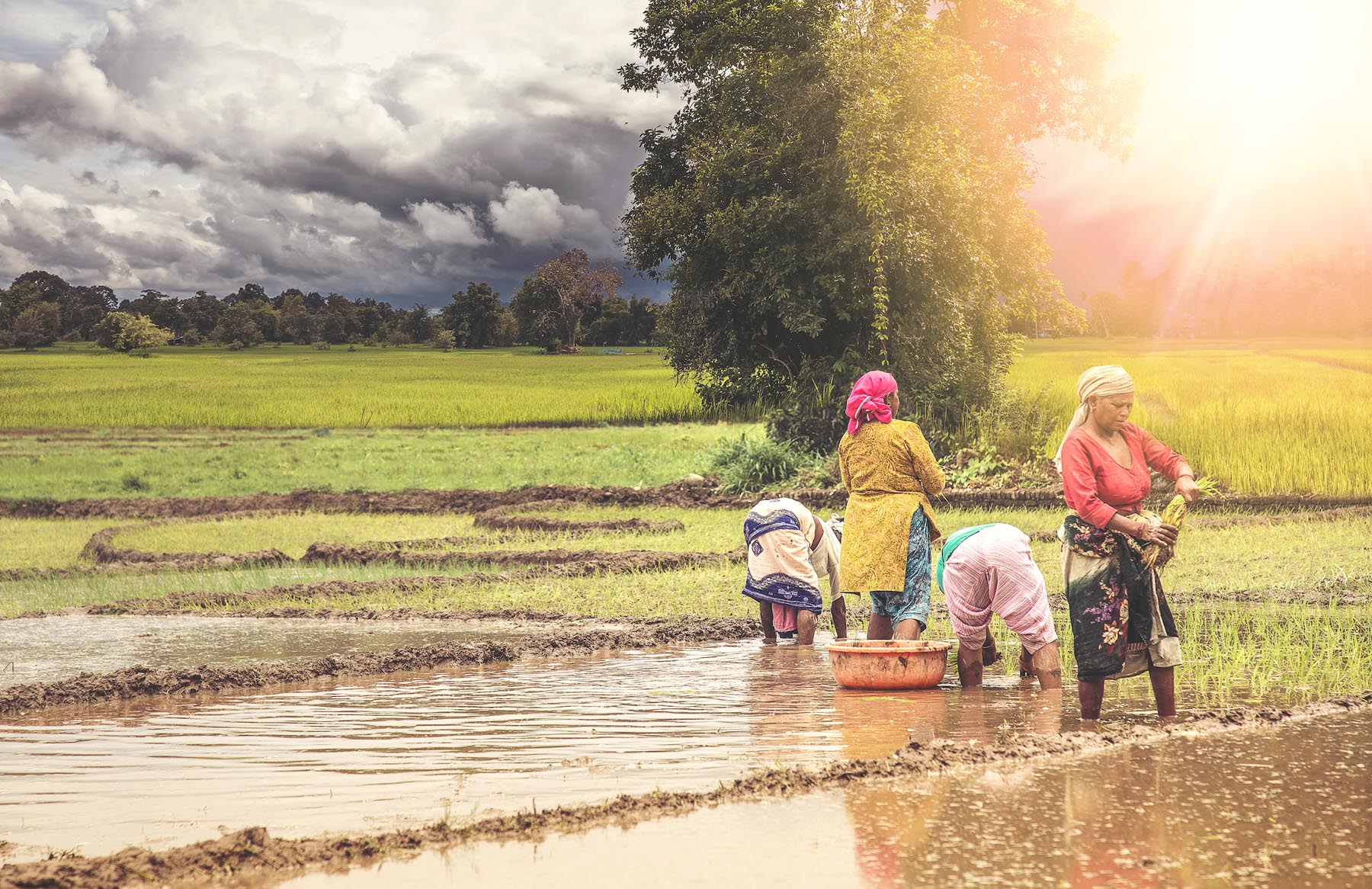
Without land and water resources, agriculture cannot survive. But in a world facing increased scarcity of both, farmers—especially those in the developing world—are increasingly hard-pressed to feed the hungry.
To assess the scope of this pressing problem, the FAO recently launched an authoritative study of the global status of land and water resources. The State of Land and Water Resources (SOLAW) is the newest contribution to the FAO’s State of the World report series. Its main findings provide insight into the availability of land suitable for agriculture, the current state of land degradation, and the institutions in place for managing land and water scarcity.
IFPRI researchers contributed two of the book’s 19 Thematic Reports, which provide insight into a specific area. Ruth Meinzen-Dick and Claudia Ringler, together with Hans Binswanger-Mkhize, contributed Policies, rights, and institutions for sustainable management of land and water resources. Ringler, Ephraim Nkonya, and Nicola Cenacchi submitted International cooperation for sustainable land and water management. Together, these reports provide an overview of the policies and institutions necessary to support sustainable land and water management.
Without land and water resources, agriculture cannot survive. But in a world facing increased scarcity of both, farmers—especially those in the developing world—are increasingly hard-pressed to feed the hungry.
To assess the scope of this pressing problem, the FAO recently launched an authoritative study of the global status of land and water resources. The State of Land and Water Resources (SOLAW) is the newest contribution to the FAO’s State of the World report series. Its main findings provide insight into the availability of land suitable for agriculture, the current state of land degradation, and the institutions in place for managing land and water scarcity.
IFPRI researchers contributed two of the book’s 19 Thematic Reports, which provide insight into a specific area. Ruth Meinzen-Dick and Claudia Ringler, together with Hans Binswanger-Mkhize, contributed Policies, rights, and institutions for sustainable management of land and water resources. Ringler, Ephraim Nkonya, and Nicola Cenacchi submitted International cooperation for sustainable land and water management. Together, these reports provide an overview of the policies and institutions necessary to support sustainable land and water management.