




-
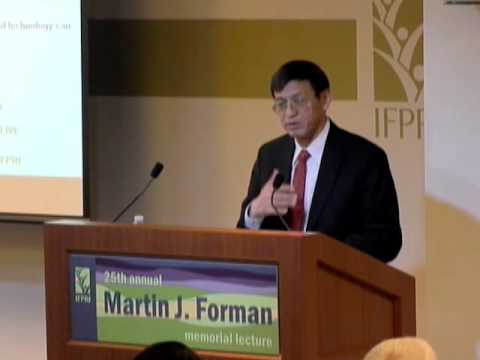
Ending hunger: How leadership, data and technology can transform the global face of poverty
The International Food Policy Research Institute (IFPRI) is pleased to host the 25th Annual Martin J. Forman Memorial Lecture. The event commemorates the significant impact on international nutrition by Martin J. Forman, who headed the Office of Nutrition at USAID for more than 20 years. The annual lecturer is invited to present his or her…
-
Stepping into the SUN: Successes and Constraints from On-the-Ground
The June 2013 Lancet series underscores that tackling the burden of malnutrition is one of the greatest challenges the global community faces in ensuring the survival and healthy development of our children. Events in 2008 have catalyzed renewed interest in nutrition – resulting in the Scaling Up Nutrition movement. In his presentation Shawn Baker will…
-
Public-Private Partnerships Innovating to End Malnutrition
Today, 1 billion people are undernourished and 2 billion are micronutrient deficient. The potential of the private sector to eradicate malnutrition is enormous, but requires an enabling environment featuring the right mix of public policies, regulations, and investments. Innovations in public-private partnership have already achieved some success. In this seminar, Josette Sheeran will highlight the…
-
Nutrition in Senegal: Achievements and Prospects
After several major transitions, Senegal succeeded in developing a multisectoral strategy to achieve sustainable nutrition outcomes. The country achieved significant results through a combination of actions, including a strong political commitment to fighting malnutrition and the development of a coherent architecture to support this effort. An integral part of this architecture was the creation of…
-
Nutrition Repositioned in the Development Agenda? Current Prospects for Scaling-Up Nutrition Outcomes
Nutrition has recently gained momentum and is increasingly being discussed in high-level global development debates. Dr. Nabarro will share his views on how human nutrition is being prioritized, addressed, resourced and assessed by different groups of stakeholders at global, regional and national levels. He will discuss how different stakeholders are seeking new ways to align…