Food is always close by: An assessment of the healthiness of the adolescent home and school food environments in northern Vietnam
Background
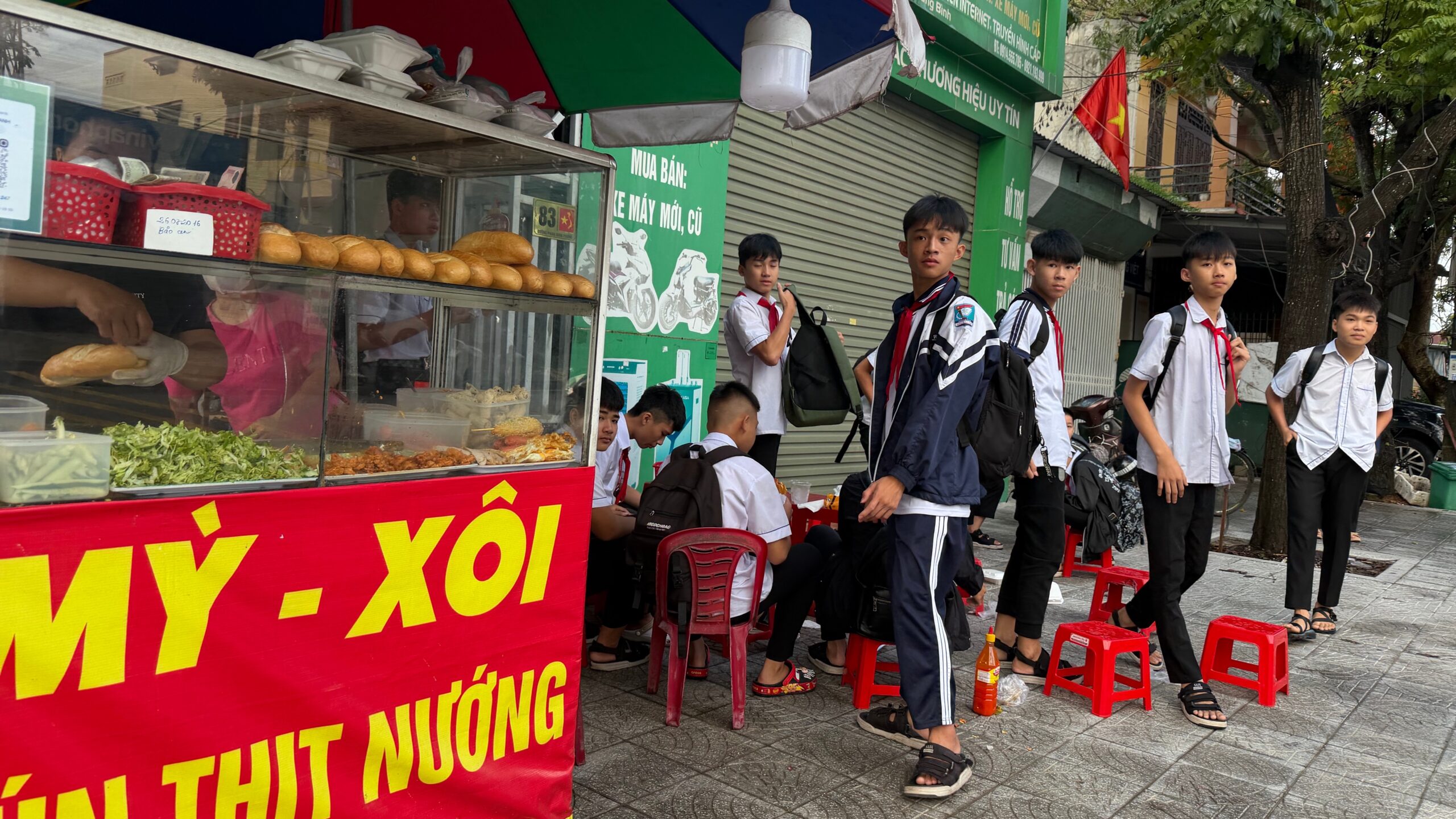
Adolescents are vulnerable to rapidly evolving food environments. Urbanization is widely thought to contribute to less healthy food environments, and school food environments are often considered less healthy than those at home. These associations, however, have not been quantified.
Objective
Assess differences in adolescent food environments in Northern Vietnam by setting (home vs school) and area (rural town, peri-urban or urban).
Methods
We collected cross-sectional data on adolescents (n=3,005) and surveyed all outlets (n=6,194) that sold food or beverages around adolescents’ homes and schools (n=13) in three sites that differed in urbanicity. We calculated distances from home and school to the nearest outlet selling select food groups and measured outlet density and diversity of foods offered (within 100-meter radius). We analyzed differences by urbanicity and by home/school environment using regression models, accounting for clustering at commune level.
Results
Both unhealthy food groups (UFG) (e.g., sugar-sweetened beverages, sweets), and healthy food groups (HFG) (e.g., fruits, nuts/seeds) were closer to adolescents’ home in the urban (∼21-50 m) than the peri-urban area (∼75-200 m) and rural town (∼155-270 m). Fruits and vegetables were consistently further away than UFG across all areas in home environments, although still close by (∼ 50-270 m). Urban adolescents were exposed to the greatest density and diversity of both HFG and UFG close to home and school. There were no differences in healthiness of home and school food environments.
Conclusions
Unhealthy foods were more accessible (in distance) and available (in density) than fruits and vegetables across all settings, but differences were small and food was always close by. Diversity of HFG and UFG was the greatest in urban areas. Healthy foods should be promoted and made the preferred choice through nudging interventions at point-of-purchase, combined with restrictions on the marketing and availability of unhealthy foods.
Authors
Fretes, Gabriela; Zaw, Nicholus Tint; Nguyen, Phuong Hong; Le Port, Agnes; Maasen, Kim; Talsma, Elise F.; Truong, Mai T.; Tran, Trang T.T.; Brouwer, Inge D.; Ruel, Marie T.; Leroy, Jef L.
Citation
Fretes, Gabriela; Zaw, Nicholus Tint; Nguyen, Phuong Hong; Le Port, Agnes; Maasen, Kim; et al. 2026. Food is always close by: An assessment of the healthiness of the adolescent home and school food environments in northern Vietnam. Current Developments in Nutrition 10(7): 109402. https://doi.org/10.1016/j.cdnut.2026.109402
Keywords
Asia; South-eastern Asia; Foods; Healthy Diets; Adolescents; Food Environment; School Feeding; Spatial Analysis; Urbanism
Project
Sustainable Healthy Diets
Record type
Journal Article