



IFPRI Projects
For additional resources, refer to the quick links provided below.
Quick Links:
Filters
Found 134 Results
-
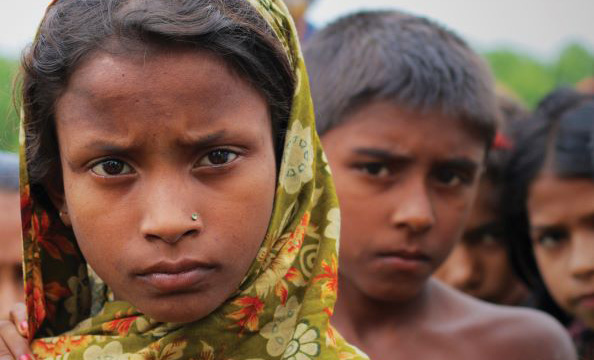
Integrated Food Policy and Research Program (IFPRP)
The Integrated Food Policy and Research Program combines policy research with capacity strengthening to tackle all four aspects of food security – availability, access, utilization, and stability – in a holistic and sustainable approach
-
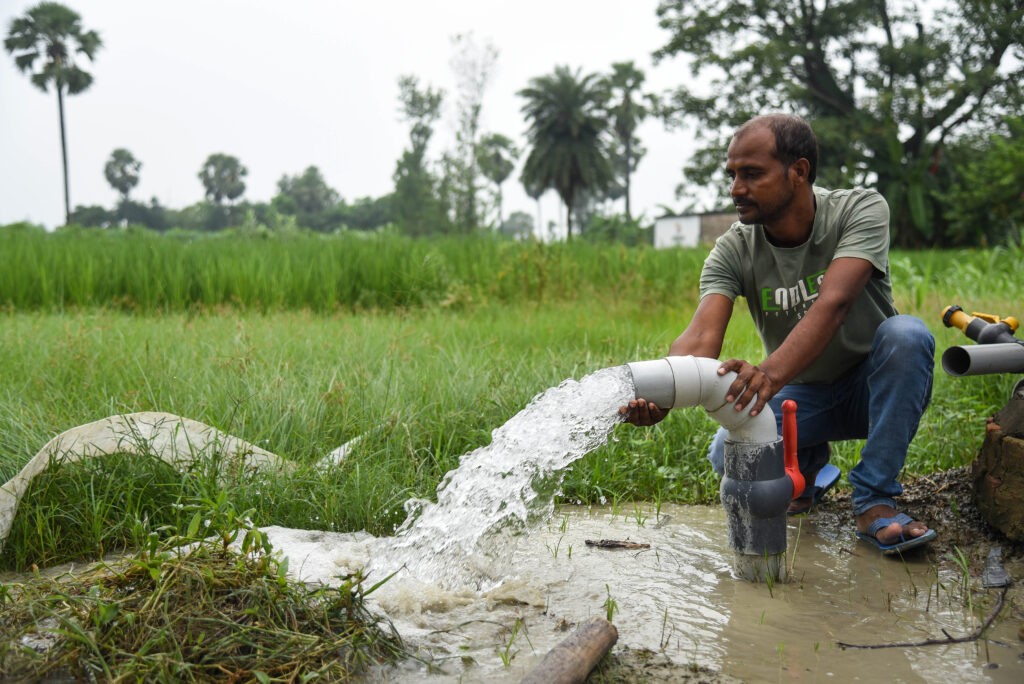
Irrigation as a Service for Small-Scale Producers: Advancing Equity and Women’s Empowerment
Small-scale irrigation provides benefits for productivity, income, food security, nutrition, and resilience to climate shocks. However, women often face greater constraints than men to accessing small-scale irrigation technologies and services. Irrigation interventions are rarely designed or implemented with a gender lens. Alternative modalities for supplying irrigation are needed to increase […]
-

Knowledge Lab on Climate-Resilient Food Systems
This program will identify and deploy innovative approaches to achieving resilient food systems in a context of climate change.
-

Land Resource Management for Poverty Reduction
Land-based resources generate most of the income and subsistence goods for the poor in developing countries.
-
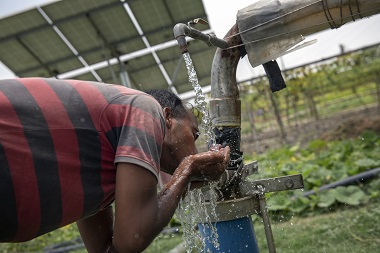
Mapping Solar Irrigation Potential
Assessing the potential for solar-irrigation adoption to support small-scale irrigation development in Sub-Saharan Africa Irrigated agriculture contributes 40% of global food production but development in Africa south of the Sahara lags behind despite its important income, food and nutrition security and resilience benefits. One key reason for the low development of […]
-
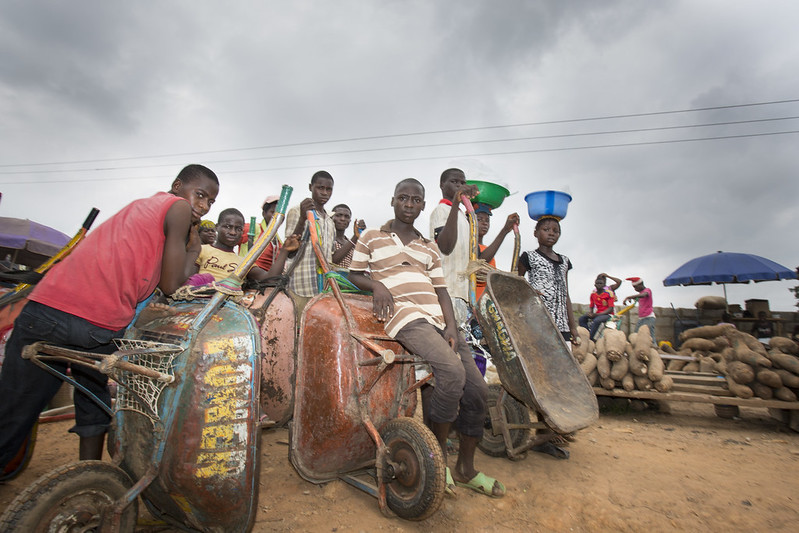
Measuring cross border trade in Africa
There is broad consensus in the economic literature as well as within Africa on the fact that data on trade across the continent are seriously lacking. On the one hand, there is a clear problem of reporting with respect to African trade data in international databases such as COMTRADE. On […]
-

Millions Fed
Learning from successes in agricultural development is now more urgent than ever.
-
National Agriculture Investment Plan (NAIP)
Starting in 2016, IFPRI has led the provision of technical support to countries for next-generation National Agriculture Investment Plans (NAIPs) at the request of the African Union Commission (AUC) and NEPAD Planning and Coordinating Agency (NPCA). Many of the first-generation NAIPs established under the Comprehensive Africa Agriculture Development Programme (CAADP) […]
-
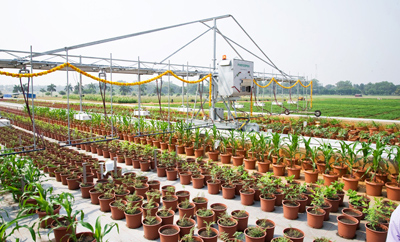
Next-generation crop production analytics using smartphone 3D imaging and dynamic area sampling frames
As a part of the “Enabling crop analytics at scale” program, supported by the Bill and Melinda Gates Foundation and managed by Tetra Tech’s AGDATA Acceleration Facility, IFPRI launched a new crop production analytics project, “Next-generation crop production analytics using smartphone 3D imaging and dynamic area sampling frames.” In this […]
-

Nexus SAMs
Improving the quality of Social Accounting Matrices (SAMs) used for Computable General Equilibrium (CGE) modeling, the project develops toolkits and establishes common data standards, procedures, and classification systems for constructing and updating national SAMs