




Search IFPRI web
Filters
Found 7462 Results
-
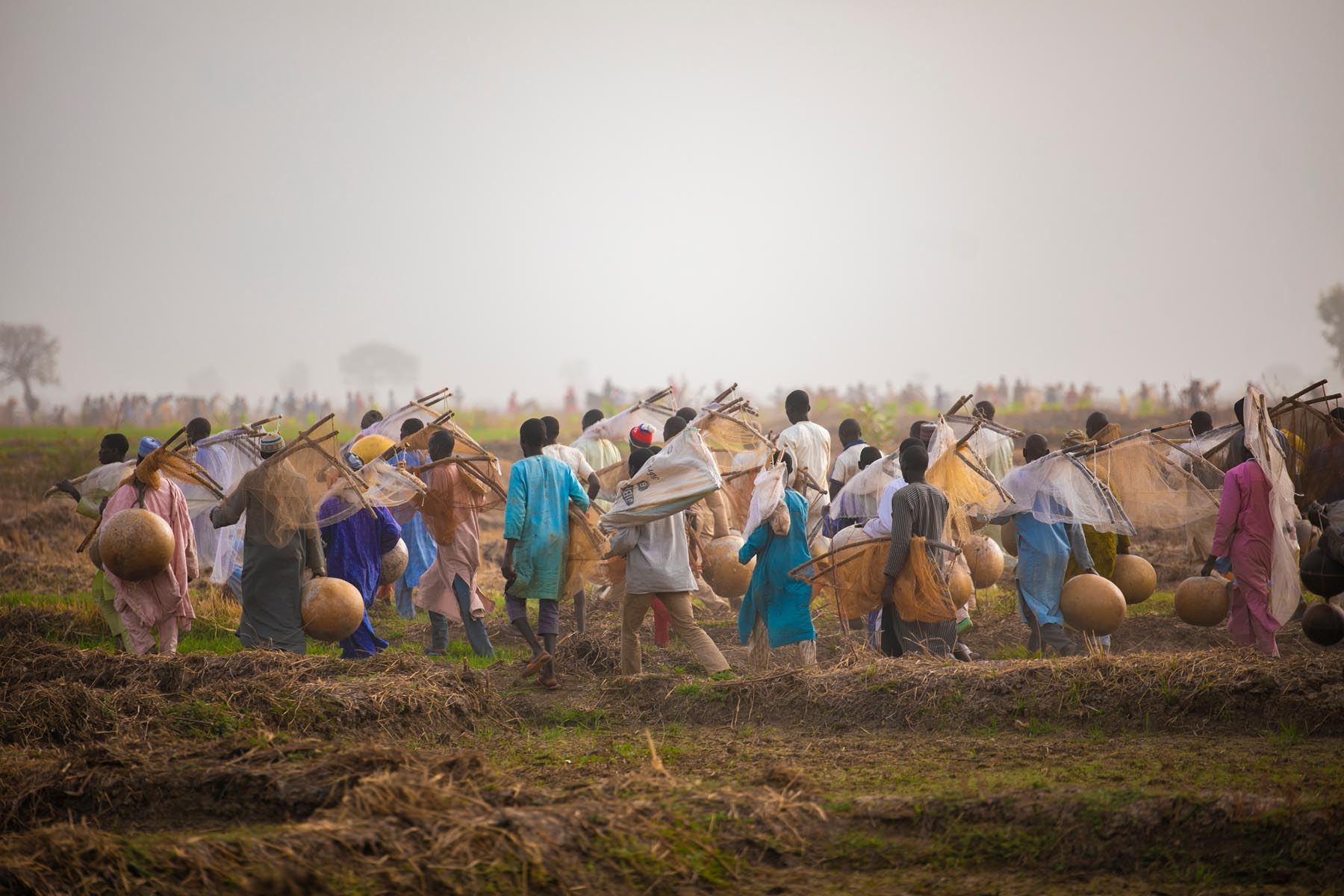
The Other Green Revolution
Farmer-led Change in the Sahel 1980-2010
A successful example of achieving food security while adapting to climate change, catalyzed by farmers and scaled-up by effective aid. After the devastating droughts of the 1970s and 1980s, African farmers in the Sahel region mobilized to reclaim their land from the encroaching desert. 30 years later, their work has secured 13 million acres of […]
-
Spotlight on Agriculture and Climate Change: Blog Action Day 2009
Climate change and agriculture are vitally linked, as each has profound implications for the other. This year’s Blog Action Day, with its focus on climate change, is the perfect opportunity to remind everyone in the development and environmental fields about this relationship, to help ensure that poor people are not adversely affected by climate change. A […]
-

Regional Inequality and Harmonious Development in China
China’s spectacular achievements in economic growth and poverty reduction have been accompanied by growing inequality, which not only jeopardizes its equitable development goals but also threatens its social compact and thus, the political basis for future economic growth. Chinese policymakers and scholars are questioning this growth pattern and have launched reviews and policy initiatives to […]
-
India State Hunger Index May Improve with Food Security Act
“A large proportion of the under nutrition in South Asia begins well before children are born, so it relates to gender constraints and issues related to women’s education to adolescent health to early marriage,” explains Purnima Menon, a research fellow at the International Food Research Policy Institute (IFPRI),in a recent interview. “You have women entering pregnancies […]
-
Pakistan: A Crisis within the Crises
Internally Displaced Persons of the Swat and Buner Districts
n late 2008 there were an estimated 24 million Internally Displaced Persons spread across fifty countries around the world. Within the span of just two months in 2009, an additional 3 million persons were internally displaced from the Swat and Buner districts in Pakistan: a collateral damage of the global war on terror. Displaced from […]
-
Reflections on The Global Food Crisis
How Did It Happen? How Has It Hurt? And How Can We Prevent The Next One?
This seminar consists of three presentations of new work on the global food crisis. Headey and Fan present an update of their earlier review of the causes and consequences of the food crisis, with new data and analysis of sources of demand growth, the impacts of export restrictions and panic purchases, supply response, and price […]
-
Smart Input Subsidies and Sustainable Agricultural Development
Agricultural input subsidies were commonly used to alleviate poverty in rural areas in the 1960s and 70s. However, these types of subsidies were abolished in the late 1980s as part of structural-adjustment programs implemented by development agencies. As a result, fertilizer use in Africa plummeted significantly. Today, the low use of fertilizer and other inputs […]
-
IFPRI Hosts Side Event at International Climate Change Negotiations in Bonn
On the eve of World Environment Day on June 4, 2009, IFPRI hosted a side event at the June meetings, held in Bonn, of the United Nations Framework Convention on Climate Change (UNFCCC), focusing on “Agriculture and climate change: an agenda for negotiation in Copenhagen.” The event discussed the importance of negotiation outcomes that support adaptation and mitigation by poor farmers […]
-
Climate Change — Adaptation and Poverty
Climate change threatens poor people, especially farmers, in developing countries. They will need help to adapt to climate change, a daunting task as droughts and floods stress agricultural systems, water sources become more variable and uncertain, and competition over natural resources accelerates. And if agricultural interests, particularly small farmer interests, are not properly included in […]
-
Strengthening Social Entrepreneurship
An Innovative Approach to the Teaching of Food Policy Analysis
“The Social Entrepreneurship Approach” developed by Per Pinstrup-Andersen at Cornell University in collaboration with IFPRI, Copenhagen University and Wageningen University, aims to instill in the students a social entrepreneurship mindset and to strengthen their analytical capacity and judgment on the basis of verifiable evidence. It brings into the classroom real-life policy case studies for discussion […]
-
Dealing with Climate Change
The Need to Include Agriculture and Land Use
Chair: Joachim von Braun, Director General, IFPRI Lunch served from 11.45 am, panel begins at 12.15 pm To meet mitigation and adaptation goals, international climate negotiations must include agriculture. In the lead up to Copenhagen, negotiators will meet next in Bonn in early June. Panelists will discuss the challenges and opportunities for integrating agriculture into […]
-
Implications of the Financial Crisis for Developing Countries
Regional Commentators: Eugenio Diaz-Bonilla, Executive Director for Argentina and Haiti, Inter-American Development Bank; Stephen Mink, Lead Economist, Agriculture and Rural Development, World Bank Chair: Joachim von Braun, Director General, IFPRI Most of the attention around the unfolding global financial crisis is focusing on its causes as well as effects in the banking and broader finance […]
-
The Beauty and the Beast
Unveiling the Beauty of Statistics for a Fact-Based World View
There are no longer two types of countries in the world. The old division into industrialized and developing countries has been replaced by 192 countries on a continuum of socio-economic development. Many Asian countries are now improving twice as fast as Europe ever did. A new gap may form between 5 billion people moving towards […]
-
Overcoming Infrastructure Challenges to Africa’s Rural Development
Chair: Shenggen Fan, IFPRI Infrastructure in Africa is currently very limited in many countries and sectors. Though providing adequate levels of infrastructure can be a key catalyst in enhancing the growth and development of the continent, it is prohibitively expensive for many governments in the region. However, it would require comparatively modest global investment. This […]
-
Securing a Place for Agriculture at the International Climate Change Negotiations
Including agriculture in the international climate change negotiations leading up to the meeting of the 15th Conference of Parties (COP-15) of the UN Framework Convention on Climate Change (UNFCCC) in Copenhagen in December 2009 is essential if fundamental mitigation and adaptation goals are to be met. Agriculture, together with land use change and forestry, is […]
-
Improving Access to Quality Seeds for Small-Scale Farmers
Traders in the open-air markets of Kathonzweni, a market center in semi-arid eastern Kenya, sell several varieties of pigeonpea, a nutritious cash-crop that can grow well in dryer climates. Even though they sell the pigeonpea for use as seed, traders sometimes times do not know the origin or name of the variety. This information is […]
-
Eliminating Drastic Food Price Spikes – a three pronged approach for reserves
The 2007/08 international food price crisis caused hardship on a number of fronts. The steep rise in food prices led to economic difficulties for the poor and generated political turmoil in many countries. The crisis could also result in long-term, irreversible nutritional damage, especially among children. There is a global interest in preventing such events […]
-
Better Land Management Benefits Farmers
Sabika Moses Kasaato used to worry about how he would feed his family on his unproductive land in the village of Goma, Uganda. About 25 km from the capital, Kampala, Goma is very densely populated, and residents eke out a living on soil drained by ever-increasing pressure on the land. As part of efforts to improve […]
-
Has the food crisis abated?
The Scientific American recently published an edited transcript from an interview with Joachim von Braun, Director General of the International Food Policy Research Institute (IFPRI). In the question-an-answer segment, von Braun discusses current issues and future projections surrounding world food prices and their relationship to the global economic downturn. Although world grain prices have dropped […]
-
The food crisis isn’t over
In a recently published commentary in Nature, Joachim von Braun outlines the risks of a global recession on food security in developing countries. “The stage is set for the next international food crisis,” warns von Braun. The article abstract may be viewed at the following URL: http://www.nature.com/nature/journal/v456/n7223/full/456701a.html. Full text of the article available with paid subscription […]