





Last in a series of blog posts summarizing impacts of IFPRI research over five decades. Read the first here, the second here, and third here.
In 2025, as IFPRI marked its 50th anniversary, the Institute commissioned a review titled Taking Stock: Impacts of 50 Years of Policy Research at IFPRI to evaluate its standing as an international research institution and the influence and impact of its policy research and capacity strengthening activities. The review drew on bibliometric data and about 45 independent assessments commissioned by IFPRI, its partners, or investors over the years.
This blog post provides an overview of the impact of IFPRI’s support for capacity sharing, as described in that report.
Capacity plays a central role in advancing evidence-based food policy. Stakeholders involved in research and decision-making must have sufficient capacity to collect and maintain datasets, conduct analyses, communicate results, and implement policies. Limited capacity at any point along the science-policy interface hinders the translation of high-quality research into effective policymaking and positive development outcomes. The process of capacity sharing ensures these capabilities are retained long-term and that the science and policy they generate are locally owned.
| The language around capacity has changed over time—both among CGIAR Centers and the development community at large—to recognize it as a process of multidirectional exchange, rather than a top-down approach (CGIAR 2024). Today, IFPRI and CGIAR use capacity sharing to refer to the strengthening of capabilities of individuals and institutions to address pressing global challenges. Capacity sharing is anticipated to increasingly take the form of South-South cooperation, building on the progress of the past 50 years. |
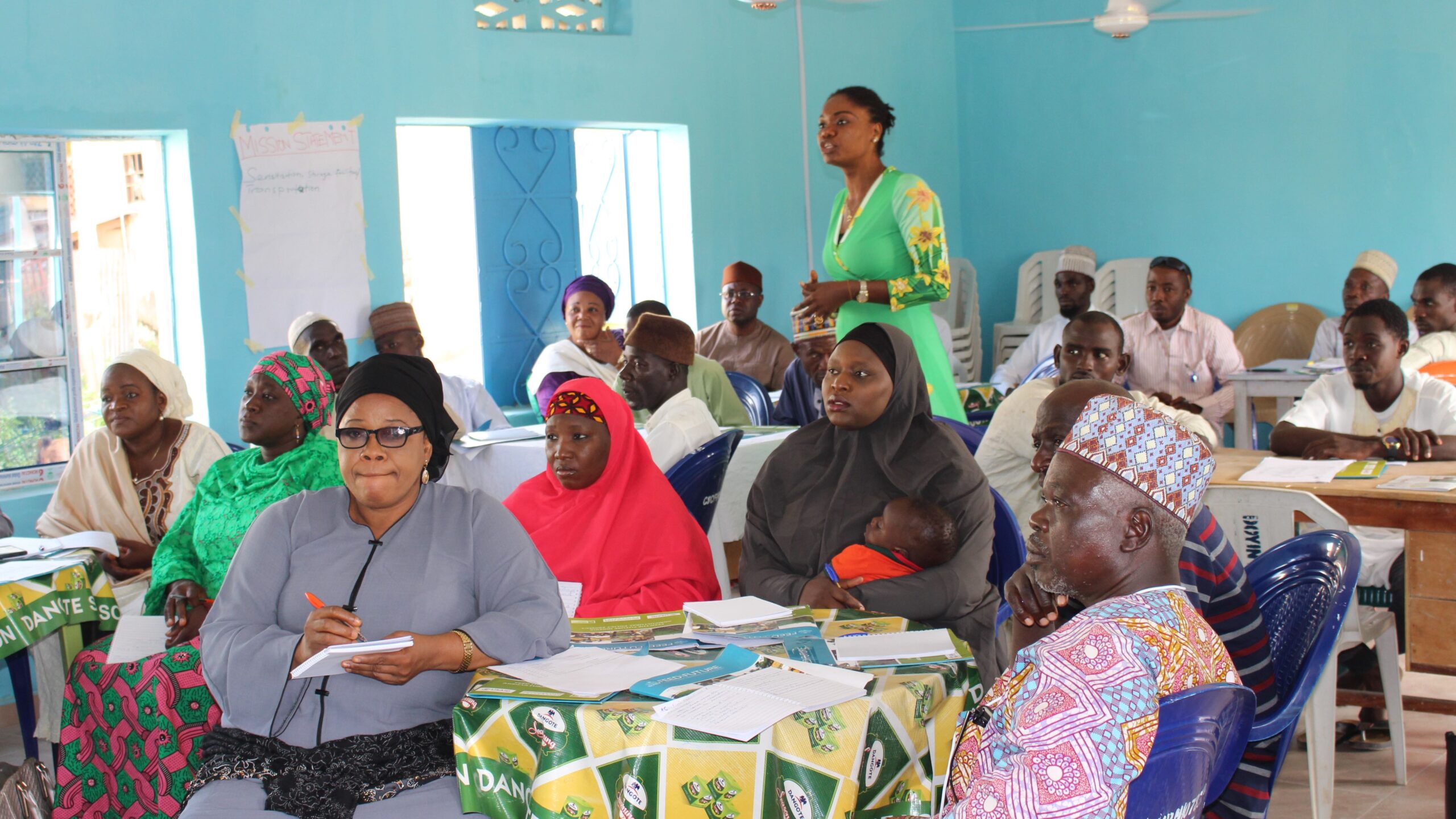
At IFPRI, capacity sharing has been a cross-cutting element of research activities for decades. This post summarizes key examples of how IFPRI has supported capacity development at national and regional levels around the world, drawing on evidence provided in available independent assessments. While the effectiveness of capacity sharing has varied, the evidence suggests that IFPRI’s efforts have helped to strengthen research and policy capabilities among the individuals and institutions with which it collaborates.
Successes and lessons in capacity sharing
Although IFPRI began as a centralized institution in Washington, DC, capacity sharing always accompanied its country-based research. This was the case in Malawi and Bangladesh, where impact assessments document how IFPRI’s presence helped address limited policy analysis capabilities. In these countries, the Institute partnered with government ministries, research institutions, and universities to support a range of activities: it held trainings and workshops; collaborated on articles and working papers; and developed curriculums and supervised postgraduate students. When IFPRI established its country strategy programs in 2003, capacity sharing first became a standard component of its approach to research. By taking stock of existing capacity and identifying gaps, IFPRI could embed activities to strengthen key national or regional research institutions and government ministries within its country-based research. IFPRI continues to facilitate trainings on the use of policy analysis tools in countries without in-country offices, helping to extend the reach of its capacity work beyond locations where it maintains a long-term presence.
In 2014, IFPRI commissioned an independent assessment of all its capacity-sharing work from 1985 to 2010 using a representative sample of activities and a set of evaluative criteria to ascertain which were most effective. The following cases illustrate the variety of these activities and their impact on local capacity.
Collaborative research in China
IFPRI began its collaboration with Chinese institutions when key members of the Chinese Academy of Agricultural Sciences (CAAS) visited the Institute in the early 1990s. As one outcome of this visit, the Chinese Center for Agricultural Policy was established and modeled after IFPRI to focus on policy research related to reforms in Chinese agriculture. By the mid-1990s, CAAS researchers worked at IFPRI’s headquarters as visiting fellows from six months to a year. Researchers from several Chinese agricultural universities also engaged in collaborative research at IFPRI.
Increased demand for capacity development led to the establishment of IFPRI’s Beijing office on CAAS premises, a collaboration which continues today, albeit with limited IFPRI staff presence due to the acceleration of local capacity. IFPRI’s capacity-sharing efforts in China provided training in agricultural policy analysis to a large group of young doctoral students, many of whom continued to engage in national policy debates and design policy and program interventions for Chinese agriculture.
Postgraduate program in eastern, central, and southern Africa
IFPRI played an important role in designing the Collaborative Master’s in Agricultural and Applied Economics (CMAAE), a postgraduate program established to build capacity for agricultural policy research and analysis in eastern, central, and southern Africa. With funding from the Rockefeller Foundation, IFPRI collaborated with the Eastern and Central African Programme for Agricultural Policy Analysis and the African Economic Research Consortium (AERC) to develop a proposal and course curriculum starting in 2001. Between 2002 and 2004, consultative meetings were held to develop strategic plans, governance structures, and operating procedures. In 2005, the CMAAE was launched under the AERC, with subsequent funding from the Gates Foundation.
IFPRI’s involvement with the CMAAE program included having a staff member serve as an external mentor to guide thesis projects. A faculty member from the Department of Agricultural Economics at the University of Pretoria (UP) also spent a year at IFPRI’s headquarters, during which time IFPRI materials were used to revise the curriculum for selected courses. IFPRI continues to collaborate with UP but became less involved with the master’s program after 2020. The program currently involves 17 universities across 13 African countries, and in 2024, it included 123 students from 17 African countries.
Regional policy networks in Africa and Asia
In the 1990s, IFPRI began to create or support policy networks in low- and middle-income countries to facilitate cooperation and build human capacity between policy actors, with varying results. For example, Paarlberg (2005) compared two policy network efforts by IFPRI: the Policy Analysis and Advisory Network for South Asia (PAANSA) and the 2020 Vision East Africa Network. The assessment found that PAANSA was more successful partly because the initial research capacity of its member countries was stronger and hence better able to take advantage of new opportunities, a factor not clearly linked to IFPRI activities. Even so, the PAANSA network eventually helped to create demand for establishing IFPRI’s South Asia Office, and members of the network (notably former Prime Minister Dr. Manmohan Singh and Isher Judge Ahluwalia) were instrumental in requesting IFPRI’s permanent presence in South Asia.
In comparison, an assessment of the IFPRI-led Regional Network on AIDS, Livelihoods and Food Security in Africa noted that although capacity strengthening was a key pillar of its strategic approach, stakeholders felt that capacity strengthening under the network was “not enough” (Frankenberger and Nelson 2011).
…
Through these and several other examples, Kuyvenhoven (2014) concluded that engaging in collaborative research, supporting postgraduate students, and assigning visiting fellows and postdoctoral fellows to IFPRI’s headquarters had the greatest impact on strengthening the capacity of individual researchers. The assessment also found that IFPRI had the most success in building national research capacity in places where it had an established country program.
These findings indicate that a deliberate strategy of decentralization, with increasingly fewer staff concentrated in the US-based headquarters, has complemented capacity-sharing activities from the start. Other independent evaluations used in the Taking Stock report also note that an in-country presence improves the likelihood of IFPRI producing research that leads to policy uptake and downstream development impacts. With ample opportunity for collaboration, IFPRI can align research with local demand not only by consulting with stakeholders about their needs but also by exploring those questions alongside them. This relationship allows for the sharing of knowledge and skills across the science-policy interface, which in turn strengthens the capacities of IFPRI and its partners.
Conclusion
The assessments of IFPRI’s capacity work tell only part of the story. Many more examples are not included in evaluations or are too recent to have developed mature outcomes. It is also difficult to determine how returns on investments in capacity development compare to IFPRI’s research investments, given the lack of studies quantifying the economic and welfare impacts of such activities. However, as Gardner (2003) concluded after a systemwide review of capacity development by CGIAR, research and capacity sharing both serve to enhance returns on each other.
The link between research and capacity sharing is particularly important for research aimed at influencing government policies. For IFPRI, part of the mission to sustainably reduce poverty and end hunger and malnutrition involves ensuring that a government or organization can continue to advance evidence-informed policy after the Institute concludes its engagement or assumes a different role. Its success as an international research organization thus depends on an ongoing commitment to capacity sharing as much as the production of high-quality scholarship. Capacity sharing remains a core approach to research in the IFPRI Strategy 2026-2030. Although funding for future evaluations is unclear, independent assessments will continue to be important for determining which activities are most effective for capacity sharing and long-term retention among individuals and institutions.
Maria DiGiovanni is a Research Analyst with IFPRI’s Director General’s Office; Peter Hazell is an IFPRI Senior Research Fellow Emeritus; Frank Place is a former IFPRI Senior Research Fellow.
Reference:
Hazell, Peter B. R.; and Place, Frank. 2025. Taking stock: Impacts of 50 years of policy research at IFPRI. Independent Impact Assessment Report 48. Washington, DC: International Food Policy Research Institute. https://hdl.handle.net/10568/177103