







Blogs
What’s New
News
-
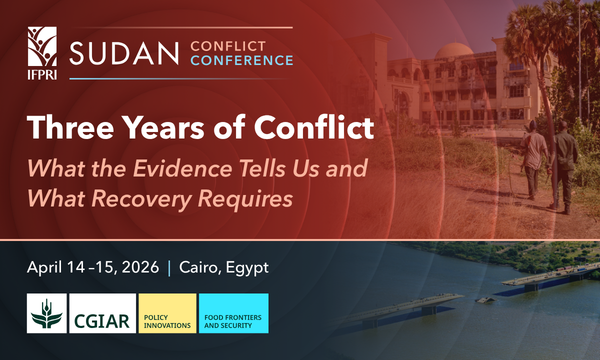
Sudan: how warring factions gained influence in the country’s food system – and what it means for the current conflict (The Conversation)
The importance of understanding the political economy incentives that drive large-scale conflict.
-
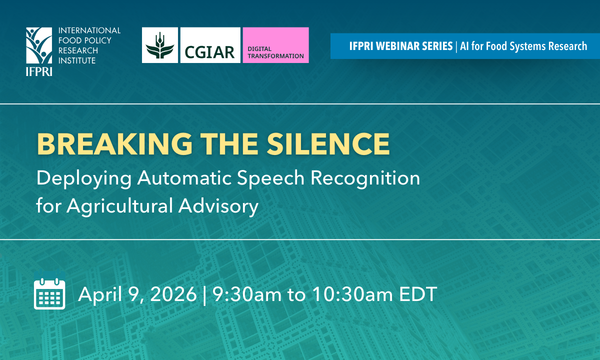
IFPRI and Farm Radio International collaborate to give a voice to the most vulnerable farmers by advancing AI tools for African languages
Introducing Longa, an AI-powered speech recognition tool designed to strengthen agricultural communication and inclusivity across sub-Saharan Africa.
-
Can digital cash transfers serve those in active conflict zones? (VoxDev)
Digital cash transfers can be delivered even in active conflict settings like Sudan and can significantly protect vulnerable households from worsening food insecurity, though their impacts vary by context and…
Events
-
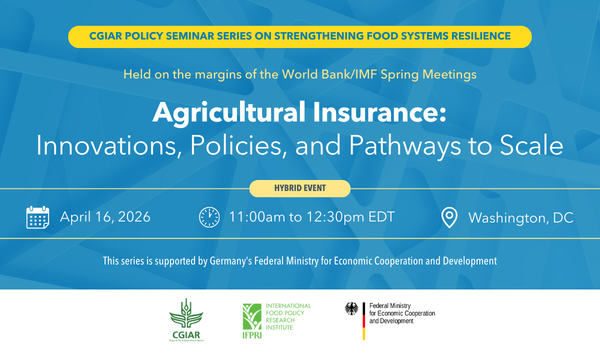
Agricultural Insurance: Innovations, Policies, and Pathways to Scale
Also streaming on Please type your questions into the chat box with name, affiliation, and country. The event video, presenter slides, and podcast will be available in the days following the event. Farm households face numerous risks that can discourage investments and trap them in poverty. Insurance should be a useful tool to reduce these […]
-
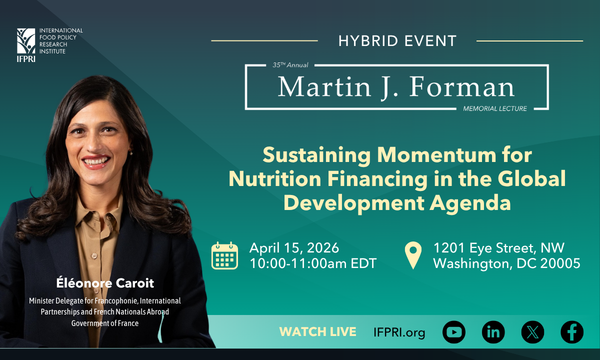
Sustaining Momentum for Nutrition Financing in the Global Development Agenda
Also streaming on Please type your questions into the chat box with name, affiliation, and country. The event video, presenter slides, and podcast will be available in the days following the event. Recognizing France’s tremendous leadership of the 2025 Nutrition for Growth Summit (N4G), IFPRI and the Forman lecture selection Committee are delighted to announce […]
-
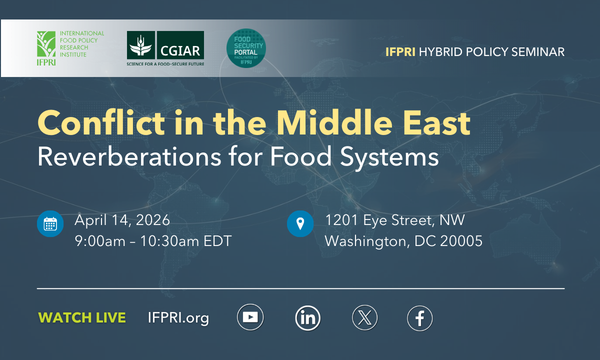
Conflict in the Middle East: Reverberations for Food Systems
Also streaming on Please type your questions into the chat box with name, affiliation, and country. The event video, presenter slides, and podcast will be available in the days following the event. While the global food system has largely adjusted to the disruptions in agricultural commodities and fertilizers following the invasion of Ukraine, the new conflict in […]
Publications
Featured Publications
Journal Article
A food system transformation pathway reconciles 1.5 °C global warming with improved health, environment and social inclusion
2025…more
Strefler, Jessica; Lewis, Jared; Heinke, Jens; Müller, Christoph; Karstens, Kristine; Weindl, Isabelle; Stevanović, Miodrag; Rein, Patrick; Sauer, Pascal; Mishra, Abhijeet; Bacca, Edna Johanna Molina; Köberle, Alexandre C.; Wang, Xiaoxi; Singh, Vartika; Hunecke, Claudia; Collignon, Quitterie; Schreinemachers, Pepijn; Dietz, Simon; Kanbur, Ravi; Dietrich, Jan Philipp; Lotze-Campen, Hermann; Popp, AlexanderJournal Article
Armed conflict and climate-induced weather disruptions in agricultural input use: Evidence From Ethiopia
2026Ayalew, Hailemariam; Berhane, Guush; Wondale, Meserete; Breisinger, ClemensJournal Article
Associations between Global Diet Quality Score (GDQS) and obesity in women of reproductive age in Northern Tanzania: A cross-sectional study
2026Bliznashka, Lilia; Azupogo, Fusta; Reynolds, Elise; Arnold, Charles D.; Hess, Sonja Y.; Kinabo, Joyce; Jeremiah, Kidola; Malindisa, Evangelista; Olney, Deanna K.; Ruel, Marie T.


As part of CGIAR’s global gender research community, IFPRI supports the UN International Year of the Women Farmer by providing evidence that expands women’s access to resources, technologies, and markets and strengthens their economic opportunities to advance more equitable, resilient agrifood systems.
IFPRI and CGIAR
IFPRI is a Research Center of CGIAR, the world’s largest global agricultural innovation network. IFPRI researchers collaborate closely with researchers from other CGIAR Centers, and our work contributes to the CGIAR mission of delivering science and innovation that advance the transformation of food, land, and water systems in a climate crisis.

Experts in Our Field
IFPRI’s experts work around the world to provide the evidence that supports effective policies to sustainably reduce poverty and end hunger and malnutrition.
480+
staff across the world
70+
countries where we work
#1
in the field of Agricultural Economics
25,000+
research outputs
Meet a Researcher
Harold Alderman is a Research Fellow Emeritus in the Director General’s Office. He has gravitated toward research on the economics of nutrition and food policy. His current research focuses on the linkages between nutrition and early child development and the means by which nutrition and social protection programs contribute to long-term economic growth. Harold spent 10 years at IFPRI prior to joining the World Bank in 1991, where he divided his time between the Development Research Group and advising the…


From our video channel
Mamata Pradhan, Research Coordinator
In this video Berber Kramer, Senior Research Fellow in IFPRI’s Markets, Trade, and Institutions Unit, based in Nairobi, Kenya, shares the best advice she has been given in her career and what keeps her passionate about her work. Her research focuses on financial inclusion, technology adoption, gender, and adaptation to climate change.
“Faces of IFPRI” is a series of interviews with IFPRI colleagues around the world, showcasing the diversity of talent, geographies, and research interests across the Institute.
Making a Difference Blog Series
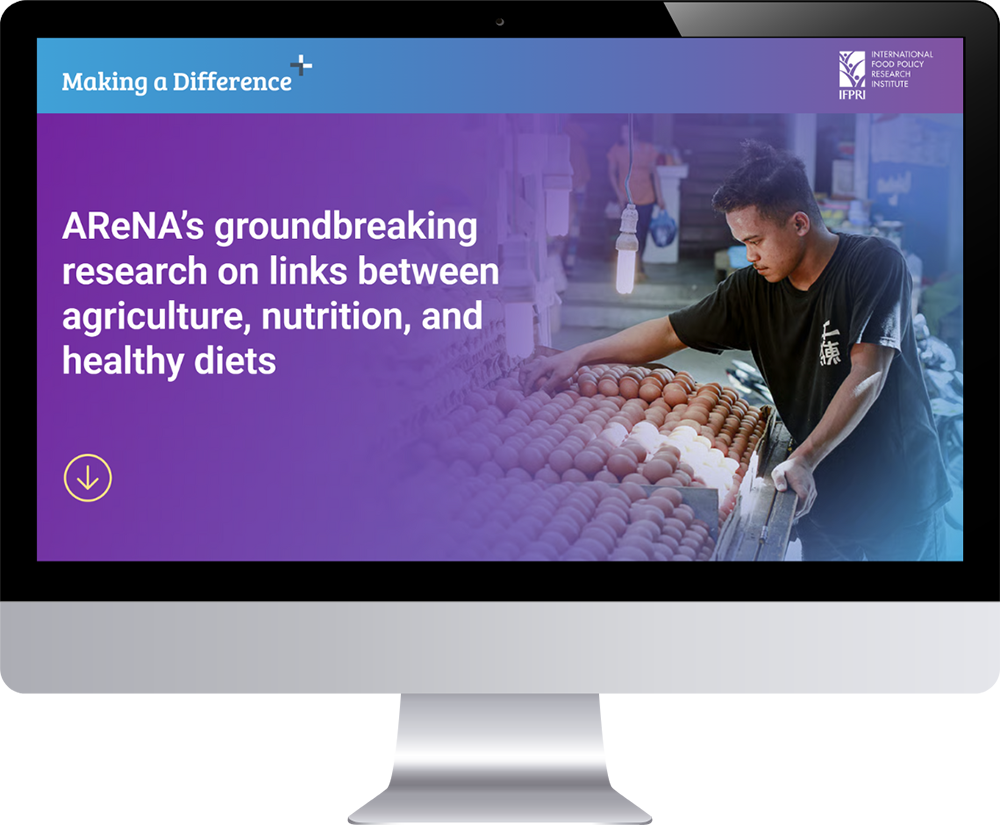
In 2014, IFPRI and the Gates Foundation launched the AReNA project to bridge agriculture and nutrition research, addressing data gaps and advancing understanding of how agriculture can better improve diets and nutrition worldwide.
The AReNA project created a one-of-a-kind dataset that links nutrition-related indicators to agricultural and environmental indicators. The dataset has been used for countless studies on the determinants of child stunting, wasting, and feeding practices.
AReNA was the first project to use the World Bank’s International Comparison Program (ICP) data on retail food prices—covering 175 countries and 800 food items—to study the affordability of healthy and unhealthy diets. It significantly influenced the adoption of healthy diet metrics in FAO-led State of Food Security and Nutrition reports and led to the widely-cited finding—used by the FAO, World Bank, and others—that 3 billion people cannot afford a healthy diet.