





Second in a series of posts summarizing impacts of IFPRI research over five decades. Read the first here and the third here.
In 2025, as IFPRI marked its 50th Anniversary, it commissioned a review titled Taking Stock: Impacts of 50 Years of Policy Research at IFPRI to evaluate its standing as an international research institution and the influence and impact of its policy research and capacity-strengthening activities. The review drew on bibliometric data and about 45 independent assessments previously commissioned by IFPRI, its partners, or investors over the years.
This blog post provides an overview of IFPRI’s policy impact, as described in that report.
Evolution of IFPRI’s policy research agenda
IFPRI’s policy research originally began with a Washington-based research agenda focused on a few global policy issues, with the intent of generating international public goods of value to most low- and middle-income countries. Over time, this approach has transitioned to become driven more by country and regional policy issues. This shift was reinforced by a decentralization strategy that placed many senior staff in country and regional offices to undertake demand-driven research. By January 2025, one-third of IFPRI’s approximately 140 senior research staff were outposted to 14 country and three regional offices. Much of this work was undertaken within the context of country programs that took a more holistic approach to supporting countries’ development strategies and strengthening their policy research capacities.
IFPRI’s policy influence and impact
The assessment of how well IFPRI’s research has translated into policy influence and impact is based on available independent assessments. There are no such assessments of IFPRI’s early work on international public goods or of some recent and ongoing research, but taken together, the available assessments cover the majority of IFPRI’s other work. Given this broad coverage and the fact that most independent assessments covered research programs that involved many projects, there was little room for selectivity bias in the report. While some of these assessments lack scientific rigor and must be viewed with some caution, they reflect the judgments of external experts based on careful study of the available evidence.
Assessing the impact of policy research presents many challenges, including demonstrating that research actually influenced policy decisions and assessing the economic and welfare outcomes of those decisions, as compared to a relevant counterfactual. Impact pathways for policy research are inherently complex, but are shorter and more clearly defined for some types of research than for others. This affects the type of evidence that can be captured by an evaluation team. Most of the available assessments were only able to establish pathways of policy influence rather than impact, but a few were able to evaluate the economic and welfare impacts of influenced policies. Below, we provide examples that align with three major clusters of IFPRI’s policy research.
Informing social protection and nutrition policy
The independent assessments of IFPRI’s existing work on social safety nets and nutrition programs most clearly demonstrate the Institute’s impact and influence. IFPRI worked directly with program-implementing agencies, and the impact of the programs was demonstrated through randomized controlled trials or other rigorous research methods. In addition to relatively simple and direct impact pathways, the evidence base for the evaluators was also available.
An external evaluation of IFPRI’s social protection work credits the Institute for creating a “global culture of evaluation.” IFPRI’s long-term evaluation of Mexico’s Programa Nacional de Educación, Salud, y Alimentación (PROGRESA) conditional cash transfer (CCT) program in the early 2000s is a foundational case of this influence. IFPRI provided credible evidence of PROGRESA’s impacts on school attendance, health, and nutrition, which supported the program’s continuation and expansion. PROGRESA was shown to significantly improve educational attainment and earnings among recipients in adulthood, and it subsequently influenced similar initiatives across Latin America and beyond. Although the program was rolled back in 2019 following a change in political leadership, PROGRESA continues to serve as a model for effective, evidence-informed CCTs. IFPRI has continued its work on social programs, with evidence showing that its recommendations led to policy uptake for current social protection programs in countries such as Bangladesh, Brazil, Egypt, Ethiopia, Malawi, Mali, and Nicaragua.
Similarly, IFPRI has developed a strong reputation for evaluating nutrition programs. This body of work is said to have “change[d] the language of evaluation,” according to another independent evaluation. In the early 2000s, a team of researchers from IFPRI and other organizations found that children in Haiti who received a preventive nutrition intervention experienced less stunting and wasting than those who received the recuperative intervention. This provided the experimental evidence needed for the nutrition community, including the Scaling Up Nutrition movement, to universally adopt the first 1,000 days—from conception to a child’s second birthday—as the critical window of opportunity for improving nutrition.
Shaping agricultural development strategies
Across multiple continents, IFPRI provides analyses and institutional guidance that influence how countries design agricultural development strategies. This work is typically carried out within the context of country programs, within which IFPRI has cultivated long-term relationships with governments and other local partners to produce research relevant to national policy priorities. Since the country programs began in 2003, IFPRI has hosted 20 such programs, with 14 still active as of 2024. The independent assessments of these programs mostly report on policy influence, but a few also quantified impacts.
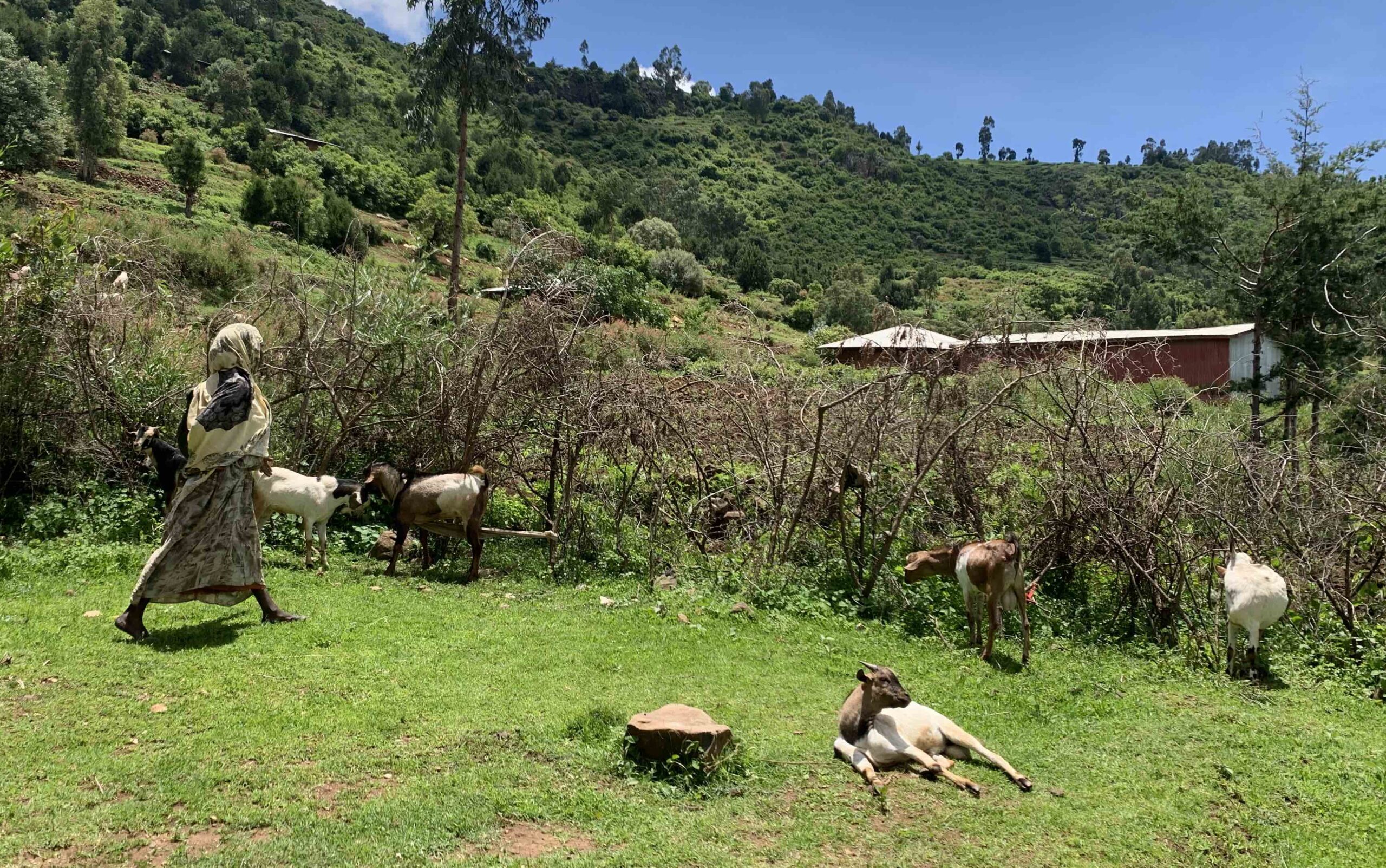
Carried out in partnership with the Ethiopian Development Research Institute, the Ethiopia Strategy Support Program (ESSP) facilitated fruitful engagement between IFPRI and the government of Ethiopia. For instance, IFPRI collaborated with Ethiopia’s Ministry of Agriculture to produce rapid diagnostic studies related to input and output markets, finance, irrigation, and livestock, which identified policy and institutional recommendations and reinforced the need for a more coordinated effort to overcome sectoral constraints. These studies contributed to the design and establishment of the government’s Agricultural Transformation Agency (ATA) in 2010, a unique institution that complements the Ministry of Agriculture. An FAO evaluation confirmed that the ATA played a significant role in increasing the productivity of Ethiopian agriculture through improved access to and use of agricultural inputs, extension services, irrigation, mechanization, and markets among smallholders. IFPRI research through the ESSP also had a demonstrable impact on the establishment and regulation of the Ethiopia Commodity Exchange and the monitoring and evaluation of the Ethiopia Productive Safety Net Program.
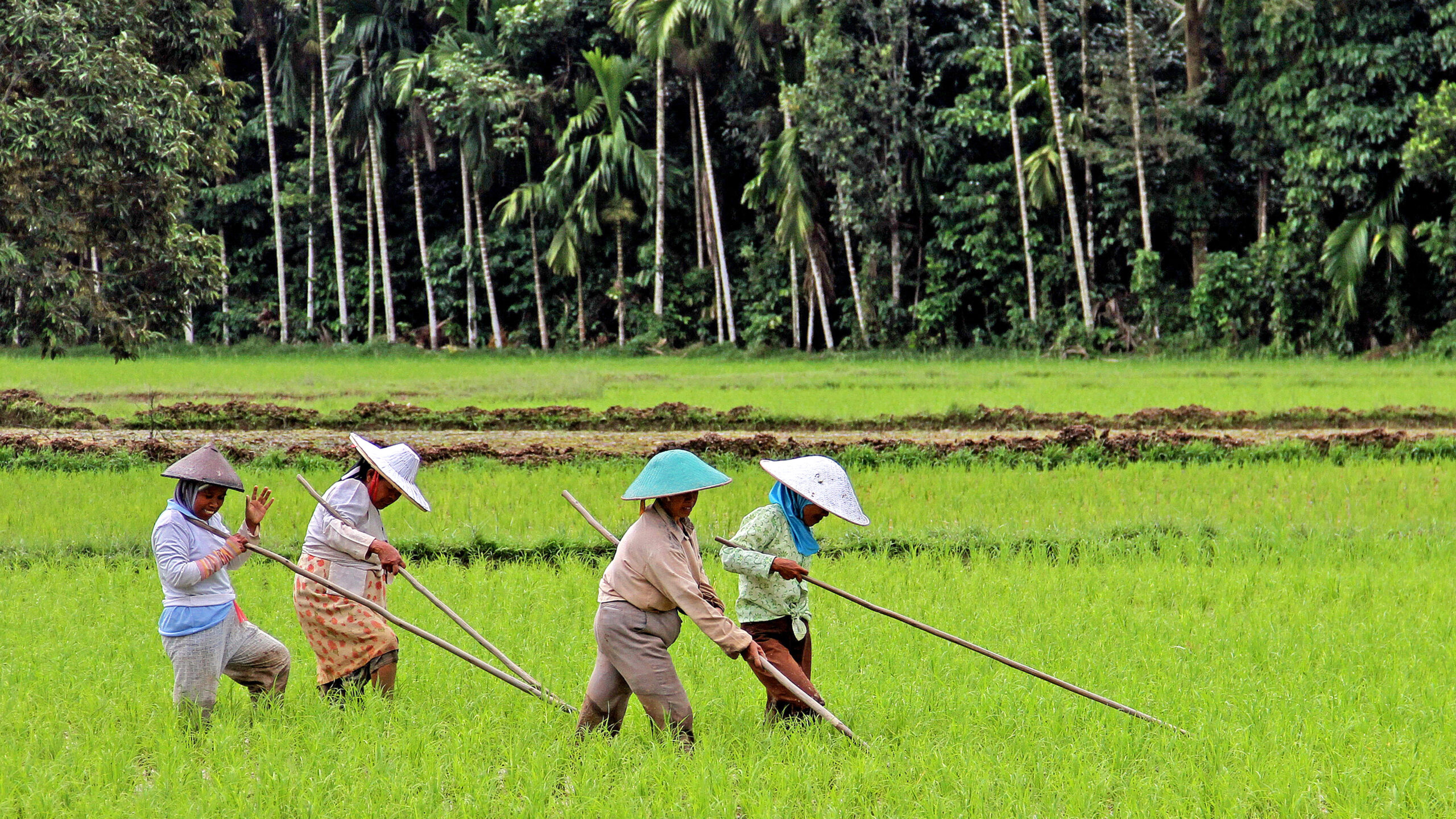
IFPRI has also responded to the need for evidence to assist governments in executing well-designed public policies in countries without local offices. For example, IFPRI research guided the design of rice market reforms in Viet Nam. When Viet Nam’s government began to liberalize the agriculture sector in the late 1990s, IFPRI developed a model and conducted policy simulations to identify rice market policies that would support export-oriented growth. An independent evaluation established that IFPRI’s analyses, completed in close association with national institutions, helped to build consensus on the need for and nature of policy change. Following rice market reforms, the evaluation estimated that the benefits derived from IFPRI’s contributions were valued at 56 times their cost.
Providing evidence for regional and global agendas
IFPRI also utilizes rigorous analysis to inform trade policies between multiple countries. Before the signing of the CAFTA-DR—a free trade agreement between the United States and several Central American countries—the Institute carried out detailed background studies to better inform the regional debate. An IFPRI team based in Costa Rica developed computable general equilibrium models for Costa Rica, El Salvador, Honduras, and Nicaragua to simulate the trade and macroeconomic consequences of the agreement for each country and provide recommendations for public investments that would buffer potential losses for smallholder farmers. Except for Costa Rica, all the other countries signed the agreement by 2004, and it took effect in 2006. IFPRI played an influential role in informing Costa Rica’s protracted national debate over the agreement, which led to a national referendum before the country eventually signed the CAFTA agreement in 2007. The World Bank’s ex post assessment of CAFTA-DR demonstrated its favorable economic impacts, which were consistent with predictions made in IFPRI’s research.
IFPRI also facilitated the harmonization of development strategies across Africa through technical support to the Comprehensive Africa Agriculture Development Programme (CAADP). In the early 2000s, the Institute worked with the African Union Commission, the New Partnership for Africa’s Development’s Planning and Coordination Agency, regional economic organizations, and country governments to design roadmaps for CAADP implementation at continental, regional, and country levels, building mutual reviews and accountability into the framework. IFPRI also helped develop modalities for national-level priority setting and implementation. Its analyses of agricultural growth and investment options for poverty reduction in more than 30 countries contributed to the CAADP process of roundtables, country compacts, and National Agricultural Implementation Plans. An ODI evaluation of three countries involved in CAADP demonstrated that they achieved increased agricultural investment and noticeable improvements in agricultural performance within the first seven years of CAADP being implemented than prior to joining.
At the global level, IFPRI has a long history of producing international public goods, which are knowledge products intended to be useful to multiple countries. Assessing the impact of these goods is particularly fraught given their long and widely diffused impact pathways, and available assessments are largely limited to assessing influence as measured by bibliometric data and stakeholder surveys. As one example, IFPRI used its economy-wide modeling expertise to undertake influential analyses to support the World Trade Organization’s Doha trade negotiations from 1999 to 2008. Stakeholder interviews revealed that think tanks, advocacy groups, and academic researchers appreciated the objectivity, usefulness, and quality of IFPRI’s work.
IFPRI’s global policy influence has been amplified during crises, when policymakers have looked to the Institute for rapid and credible analyses. During the world food crisis of 2007/08, IFPRI coordinated across divisions to make recommendations on urgent global policy actions, then communicated them through intensified media engagement and in-person presentations and meetings with high-level policymakers. An independent evaluation argued that the Institute’s use of its position to help increase international attention to agriculture potentially benefited billions of people.
IFPRI also responded to two later crises that negatively affected global food security: the COVID-19 pandemic and Russian invasion of Ukraine. As yet, there are no independent assessments of IFPRI’s campaigns in response to these crises, but the Institute’s researchers twice received Quality of Communication Awards from the Agricultural and Applied Economics Association (2021 and 2023) for their coverage and analysis.
Lessons and limitations
Evidence generated from policy-relevant research is just one step of the policy process. The independent assessments identified several factors that facilitated IFPRI’s successful policy influence.
- Proximity: In-country staff integrate into the local policy ecosystem and establish credibility. Long-term engagement allows IFPRI to stay updated on local priorities and deepen relationships.
- Relevance: Research priorities come from stakeholders, usually from a consultation process that engages policymakers, donor agencies, and research partners. Timing also plays a role.
- Partnership: Collaboration with local stakeholders from the outset establishes a sense of ownership and aligns research with demanded priorities. Some partners may have closer relationships with policymakers than IFPRI, helping to advance policy impact.
- Outreach and communication: Results must reach different relevant audiences to inform actors and support policy influence, requiring a coordinated communications strategy.
Recommendations are not always adopted in full. The lack of policy uptake may be beyond institutional control: for instance, research recommendations may not align with political timing; political administrations can change; or more immediate crises may emerge, such as COVID-19. In other cases, the challenge may stem from IFPRI. Impact assessments found that policy influence was less likely where IFPRI did not have established country programs. At times, in-country staff also lacked the communication skills needed to translate high-quality research into policy change. These conclusions underline the importance of IFPRI’s decentralization strategy, which will further cement IFPRI’s in-country presence around the world.
Conclusion
The full Taking Stock report covers additional areas in which IFPRI has made policy impact—backed by independent assessments not mentioned here—such as natural resource governance, agricultural insurance, and biosafety.
Challenges to achieving and measuring policy impact still arise. The shift from core institutional support to project-based funding makes it more difficult for IFPRI to pursue long-term research agendas and generate international public goods. The shorter reporting frameworks that accompany project-based funding (3-5 years) may not encapsulate how policy influence matures into economic and social impacts further along the projected impact pathways. The lack of unrestricted funding also threatens resources for future independent evaluations to capture and produce lessons for policy impact.
Nonetheless, IFPRI has clearly made policy impact and continues to hone its ability to do so. The demand for credible policy analysis will only grow in response to mounting challenges to food security such as climate change and geopolitical shocks. Impact assessments enable IFPRI to combine its existing assets—rigorous research, trusted relationships, and global reach—with a deeper understanding of how to generate positive food policy change. A constrained funding environment only increases the importance of these assessments, as they can help determine which research activities are most likely to be effective in delivering policy impact.
Peter Hazell is an IFPRI Senior Research Fellow Emeritus; Frank Place is a former IFPRI Senior Research Fellow; Maria DiGiovanni is a Research Analyst with IFPRI’s Director General’s Office.
Reference:
Hazell, Peter B. R.; and Place, Frank. 2025. Taking stock: Impacts of 50 years of policy research at IFPRI. Independent Impact Assessment Report 48. Washington, DC: International Food Policy Research Institute. https://hdl.handle.net/10568/177103