


Are the relationships between actors in Odisha’s vegetable value chains parasitic or symbiotic?
This project note identifies the following key findings in answer to the question of whether the relationships between off-farm micro, small and medium enterprises (MSMEs) and commercial small-scale vegetable farmers in Odisha’s vegetable value chains are parasitic or symbiotic:
Relationships between MSMEs and farms in vegetable value chains in Odisha are predominantly symbiotic, not exploitative. Contrary to common assumptions, we find little evidence for the existence of parasitic credit relations between traders, input suppliers and smallholder vegetable farmers.
Value chain credit is relatively uncommon. More than 90 percent of input suppliers and retailers provide no credit of any kind, and fewer than 2 percent of surveyed enterprises impose exclusive tied-credit obligations on buyers or sellers.
Trade credit functions primarily as short-term working capital, not a means of control. Wholesalers allowed buyers to delay payments for vegetables for several days in almost 40 percent of their most recent sales transactions.
Farmers are not heavily credit constrained. Half of vegetable farmers borrowed money to fund agriculture within the past year, and only 5 percent of non-borrowing vegetable farmers reported that they wished to access agricultural credit but were unable to. Most farmers borrowed from family and friends or self-help groups. Less than 2 percent of loans originated from wholesalers or input suppliers.
Input suppliers are an important source of advisory services for farmers. Nearly half of farmers sought advice from input suppliers during their most recent purchase, and over half received it, largely free of charge.
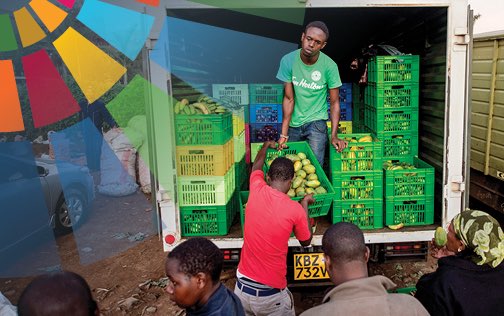
Wholesalers and retailers often provide transport services when sourcing or supplying vegetables. These services are usually costed into the price of goods received or sold, but are convenient for time- or mobility-constrained farmers and other trading partners. Much of the transport organized by traders is supplied by third-party service providers (transport businesses).
Provision of other types of service by wholesalers, retailers, and input suppliers to their suppliers and customers are quite limited, indicative of an intermediate level of value chain transformation.
Farmers undertake more product upgrading and value addition activities than wholesalers or retailers. Many farmers grade, wash, and remove damaged produce prior to sale, enhancing value capture and simultaneously reducing transaction costs for buyers.
Market “thickness” and competition moderate exploitative behavior. Improvements in infrastructure, mobility, communications, and the spatial clustering of farms and MSMEs may limit the ability of marketing intermediaries to create dependencies among farmers, and improve access to information and markets, lowering barriers to entry and giving rise to outcomes that are more symbiotic than exploitative.
Authors
Belton, Ben; Narayanan, Sudha; Islam, Mir Raihanul; Reardon, Thomas
Citation
Belton, Ben; Narayanan, Sudha; Islam, Mir Raihanul; and Reardon, Thomas. 2026. Are the relationships between actors in Odisha’s vegetable value chains parasitic or symbiotic? INCATA Project Note 6. Washington, DC: International Food Policy Research Institute. https://hdl.handle.net/10568/181786
Keywords
Asia; Southern Asia; Vegetables; Value Chains; Agricultural Value Chains; Symbiosis; Parasitism; Interspecific Relationships