





Publications
Brief
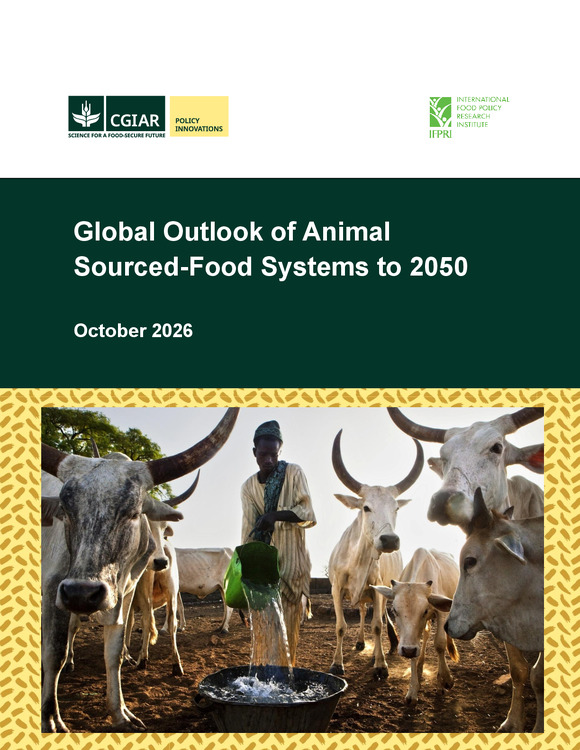
Global outlook of animal sourced-food systems to 2050
Report
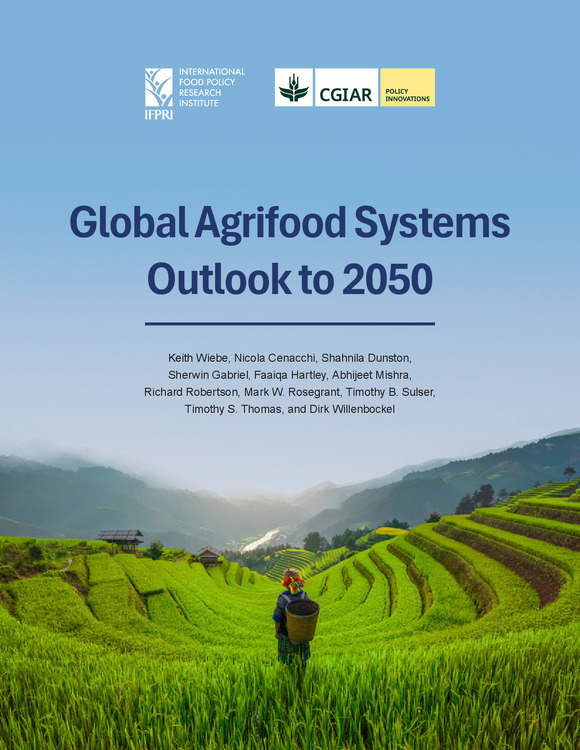
Global agrifood systems outlook to 2050
Wiebe, Keith; Cenacchi, Nicola; Dunston, Shahnila; Gabriel, Sherwin; Hartley, Faaiqa; Mishra, Abhijeet; Robertson, Richard D.; Rosegrant, Mark W.; Sulser, Timothy B.; Thomas, Timothy S.
…more
Willenbockel, Dirk
Journal Article
Food systems transformation would reshape global agriculture
Gibson, Matthew; Sundiang, Marina; Mason-D’Croz, Daniel; Diniz Oliveira, Thais; Beier, Felicitas; Benavidez, Lauren; Bos, Astrid; Chepeliev, Maksym; Doelman, Jonathan; Dunston, Shahnila
…more
Fujimori, Shinichiro; Hasegawa, Tomoko; Havlik, Petr; Hristov, Jordan; Jägermeyr, Jonas; Kozicka, Marta; Kuiper, Marijke; Kyle, Page; de Lange, Thijs; Bodirsky, Benjamin Leon; Lotze-Campen, Hermann; Luchtenbelt, Hermen; Chen, David Meng-Chuen; Mishra, Abhijeet; Müller, Christoph; Nelson, Gerald; Palazzo, Amanda; Perez Dominguez, Ignacio; Popp, Alexander; Sands, Ronald; Springmann, Marco; Stehfest, Elke; Sulser, Timothy B.; Takahashi, Kiyoshi; Tassinari, Gianmaria; Thom, Ferike; Thornton, Philip K.; Tsuchiya, Kazuaki; van Zeist, Willem-Jan; van Meijl, Hans; van der Mensbrugghe, Dominique; Van Vuuren, Detlef; van Zanten, Hannah H. E.; Weindl, Isabelle; Wiebe, Keith; Zhao, Xin; Herrero, MarioBlogs
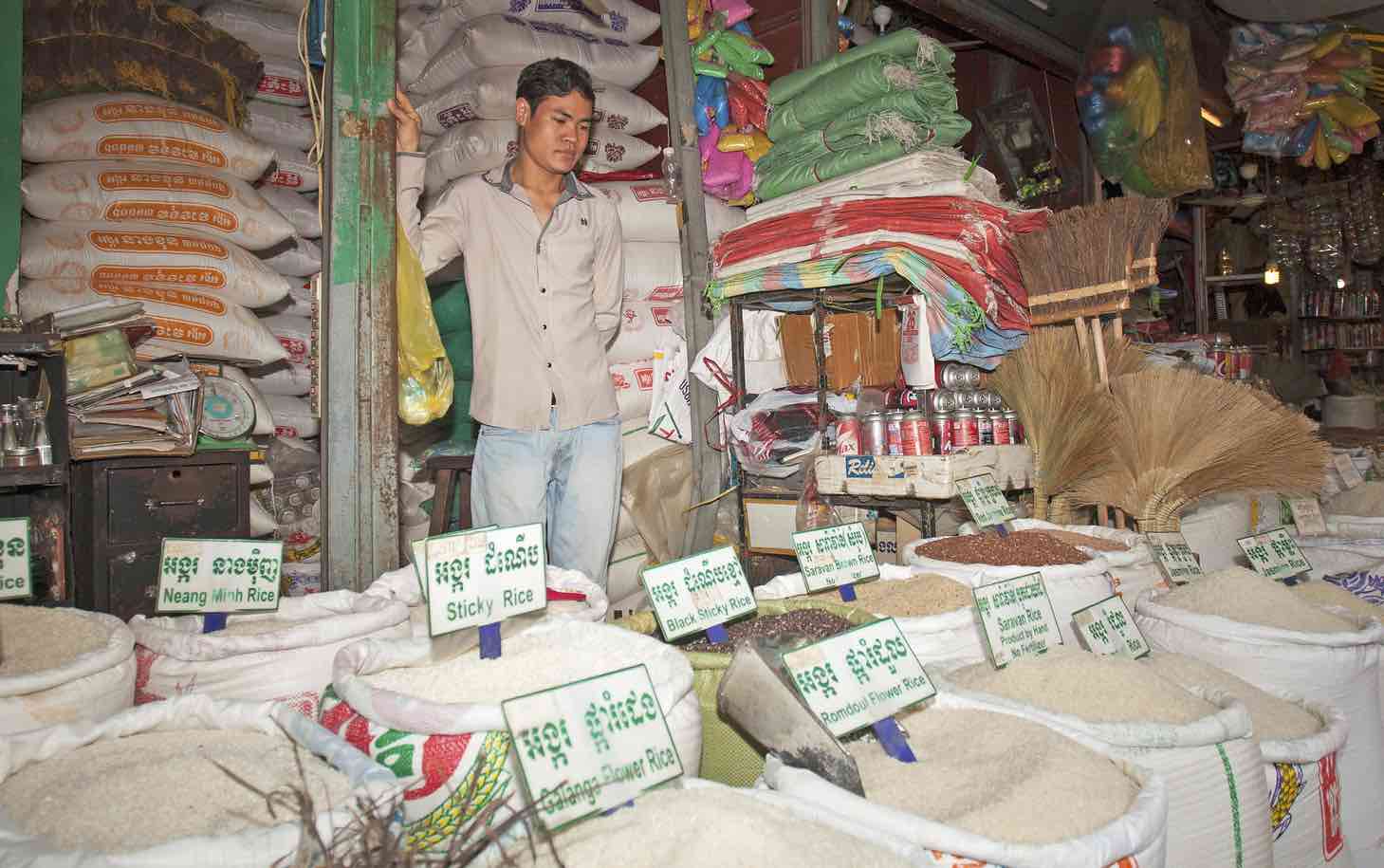
COVID-19-related trade restrictions on rice and wheat could drive up prices and increase hunger
Modeling suggests export bans intended to buttress domestic food supplies could have wide impacts.
Effects of rising CO2 on protein, iron, and zinc availability in global diets
New research shows climate change will slow the growth in the global availability of key nutrients provided by important crops such as wheat, maize, and legumes.