




Search IFPRI web
Filters
Found 7462 Results
-
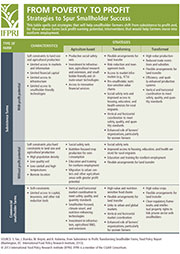
Transforming smallholder farms
Small farms play an indispensable role in global food security, particularly in developing countries. In fact, according to the UN Food and Agriculture Organization (FAO), four-fifths of the developing world’s food is a product of small-sized farms. That said, not all smallholder farms are cut from the same cloth and strategies that help shift small farms […]
-
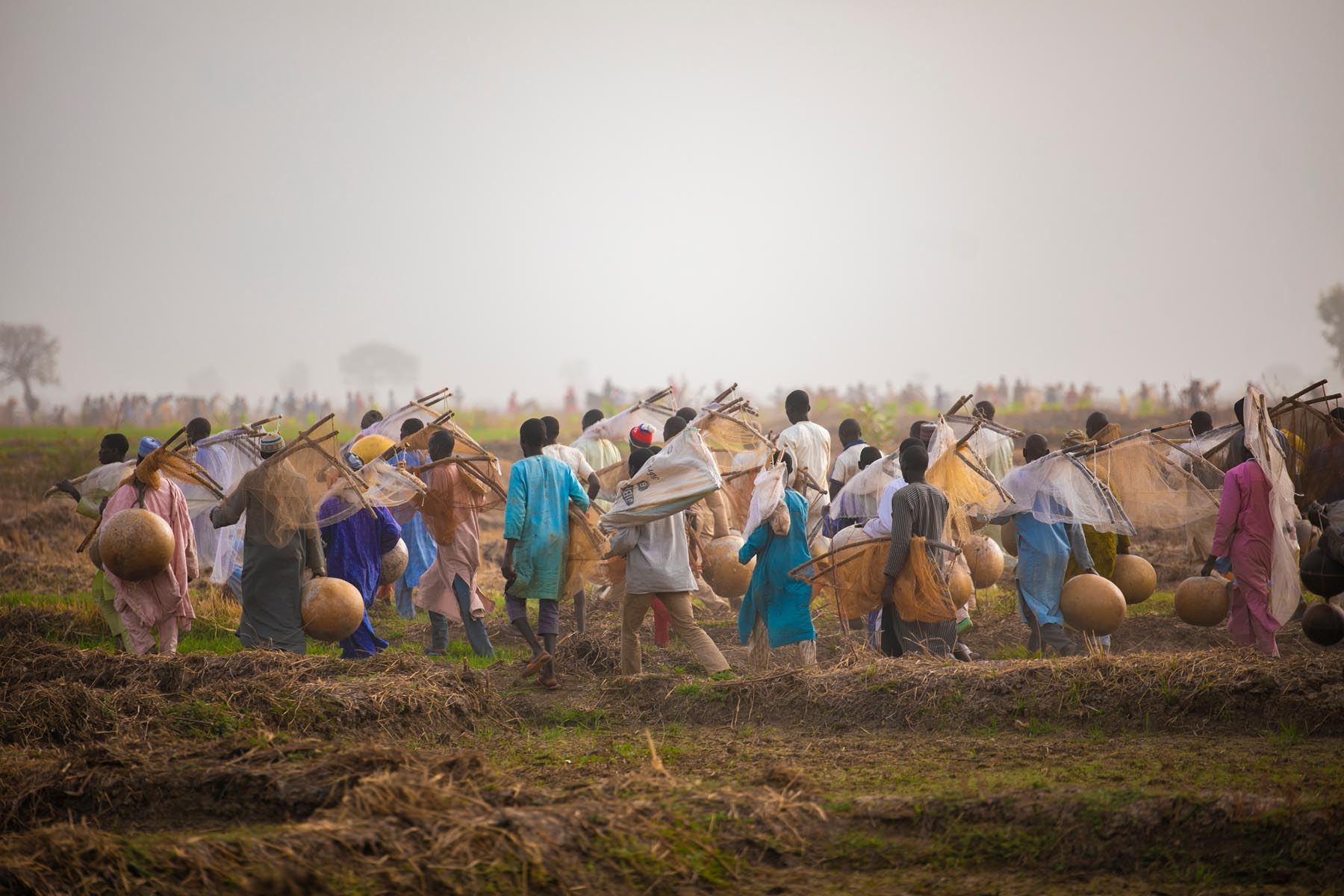
The future of US Food Aid
Overview of seminar, Proposed Reforms to U.S. Food Aid: Framing the Debate
-
Insights from Indonesia
Yanyan Liu is a research fellow in IFPRI’s Markets, Trade and Institutions Division. The world’s population is both rapidly expanding and becoming increasingly urbanized. But while population growth poses significant challenges to food security and sustainable resource use, particularly in developing countries, a study I conducted with Futoshi Yamauchi of the World Bank suggests that for more educated […]
-

Beyond Coffee and Chocolate
Can Africa’s agricultural sector compete in the global marketplace? Consumable “niche” goods in the form of luxury coffee and teas from Africa are already on the shelves of such major US and UK retailers as Starbucks, Fortnum and Mason, and Costco. And Ghanaian chocolate has infiltrated the connoisseur’s market, featured at the famed Parisian chocolate […]
-
Recent EU committee vote forecasts change for Europe’s biofuel policy
In a move that potentially pleases both food security experts and environmentalists, the EU’s Environment Committee voted on July 11 to set a cap on the amount of energy produced from food and energy crops while encouraging the use of advanced biofuels and electric vehicles. Experts, including IFPRI’s David Laborde, argue in the international weekly science journal Nature that most varieties […]
-
ReSAKSS-Africa website gets a facelift
ReSAKSS-Africa (Regional Strategic Analysis and Knowledge Support System) website is now ready with enhanced features to track progress in implementing the Comprehensive Africa Agriculture Development Programme (CAADP), including the target of allocating 10 percent of national budgets to agriculture. The website serves as a “one-stop shop” for policymakers, researchers, farmer organization representatives, donor and development agencies, and […]
-
Privatizing Africa’s Urban Water Supply: Good or Bad for Child Health?
Every year, 1 in 10 child deaths—approximately 800,000—are the direct result of diarrhea. Of these deaths, 88 percent are preventable by guaranteeing access to safe drinking water and sanitation supplies. The situation is particularly dire in Africa south of the Sahara. Almost two-fifths (39 percent) of people living in the region are without safe drinking […]
-
Good Reasons for Low Emissions Development Strategies (LEDS) Research
This blog story by IFPRI Senior Research Fellow Alex De Pinto was originally posted on Tim Thomas’ Much Ado About Something blog. It is now widely recognized that natural resource use in many developing countries, from crop production to deforestation, is responsible for the bulk of greenhouse gas emissions. We also know that, in many countries, it is the […]
-

Tangled up in Blue
Appearances can be deceiving: There’s always a backstory, the behind-the-scenes truths of how we moved from point A to point B. How the intangible dynamics of power structures, information pathways, and spheres of influence ultimately shape policy outcomes is challenging to decipher—but understanding the various actors, belief systems, channels, and motives in play is essential […]
-
World Population Day
Chiara Kovarik is a Senior Research Assistant in IFPRI’s Poverty Health and Nutrition Division Today, on World Population Day, IFPRI recognizes that the world’s growing population—which reached 7 billion in 2011—has a powerful impact on development. The stresses caused by a growing global population, along with rising incomes, rapid urbanization, and changing demographics, are affecting the […]
-
Low carbon agriculture
According to IFPRI Director General Shenggen Fan and Senior Research Analyst Tolulope Olofinbiyi, world agriculture has reached a crossroads. Rising incomes; changing population, demographics, and consumer preferences; growing natural resource constraints; increasing energy prices; and a varying climate are redefining the global supply and demand of food. At the same time, almost 1 billion people remain undernourished globally. The change to a […]
-

Tackling Malnutrition in India
This blog story by IFPRI Senior Research Fellow Purnima Menon and Micronutrient Initiative President Venkatesh Mannar was originally posted on The Bill & Melinda Gates Foundation’s Impatient Optimists blog. The 27 million children born in India this year will grow up in a very different country than the one we grew up in. India has changed more than one would think possible in […]
-
Twitter Chat on youth and agriculture connects IFPRI with new audiences
Earlier this month, I took part in a new experience: a twitter chat. Organized by USAID, the #AskAg Twitter Chat on Youth Employment in Agriculture, connected me and my fellow guest speakers from USAID, Making Cents International, and Winrock International with twitter participants from MPULE Institute, students, development program workers, and others from a range of locations, including Mexico, Belgium, […]
-
SDGs should target ending hunger sustainably by 2025
A “High Level Panel of Eminent Persons” appointed by the United Nations Secretary General to advise on the Post-2015 Development Agenda recently released its recommendations in a report IFPRI Director General Shenggen Fan comments on the report in a blog story on IFPRI’s DGCorner blog, emphasizing the role of smallholder agriculture and the importance of covering dietary quality and nutrition in the […]
-
Karen Brooks on generating knowledge to improve policies, institutions, and markets
Leaders of CGIAR research programs, along with donors and external stakeholders, are meeting this month in Montpellier, France to review the CGIAR Research Program and to “listen, engage, learn and progress on how to achieve the outcomes of reducing rural poverty, increasing food security, improving nutrition and health and the sustainable management of natural resources.” In an interview conducted at this meeting, […]
-
Public health experts take on UN’s Zero Hunger Challenge
This blog story was originally posted on the HarvestPlus blog. Washington, D.C —A new initiative, the Community for Zero Hunger, was launched today. It will identify the greatest gaps that remain in reducing hunger and malnutrition, and leverage the private sector to help fill those gaps at scale. In 2012, United Nations Secretary-General Ban Ki-moon launched the Zero Hunger […]
-
Food Subsidies in Egypt: a help or hindrance?
Statistics are sounding a warning bell about the state of Egypt’s food security, poverty, and malnutrition. The number of food insecure Egyptians has increased about 21 percent from 2009 to 2011, according to a 2011 analysis of household incomes, expenditures, and consumption. Results for poverty and malnutrition were even more dramatic, with poverty increasing around […]
-
Not a Free Ride
Collective action in agriculture can take many forms, from contract farming to producer marketing groups. Smallholders often rely on these groups to increase their access to markets and get higher prices for their goods. My IFPRI discussion paper, later published in the American Journal of Agricultural Economics, looks at a different type of collective action, one […]
-
Boosting both food security and forest resources requires new thinking
Peter Holmgren is Director General, Center for International Forestry Research (CIFOR) The goal of producing enough food for a growing population has long been at the top of the global political agenda. But in pursuit of this aim, agriculture has expanded into forestland, creating an array of environmental problems: more than 50 percent of the Earth’s forests have […]
-
G8, build political will to overcome malnutrition
This blog story by IFPRI Senior Research Fellow Stuart Gillespie and IFPRI Division Director Marie Ruel was originally posted onThe Guardian’s Development Professionals Network. The G8 countries are being asked to make firm financial and strategic commitments to fight malnutrition on a scale never before imagined. Can they do it? If not, we can point to a lack of political will, but […]