




Search IFPRI web
Filters
Found 7452 Results
-
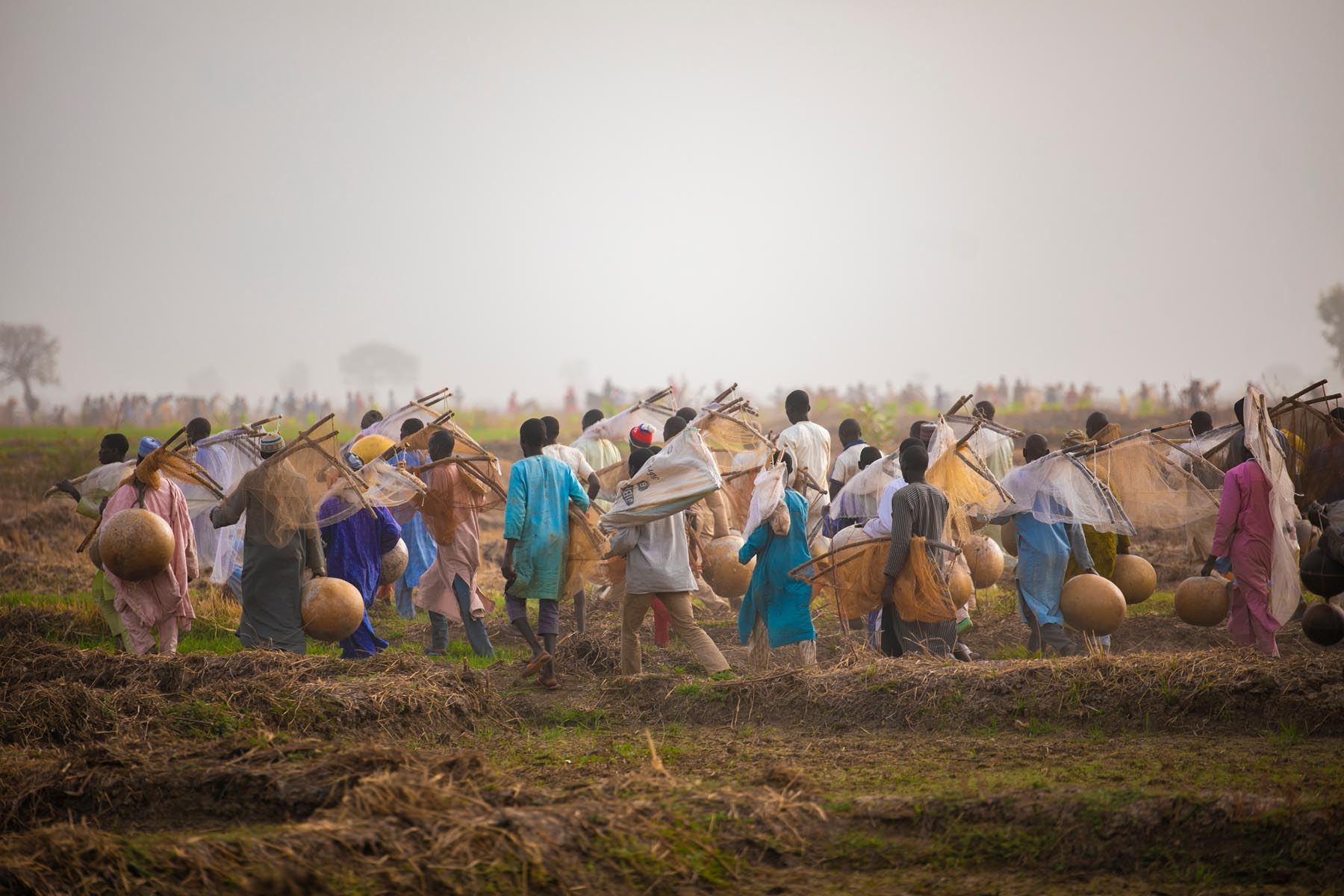
Fish farming on rise in Bangladesh (Daily Asian Age)
October 14, 2020
Daily Asian Age (Bangladesh) published an article on aquaculture/fish farming. Fish production in the country has increased by more than 50 percent in the last 11 years. An IFPRI study (See IFPRI book, The Making of a Blue Revolution in Bangladesh: Enablers, Impacts, and the Path Ahead for Aquaculture) made an interesting observation while reviewing the Bangladesh fish farming sector: […]
-
Minister Müller on world food situation: “A world without hunger is possible – we need a green agricultural revolution.” (BMZ)
October 13, 2020
BMZ (Germany) published an article on German Development Minister Gerd Müller’s meeting with representatives from IFPRI, Cornell University, FAO, and other organizations on the Ceres2030: ‘Sustainable Solutions to End Hunger report. The Minister stated that “The latest studies show that the industrialized countries could fund the necessary investments if they provide an annual additional 14 billion dollars between now and 2030. The developing countries also need […]
-
Farmers sell crops below farmgate prices—study (Malawi Times)
October 13, 2020
Malawi Times reported on IFPRI-Malawi findings that show that 75 percent of maize farmers and 90 percent of soybean farmers sold their crops below the official minimum farmgate prices. The report released this month established that 39 percent for maize and 52 percent for soybeans were sold either on-farm or at nearby markets (41 percent for both crops) and were mainly sold to assemblers and retailers. This study used an […]
-
Maize, soya bean farmers duped (The Nation)
October 14, 2020
The Nation (Malawi) published an article on how farmers are dealing with prices for crops. Maize and soya bean farmers sold their crops below the government recommended farm-gate minimum prices of K200 per kilogram and K300 per kg according to an IFPRI-Malawi study, Report on a study to crowdsource farmgate prices for maize and soybeans in Malawi. The study shows that about 75 percent of maize farmers and […]
-
Monitoring the impact of COVID-19 in Myanmar: Agricultural commodity traders – synopsis of results from three survey rounds through early August (October 2020) (ReliefWeb)
October 13, 2020
Reliefweb published an article from IFPRI-Myanmar stating that to understand how Myanmar’s crop marketing system has been affected by the COVID-19 crisis, phone interviews were conducted with more than 100 agricultural commodity traders roughly every 30 days from late May until early August 2020. A round of qualitative interviews was also conducted with key informants on land-trading routes to China, Thailand, and India. Republished in Humanitarian News, Nigerian News Shafaqna
-
Impacts of COVID-19 on Myanmar’s agri-food system: Evidence base and policy implications (October 2020) (Reliefweb)
October 14, 2020
Reliefweb published an article on stating that between April and October 2020, IFPRI and Michigan State University, with support from the United States Agency of International Development (USAID) and the Livelihoods and Food Security Fund (LIFT), have undertaken analyses of secondary data combined with regular telephone surveys of actors at all stages of Myanmar’s agri-food system in order to better understand the impacts of COVID-19 […]
-
Poverty and food insecurity during COVID-19: Telephone survey evidence from mothers in rural and urban Myanmar (October 2020) (Relief Web)
October 14, 2020
Reliefweb published an article about how Myanmar had one of the lowest confirmed COVID-19 caseloads in the world in mid-2020 and was one of the few developing countries not projected to go into economic recession. to explore the impacts of COVID-19 disruptions on household poverty and coping strategies, as well as maternal food insecurity experiences, this study used a telephone […]
-
FAO suggests doubled investment needed to end hunger by 2030 (Agri-Pulse)
October 14, 2020
Agri-Pulse published an article on the report from Ceres2030 on ending hunger by the year 2030. The article stated that donors in the fight against hunger would need to spend an additional $14 billion on average each year between now and 2030 to help end hunger, an amount that is roughly double the current investment. This conclusion comes from the Ceres2030: […]
-
Are warnings of a COVID-19 famine in Africa overblown? (The New Humanitarian)
October 14, 2020
New Humanitarian (Kenya) published an article stating that aid agencies routinely list the coronavirus as a major factor in driving humanitarian needs, from the Sahel to Somalia, and don’t shy away from describing its impact as the “perfect storm.” In the early months of the COVID-19 pandemic, research was showing that bad times were ahead–famine, loss of jobs, closed markets, and poverty on the rise. […]
-
Donors must double investments to stamp out hunger (ReliefWeb)
October 12, 2020
Reliefweb published an article on the latest findings from Ceres2030: ‘Sustainable Solutions to End Hunger that states if donors double their investments and spend the money wisely, they could help end hunger by 2030, a coalition of research groups said in a call-to-action ahead of World Food Day. Donors must spend an additional US$14 billion on average each year between […]
-
Sustainable Solutions to End Hunger Project Develops 10 Key Recommendations (IISD)
October 13, 2020
IISD published an article stating that the Ceres2030: ‘Sustainable Solutions to End Hunger’ research project, which focused on providing donor governments with new tools to help them increase poor producer’s incomes while simultaneously protecting the climate and ending hunger, has suggested undertaking interventions worth USD 14 billion on average each year. The research findings support an integrated approach, recognizing that “agricultural […]
-
Hunger crisis: increase agricultural production by 60% by 2050 (Top Agrar Online)
October 13, 2020
Top Agrar Online published an article about the German conference on development aid and ways to end hunger in the world. Minister of Development Müller stated, “The developing countries must also focus on agriculture and the food industry and make comparable investments.” This would enable 500 million people to overcome hunger by 2030, double the incomes of small producers and build climate-resistant agriculture. That is […]
-
Pandemic of hunger (Nature)
October 12, 2020
Nature published an article on how the COVID-19 is straining African food security, but also presents an opportunity for change. One example is in Ethiopia. According to IFPRI, Survey: Despite COVID-19, food consumption remains steady in Addis Ababa, Ethiopia the lockdowns in Ethiopia have disrupted distribution chains for both dairy products and vegetables. The pandemic has also strained household budgets, […]
-
To end hunger by 2030, donors will need to double their spending (Le Monde)
October 13, 2020
Le Monde published an article on the release of new findings from the Ceres2030: ‘Sustainable Solutions to End Hunger. To end hunger by 2030, donors will need to double their spending. In a body of publications, Ceres2030 calls on the international community to redouble their efforts to keep their commitments to fight against food insecurity. This work concludes that […]
-
Eat less meat to save the planet? (Deutsche Welle)
October 16, 2020
Deutsche Welle published an article on how a change of diet, consuming more plants & less meat is a simple way to sustainably feed the planet’s exploding population. But more than 1.5 billion people around the world can’t afford a diet that meets the required levels of essential nutrients, and animals provide a vital source of protein in the form of milk, meat, […]
-
“A world without hunger is possible” (Deutsche Welle)
October 14, 2020
Deutsche Welle (DW) (Germany) reported on a recent conference where German Development Minister Mueller participated in a food security conference. Mueller discussed what he viewed as the current situation and what are the next global moves. The developing countries themselves should also make agriculture and the food industry a priority and make additional investments of a comparable amount in order to guarantee a world […]
-
60 percent of rural India can’t afford nutritious diets (Hindustan Times)
October 14, 2020
Hindustan Times published an article focusing on a paper by Research Fellow Kalyani Raghunathan that states the cost of a recommended diet (CoRD) in India in 2011 (the most recent year for which expenditure and consumption data is available) was ₹45.1 and ₹51.3 for women and men, numbers that were almost 1.6 times the commonly used World Bank poverty line […]
-
Strengthening Food Value Chains
Co-Organized by the CGIAR Research Program on Policies, Institutions, and Markets (PIM) and the Food Security Portal
Across the developing world, urbanization and income growth are driving massive shifts in consumers’ food preferences and subsequently in the form and functioning of local and regional food value chains. These changes hold great potential for improving livelihoods and food security in developing countries, but they also carry social, economic, environmental, and health risks. A […]
-
Ceres2030 research: Ending hunger sustainably by 2030 requires doubling assistance
Donors and developing countries must boost spending to improve food security, support smallholders, and blunt climate impacts.
-
COVID-19 and Food Market Disruptions in Myanmar
The rise of COVID-19 infections and policies imposed to control the spread of the disease might have created significant food market disruptions. Disruptions in food markets are an obvious concern, given the importance of agricultural prices for the income of farmers and food prices for the already lower purchasing power – due to reduced incomes […]