


Richard Ariong
Research Analyst, Innovation
Policy and Scaling

Back
With research staff from more than 60 countries, and offices across the globe, IFPRI provides research-based policy solutions to sustainably reduce poverty and end hunger and malnutrition in developing countries.

researcher spotlight
Elodie Becquey is a Senior Research Fellow in the Nutrition, Diets, and Health Unit, based in IFPRI’s West and Central Africa office in Senegal. She has over 15 years of research experience in diet, nutrition, and food security in Africa, including countries such as Burkina Faso, Chad, Ethiopia, Ghana, Kenya, Mali, and Tanzania.

Back
Since 1975, IFPRI’s research has been informing policies and development programs to improve food security, nutrition, and livelihoods around the world.

Back
IFPRI currently has more than 600 employees working in over 80 countries with a wide range of local, national, and international partners.

Ecosystem services are the benefits people obtain from ecosystems, including many that are essential for agricultural production and food, such as water supply, pollination, and climate regulation. Biodiversity is the variety of life at genetic, species, and ecosystem levels, and plays a key role in ecosystem services. For instance, soil fertility, pollination, and natural pest control are examples of biodiversity-mediated ecosystem services that are critical to crop production. How crops and agricultural lands are managed and maintained can have positive—or negative—effects on ecosystem services and biodiversity.
IFPRI research provides much-needed insight into how the dual goals of food and nutrition security and ecosystem health can be included in the decision-making of farmers, communities, and policymakers. To inform policies and local governance that promote sustainability and inclusion, IFPRI engages in policy-relevant research on valuing and modeling ecosystem services, assessing the relationship between biodiversity-mediated ecosystem services and land use and management choices, informing community-based conservation, and supporting self-governance of common pool resources, including designing, testing, and scaling natural resource management games for research and experiential learning. IFPRI’s research on ecosystem services and biodiversity uniquely pays attention to gender and institutions.
IFPRI’s ecosystem services and biodiversity research is closely aligned with the Sustainable Development Goals (SDGs), including SDG 15, and the CGIAR Impact Areas on Climate Adaptation and Mitigation; Environmental Health and Biodiversity; and Poverty Reduction, Livelihoods, and Jobs.


Internal Document

Working Paper

Working Paper

Linking sustainable farming practices to childhood nutrition.

Lessons from Qingshan village.

Prioritizing a key form of natural capital.

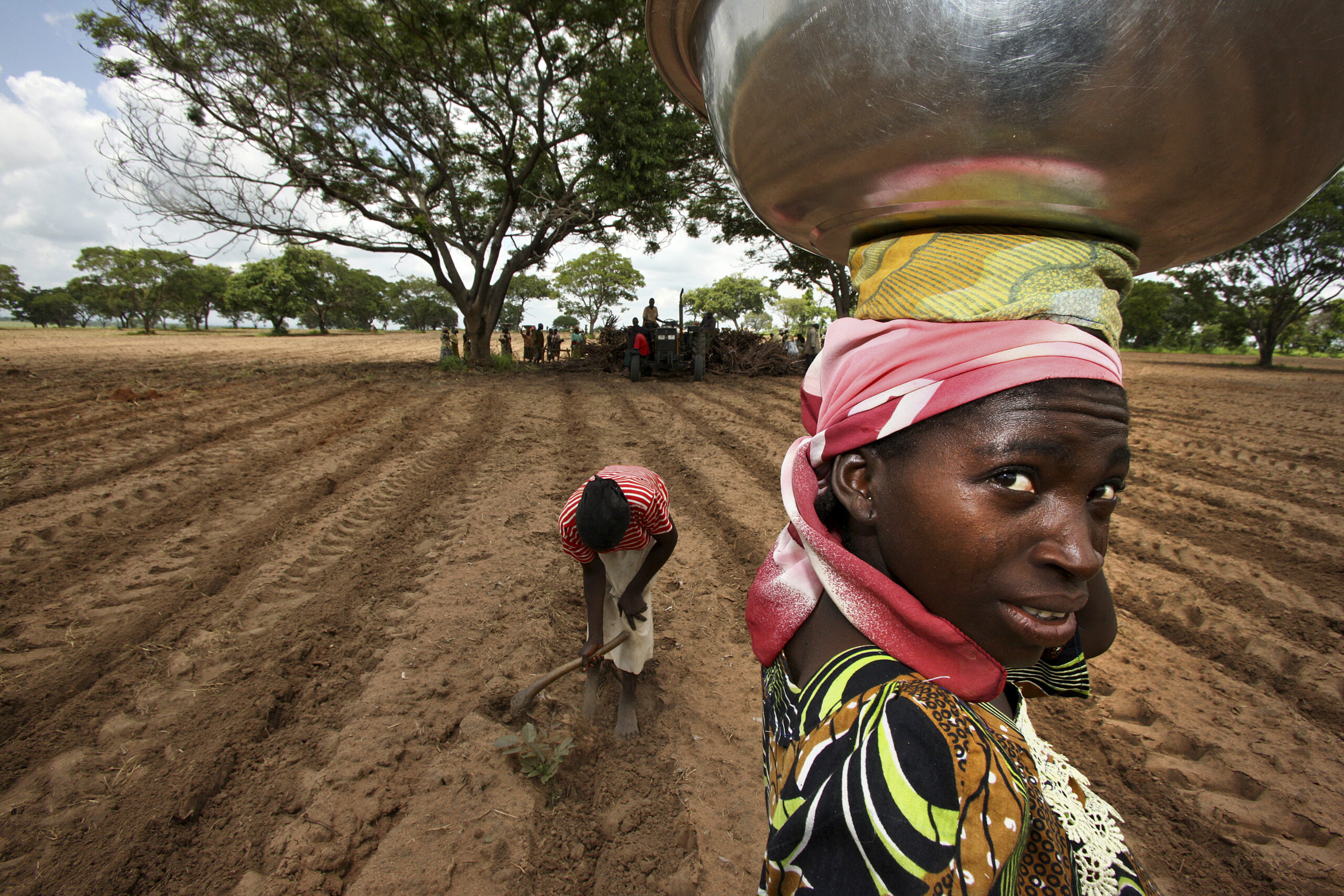
Achieving the goals of climate smart agriculture (CSA)—increased profitability, adaptation, and mitigation—and scaling climate action require explicit consideration of gender and other intersectional identities. Failing to design climate actions to include and benefit women and other vulnerable groups misses opportunities to build resilience capacities, which would enable these groups to contribute to more sustainable and […]

Join us for a discussion of key findings from a recent special issue of Food Policy exploring the complex interactions between fertilizer use, soil health management, and economic shocks in various agricultural systems. Governments around the world have long implemented policies to enhance agricultural productivity through inorganic fertilizer application and soil management, yet recent global […]

IFPRI in collaboration with Uganda’s National Agricultural Research Organization (NARO), an autonomous public research agency under the auspices of the Ministry of Agricture, Animal Industry and Fisheries, has collected soil health data at plot level together with intra-household socioeconomic data and laboratory analyses of soil samples since 2003. The most recent data collection took place […]
IFPRI’s Wei Zhang will participate in the NASEM study that will assess trends in insect abundance, identify research priorities, and recommend actions to slow insect declines in the most vulnerable and ecologically critical areas.
Eureka Alert published an article stating that a team of scientists argue that a One Health approach to plant health is vital if we are to sustainably feed a growing population expected to reach 10 billion by 2050. The researchers, who published a commentary in the CABI Agriculture and Bioscience journal, suggest that a One […]
Daily News (Sri Lanka) published an article about new research that is part of a special edition of Ecological Restoration titled “Restoration by Whom, for Whom,” published in June 2021. The research includes work on farmer-managed natural regeneration in Ghana, on-farm experiments and payments for ecosystem services in Kenya, a government-led tree planting initiative in Vietnam, and […]

Research Analyst, Innovation
Policy and Scaling

Senior Research Analyst, Natural
Resources and Resilience

Research Fellow, Natural
Resources and Resilience

Research Analyst, Development
Strategies and Governance

Senior Research Fellow, Natural
Resources and Resilience

Program Manager, Development
Strategies and Governance