



IFPRI’s Approach to Impact
Our Approach to Impact
IFPRI creates impact by working with partners to shape policies, programs, and institutions in ways that catalyze lasting, significant, and measurable improvements to food system outcomes.
We produce actionable, demand-driven research that follows four primary impact pathways. The changes influenced by our research often include improvements in policies, programs, research methods and tools, or research capacity among our partners. These changes may then lead to further positive downstream impacts on development, including improved food and nutrition security, better livelihoods, gender equity, environmental sustainability, reduced poverty, and other aspects of well-being around the world.
Our impacts are aligned with CGIAR’s five impact areas:
- Climate adaptation & mitigation
- Environmental health & biodiversity
- Gender equality, youth & social inclusion
- Nutrition, health & food security
- Poverty reduction, livelihoods & jobs
Externally validated impact work
IFPRI commissions independent, peer-reviewed assessment reports of the Institute’s impact within specific research themes, countries, or regions. These reports assess IFPRI’s impact, but also outline conceptual and methodological approaches used to determine impacts, which vary across topics and contexts.
Methodologies include tracking outputs such as publications, citations, Altmetric scores, and institutional rankings to assess influence on academic discourse. Researchers also conduct in-depth interviews with partners and beneficiaries to establish an impact pathway within policy, research, and development settings. Other methods involve scoping policy or institutional documents for evidence of the use of research, and using modeling techniques to analyze impacts on development indicators.
Internally validated impact work
IFPRI publishes blogs, brochures, slide decks, and other communications products about our impact. These products are peer reviewed by researchers and partners.
Data collection
IFPRI’s impact team continually collects and updates data on the Institute’s impact and impact methodologies, so that IFPRI staff can share evidence of impact and exchange ideas on how to best measure impact for specific programs, projects, and activities.
Coordination with CGIAR evaluation mechanisms
To avoid duplication, IFPRI coordinates with CGIAR’s assessment and evaluation mechanisms. These include CGIAR’s Independent Advisory and Evaluation Service (IAES), which serves as the secretariat for the Independent Science for Development Council (ISDC) and the Standing Panel on Impact Assessment (SPIA), and implements CGIAR’s multi-year independent evaluation plan.
Impact Pathways
IFPRI’s research, communications, and capacity building efforts aim to move along an impact pathway, influencing improvements in policies, programs, research methods, and human or institutional capacity to undertake research or use evidence to make policies. Some of these changes continue along the impact pathway to make a sustained difference for food and nutrition security, livelihoods, gender equity, environmental sustainability, and poverty reduction.
IFPRI has identified four primary impact pathways to describe the diversity of our work, which we carry out with hundreds of partners:
Clarifying the situation and outlook
IFPRI provides foresight modeling on food system trends and future policy scenarios, conducts ex ante assessments of potential policy pathways and investments, and develops metrics and frameworks to analyze and monitor impacts on the poorest and most marginal populations. Communicating these results can help set global, regional, and national research and development agendas, and catalyze new investments.
Testing and scaling solutions
Together with partners, IFPRI identifies, develops, and assesses promising policy, institutional, governance, and behavioral change innovations and technologies for sustainable, equitable food systems transformation. IFPRI also assesses alternative pathways for delivery and scaling up of sustainable food systems solutions, with a focus on improving livelihoods, well-being, equity, and inclusion. These results can inform decisions on whether to invest further in scaling up or influence others to replicate these efforts.
Shaping enabling environments
IFPRI explores and advises on enabling governance environments at the local, national, and international levels to facilitate and incentivize innovative solutions and investments in sustainable food systems transformation from the public and private sector, civil society organizations, and individuals. This includes testing policies, investments, or programs that have already been implemented (ex post), and analyzing policymaking processes.
Strengthening research methods and sharing capacity
IFPRI aims to achieve broad and lasting impacts through collaboration with a wide range of partners, including governments, non-governmental and international organizations, the private sector, and individuals. By developing research methods, databases, and tools, integrating innovative approaches in data and digital technology, providing training and workshops for capacity sharing, and facilitating collaborative research, IFPRI advances the research field and promotes capacity sharing among partners. This collaborative approach allows the organization and partners to effectively analyze current market trends and future outlooks (approach 1), identify and scale innovations (approach 2), and shape the enabling environment (approach 3).
Measuring the impact of IFPRI’s activities presents several challenges
- Research and expert guidance are only a few factors that policymakers consider in their decision-making processes. Therefore, when policy changes are enacted, it is often difficult to measure the importance of IFPRI’s contribution to the outcome.
- Finding common measures of impact across sectors is complex, especially as IFPRI’s work increasingly covers entire food systems.
- It takes many years for policy changes to meaningfully impact people’s lives. As such, most of IFPRI’s impacts are long term.
- When changes to policies and programs are implemented, the research that informed these changes only contributes indirectly to the impacts of those programs on food and nutrition security, gender equality, sustainability, and other food systems outcomes.
- It is challenging to know how, in the absence of IFPRI’s activities, policies and impacts on target populations might have been different.
- Many academic estimates of impacts of food systems research suffer from attribution bias: high estimates of rates of return may not count the spillover of other unrelated technologies, nor account for work done by implementing partners.
In recognition of these challenges, IFPRI conservatively reports the number of its beneficiaries and does not report a rate of return for the sum of its work. It also draws on numerous information sources, including rigorous impact assessment studies and modeling analyses, and follows a peer review process, to provide compelling evidence of how our work improves food systems.
What’s New
-

Models as assets for food security: The impacts of IFPRI’s IMPACT, RIAPA, and SPAM models
IFPRI’s modeling tools—IMPACT, RIAPA, and SPAM—provide global, national, and subnational insights to guide food policy decisions. These models have influenced major investments and policies, offering evidence-based projections to enhance food security, nutrition, and resilience in evolving agrifood systems.
-
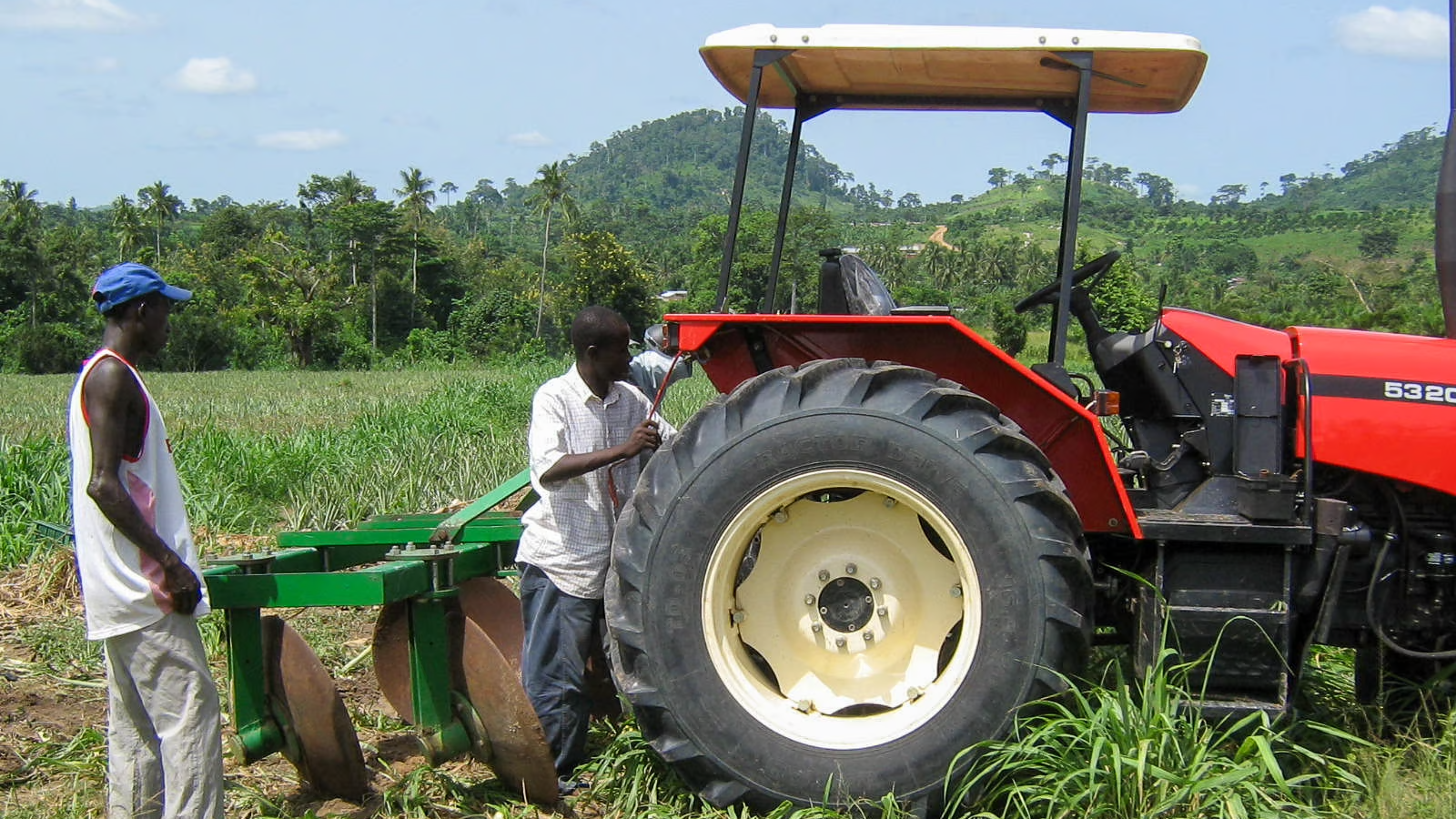
Making a Difference: How farmers in Ghana benefit from the Agricultural Mechanization Services Enterprise Centers Program
In 2011, at the request of the Ghanaian government, IFPRI began work to assess the impacts and progress of mechanization programs in Ghana. This blog outlines how farmers have benefited from Ghana’s Agricultural Mechanization Services Enterprise Centers Program.
-
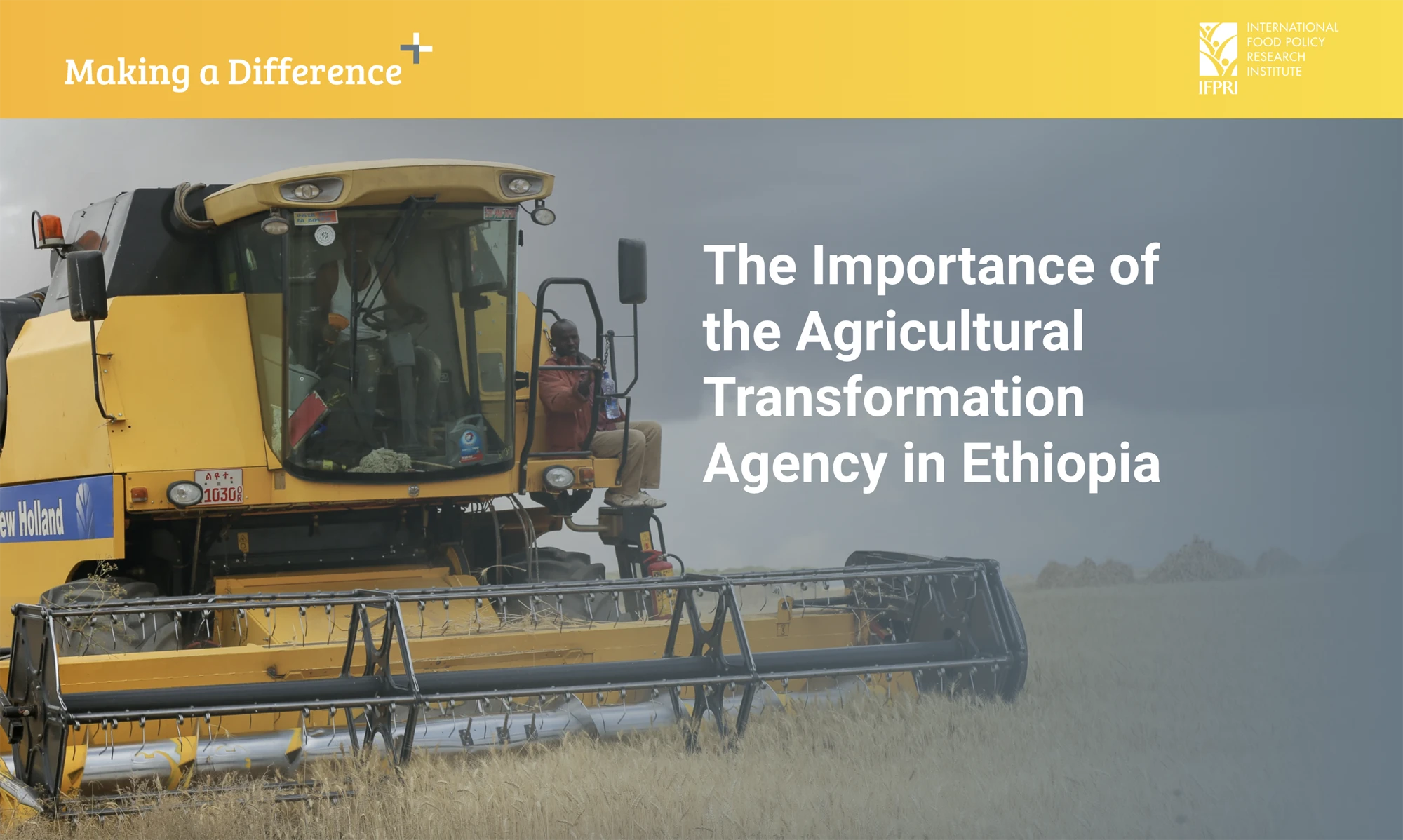
The importance of the agricultural transformation agency in Ethiopia
This blog discusses how IFPRI’s long-term strategic research support to Ethiopia’s Agricultural Transformation Agency (ATA) has led to tangible government policy outcomes. Established in 2010, the ATA plays a critical role in guiding the country’s agricultural development and sustainability.