




IFPRI’s research on natural resource governance addresses questions on how natural resources can best be managed, sustained, and restored, while improving livelihoods of the millions who depend on these resources.
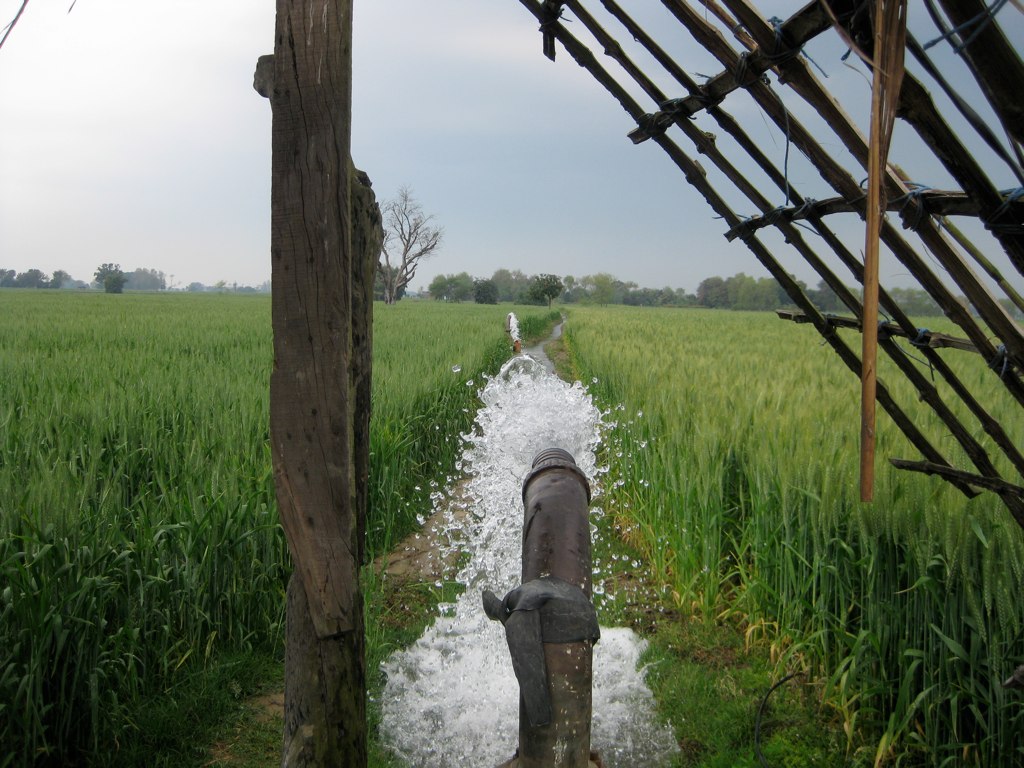
As a common pool resource with high subtractability and low excludability, water is easily depleted if no effective coordination exists among users to ensure provision and regulate withdrawals. Management of groundwater resources is particularly challenging, as declines are not directly visible, with many users sharing the same resource, often unknown to each other.
Under various projects, IFPRI researchers investigate improving natural resources governance, including groundwater resources, through participatory experiential learning interventions such as collective action behavioral games, structured community debriefings, and participatory water planning tools that contribute to greater awareness and improved governance, inducing behavioral change toward more sustainable water management.
Our research finds that behavioral games are effective tools to increase awareness and understanding of groundwater systems, induce behavior change, and stimulate cooperation for governance of collective resources. Social learning is resulting in sustainable change, with communities jointly developing solutions that they are more likely to adopt and retain.
Project Outputs:
DATASETS
MANUALS, TOOLS, and VIDEOS
- WOCAT SLM Approaches [Link].
- Foundation for Ecological Security, International Crops Research Institute for the Semi-Arid Tropics, and International Food Policy Research Institute. (2021). Commoning the Commons: A Sourcebook to Strengthen Management and Governance of Water as Commons [Link].
- International Food Policy Research Institute (IFPRI), Foundation for Ecological Security (FES), International Crops Research Institute for the Semi-Arid Tropics (ICRISAT) & Arizona State University (ASU) (2022). Groundwater Game Practitioner’s Manual, version 2. IFPRI and ASU, USA; ICRISAT and FES, India.Manual: Link; Videos: Game 1, Game 2, Game 3, Ethiopia Game; and Poster: [Link]
BLOGS
- GW governance toolbox: Groundwater governance toolboxes to encourage sustainable water use [Link]
- The Knowledge-Motivation-Agency approach to managing GW: Governing groundwater with knowledge, motivation, and agency [Link]
- Crafting GW governance measures: Six synergies to consider for groundwater governance [Link]
- India:
- Playing games to strengthen groundwater governance in rural India [Link]
- Combining an array of approaches for systemic behavior change in groundwater governance in India [Link]
- Changing the game: Experiential learning for triggering large scale change towards sustainable water management in India [Link]
- Ghana: Enhancing Groundwater Governance through Experimental Games in Ghana [Link]
- Ethiopia: ‘When the water goes down, we remember the games’: A photo story on groundwater governance in Ethiopia [Link]
- Nepal: Governing groundwater for nexus gains: Solarizing irrigation, negotiating recharge, and including nature [Link]
- Suitability tool: Playing the right game: A decision tree for choosing approaches to strengthen water governance [Link]
EVENT
- Governing groundwater with knowledge, motivation, and agency [Link]