



International Year of the Woman Farmer
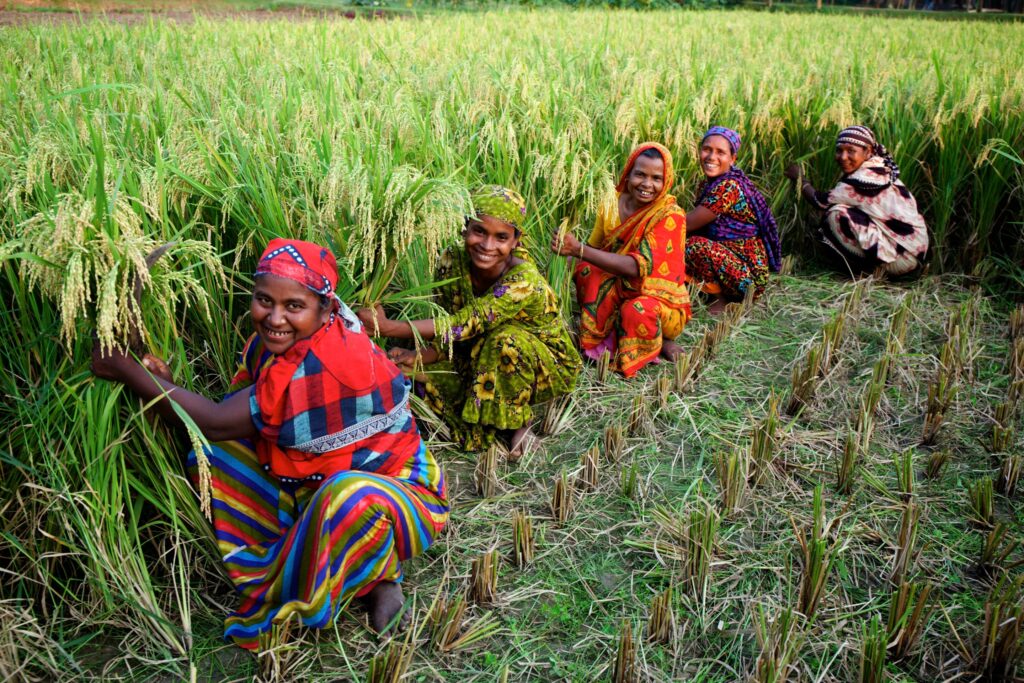
The United Nations declared 2026 the International Year of the Women Farmer (IYWF 2026). The Year will spotlight the essential roles women play across agrifood systems, from production to trade, while often going unrecognized. Women farmers are central to food security, nutrition and economic resilience. IYWF 2026 will raise awareness and promote actions to close the gender gaps and improve women’s livelihoods worldwide.
IFPRI’s research on gender equality aligns closely with the IYWF goals, and we are proud to join this important global campaign. Part of global CGIAR’s gender research community, IFPRI contributes evidence on interventions that expand women’s access to resources, technologies, and markets while strengthening their decision-making power and economic opportunities. This work provides the data and insights needed to inform the IYWF’s global call for more equitable and resilient agrifood systems.
IFPRI’s research on women farmers
IFPRI researchers work across five major research themes to ensure women farmers are included in broader development efforts. These themes include a changing climate, natural resource management, technology uptake, agricultural extension, and financial inclusion—a reminder that the challenges faced by women farmers are multifaceted and require a wide range of interlocking solutions to motivate lasting positive change.
Changing climate
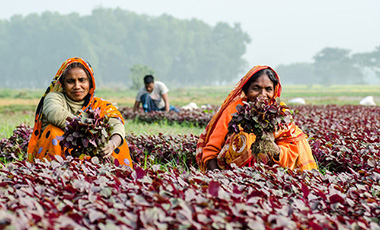
Women farmers face distinct challenges and vulnerabilities in the face of climate change. Through initiatives such as participatory video extension, gender-responsive finance models, and targeted research tools, IFPRI works to support resilient agricultural systems and address gender inequalities by empowering and reaching women farmers with relevant adaptation strategies.
Natural resource management
Women farmers play a critical role in supporting sustainable agrifood systems through their engagement in natural resource management, biodiversity, and ecosystem services. Through tools such as the Women’s Empowerment in Agriculture Index and participatory approaches such as Living Labs, IFPRI demonstrates the importance of women farmers’ inclusion in resource governance and innovation systems. Their empowerment improves household welfare, strengthens collective action, and leads to more sustainable and equitable environmental outcomes.
Financial inclusion
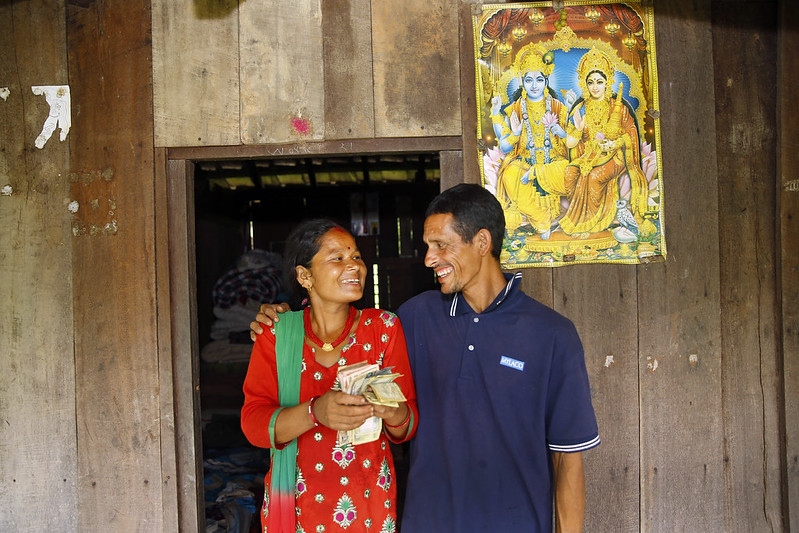
Financial inclusion can strengthen resilience and reduce poverty by allowing women farmers to manage risk, invest in their livelihoods, and fully participate in markets. Yet IFPRI’s research shows that women farmers often face barriers to accessing financial tools due to infrastructure gaps, limited connectivity, and persistent gender inequalities.
Agricultural extension for women farmers
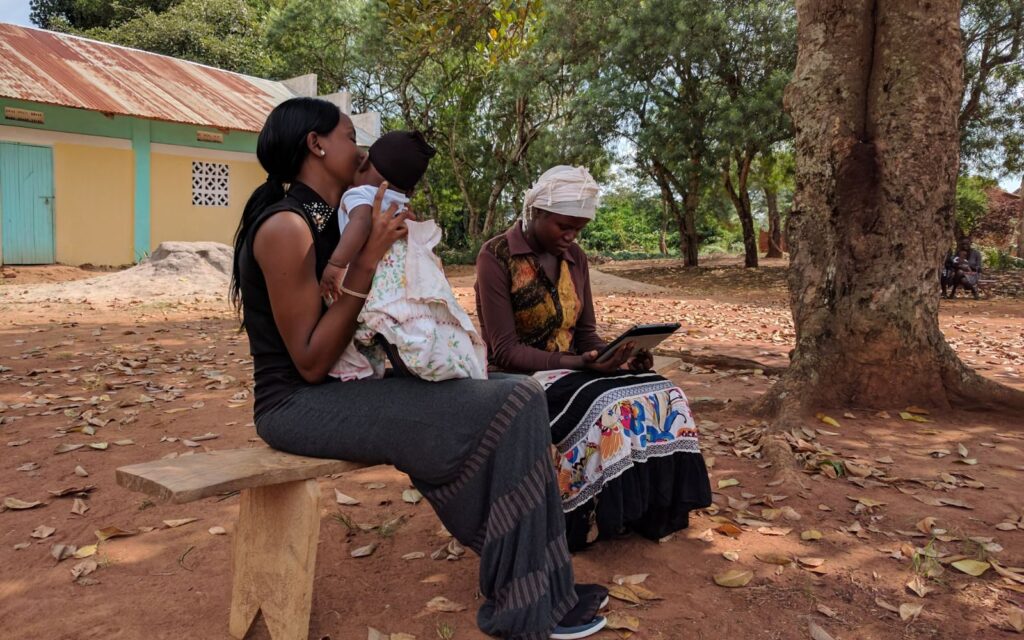
Traditional extension services often overlook women and limit their decision-making power, despite their central role in agriculture. IFPRI’s work helps agricultural extension systems to better reach smallholders through inclusive, gender-responsive extension approaches, with a particular focus on closing gaps faced by women farmers in accessing information, inputs, and markets. Directly engaging women farmers with tailored information and services improves their agency, strengthens technology adoption, and leads to better household and community outcomes.
Technology uptake
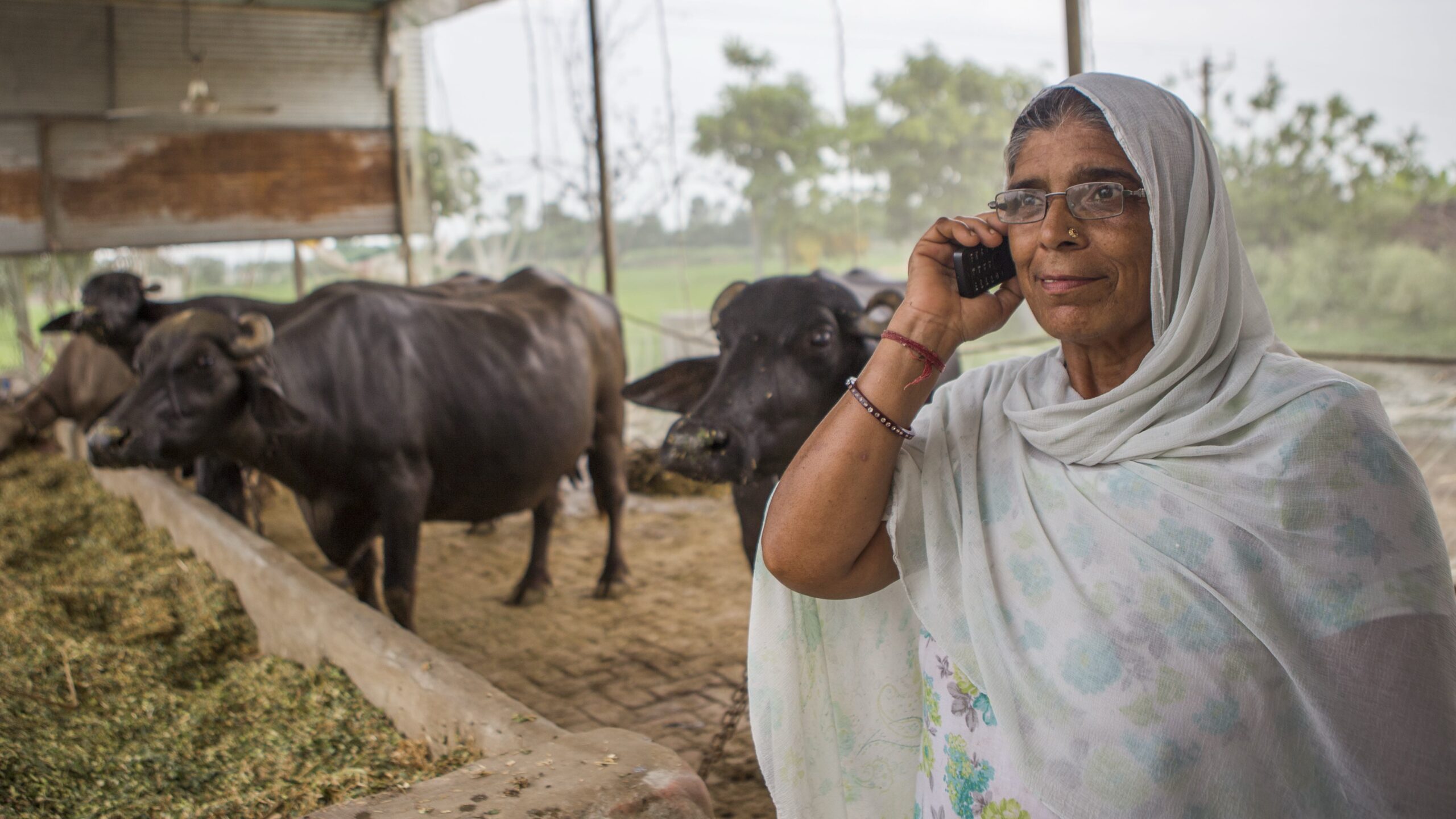
Women farmers often face barriers in access to credit, decision-making power, and appropriate technologies, which can lead to lower adoption rates for new innovations or increased labor burdens. IFPRI’s research on gender-sensitive technology uptake shows that ensuring women farmers can access and benefit from innovations such as irrigation leads to improvements in productivity, income, resilience, and status within the household and community. Our work highlights the need to design and disseminate technologies that align with women farmers’ needs, as well as the importance of reaching them through inclusive information channels, such as women’s groups and tailored extension services.
Key Publications
- Nassif, Gabriella; Ringler, Claudia; and Bryan, Elizabeth. 2025. Gender-just mitigation in the agrifood systems sector: Potential and pitfalls. Annual Review of Resource Economics, 17. https://doi.org/10.1146/annurev-resource-112923-094228
- Eissler, Sarah; Magalhaes, Marilia; Ringler, Claudia; and Bryan, Elizabeth. 2025. Measuring gender sensitive climate adaptation in agrifood systems for climate finance. Washington, DC: International Food Policy Research Institute. https://hdl.handle.net/10568/179203
- Escalante, Luis Enrique; and Maisonnave, Helene. 2022. Impacts of climate disasters on women and food security in Bolivia. Economic Modelling, 116: 106041. https://doi.org/10.1016/j.econmod.2022.106041
- Alkire, Sabina; Meinzen-Dick, Ruth Suseela; Peterman, Amber; Quisumbing, Agnes R.; Seymour, Greg; and Vaz, Ana. 2013. The Women’s Empowerment in Agriculture Index. World Development 52(December 2013): 71-91. https://doi.org/10.1016/j.worlddev.2013.06.007
- Steimanis, Ivo; Falk, Thomas; Bartels, Lara; Duche, Vishwambhar; and Vollan, Björn. 2025. The role of women in learning games and water management outcomes. PNAS Nexus 4(8): pgaf243. https://doi.org/10.1093/pnasnexus/pgaf243
- Kramer, Berber; and Trachtman, Carly. 2024. Gender dynamics in seed systems: An integrative review of seed promotion interventions in Africa. Food Security 16: 19-45. https://doi.org/10.1007/s12571-023-01403-2
- Eissler, Sarah; Magalhaes, Marilia; Ringler, Claudia; and Bryan, Elizabeth. 2025. Measuring gender sensitive climate adaptation in agrifood systems for climate finance. Washington, DC: International Food Policy Research Institute. https://hdl.handle.net/10568/179203
- Pattnaik, Subhransu; Kramer, Berber; Ward, Patrick S.; Yingchen Xu; Tharakeswar, G. 2023. Impacts of a digital credit-insurance bundle for landless farmers: Evidence from a cluster randomized trial in Odisha, India. Presentation. Presented at the CGIAR GENDER Conference ‘From Research to Impact: Towards just and resilient agri-food systems’, New Delhi, India, 9-12 October 2023. International Food Policy Research Institute. https://hdl.handle.net/10568/136959
- Kabir, Hauwa; Myers, Emily; Nwagboso, Chibuzo; Hassan, Salisu; Popoola, Olufemi; et al. 2026. Barriers and opportunities for youth in northern Nigeria’s agrifood value chains: Findings from qualitative research. SFS4Youth Working Paper 14. Washington, DC: International Food Policy Research Institute. https://hdl.handle.net/10568/181952
- Kramer, Berber; and Trachtman, Carly. 2024. Gender dynamics in seed systems: An integrative review of seed promotion interventions in Africa. Food Security 16: 19-45. https://doi.org/10.1007/s12571-023-01403-2
- Ragasa, Catherine. 2014. Improving gender responsiveness of agricultural extension. In Gender in agriculture: Closing the knowledge gap. Part V Toward a gender-sensitive agricultural research, development, and extension system, ed. Agnes R. Quisumbing, Ruth Suseela Meinzen-Dick, Terri L. Raney, André Croppenstedt, Julia A. Behrman, and Amber Peterman. Chapter 17. Pp. 411-430. Netherlands: Springer. https://doi.org/10.1007/978-94-017-8616-4_17
- Meinzen-Dick, Ruth Suseela; Quisumbing, Agnes R.; Behrman, Julia A.; Biermayr-Jenzano, Patricia; Wilde, Vicki; et al. 2011. Engendering agricultural research, development, and extension. Washington, DC: International Food Policy Research Institute (IFPRI). https://hdl.handle.net/10568/76367
- Lee, Yeyoung; Bryan, Elizabeth; Mason, Nicole M; Hassen, Ibrahim; Theriault, Veronique; and Ringler, Claudia. 2025. Does small-scale irrigation affect women’s time allocation? Insights from Ethiopia. World Development, 196: 107106. https://doi.org/10.1016/j.worlddev.2025.107106
- Tarjem, I.A., Ragasa, C., Polar, V., Sylla, A., Teeken, B., Nchanji, E., Mujawamariya, G., Mudege, N. and Marimo, P. 2021. Tools and methods on gendered design, deployment and evaluation of agricultural technologies. CGIAR GENDER Platform Working Paper #003. Nairobi, Kenya: CGIAR GENDER Platform. https://hdl.handle.net/10568/116887
- Kramer B, Trachtman C, Zuze L. 2023. Information as a Source of Empowerment: The Role of Climate Information Services. AICCRA Workin Paper no.17. Accelerating Impacts of CGIAR Climate Research for Africa (AICCRA). https://hdl.handle.net/10568/135668
Support IFPRI’s work on women farmers
Contributions to IFPRI support cutting-edge science that has a real-world impact.
Events
-
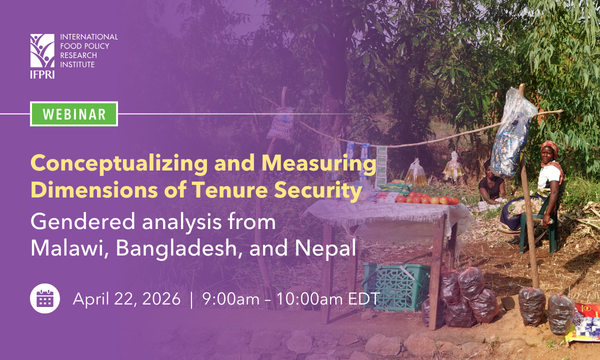
Conceptualizing and measuring dimensions of tenure security: Gendered analysis from Malawi, Bangladesh, and Nepal
April 22, 2026
- 9:00 – 10:00 am (America/New_York)
- 3:00 – 4:00 pm (Europe/Amsterdam)
- 6:30 – 7:30 pm (Asia/Kolkata)