





Key takeaways
•A state-sponsored school meal program is boosting enrollment and attendance in Zamfara, giving children a strong incentive to come to school.
•School meals support communities, creating income for local women and strengthening local food systems.
•Scaling the program will require better infrastructure, monitoring, and consistent funding to reach more children—especially the hardest-to-reach.
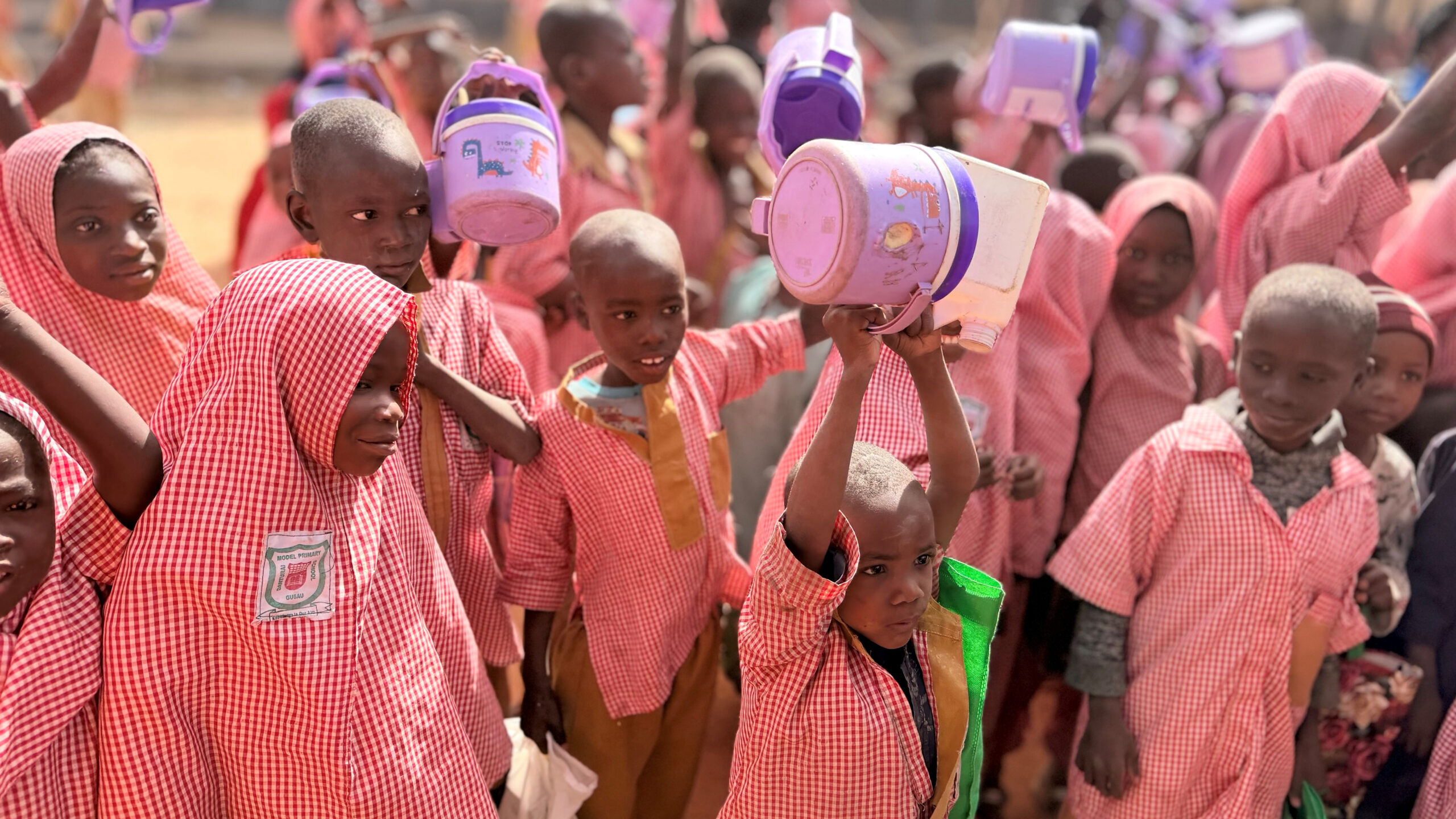
On a recent morning in Zamfara State in northwestern Nigeria, children lined up patiently at Danturai Primary School, bowls in hand. For many of them, this was more than just a meal. It was a major reason to come to school.
In February 2026, a joint team from IFPRI and the World Food Programme (WFP), alongside government partners from Nigeria’s National Home-Grown School Feeding Programme (NHGSFP), visited Zamfara. Our mission was simple but urgent: to understand how the state’s school meal program—a recent effort, begun in 2025—is shaping education outcomes and whether it can help address one of Zamfara’s most pressing challenges: getting children into school and keeping them there.
A state responding to crisis
Zamfara has faced enormous education challenges. Poverty, insecurity, and weak infrastructure have left hundreds of thousands of children out of school. In 2023, Zamfara Executive Governor Dauda Lawal declared a state of emergency in education—a turning point that led to the launch of a range of new policies and programs on school rehabilitation, teacher recruitment, clearance of outstanding debts to examination bodies (leading to the release of withheld results for thousands of students), and renewed political focus on learning outcomes.
But policymakers in Zamfara quickly realized that focusing on education alone would not solve the problem. Children cannot learn if they are hungry. And families struggling to survive often prioritize farm labor or household duties over schooling.
School meals became a central strategy, not as a welfare measure, but as a human capital investment. Globally, school meals are among the most widely implemented social programs, reaching more than 400 million children around the world annually. Research shows that these programs promote better nutrition, school attendance, and educational outcomes.
More than a meal
The program began modestly. A pilot, launched in 2025 and supported by development partners, quickly reached about 3,300 pupils in a handful of schools.
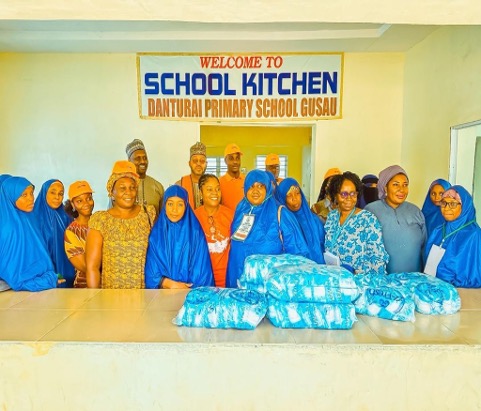
Local women prepare and deliver school meals, creating livelihoods alongside nutrition support.
The design goes well beyond food distribution. Under the “home-grown” model, local women are recruited as cooks, creating income opportunities at the community level. Food is sourced locally where possible, strengthening agricultural value chains and supporting local markets. Schools themselves become hubs for nutrition, attendance, and community engagement, reinforcing their central role in local development.
At Danturai Primary School, where the pilot was launched in 2025, enrollment reportedly increased from around 1,050 pupils to 1,200 after meals began—a 14% jump. Teachers and administrators describe noticeable improvements in attendance.
Meals typically include rice and beans, porridge, or snacks served three times per week. Budget constraints sometimes reduce service to snacks on Fridays—but even this limited provision makes a difference.
Each cook serves roughly 60 children and earns about 20,000 Nigerian naira ($14.50) per month—income that supports her household while anchoring the program in the community. Today, the state intends to expand to 50,000 children across 14 local government areas.
Getting to the hardest-to-reach
We also visited an integrated almajiri school, where traditional Quranic education is being combined with formal subjects such as English, mathematics, and vocational skills. These settings are critical in a state with high numbers of out-of-school children.
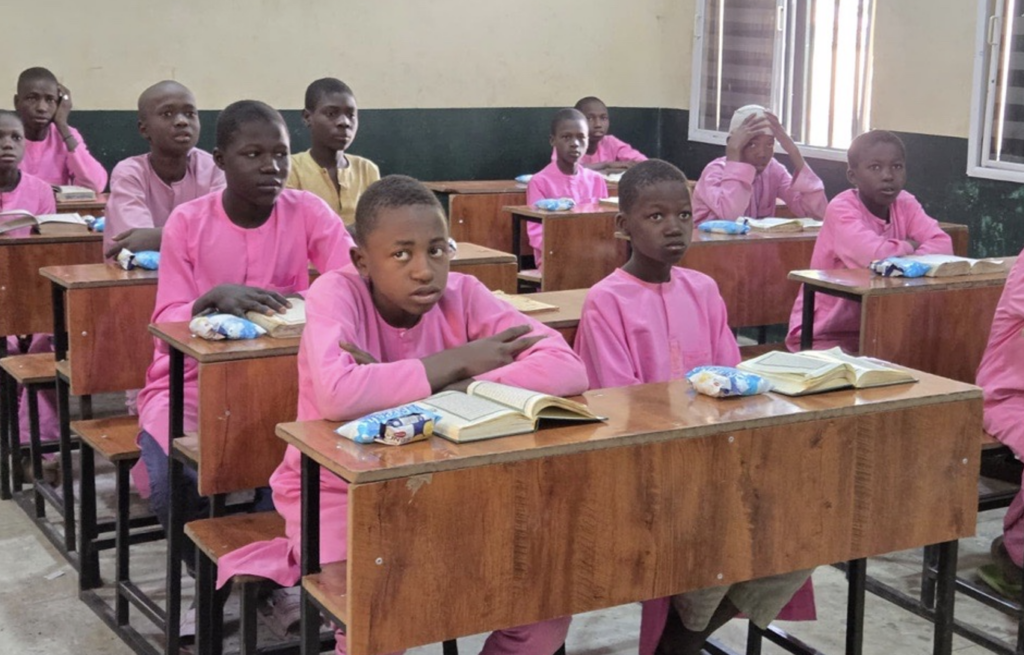
Students at an integrated almajiri school combining religious and formal education. Not currently part of the school meal program, state officials aim to expand to include them going forward.
However, meal programs in these schools remain unfunded due to budget constraints. Thus, parents remain responsible for their children’s meals, which can discourage consistent attendance.
This is where school meals could have transformative power. Reliable meals may be the tipping point that convinces families to enroll (and keep) their children in school.
Strong political commitment, real implementation gaps
Across our meetings—with the Ministry of Education, the Ministry of Humanitarian Affairs, the Secretary to the State Government, and officials at the Governor’s Office—one message was consistent: school meals are central to Zamfara’s education recovery strategy.
State leaders see it as a multi-sector investment that improves attendance and retention, supports women’s livelihoods, strengthens local agriculture, and enhances social cohesion. The school meal program is not viewed in isolation but as part of a broader effort to rebuild education and human capital in the state.
But important challenges remain. Across all the schools, cooks prepare food at home because the school kitchens lack the necessary equipment. Infrastructure gaps limit hygiene and storage capacity. Clean water access and boreholes are limited, affecting hygiene and school gardens. Monitoring systems are weak, making it difficult to verify meal distribution and track beneficiaries effectively. Conflict-related insecurity continues to affect rural attendance, and budget constraints sometimes reduce the frequency or quality of meals.
From pilot to system
Zamfara’s challenge now is how best to scale up its school meal program. Smart scaling will require rehabilitating kitchens and water, sanitation, and hygiene (WASH) facilities, introducing digital monitoring systems, strengthening School-Based Management Committees, and formalizing supply chain contracts to improve efficiency and accountability. The effort also requires linking meal programs to complementary health interventions such as deworming, expanding coverage to integrated almajiri schools, and deepening connections with smallholder farmers to provide more diverse and nutritious meals.
The state has already laid important groundwork through its broader education policies and projects: renovating schools, recruiting teachers, and making schools more secure for learning. School meal programs can help ensure children not only enroll but stay and complete their education.
A clear and hopeful lesson
The lesson from Zamfara is simple but powerful: when nutritious school meals are provided in a reliable, consistent manner, children come, and they stay. In fragile and low-income settings, school feeding is not just a nutrition program. It is an education strategy, a gender strategy, a local economic strategy, and a resilience strategy.
But getting results takes sustained effort from policymakers and communities. Turning this and other promising pilots into sustainable systems will require steady financing, standardized operations, strong monitoring, and cross-sector coordination. In Zamfara, the political will is evident and community engagement is real. And the children we met—curious, energetic, and eager to learn—are ready.
Oliver K. Kirui is a Research Fellow with IFPRI’s Development Strategies and Governance (DSG) Unit and Country Program Leader for the Nigeria and Ghana Strategy Support Programs based in Abuja, Nigeria; Chibuzo Nwagboso is a DSG Research Analyst based in Abuja; Aisha Oluwakemi Ololade is a Technical Advisor with Nigeria’s National Home-Grown School Feeding Programme and a Strategic Engagement Advisor with the Presidential Committee on Economic and Financial Inclusion Secretariat; Asabe Maidawa is an Assistant Director with Nigeria’s National Home-Grown School Feeding Programme. Opinions are the authors’.
This work is supported by the CGIAR Program on Scaling for Impact.