





Key takeaways
- Local leadership builds lasting research capacity. In a collaborative project in Tamil Nadu, transferring ownership to local partners helped to ensure long-term sustainability.
- Aligning research with local priorities improves impact. Collaboration with local and national stakeholders strengthened adoption and relevance.
- Capacity development goes beyond technical training. Management, communication, and leadership skills were critical to project success.
Many international research programs, often from the Global North, collaborate with local institutions mainly to collect data without the kind of capacity sharing or shared decision-making opportunities that would help them build improved methodological and analytical skills. This approach fails to leave sustainable capacity that would help countries develop more robust research and policymaking institutions.
The global research ecosystem should move away from such top-down research collaboration and transition toward equitable, locally led research governance.
In this post, we document lessons from such a multidisciplinary research and capacity development collaboration focused on reducing methane emissions in rice farming in the state of Tamil Nadu, India. The project was overseen by IFPRI and Tamil Nadu Agricultural University (TNAU) and funded through Global Methane Hub (GMH-IFPRI-TNAU).
The project showed ways to build successful research collaborations that bridge international, country-level, and community institutions and build lasting local and national research capacity.
What the project did
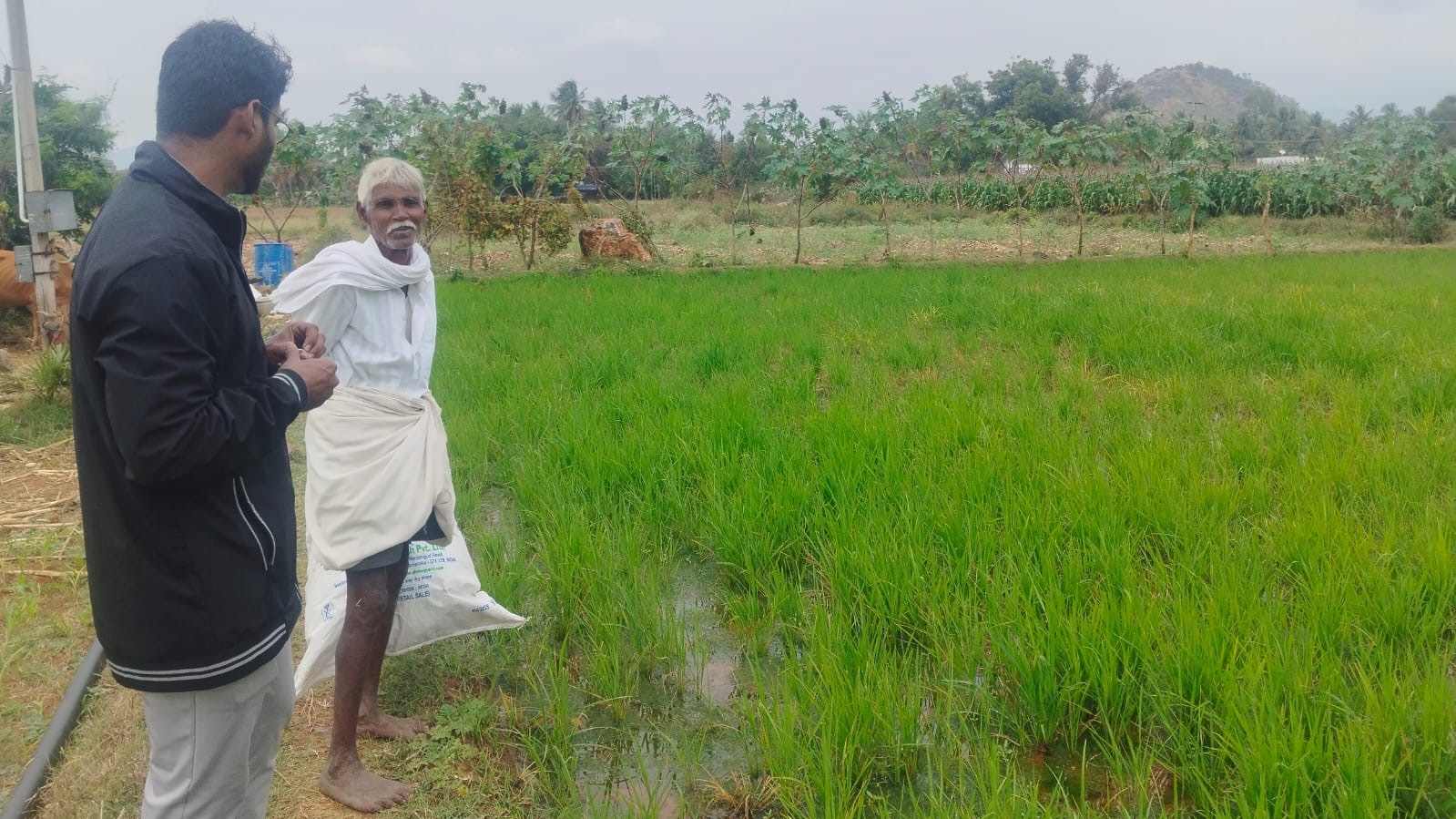
Implemented during 2023-25, the collaboration aimed to build a comprehensive knowledge base for scaling up methane reduction technologies across India’s rice farming systems. It implemented robust field demonstrations across 20 distinct agroecological sites spanning 14 districts in Tamil Nadu. These provided hands-on training to local farmers, agricultural extension workers, and senior officials.
Participants gained critical technical knowledge regarding low-emission cultivation practices while learning how these sustainable frameworks directly improve crop yields, boost farm income, and deliver substantial cost and resource savings and external benefits such as methane reduction.
Fostering local and national research collaboration
Preparatory consultations with policymakers, including the Tamil Nadu State government’s Planning Commission, showed that such research collaborations work best when aligned with existing domestic climate action and sustainable agricultural development frameworks. Thus, the project design evolved through local consultations among policymakers and researchers involved in climate-resilient agriculture and food systems and local government priorities in climate action.
At the same time, the project team worked to align its approach with national climate goals, including India’s commitment to its Nationally Determined Contributions (NDCs). The project incorporated the strategic climate action priorities of the national rice research system, including the Indian Institute of Rice Research, and of policy institutions such as the NITI Aayog (the government’s principal policy think tank).
This approach, integrating national priorities with local needs, enabled the project to swiftly scale up to a mainstream and sustainable research program. One benefit was the ability to adopt local innovations. For example, TNAU added the newly tested use of microbial sprays to reduce methane emissions—not part of the original research design—and worked through local rice farmer producer organizations to promote the innovation.
Building research capacity
The capacity strengthening process took a dual approach: practical, experiential insights gained through joint research workshops iteratively refined the program implementation and field operations. Meanwhile, formal, structured skill development activities for farmers, extension professionals, and local officials of the Department of Agricultural Extension supported the effort.
The project integrated technical workshops, advanced methodological training, and specialized analytical skill development directly into the research efforts by local scientists, with more than 25 senior researchers, associates, and PhD students from a variety of disciplines contributing to evidence generation and capacity development.
Insights from the project design and implementation process
Below are some key steps the project took to support local participation and their results:
Gradual transfer of ownership: Instead of IFPRI as an external partner leading throughout, the project phased in local leadership. In the early phase, IFPRI researchers provided significant technical guidance for the development of the project. During the intermediate phase, the project adopted a co-leadership and co-production approach to research design and implementation, with local partners leading on key components. In the final phase, the ownership was fully transferred to TNAU and other local stakeholders, ensuring research sustainability beyond the project funding cycle.
Constant checking on local leadership development: The project provided space for local researchers to take on leadership roles, even if that required more time, allowing them to gain experience. A series of GMH-TNAU-IFPRI consultative workshops constantly evaluated whether local researchers and implementing partners were gaining decision-making authority.
Integrated technical and management support: Building capacity depends on combining technical research skills with the ability to manage the collaborative research project. Here, technical support and mentorship were provided on data collection design, analysis, and methodology throughout the project cycle. Further, regular discussions on project management approaches, financial oversight, budgeting, and planning ensured smooth project implementation.
Multidisciplinary teams and soft skills: From the beginning, the project emphasized that non-technical skills are often more important than technical research skills for the long-term success of joint research programs. It cultivated soft skills such as prioritizing communication, trust-building, empathy, and conflict resolution. Effective team-building exercises both in the field and in the project management units ensured a shared vision and mutual accountability for research outcomes.
Managing IFPRI’s role: As an external partner, IFPRI carefully managed its involvement to ensure it did not undermine the collaborative research process, staying flexible with funding and administration to address local issues as they arose. In addition, setting clear expectations, roles, and authorship agreements at the start of the project ensured an authentic partnership that quickly shifted away from a “top-down” approach that ensured all partners saw each other as equals. This approach ensured that local institutions and leadership came out stronger and empowered to continue the research program.
Capacity development lessons
The GMH-IFPRI-TNAU research project shows that imparting and strengthening research capacity depends on a structured process requiring intentional design, leadership commitment, and sustained collaboration. Successful capacity development also aligns with local needs by fostering ownership, investing in both technical and soft skills, and establishing long-term, bidirectional partnerships.
Following are several lessons that emerged from the research collaboration and capacity development process:
Local needs assessment and alignment to context: Before the project began, IFPRI conducted a thorough assessment of existing research management systems, research infrastructure, and skills in Tamil Nadu in order to ensure local institutions would respond to research project needs and priorities. Research programs stand a better chance of success when designed and led by local researchers who define their own capacity needs.
Co-designing and clarifying roles: IFPRI engaged local researchers and communities in all phases of the co-creation process, from defining research questions and proposal planning to protocol development, helping to clarify each partner’s role. As research projects evolved, holding regular consultations to track progress and refine the program design helped to recalibrate roles and responsibilities to match changing contexts.
Leadership buy-in and structural support: Showing how investment in local capacity leads to higher quality, sustainable research programs is key to securing funding for capacity development. This includes recognizing research output in promotions, ensuring protected time for researchers, and developing career pathways for early-career researchers involved in the project.
Communication and coordination: The GMH-IFPRI-TNAU project was effective in using digital and face-to-face communication methods. Using a mix of virtual platforms (e.g., WhatsApp, LinkedIn, and Zoom) for immediate communication and regular face-to-face workshops kept all researchers and partners well-informed on the progress made. Defining rules of engagement and establishing clear guidelines for communication at the outset, including how to provide constructive feedback, manage confidentiality, and ensure transparency helped to build a collegial work environment and improved open exchange of information and feedback from field activities. Multi-level engagement with state- and national-level policymakers ensured project outcomes are effectively communicated to decision-makers.
Conclusion
The GMH-IFPRI-TNAU project demonstrated that a highly successful strategy for research collaboration hinges on establishing a long-term, capacity development approach rather than pursuing purely transactional, short-term research projects. By shifting leadership responsibilities early on to the local partner, setting priorities jointly, and investing in people and institutional systems through regular consultations and refinement, the project is a good model for building research capacity in different countries.
Suresh Chandra Babu is a Research Fellow Emeritus with IFPRI’s Director General’s Office and teaches at the Department of Food, Agricultural, and Resource Economics at Rutgers University, New Jersey; D. Suresh Kumar is the Director of the Centre for Agricultural and Rural Development Studies, Tamil Nadu Agricultural University; Sudha Narayanan is a Senior Research Fellow with IFPRI’s Development Strategies and Governance Unit based in New Delhi. Opinions are the authors’.
This work was supported by the Global Methane Hub.