







What’s New
-
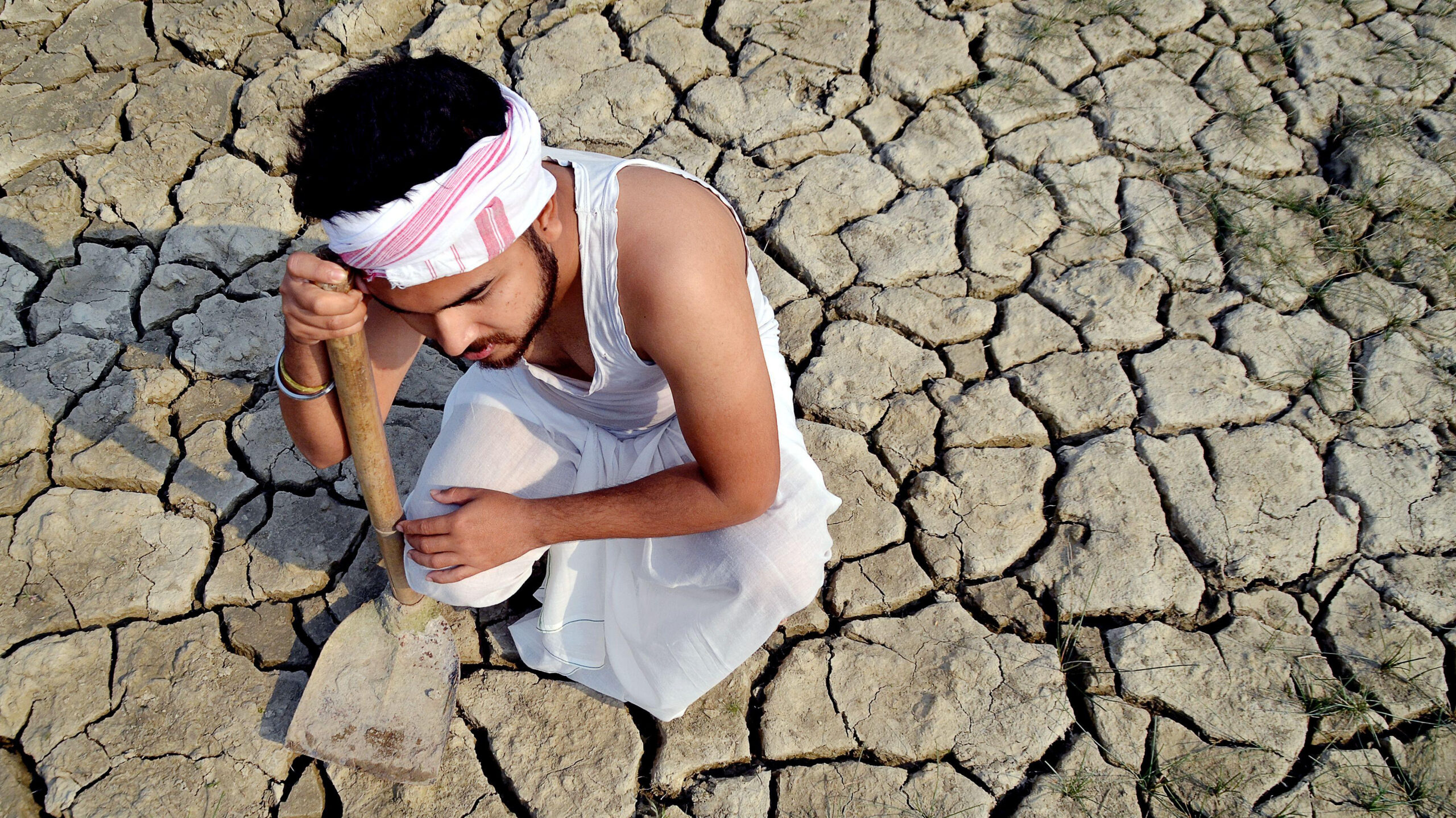
Intensification or expansion? A new approach to measuring agricultural change (VoxDev)
Jeffrey Bloem (IFPRI) and Clark Lundberg (San Diego State University) introduce a new method for linking village-level interventions with high-resolution earth observation data.
-
Celebrating 50 Years of Impact and Informing Food Policies Across Africa
IFPRI marks its 50th anniversary with a special event at the Africa Food Systems Forum in Dakar.
-
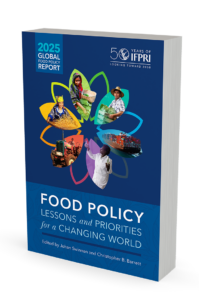
Launch of IFPRI’s 2025 Global Food Policy Report at Africa Food Systems Forum
IFPRI and AGRA will host a high-level Africa launch of IFPRI’s 2025 GFPR, “Food Policy: Lessons and Priorities for a Changing World,” at AFSF, highlighting linkages to the new CAADP…
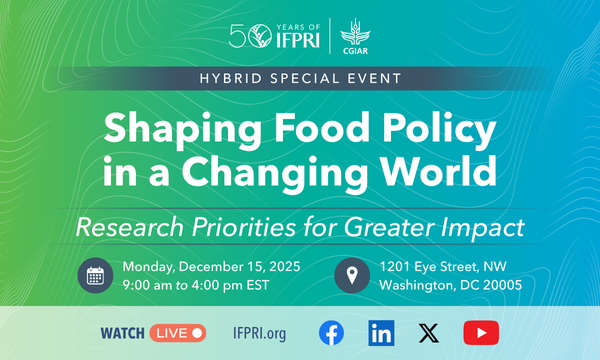
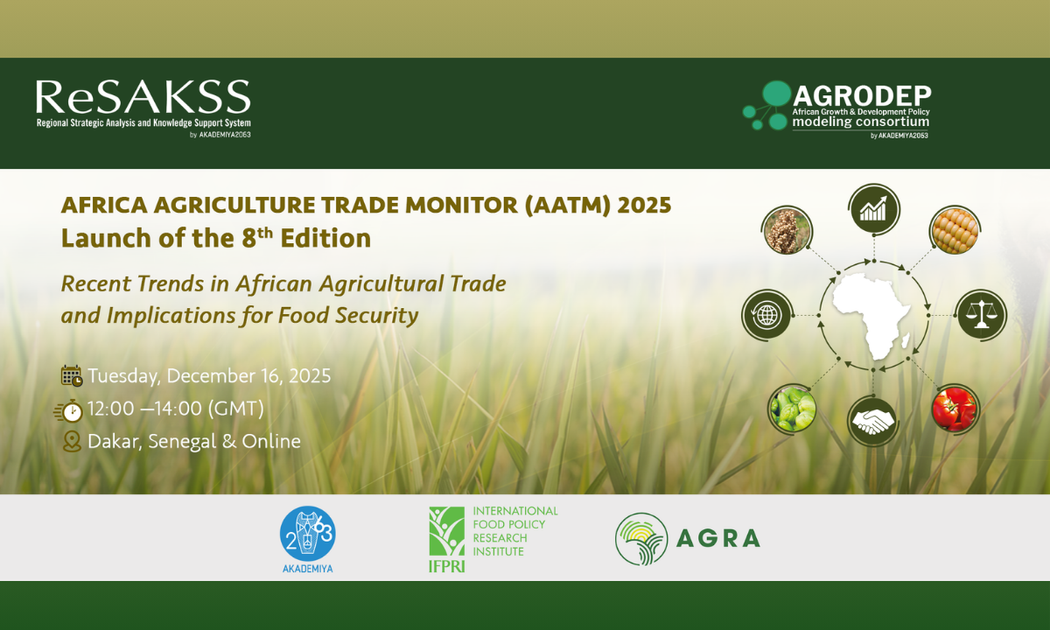
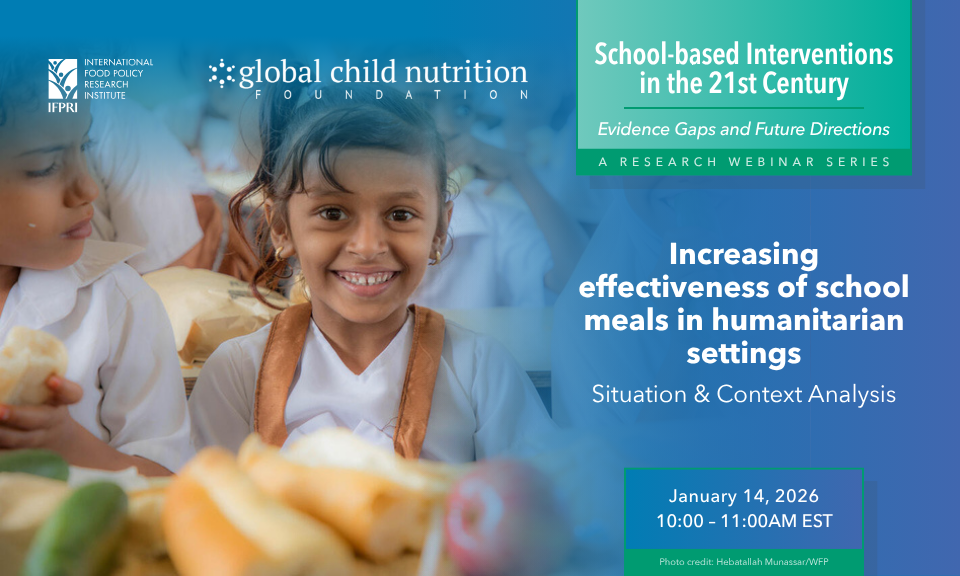
Our Events
Featured Publications
Working Paper
A good global investment for the United Kingdom: How investing in CGIAR reduces global poverty and benefits U.K. citizens
2025Hill, Ruth; Martin, Will; McNamara, Brian; Nia, Reza; Spielman, David J.; Takeshima, Hiroyuki; Vos, RobWorking Paper
A good global investment for the United States: How investing in CGIAR makes America stronger, safer and more prosperous
2025…more
Hernandez, Manuel A.; Headey, Derek D.; Hoffmann, Vivian; Kosec, Katrina; Martin, Will; Nia, Reza; Nin-Pratt, Alejandro; Piñeiro, Valeria; Takeshima, Hiroyuki; Vos, Rob; Zambrano, Patricia; Zhang, WeiJournal Article
Estimating multidimensional development resilience
2026Lee, Seungmin; Abay, Kibrom A.; Barrett, Christopher B.; Hoddinott, John F.

What Do We Know About the Future of Food Systems?
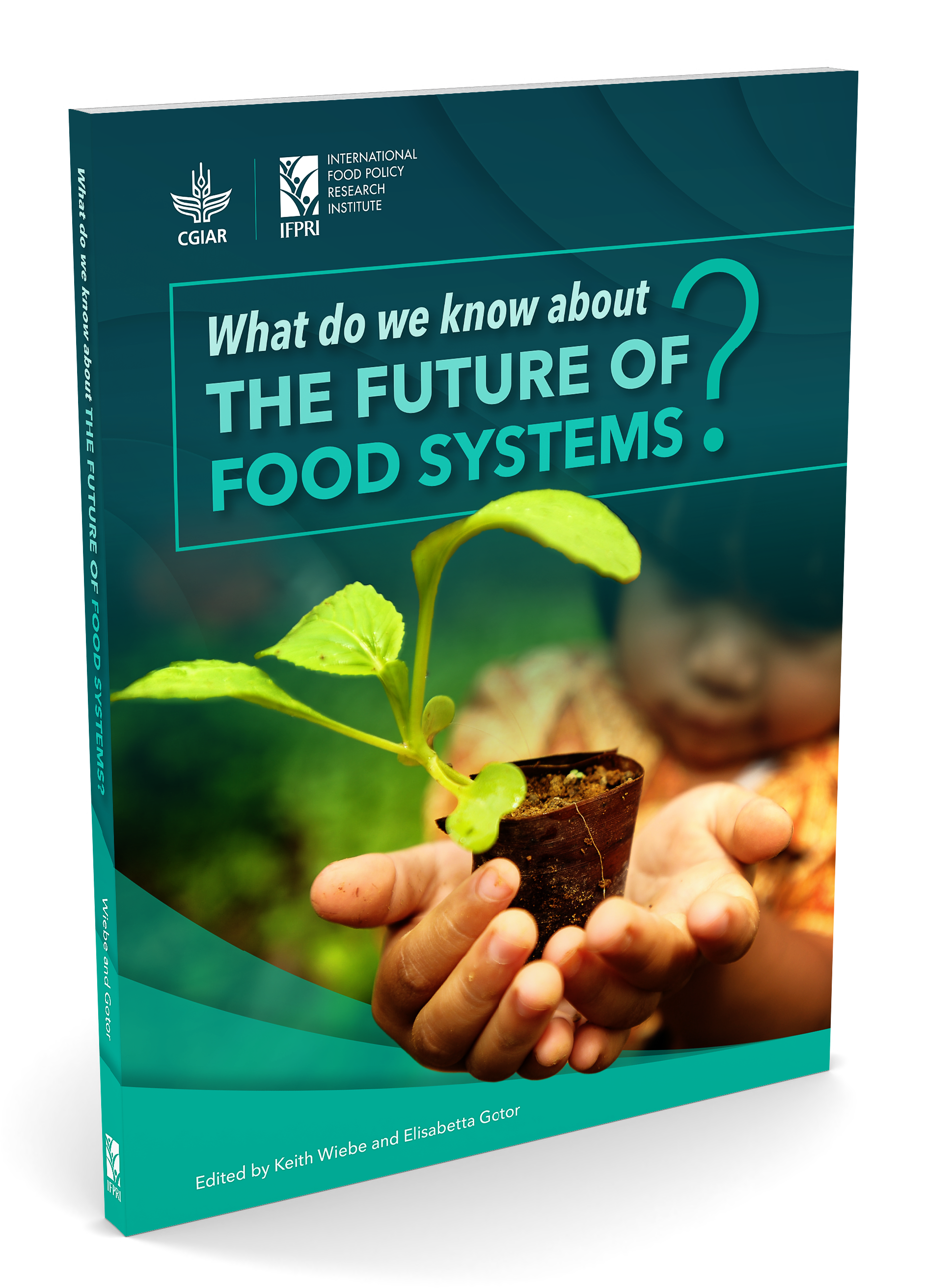
IFPRI Book published in July 2025
This book, What Do We Know About the Future of Food Systems?, is a collection of short chapters that synthesize current knowledge about different aspects of the future of food systems. Written by more than 100 scientists from around the world with expertise in a wide range of related disciplines and regions, these chapters provide accessible overviews of the latest foresight research on each topic, guide readers toward more detailed information, and offer insights into how our knowledge of future trends can be improved.
IFPRI and CGIAR
IFPRI is a Research Center of CGIAR, the world’s largest global agricultural innovation network. IFPRI researchers collaborate closely with researchers from other CGIAR Centers, and our work contributes to the CGIAR mission of delivering science and innovation that advance the transformation of food, land, and water systems in a climate crisis.

Experts in Our Field
IFPRI’s experts work around the world to provide the evidence that supports effective policies to sustainably reduce poverty and end hunger and malnutrition.
600+
staff across the world
80+
countries where we work
#1
in the field of Agricultural Economics
20,000+
research outputs
Meet a Researcher
Dr. Danielle Resnick currently is a Senior Research Fellow in the Markets, Trade, and Institutions Unit at the International Food Policy Research Institute (IFPRI) and a Non-Resident Fellow at the Brookings Institution in the Global Economy and Development Program. Key research areas include the political economy of agricultural policy and food systems, decentralization, urban governance, informality, and democratization. She has conducted analysis, policy outreach, and/or fieldwork in a wide range of countries, including Botswana, Burkina Faso, Ghana, India, Kenya, Malawi,…


From our video channel
Mamata Pradhan, Research Coordinator
In this video, Mamata Pradhan, Research Coordinator in the Development Strategies and Governance Unit, discusses her diverse research topics, including scaling up climate-smart agriculture in South Asia, agrifood trade, and agricultural transformation, as well as her advice for the next generation of researchers.
“Faces of IFPRI” is a series of interviews with IFPRI colleagues around the world, showcasing the diversity of talent, geographies, and research interests across the Institute.

Making a Difference Blog Series
In 2014, IFPRI and the Gates Foundation launched the AReNA project to bridge agriculture and nutrition research, addressing data gaps and advancing understanding of how agriculture can better improve diets and nutrition worldwide.
The AReNA project created a one-of-a-kind dataset that links nutrition-related indicators to agricultural and environmental indicators. The dataset has been used for countless studies on the determinants of child stunting, wasting, and feeding practices.
AReNA was the first project to use the World Bank’s International Comparison Program (ICP) data on retail food prices—covering 175 countries and 800 food items—to study the affordability of healthy and unhealthy diets. It significantly influenced the adoption of healthy diet metrics in FAO-led State of Food Security and Nutrition reports and led to the widely-cited finding—used by the FAO, World Bank, and others—that 3 billion people cannot afford a healthy diet.