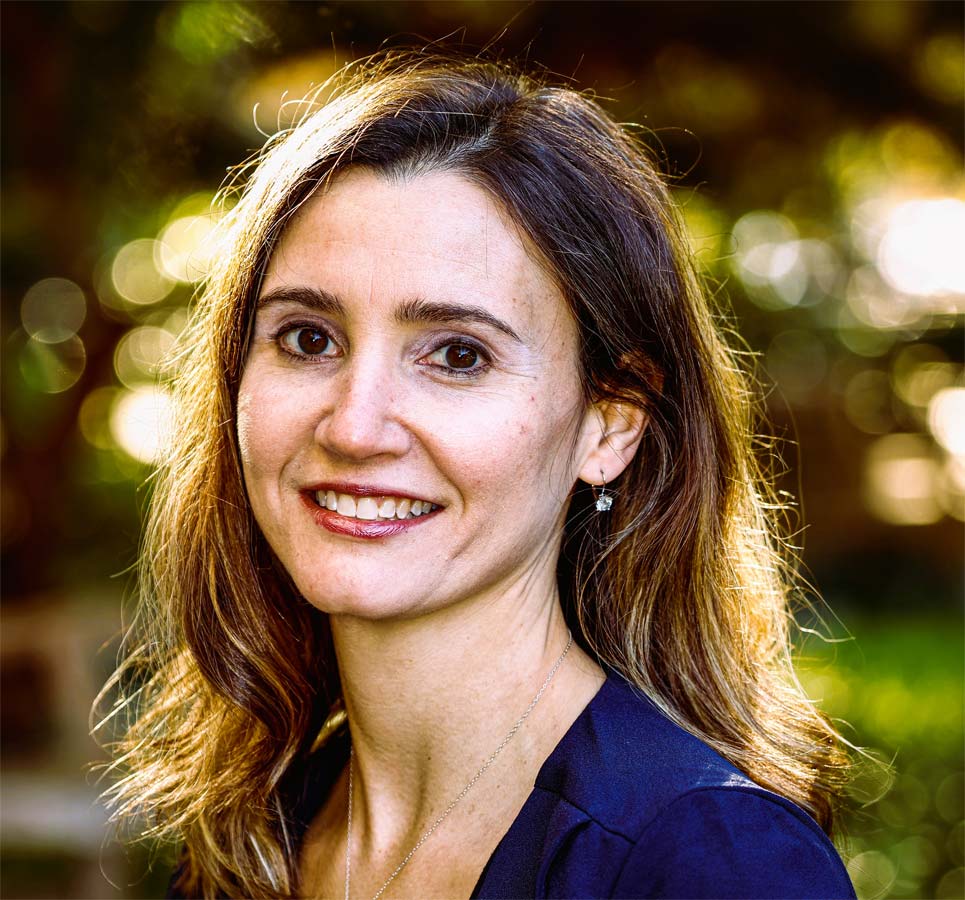
Dr. Danielle Resnick currently is a Senior Research Fellow in the Markets, Trade, and Institutions Unit at the International Food Policy Research Institute (IFPRI) and a Non-Resident Fellow at the Brookings Institution in the Global Economy and Development Program. Key research areas include the political economy of agricultural policy and food systems, decentralization, urban governance, informality, and democratization. She has conducted analysis, policy outreach, and/or fieldwork in a wide range of countries, including Botswana, Burkina Faso, Ghana, India, Kenya, Malawi, Madagascar, Mozambique, Nepal, Nigeria, Senegal, South Africa, Sudan, and Zambia.
Her work has appeared in journals such as Comparative Political Studies, Comparative Politics, Food Policy, Nature Food, and World Development, among others. She has authored or co-edited several books, including The Political Economy of Food System Transformation: Pathways to Progress in a Polarized World (with Johan Swinnen, OUP/IFPRI, 2023), Ghana’s Economic and Agricultural Transformation: Past Performance and Future Prospects (with Xinshen Diao, Peter Hazell, and Shashi Kolavalli, OUP/IFPRI, 2019), and Urban Poverty and Party Populism in African Democracies (Cambridge University Press, 2014). Her analysis and commentary also have been featured in several popular outlets, including Foreign Policy, The Washington Post, Newsweek, Der Spiegel, National Public Radio, Radio France International, France24, and Voice of America.
She has served in several advisory roles, including currently on the UN’s High-Level Panel of Experts on Food Security and Nutrition for the 2024 report on Strengthening Urban and Peri-Urban Food Systems and on the advisory group for the World Bank’s Poverty and Equity Global Practice. She previously was a member of the Lead Expert Group for the Global Panel on Agriculture and Food Systems for Nutrition (GloPan) for the 2020 report on Future Food Systems. Dr. Resnick further serves as a country expert for the Bertelsmann Transformation Index and currently sits on the editorial boards of Journal of Development Studies, Regional and Federal Studies, and Populism.
She received her PhD in Government from Cornell University, MSc in Development Studies from London School of Economics, and BS in International Political Economy from Georgetown University’s School of Foreign Service.
Languages spoken: English, French