






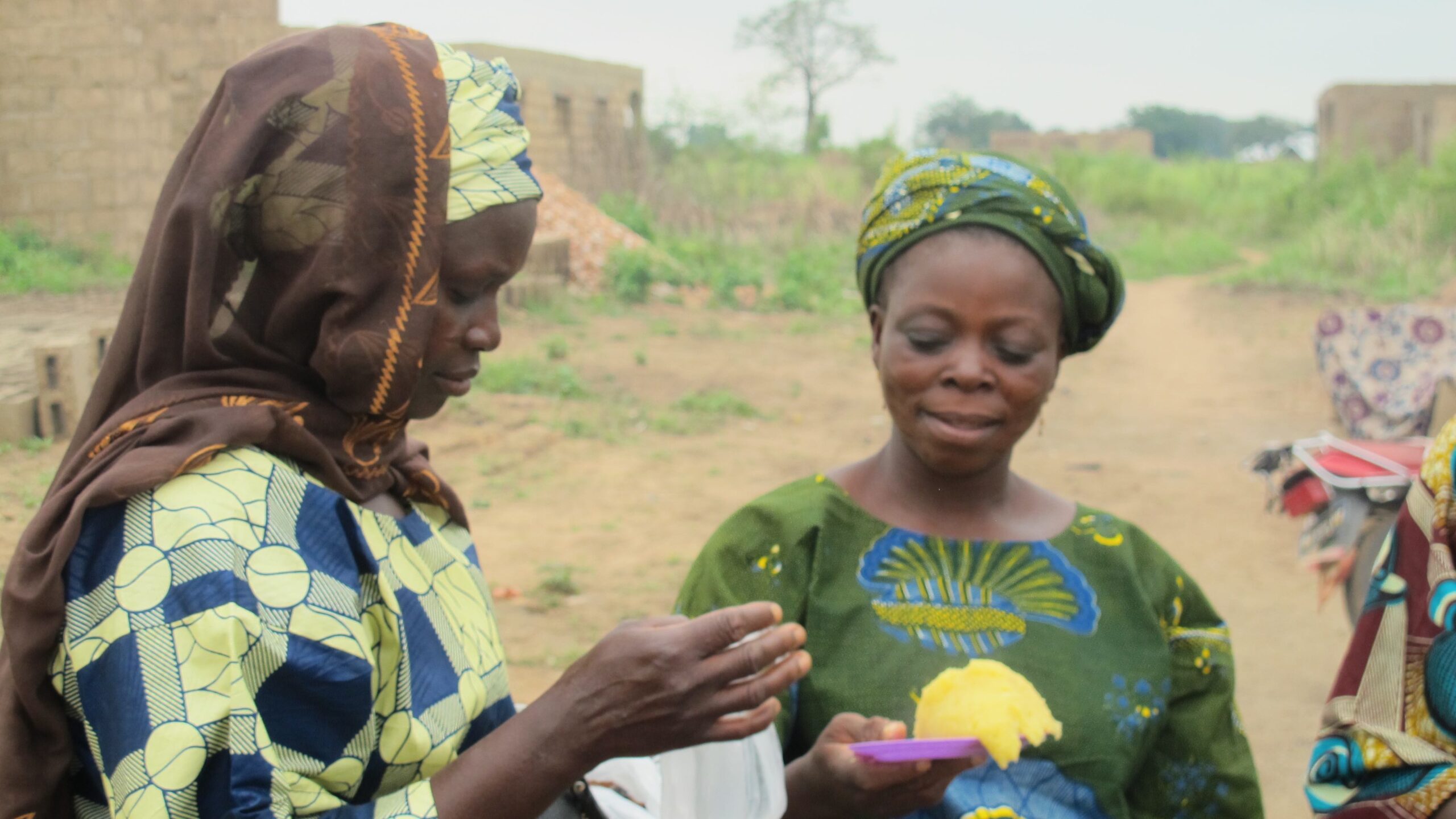
Key takeaways
•Biofortification programs have expanded rapidly worldwide, creating a need for reliable measures of how many people consume nutrient-enriched crops.
•A new peer-reviewed tool developed by HarvestPlus and partners provides the first standardized, replicable way to estimate the reach and national coverage of biofortified foods.
•This tool estimates that 177-293 million people in Bangladesh, Pakistan, and Nigeria consumed biofortified foods in 2023.
Biofortification—increasing the nutritional value of crops through selective breeding—helps to reduce or prevent micronutrient deficiencies, a major public health problem globally.
Promotion and delivery of biofortified crops, including iron-enriched beans and vitamin A-enriched orange sweet potato, began about a decade ago. Since then, a number of countries have embraced these crops and scaling has occurred rapidly, especially in the last five years.
This accelerated scaling has created challenges for policymakers and program managers who need data to fully understand the national reach of biofortification programs. Yet, a reliable, standardized method for estimating how many people are consuming biofortified foods did not exist.
A newly published, peer-reviewed tool now fills that gap. Developed by researchers at HarvestPlus at IFPRI and GroundWork, the tool provides a robust, systematic, and replicable way to estimate the reach of a biofortification program (the number of people eating biofortified foods) and its coverage (the extent to which the program has been scaled nationally). The tool—freely available as part of the research publication—is accessible as a downloadable spreadsheet, allowing program managers to enter their own data using preset formulas.
What estimates show
HarvestPlus is using this tool to estimate the reach of biofortified foods in countries where it leads scaling programs, providing transparency for how the performance of programs is being assessed. Based on data from 2023, researchers estimate that:
- In Bangladesh: up to 16 million people (~9% of the population) were consuming zinc-enriched rice.
- In Pakistan: up to 173 million people (~70% of the population) were consuming zinc-enriched wheat.
- In Nigeria: up to 66 million people (~29% of the population) were consuming vitamin A-enriched maize, and up to 38 million people (~17% of the population) were eating vitamin A enriched cassava.
In total, for these four crops in the three countries studied, the estimates show that between 177 and 293 million people consumed biofortified foods in 2023.
How the tool works
The tool’s methodology follows a stepwise approach to estimate the consumption of biofortified foods using primary data from HarvestPlus post-harvest farmer monitoring surveys, as well as secondary data such as metrics from the UN Food and Agricultural Organization (FAOSTAT). This is particularly valuable to program managers and policymakers so they can routinely measure the estimated national performance of their programs with readily available data for any given year. In simplified form, the step-by-step process is:
- Gather primary data on the quantity of biofortified seed planted each year.
- Determine the quantity of biofortified crops harvested and available for human consumption.
- Calculate “on-farm” consumption: the number of people in farming households consuming the biofortified food they grow and how much they eat.
- Calculate “off-farm” consumption: the quantity of biofortified food available on the market and how many people purchased and are consuming it.
- Add the on-farm and off-farm reach together to calculate the total reach at national level and the proportion of the national population that consumed biofortified foods.
Final estimates are expressed as a range to reflect that it is not known whether consumers fully replace traditional varieties with biofortified ones or only partially substitute them.
A strength of the tool is its ability to estimate the reach and coverage of crops with “invisible” traits like zinc in zinc-enriched wheat and rice, and their off-farm (market-based) consumption. It also incorporates country- and crop-specific sociocultural nuances, because there is no one-size-fits-all approach to agricultural-nutrition programming. To determine how much biofortified food people eat, results from surveys of farming households are assessed together with market consumption patterns. The methodology also accounts for key factors such as seed availability, average crop yield, post-harvest crop losses, and share of crops allocated to animal feed or farm-saved seed.
The results generated from this tool can be used to perform additional analyses to estimate reach per specific demographic groups and the seed, area, and grain market share of biofortified crops.
A free resource for decision-making
This tool provides a cost-effective approach to generate required evidence for designing programs and evaluating their effectiveness. It is freely available for policymakers, program managers, and anyone seeking to evaluate the performance of biofortification programs. By providing a clearer picture of how many people these nutritious foods reached and to what extent, it helps to validate the cost-effectiveness of the reach of biofortification and offers a critical foundation for evidence-based decision-making in agricultural‑nutrition programs worldwide.
Richard Alioma is Senior Manager of Socio-Economic Research, Monitoring and Evaluation with IFPRI’s HarvestPlus program; Rita Wegmüller is a Senior Associate, Nutrition & Neglected Tropical Diseases with GroundWork; Bho Mudyahoto is HarvestPlus Head of Monitoring, Evaluation, and Learning; James P Wirth is Co-Founder and Managing Director at GroundWork; Wolfgang Pfeiffer is the former Director of R&D for HarvestPlus and Senior Consultant for the Alliance Bioversity & International Center for Tropical Agriculture; Munawar Hussain is a HarvestPlus Consultant; Erick Boy is former Chief Nutritionist at HarvestPlus; Jen Foley is a HarvestPlus Senior Program Manager. Opinions are the authors’.
Reference:
Alioma, Richard; Wegmüller, Rita; Mudyahoto, Bho; Wirth, James P.; Pfeiffer, Wolfgang; et al. 2026. Estimating the number of people eating biofortified foods on-farm and from markets: a detailed methodology and tool. Current Developments in Nutrition 10(3): 107653. https://doi.org/10.1016/j.cdnut.2026.107653