



Digital agricultural technologies such as precision farming, mobile phone-based advisory platforms, smart irrigation, and satellite crop monitoring systems promise increased efficiency, environmental sustainability, and farm productivity. The rapid expansion of artificial intelligence-based applications—in new tools and integrated into existing ones—is accelerating this trend.
Yet these digital tools can have significant downsides for many farmers, particularly smallholders in low- and middle-income countries (LMICs) using proprietary platforms not tailored to their needs. As a result, many farmers are marginalized or excluded from this important technology.
As these precision tools continue to be deployed around the world, in both LMICs and high-income countries (HICs), it is essential to address these problems by ensuring design and governance structures for digital agricultural technologies that address farmers’ needs, protect their rights, and build inclusive, equitable food systems. Absent such efforts, digital agriculture risks replicating historical patterns of exclusion and deepening existing inequalities.
Design disconnects and farmer agency
Digital technologies often end up privileging users who already have access, skills, or institutional support. These inequities originate in design flaws that reflect more than just technical oversights; they expose deeper power asymmetries embedded in the systems shaping everyday agricultural decisions.
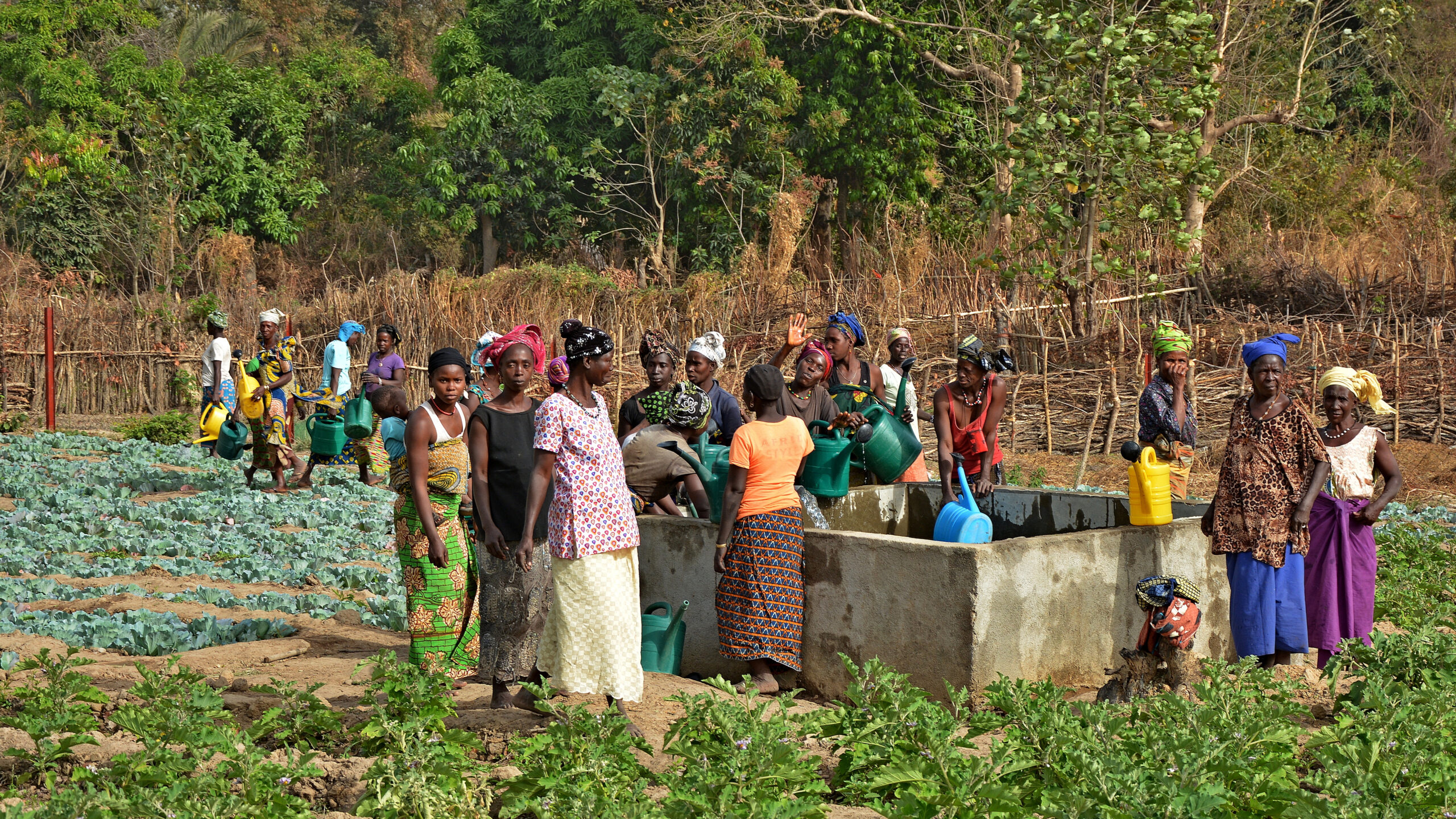
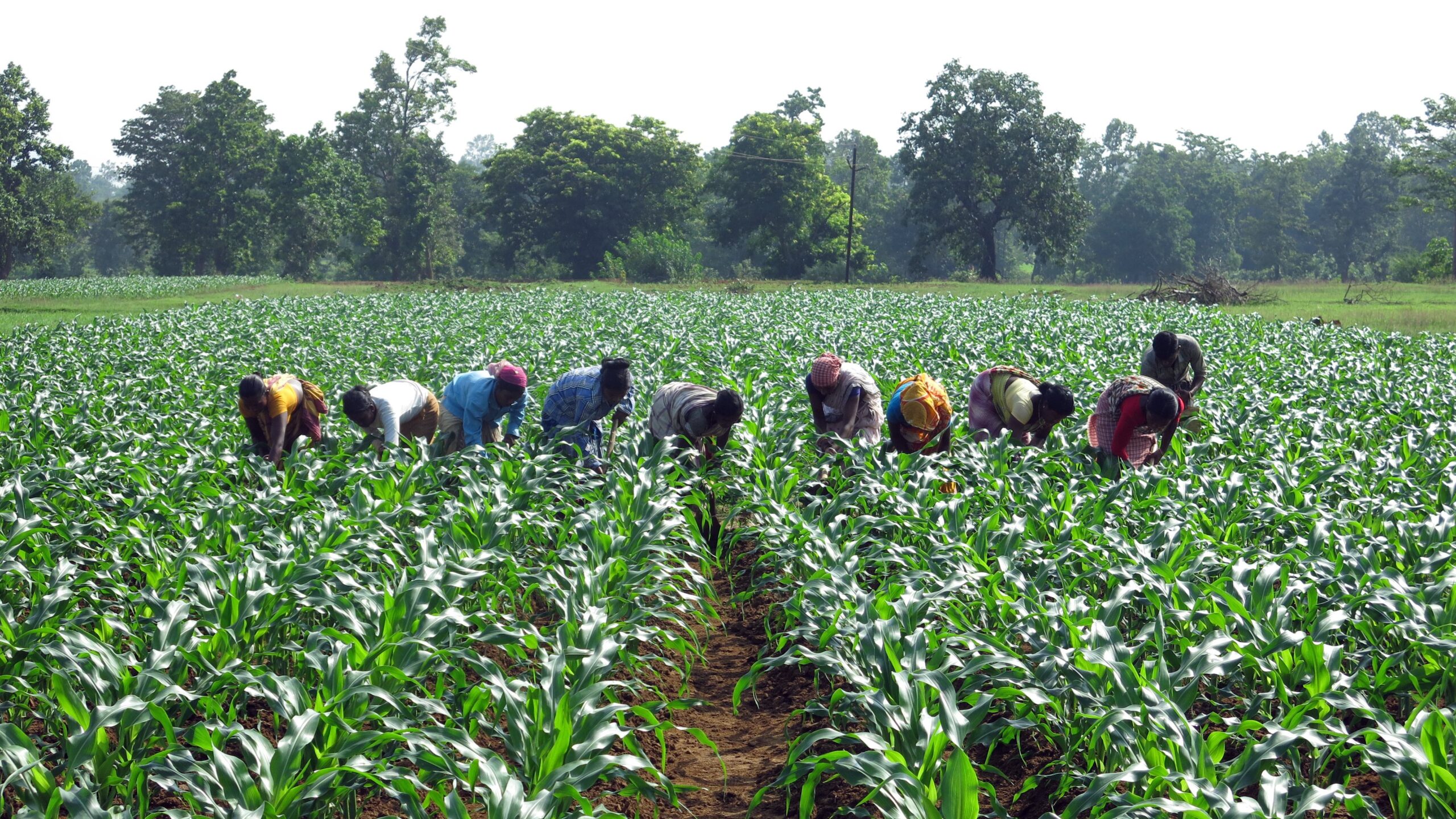
To begin with, many farmers in LMICs lack consistent access to digital technologies. For instance, in Kenya and Zambia, many smallholder farmers do not own smartphones, live in areas with patchy cellular and internet connectivity, and have limited digital literacy. Digital agricultural platforms rarely account for this diversity in user ecosystems.
Another problem is the mismatch between standard technology development practices and the needs of farmers. Digital agricultural technologies aim to support farmers’ livelihoods, but they also prioritize commercialization, efficiency, scalability, and data collection over usability, adaptability, farmers’ agency, autonomy, and capacity to adapt technologies to their local contexts. Many digital innovations are created with little to no input from farmers, failing to draw on their experiential and local knowledge, and only later adjusted to be useful in different contexts.
As a result, these tools are often rolled out in a “one-size-fits-all” format that fits poorly with diverse ecological conditions, local infrastructure, and everyday farming realities. In practice, farmers, rather than companies, are forced to adapt by changing their routines, working around complex digital features, or employing the tools in unintended ways to make them usable. Only after widespread complaints, pilot feedback, or sustained low adoption do some firms make design changes, often through software updates or limited customization. This reactive approach places the burden of adjustment on farmers and can delay effective use, particularly for farmers with limited time, digital literacy, or connectivity.
Moreover, many applications run on closed proprietary platforms that restrict farmers from switching tools, integrating data, and customizing tools to meet local needs—limiting their agency and adaptability. For instance, farmers using proprietary farm management systems such as John Deere’s Operations Center cannot easily export yield or soil data into independent decision-support apps, preventing them from customizing advice or integrating data streams across platforms. In LMICs such as Kenya, digital agricultural platforms bundle inputs, credit, and crop marketing together, making it difficult to switch providers of one service without losing access to the others.
Challenges of agricultural data governance
Many of these challenges can be addressed by developing better governance approaches that give farmers more control over applications and their own data. Yet this is easier said than done.
The biggest obstacle may be that most farmers do not meaningfully participate in shaping how their data is governed. Many smallholders remain unaware of how their data is collected, processed, and monetized. The inability to switch services or integrate different tools further reduces their autonomy and flexibility.
Efforts to improve governance also face persistent challenges stemming from fragmented infrastructures, undefined ownership rights, and existing practices that often exclude farmers from decision-making. In both HICs and LMICs, digital agriculture initiatives tend to be introduced without clear rules around access and benefit sharing.
For instance, overlapping platforms, limited interoperability, and opaque data flows prevent farmers in some LMICs from effectively using digital systems.
In practice, farmers must navigate multiple disconnected tools, one for market prices, another for input subsidies, and another for extension advice, each requiring separate registration and repeated data entry. Because these systems cannot exchange data, farmers are forced to resubmit basic information (such as ID numbers, farm size, or crop details) and cannot transfer records across platforms, increasing time costs and discouraging sustained use.
Opaque data practices further weaken farmer control. Farmers are often required to share farm and personal data without clear information about who can access it, how it is used, or whether it affects eligibility for subsidies, insurance, or credit. At the same time, weak institutional coordination across public agencies (such as ministries operating parallel registries or issuing conflicting extension messages) creates uncertainty about which platforms to trust. Together, these governance and infrastructure gaps concentrate power in technology providers and public agencies, leaving smallholders exposed to exclusion from services, unaccountable surveillance, and decisions made without their knowledge or meaningful input.
At the center of these challenges is control over data. Agricultural technology firms often assert proprietary rights over both on- and off-farm data through contracts and restrictive platform terms, limiting how farmers can use or share their own information. In LMICs, where legal frameworks for data privacy and consent are often weak or nonexistent, corporate actors are increasingly able to extract value from farm data without oversight or equitable benefit-sharing mechanisms.
Current efforts
Most existing governance efforts are voluntary industry codes. While such initiatives, including the American Farm Bureau’s Privacy Principles or New Zealand’s Farm Data Code, encourage companies to improve transparency, consent, and responsible data use, they remain largely unenforceable guidelines rather than binding regulations, leaving farmers with limited protection, especially in LMICs.
Even comprehensive regulations such as the European Union’s General Data Protection Regulation (GDPR) offer only partial protection for farmers, as they focus primarily on personal data and rarely apply to digital agricultural data.
Open-data initiatives that make agricultural and government datasets freely accessible show promise in this area. These allow citizens to monitor government performance and enable researchers and non-governmental organizations to coordinate more effectively. Developers can use the raw data to build tools that give farmers clearer visibility into prices, weather, and market conditions. But these initiatives have their own issues; they often overlook consent, ownership, and accountability in data collection.
Addressing these governance failures will require deliberate policies that prioritize equity, transparency, and farmer agency in the digital transformation of agriculture.
Toward inclusive governance, innovation policy, and design solutions for digital agriculture
If designed well, binding or co-regulated governance frameworks for AI agriculture applications (rather than industry codes) can encourage farmer participation in app development and deployment, and help ensure that agritech firms adhere to transparent data practices, with clear guidelines on data ownership, consent, and sharing of benefits from generating and using the data. By embedding these principles in enforceable rules, with independent oversight and farmer representation, such frameworks become more than aspirational and can actually shape behavior in practice.
Inclusive and participatory approaches to agricultural innovation are also critical (Figure 1). A justice-oriented approach calls for farmers to participate in the design of digital tools, ensuring that those who generate data are also active decision-makers in technology development and deployment.
Figure 1

In Ireland, for example, farmers contributed to the design of a smartphone app enabling easier communication with the Department of Agriculture, Food and the Marine through workshops, prototyping, and feedback. This participatory process resulted in an app more closely aligned with farmers’ daily routines and achieved higher adoption rates than conventional top-down approaches.
Similarly, a study documented how the Kenya Agricultural Livestock and Research Organization (KALRO) collaborated to innovate with farmers by combining digital apps, SMS, and USSD services (another form of mobile communications data), an interactive voice response (IVR) call center, and a network of local “resource farmers” to provide advice and overcome gaps in technical capacity. Farmers registered on KALRO’s platforms received geo-referenced weather and climate-smart agriculture advisories via basic phones, called in for voice-based support, and provided feedback on interface challenges (for example, asking developers to replace complex graphs with simple icons), which helped to address gaps in device access, digital literacy, and interpretation of technical information.
These cases demonstrate that co-design can succeed by drawing on farmers’ input regarding their data needs, usability requirements, and local contexts, while helping developers to reduce failure risks, increase uptake, and support donor goals. Co-design is not just a way to promote equity; it is a practical necessity. Unlike consumer apps, whose end-users can easily switch if dissatisfied, agricultural technology users have few choices; the applications have high switching costs and directly affect livelihoods.
This justice-oriented approach can broaden the availability of emerging technologies in local farming contexts while also strengthening farmer agency. There are additional ways to support this process. Bridging the digital divide is also essential, particularly through targeted investment in digital literacy, training, and infrastructure for marginalized groups such as smallholders, women, and low-skilled laborers.
By equipping these populations with the knowledge and resources to engage with emerging technologies, digital agriculture can become more equitable and accessible.
Conclusion
Digital agricultural technologies have become an integral feature of modern food systems. Yet any tool’s impact depends more on who controls, shapes, and benefits from it than on the technology itself.
Evidence from various countries shows that participatory design, farmer-centered governance, and hybrid regulatory frameworks enhance usability, trust, and ongoing adoption, yet these approaches remain underfunded and poorly institutionalized. This presents a clear policy choice: Governments and donors can either focus on rapid technology deployment that overlooks the needs of smallholders, or invest in inclusive infrastructure such as co-design capacity, digital inclusion, and enforceable data governance. Efforts by governments and donors should go beyond adoption metrics to also examine power, control, and accountability within digital agricultural systems.
Ayorinde Ogunyiola is an Assistant Professor of Sociology at Murray State University, Kentucky. Opinions are the author’s.