

Search IFPRI web
Filters
Found 7462 Results
-

Improving WTO Transparency: Shadow Domestic Support Notifications
Measurement Issues and Analysis for Eight Countries—EU, US, Japan, Norway, Brazil, China, India and the Philippines
One of the fundamental achievements of the Uruguay Round of multilateral trade negotiations that established the World Trade Organization (WTO) in 1994 was to create the first multilateral framework for disciplines on domestic farm support. However, compliance with international rules must be monitored and the WTO rules for support notifications have proven lax. Given the […]
-
Strength in numbers
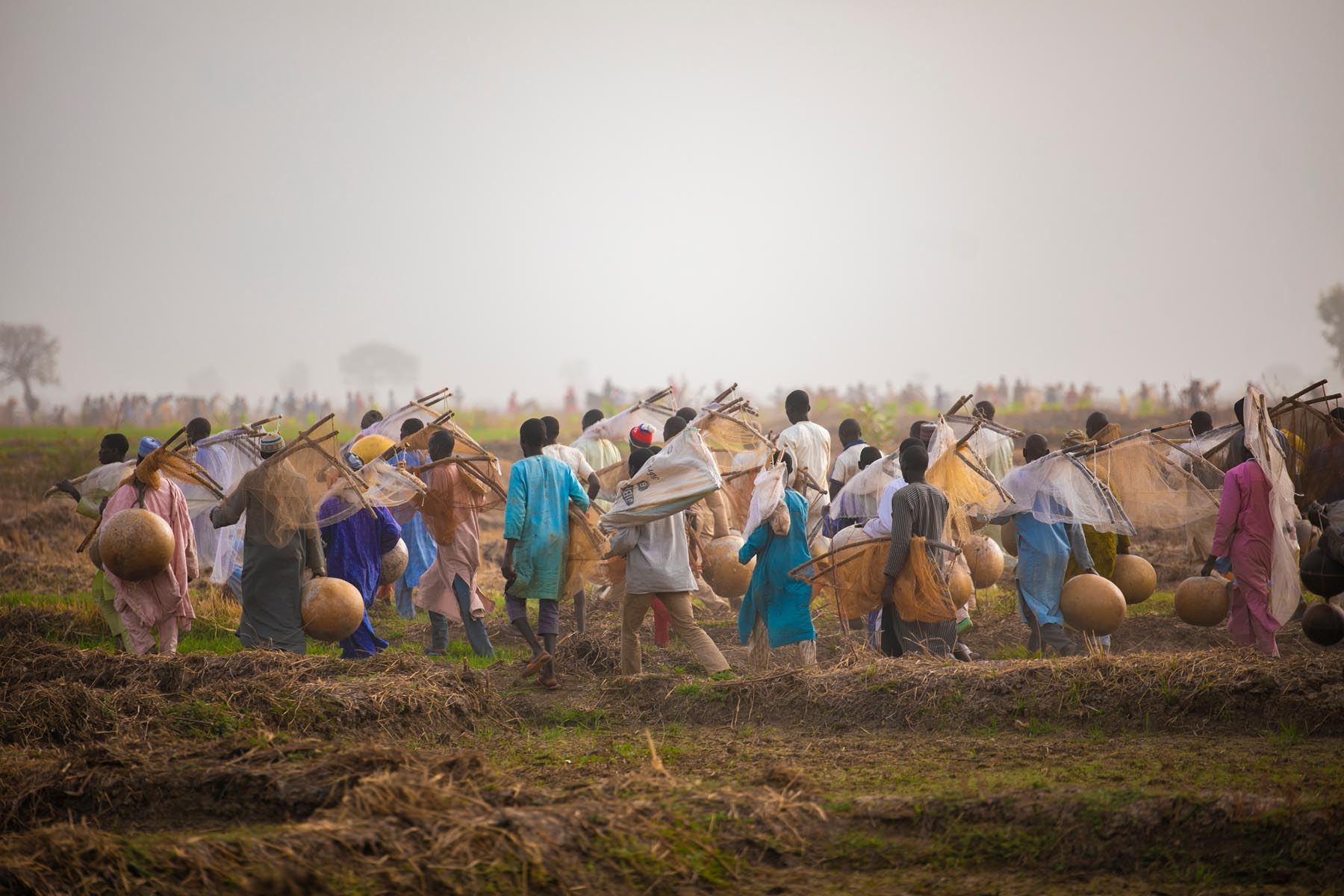
Poor people are often at great risk of losing the few assets they have when faced with an unexpected event, such as the death of a household member. But for the members of the Kalagala Twezimbe Association, located outside Kampala, Uganda, working together enables them to cope better when such “shocks” occur. By pooling their […]
-
Taking Action for the World’s Poor and Hungry People
2020 Seminar Series: Action for the World’s Poorest and Hungry
Despite much progress reducing poverty worldwide, a substantial number of the world’s poorest people are being left behind. New IFPRI research finds that 162 million of the world’s poorest people — the “ultra poor” — survive on less than 50 cents a day. They have benefited the least from substantial reductions in poverty around the […]
-
“If concentrated in a single nation, the world’s poorest people–the ultra poor–would comprise the world’s seventh most populous country.”
Press Release, November 6, 2007The World’s Poorest People Not Being Reached: New Study Examines Plight of Poor Living on Less than 50 Cents a Day Washington, DC—Despite much progress reducing poverty worldwide, a substantial number of the world’s poorest people are being left behind, according to a new report by the International Food Policy Research Institute […]
-
Impacts of a ‘Food for Education’ Program in Bangladesh
Standing Panel on Impact Assessment: Science Council Brief Number 3 As part of the overall CGIAR 2005 annual performance measurement exercise, the Science Council received 30 individual case studies of Center impact. These were the best examples of impact assessments done by the Centers during 2003–2005. The Science Council’s Standing Panel on Impact Assessment (SPIA) identified six of […]
-
Biofuels, Energy and Agriculture: Powering Towards or Away From Food Security?
Crawford Fund Annual Conference
The Crawford Fund’s annual conferences highlight an important aspect of feeding and greening the world. The future energy demands of rapidly-developing countries, the increasing concerns about the reliability of oil supplies and costs, the climate changes that are likely to result from burning fossil fuels and the certainty that transport will remain a major user […]
-
The Urbanization of Global Poverty: New Estimates
2020 Seminar Series: Action for the World’s Poorest and Hungry
One-quarter of the world’s consumption poor live in urban areas and that the proportion has been rising over time. By fostering economic growth, urbanization helped reduce absolute poverty in the aggregate but did little for urban poverty. Over 1993-2002, the count of the “$1 a day” poor fell by 150 million in rural areas but […]
-
Action for the World’s Most Vulnerable: Reaching the Poor During and After Conflict
2020 Seminar Series: Action for the World’s Poorest and Hungry
A third of those living in absolute poverty in developing countries live in countries defined as “difficult environments” due to conflict, or state collapse. What action can be taken for the poor when institutions are absent, much of a generation of implementers is missing, and security cannot be guaranteed? And by what means can action […]
-
Indigenous Peoples and Economic Opportunities in Latin America
2020 Seminar Series: Action for the World’s Poorest and Hungry
Despite the significant progress Latin America has made in reducing poverty for millions of its poorest citizens, abject poverty persists for more than 80 percent of its indigenous peoples. In this seminar, Emmanuel Skoufias will present findings from a new report (written with Harry Patrinos): “Economic Opportunities for Indigenous Peoples in Latin America.” The report […]
-
Social Protection to Overcome Poverty Traps and Aid Traps
2020 Seminar Series: Action for the World’s Poorest and Hungry
A growing proportion of development assistance is being devoted to relief efforts. This signals a worrisome pattern in which increasingly large numbers of vulnerable people have become trapped at low living standards from which they have difficulty escaping. There are potentially large returns to social protection policies that develop safety nets below the vulnerable to […]
-
Why Don’t “The Poor” Have A Louder Voice When They Are Many?
2020 Seminar Series: Action for the World’s Poorest and Hungry
A number of reasons have been used to explain why the poor do not have a louder voice in democracies where they form the majority or a large part of the population. Low levels of political activism, caste divisions, tribal frictions, regional differences are some of the reasons often given. Results from a new set […]
-
Policy Responses to the Spatial Concentration of the Poorest in Lagging Regions
2020 Seminar Series: Action for the World’s Poorest and Hungry
The spatial concentration of the poorest in regions within countries is a persistent and increasing feature of income inequality in many countries. High and rising spatial inequalities pose a significant development challenge. What types of policies effectively address these inequalities? Should we invest more in the places where the poor concentrate, or in the places […]
-
Bioenergy and Agriculture
2020 Vision Panel Discussion
Bioenergy is the subject of increasing attention around the world. It appears to offer hope for environment-friendly energy that would also be a boon to the world’s farmers. Can bioenergy fulfill the promise claimed by its proponents? Can it become an environmentally sustainable, economically viable, pro-poor source of energy? What challenges will meeting these goals […]
-
How Will Agriculture Adapt to a Shifting Climate?
Global climate change poses particular risks to poor farmers in developing countries, but there are steps that farmers, policymakers, and researchers can take to minimize losses and adapt to climate change. Past emissions that are already in the pipeline mean that even if global emissions stopped today, the Earth’s temperature would rise by about 0.5 […]
-
ECOGENLit – Economics Literature on Plant and Livestock Genetic Resources
On October 23-25, 2003, Bioversity International convened a workshop for the System-wide Genetic Resources Programme (SGRP) of the CGIAR about “Managing Agricultural Biodiversity for Sustainable Development,” hosted by the World Agroforestry Centre (ICRAF) in Nairobi, Kenya. As an outcome of that workshop, SGRP commissioned a paper assessing the status of valuation methods for crop and livestock components of agricultural biodiversity, with […]
-
Countries with a History of Conflict Rank Poorly on New Global Hunger Index
Washington, DC—According to the Global Hunger Index, developed by the International Food Policy Research Institute (IFPRI), of the 12 countries with the highest levels of hunger, nine were affected by civil wars or violent conflicts. The 10 countries that scored the worst are all in Sub-Saharan Africa, but South Asia is also a hotspot of undernutrition. […]
-
Agricultural and Economic Development Strategies and the Transformation of China and India
What can the world learn from the process of economic reform in China and India? Does the sequencing of reforms matter? What lessons do the experiences of in these countries offer for other developing countries and countries in economic transition? What could China and India learn from their own as well as each other’s experiences?
-
Pro-Poor Public-Private Partnerships for Food and Agriculture
An International Dialogue
We are recognizing that many solutions to the complex challenges facing rural communities and food systems in developing countries can only be found through innovative partnerships and collaborations in agricultural research and development. Partnerships between public research institutions, private firms, and civil society organizations offer a means of tapping the strengths of diverse actors, while […]
-
Agriculture, Food Security, Nutrition and the Millennium Development Goals
In 2000, the member states of the United Nations committed themselves to creating a “more peaceful, prosperous and just world,” to “free[ing] our fellow men, women and children from the abject and dehumanizing conditions of extreme poverty,” to making “the right to development a reality for everyone,” and to ridding “the entire human race from […]
-
HIV/AIDS and Food and Nutrition Security
We are at a watershed. Knowledge of the devastating interactions between HIV/AIDS and food and nutrition security has been growing in recent years, but the crucial next step – of using this knowledge to improve and scale up effective actions – has yet to be taken. Much past work on the HIV/AIDS-hunger nexus has been […]