

Back

Who we are

With research staff from more than 70 countries, and offices across the globe, IFPRI provides research-based policy solutions to sustainably reduce poverty and end hunger and malnutrition in developing countries.

Elizabeth Bryan

Elizabeth Basauri Bryan is a Research Fellow in IFPRI’s Agrifood Innovation and Resilience (AIR) Unit leading work on equitable climate action. She has extensive experience integrating gender and social inclusion across large, interdisciplinary, multi-partner research programs in sub-Saharan Africa and South Asia, and currently leads the Gender, Climate Change, and Nutrition Integration (GCAN) Initiative.

Back

What we do

Since 1975, IFPRI’s research has been informing policies and development programs to improve food security, nutrition, and livelihoods around the world.

Where we work

Back

Where we work

IFPRI currently has more than 480 employees working in over 70 countries with a wide range of local, national, and international partners.

Policies to address COVID-19’s impact on Africa’s informal sector

August 6, 2020

  • 2:00 – 3:15 pm (Europe/London)
  • 9:00 – 10:15 am (US/Eastern)
  • 6:30 – 7:45 pm (Asia/Kolkata)

IFPRI Senior Research Fellow Danielle Resnick is participating in an International Growth Centre (IGC) webinar that explores the impact of COVID-19 on informal workers and discusses necessary policy measures to enhance social protection coverage and support mechanisms to protect informal workers if they lose their livelihoods.

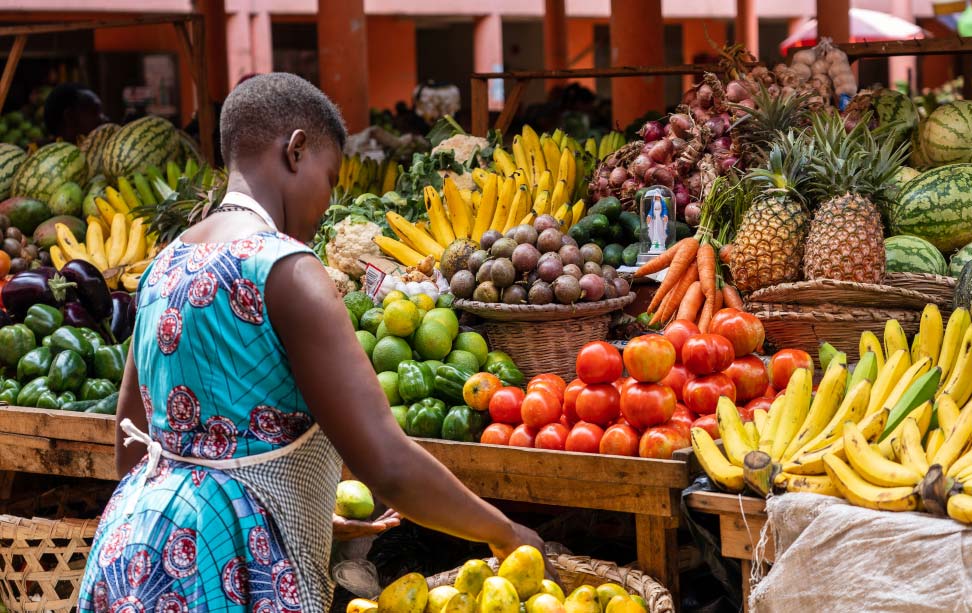
Ongoing IGC surveys of traders in Nigeria and Sierra Leone show they have less customers, challenges restocking, and drops in income after national lockdowns were implemented in those countries. Informal traders are particularly impacted by social distancing rules and have less access to clean water and sanitation. Additionally, with 90% of women across Africa employed in the informal sector, COVID-19 threatens their economic self-sufficiency from plying their trade and contributing to the livelihood of their household.