





This post first appeared on the Africa Food Systems Forum website.
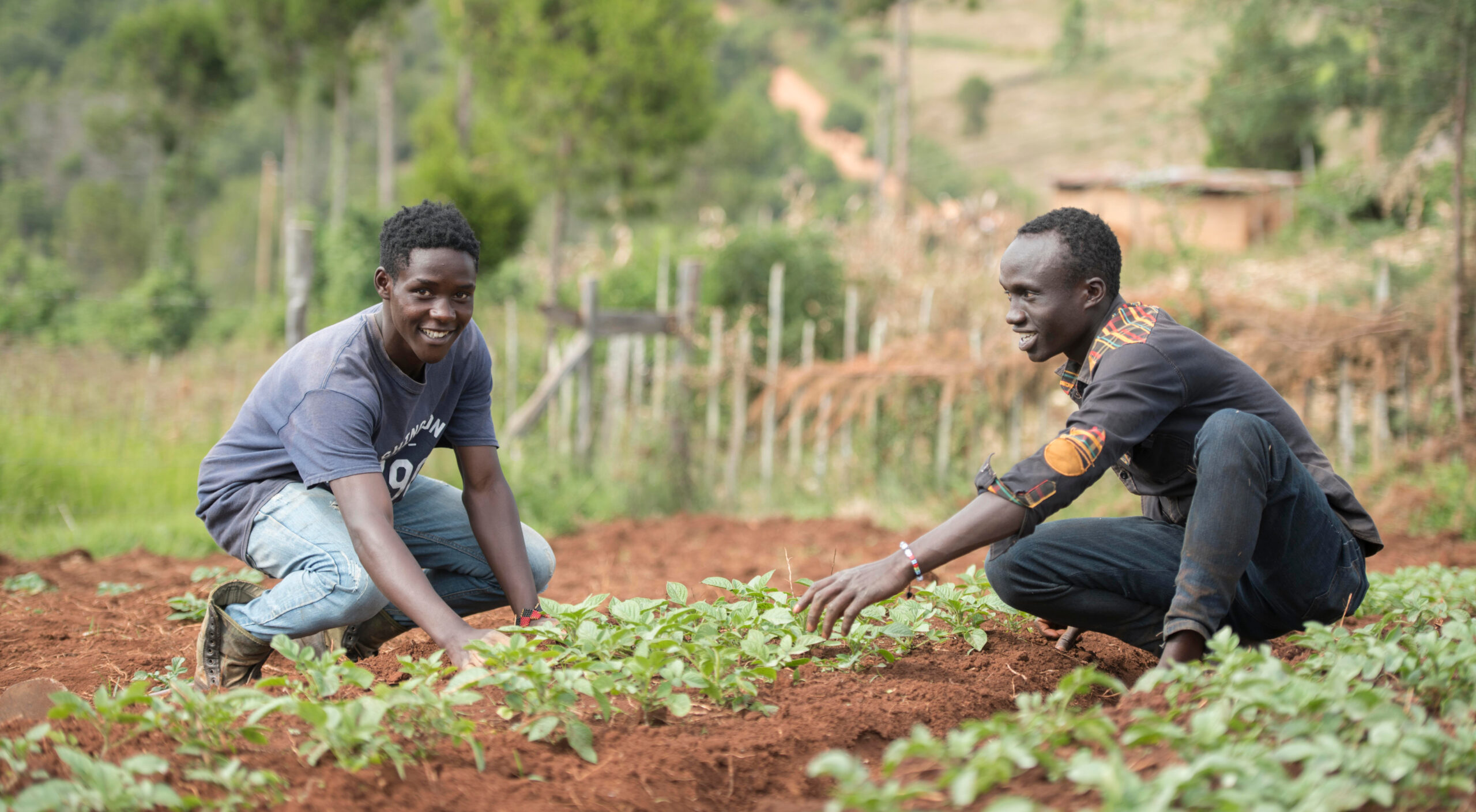
Over 60% of Africa’s people are under 25. By 2035, more young Africans will join the workforce each year than in the rest of the world combined, underscoring the urgency of the 2025 African Food Systems Forum (AFS Forum) theme: “Africa’s Youth: Leading Collaboration, Innovation, and Implementation of Agri-Food Systems Transformation.”
The spotlight on youth was clear from the outset. Presidents Bassirou Diomaye Faye of Senegal and Paul Kagame of Rwanda engaged in substantive dialogue with young agrifood entrepreneurs from across the continent. Their energy was sustained through to a jubilant award ceremony celebrating the “Go-Gettaz” along with other prizes honoring young Africans.
Youth at the center of food systems transformation
This year’s Africa Food Systems Report (AFSR), produced by AGRA, saw youth playing a key role. For the first time, the report expanded its focus beyond just agriculture to a broader food systems view, stressing that food systems transformation must be driven by and for youth. For young Africans, the report confirms that their role extends far beyond being recipients; they are essential players, farmers, agripreneurs, processors, innovators, and policymakers, whose leadership will decide whether Africa moves past fragmented gains, toward meaningful and systemic change.
Equally encouraging was the signing of the Global Future Foods Memorandum of Understanding between AFS Forum and the Gulf Cooperation Council (GCC), which will open new markets for African youth innovators. The Gates Foundation and the World Bank co-authored a white paper on digital public infrastructure for agriculture, emphasizing youth-led tech solutions—another commendable step from two heavyweights in “action over rhetoric.”
To sustain momentum, the energy around youth at AFS Forum must translate into concrete initiatives and policies that tackle the opportunities and significant challenges of the African youth bulge. I was therefore encouraged by the launch of a $6.7 million Food Trade Corridors Partnership by the African Union, AGRA, and the United Kingdom, which will boost intra-African trade and support youth-led agribusiness.
Policy pathways: From AFS Forum to CAADP
Leaders frequently referenced the third phase of CAADP (2026–2035), which the Kampala Declaration initiated. This forward-looking blueprint guides African policymakers in transforming the continent’s agrifood systems in line with the African Union’s Agenda 2063. It represents a significant evolution from earlier frameworks by embedding equity, empowerment, and accountability as central principles. The numerous references to the Kampala Declaration at the AFS Forum show how seriously decision-makers take it.
The CAADP Kampala Declaration calls for a shift in perspective: Youth should be recognized as active co-creators of policy and innovation. It advocates for at least 30% youth representation in agrifood value chains and governance platforms. The third phase of CAADP also aims to promote inclusive financing models, land access reform, and youth-focused investment platforms, while emphasizing technical and vocational education (TVET), digital literacy, and entrepreneurship training. Youth-led agritech, climate-smart agriculture, and data-driven policy engagement are highlighted, all with youth at the core.
I, like many others, strongly support the CAADP framework, whose goals clearly align with CGIAR’s, and its concrete results drive credibility: Since its inception in 2003, CAADP has significantly increased public investments in agriculture, and improved coordination and accountability through a Biennial Review, which leaders introduced in 2017 to track progress, compare country performance, and embed a culture of evidence-based and success-driven policymaking. Nevertheless, while many countries adopted CAADP-aligned plans, weak institutions, funding gaps, and instability slow implementation. I believe these challenges can be addressed through collaborative action, and their resolution promises an even stronger framework.
Challenges and the road ahead
Despite progress, there are significant challenges to overcome. With a staggering 26% of African youth currently classified as “Not in Employment, Education or Training” (NEET) and considering recent major youth protests across several African countries, the urgency to advance CAADP’s youth-related ambitions is clear. The responsibility falls on national governments, especially as Overseas Development Assistance (ODA) decreases, and calls mount for African governments to increase their own budget allocations for food systems transformation.
National governments must prioritize implementing, or “domesticating,” the Kampala Declaration. To create real opportunities for Africa’s youth, we need to pay attention to the fundamentals of policymaking and investment prioritization. Governments must integrate youth priorities into National Agrifood Systems Investment Plans (NASIPs). National budgets, rather than declarations, reflect a government’s true priorities.
Concrete steps include providing youth entrepreneurs with faster, affordable business and intellectual property registrations; access to patient capital, mentorship, and peer learning platforms; investments in digital infrastructure and agritech; improved rural connectivity and digital literacy; and expanded vocational training. Equally important is better communication about the CAADP agenda to excite and engage more stakeholders, and developing clearer indicators, so policymakers can ensure accountability, measure progress, and increase transparency.
AFS Forum 2025 brought together ministers, financiers, entrepreneurs, experts, and civil society leaders to elevate African youth. The responsibility now lies with policymakers to sustain commitments, and with youth to seize the opportunities ahead. Those of us in development, research, and innovation stand ready to support them.
Steven Were Omamo is Director of IFPRI’s Development Strategies and Governance Unit and Director for Africa, based in Nairobi, Kenya. Opinions are the author’s.