





For decades, the global fight against child stunting has been framed around a central trinity: Nutrition, sanitation, and poverty. But what if a child’s physical address or geographic location—specifically, the altitude of their home—is an important, and largely overlooked, piece of the story of their growth?
Our new systematic review and meta-analysis, published in Next Research, finds that children under 5 living at high altitudes are about twice as likely to be stunted (low height for age) compared to those at lower altitudes. Altitude is rarely considered in the design or targeting of multi-sectoral nutrition interventions, so these findings suggest we may need to rethink how and where such interventions are prioritized, and how they address the underlying conditions in which high-altitude children are growing up.
These findings should also be read alongside the work of IFPRI’s Jef Leroy and colleagues, who emphasize that stunting is a non-causal summary indicator of early-life adversity rather than a direct cause of poorer schooling, earnings, or non-communicable disease outcomes. In that spirit, this blog post uses stunting as a visible signal of unequal conditions, not as a problem to be “fixed” in isolation from the environments that children grow up in.
Drawing on 14 studies and data from over 102,000 children worldwide, our study paints a stark picture: Stunting prevalence rises from 22.06% in lowland areas to 33.75% among high-altitude populations—corresponding to roughly double the relative risk for children living higher up. In addition, living at high altitude is associated with nearly 3 centimeters lower mean height in early childhood.
The physiological toll of thin air
The “why” behind this phenomenon lies in the harsh conditions of high altitude. The study points to two key physiological factors:
- Chronic hypoxia or oxygen shortage: At higher altitudes, the air is thinner, meaning less oxygen is available with every breath. Children growing up in this environment experience chronic oxygen scarcity. This hypoxia can directly impair cellular growth and the function of growth hormones, effectively putting a child’s linear growth on a slower trajectory.
- Soil-based nutrient deficiency: High-altitude soils are often less fertile, leading to crops – and subsequently, diets – that are deficient in critical micronutrients like zinc and iron, which are essential for healthy growth and development.
This “altitude effect” creates a perfect storm: A body struggling to grow due to lack of oxygen, while also being deprived of the essential building blocks it needs. But even here, altitude matters because it shapes children’s exposures and constraints, not because stunting itself later “causes” poor life outcomes.
Double jeopardy: When altitude meets poverty
Altitude alone is not destiny, but it interacts closely with existing social and economic vulnerabilities. A child born in a poor, high-altitude community faces a double jeopardy: The physiological challenges of hypoxia and nutrient deficiency are layered on top of the common challenges of poverty, including food insecurity and limited health care access.
This interplay is crucial. The meta-analysis showed extreme heterogeneity across studies, meaning the impact of altitude on child growth varies sharply by study and context. This variation is not a weakness in the data; it is the story. It suggests that while altitude sets a difficult baseline, the severity of its impact is amplified or mitigated by local conditions.
A child in a high-altitude community with access to diverse, nutrient-rich foods and quality health care will typically fare better than a child in a similar village plagued by crop failure and a non-functional health post. The altitude penalty is not a fixed number; it is a multiplier of existing inequities. What ultimately matters for children’s futures are these conditions—diet, care, infection risk, access to services—not the height-for-age z-score on its own.
Rethinking interventions: Why a one-size-fits-all approach fails
The evidence that altitude is associated with higher rates of stunting underscores the need to revisit existing multi-sectoral nutrition interventions and strategies. Such national programs rarely account explicitly for altitude-related geographic variation, which means high-altitude children may benefit less from “one-size-fits-all” approaches, even when they are formally included. The study results suggest that we must move from geographic blindness to geographic precision. This means prioritizing improvements to the conditions in which high-altitude children are growing up through several approaches:
- Prioritizing high-altitude regions: National nutrition plans and budgets should explicitly identify and prioritize districts and communities above a certain altitude threshold for intensified support.
- Adapting nutritional solutions: Policymakers and stakeholders should invest in research to develop and promote altitude-resilient crops biofortified with zinc, iron, and other crucial nutrients to combat soil depletion.
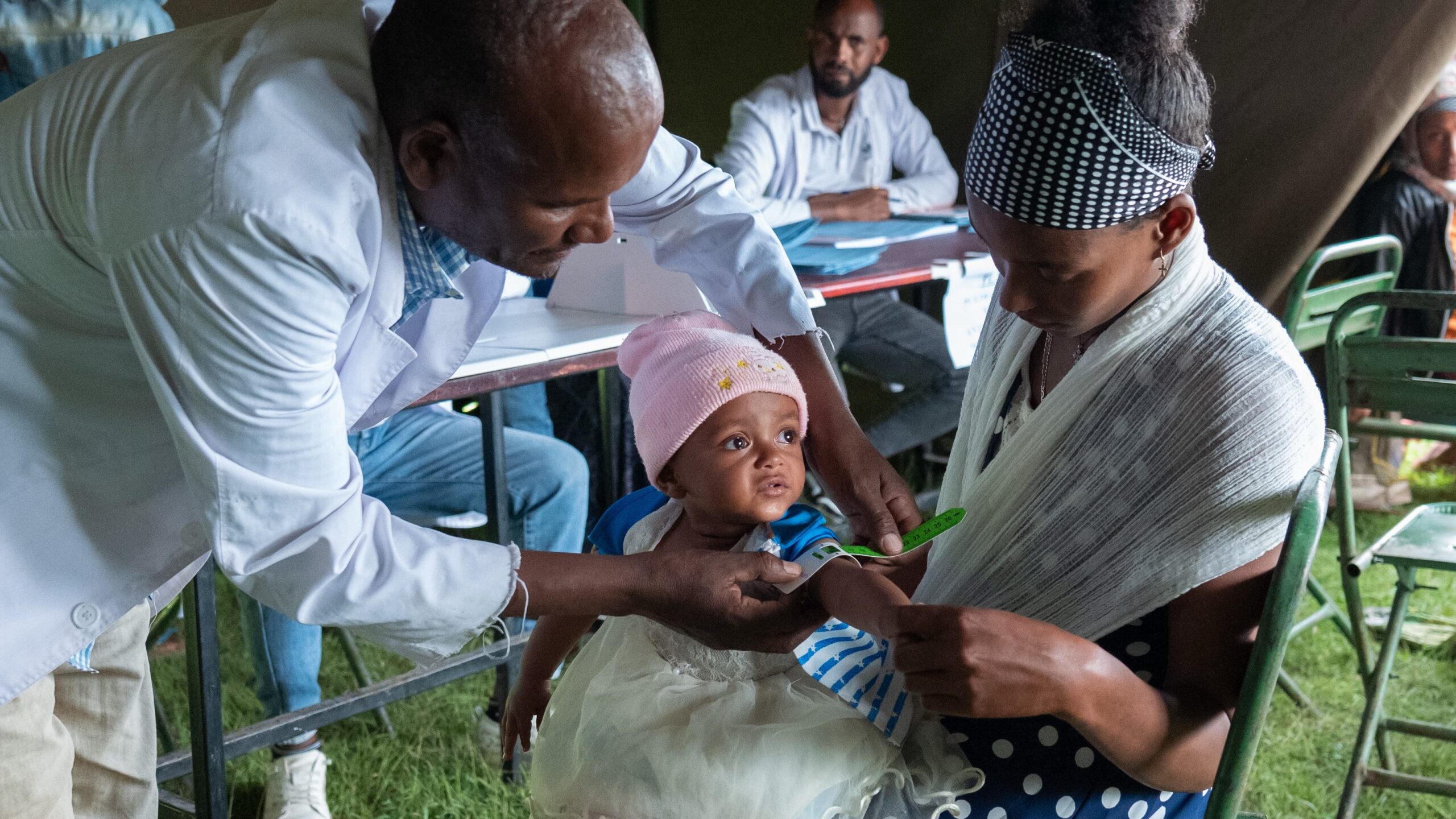
- Enhancing maternal and child health services: The first 1,000 days, from pregnancy to age two, are a window of extreme vulnerability. Antenatal care and early childhood check-ups in high-altitude regions must be strengthened to monitor growth more frequently and provide specialized nutritional support to counteract the effects of hypoxia from the very beginning.
In line with Leroy’s work, the goal here is not simply to lower stunting percentages, but to reduce the underlying deprivations—poor diets, high infection burdens, and constrained services—that both drive linear growth faltering and shape children’s later opportunities.
A call for a geographically smart approach
The findings of this study suggest a fundamental reassessment of childhood nutrition interventions is needed. The current and common approach—treating all stunting as the same, regardless of geography—omits a key driver of the problem. A child stunted at sea level and a child stunted at 3,000 meters may share a statistic, but their paths to that point, and their paths to a healthy future, are profoundly different.
In other words, ignoring altitude as a factor in stunting is like ignoring gender or poverty; it overlooks a key determinant of life chances. As efforts to end malnutrition continue, they must adopt a geographically smart approach that acknowledges this invisible, yet powerful, barrier, while keeping the focus firmly on transforming the environments that constrain children’s growth and development.
Over time, our work suggests, targeting resources and tailoring solutions to the unique physiological challenges of high-altitude living can begin to dismantle this geographic penalty and ensure that every child, no matter where they are born, has the opportunity to reach their full potential in both height and life chances.
Taddese Zerfu is a Research Fellow with IFPRI’s Development Strategies and Governance (DSG) Unit based in Addis Ababa, Ethiopia. Opinions are the author’s.
Reference:
Debebe, Wondwosen; Alem, Addis; Abebe, Melese Shenkut; Bihonegn, Mohammed Derso; Abdu, Hussen; et al. 2026. Higher altitude stunts children’s physical growth: A systematic review and meta-analysis. Next Research 3(January 2026): 101059. https://doi.org/10.1016/j.nexres.2025.101059