





The rising incidence of climate change-driven extreme weather and related problems has profound implications for food system transformation. Linking food system efforts to climate action goals and integrating their strategic objectives can accelerate progress in both food system transformation and addressing climate change, and yield positive synergies. A key effort on this front is connecting smallholder farmers to carbon markets.
Kenya’s experience offers a window on these complex challenges. In recent years, national and local governments have worked to establish carbon markets and worked to make it easier for smallholders and larger farms to participate—offering lessons for other countries in the Global South. This post is based on one of a series of case studies and accompanying policy notes that the Comprehensive Action for Climate Change Initiative (CACCI) developed in collaboration with its partners to document lessons from implementing climate and food system interventions.
Policy innovations
Although Kenya is a relatively small greenhouse gas (GHG) emitter compared to most countries, its Nationally Determined Contributions (NDCs), submitted in 2020 under the Paris Climate Agreement, aim to cut GHG emissions by 32% by 2030. Kenyan agriculture’s GHG emissions are, on a per-hectare basis, a fraction of those of the United States and other large-scale agricultural producers, but the country has targeted agriculture as a key sector for reductions. Kenya’s agriculture sector has an estimated emission reduction potential of 9.7 metric tons of carbon dioxide equivalent (MtCO₂e)—approximately equal to the annual GHG emissions of over 6 million 2-acre smallholder farms.
The majority of Kenyan agricultural GHG emissions consist of methane from cattle and manure left in pasturelands; emissions from nitrogenous fertilizer are also a factor.
To realize its emissions reduction goal, Kenya’s NDCs prioritize climate-smart agriculture, agroforestry, and sustainable land management practices that reduce methane and nitrous oxide emissions while boosting productivity and resilience.
Enabling smallholder farmers to participate in carbon markets with climate-resilient practices, with an emphasis on adaptation, is a key element of these efforts. This requires a robust policy and regulatory framework. Kenya has developed those through multi-stakeholder consultations, leading to its comprehensive Carbon Market Regulation published in May 2024.
Institutional mechanisms and their contributions
The National Environment Management Authority (NEMA) hosts the Designated National Authority (DNA), which, with the concurrence of the Cabinet Secretary, has the final authority in approving climate-related programs. DNA has provided strong support to project developers through frequent consultation sessions, helping to clarify requirements and smooth the project development process.
Decentralization and devolution of responsibilities: County-level design and implementation
Integrating smallholder farming systems for carbon market benefits is particularly challenging given the diversity of crops they grow, varying rates of adaptation, and the need to monitor their contribution to carbon sequestration. A decentralized approach to development interventions often helps to address such challenges. Kenya’s 2010 Constitution pursued a devolution strategy that granted substantial authority to 47 newly created counties, each with its own executive council headed by a governor.
However, given the complexities of carbon markets, decentralization itself presents unique governance challenges. Many counties are still grappling with how to interpret and apply the national carbon market regulations within their local contexts. For example, carbon projects, especially those tied to agriculture, often straddle multiple sectors and ministries. An agricultural carbon project may fall under both the Ministry of Agriculture and the Ministry of Environment, creating institutional ambiguity at both the national and county levels in the absence of clear guidelines on how responsibilities are distributed.
Community-level interventions
Carbon markets and other reforms central to food system transformation and climate resilience require that these inequities in their decision-making processes be addressed. Landscape-level changes in the farming system, adoption of technological innovations, and provision of incentives for adopting climate resilience approaches and participating in carbon markets all require community participation and a cultural shift towards greater inclusion of women (who are estimated to contribute up to 80% of agricultural labor yet hold only 1% of registered land titles and 5%-6% of registered titles held jointly) and youth (also underrepresented) as future farmers.
Several private sector entities have worked with farmers for carbon market development. The case of Boomitra, a global soil carbon project developer, is illustrative. Working across more than 20 counties in Kenya, Boomitra and its partners engage through existing grassroots structures such as cooperatives, farmer groups, and agro-dealer networks, ensuring that engagement is rooted in trust and local familiarity.
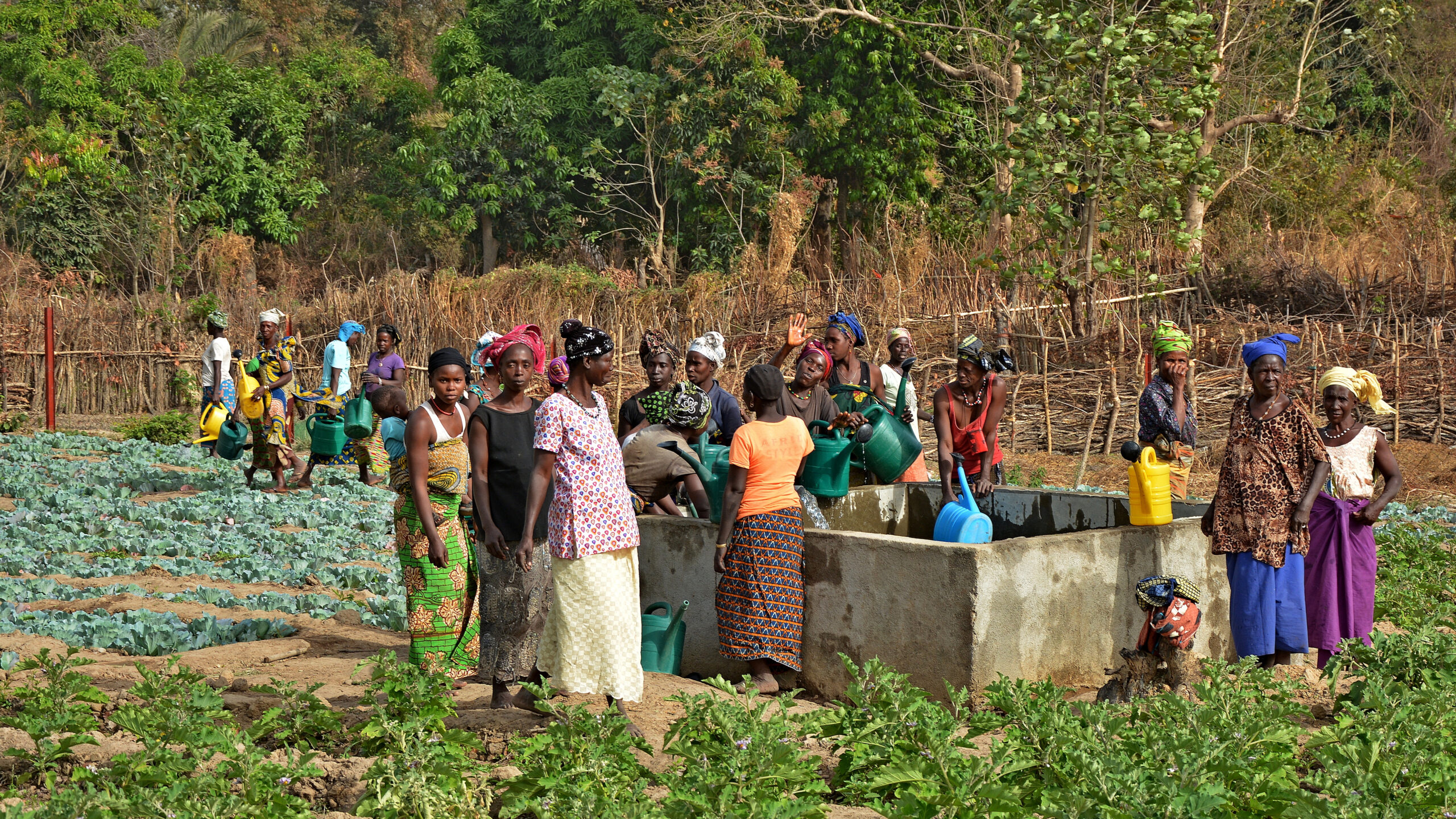
Rather than relying on one-off interactions, Boomitra and its partners have prioritized consistent, two-way communication through regular field visits, demonstration plots, and tailored support that respects local knowledge and realities (Figure 1). The project emphasizes inclusive participation across all demographics, recognizing that sustainable carbon market initiatives require the active engagement of entire farming communities, leveraging women’s extensive agricultural knowledge and labor contributions, men’s often formal land ownership roles, and youth’s potential as future agricultural leaders and technology adopters.
Figure 1

The localized approach to data collection and digital tools further ensures accessibility, even for farmers with limited technical exposure. By aligning carbon initiatives with tangible agronomic and economic benefits, Boomitra secured strong farmer participation and laid the groundwork for sustained climate-smart agricultural practices anchored in trust and community ownership.
Farm-level innovations and tracking carbon
Technological innovations that enhance soil carbon sequestration offer an important way to meet carbon market incentives. Developing a package of practices that maximizes soil organic carbon over time is an essential first step.
In Kenya, several such innovations are already in use. Regenerative agriculture and precision farming have gained traction, with the Farm to Market Alliance (FtMA) —one of Boomitra’s partners—actively promoting a range of practices including residue retention on farms, conservation tillage to minimize soil disturbance and retain organic matter, liming to manage acidic soils, biochar application to enhance long-term soil carbon storage, and the integration of agroforestry systems using nitrogen-fixing trees such as Calliandra and Gliricidia to build soil fertility.
Digital technology and data
The process of monitoring, reporting, and verification (MRV) of climate action interventions in food systems and their outcomes requires digital tools specifically developed for these purposes. While such tools leveraging advanced artificial intelligence (AI) techniques are currently under development (see Boomitra and Digital Green, for example), their testing and training depend heavily on compiling accurate datasets, including information on cropping patterns, soil characteristics, soil nutrients, and especially soil carbon.
In the Kenyan context, measuring soil carbon using AI models, satellite imagery, and remote sensing techniques must be validated through ground truthing across multiple locations, even within a single county, to ensure accuracy.
Lessons and insights from Kenya’s experience with carbon markets
- Foundational policy and legal frameworks: To address climate change and food system transformation—and specifically to set up functioning carbon markets—countries must develop a well-functioning and adaptable policy system. This requires well-defined legal frameworks to enable the design of inclusive interventions that encourage participation and equitable benefit-sharing among stakeholders. These frameworks set the stage for long-term investment and trust in carbon markets.
- Institutional capacity and regulatory efficiency: Strong institutions and functional regulatory frameworks are necessary to operationalize policy. Clearly defined processes, reduced bureaucracy, and timely decision-making minimize implementation delays. As systems mature, innovation must guide regulatory adaptation to reflect on-the-ground realities and feedback.
- Decentralized governance for localized action: Delegating decision-making to subnational levels—such as counties or community-based institutions—ensures interventions are locally relevant and context-specific. This proximity also fosters faster implementation and strengthens the connection between farmers and decision-makers.
- Public-private partnerships and blended finance: Unlocking climate finance requires collaboration across sectors. Public-private partnerships can help lower the financial risk of early-stage carbon projects, while blending donor funds with carbon revenues accelerates the adoption of climate-smart practices. These financial innovations are critical to building trust and scaling solutions. Climate justice should also be a key element of finance. It is important to identify opportunities for countries that have historically and significantly contributed to climate change to support Kenya’s adaptation and mitigation efforts.
- Robust data systems and digital infrastructure: Transparent, data-driven MRV systems underpin the credibility of carbon markets. Investing in interoperable data platforms—with clear data ownership, access, and privacy rules—enables cross-county collaboration and transparent carbon accounting.
- Harnessing AI and digital technologies for MRV: AI-powered verification tools can significantly reduce costs and increase accuracy in MRV processes. However, they depend on comprehensive datasets from diverse nodes of the food system, particularly soil and carbon data. Developing these datasets should be a priority investment.
- Locally co-created digital MRV systems: When digital MRV systems are co-developed with local institutions and validated transparently, they become more accurate, accepted, and scalable. Kenya’s experience shows that local collaboration enhances both technology uptake and system trust.
- Community engagement and farmer empowerment: Engaging farmers early and often is key to sustainable adoption of climate-smart technologies. Tangible benefits such as yield improvements and income growth must be prioritized over carbon payments. Incentives from carbon markets should serve as value additions rather than primary motivators.
- Trust through continuous feedback and local partnerships: Trust is built through transparency, consistent engagement, and visible results—not just promised payments. Working with local cooperatives and grassroots partners has proven effective in maintaining long-term farmer relationships and improving project outcomes.
- Youth and women as catalysts for change: Inclusive climate action requires active involvement of women and youth. Equipping them with digital, agronomic, and entrepreneurial skills enhances resilience and unlocks innovation at the community level.
As countries embark on the process of converting international climate agreements into national commitments—setting their priorities in various sectors for net-zero targets, developing their technological approaches, and tracking and reporting their accomplishments—they have much to learn from each other. Kenya’s experience offers lessons on both specific challenges and key ways to overcome them.
Suresh Chandra Babu is a Research Fellow Emeritus with IFPRI’s Director General’s Office; Ann Maina is East Africa Project Lead for Boomitra. Opinions are the authors’.
This work was supported by the U.S. government.