





Until recently, Dickson Mbogo was a casual laborer at a school near Bombo, Uganda, where he lives with his wife and ten children. In parts of Uganda, nearly a third of young children suffer from a deficiency of vitamin A, which protects against blindness and is needed for a healthy immune system. Many poor, rural families cannot afford food rich in micronutrients—such as fruits, vegetables, and meat—and eat mostly staple crops.
To combat this problem, HarvestPlus, an international research program, develops and distributes new varieties of staple food crops that are high in micronutrients. Through this process, known as biofortification, scientists are breeding and disseminating new varieties of orange sweet potato that are rich in vitamin A.
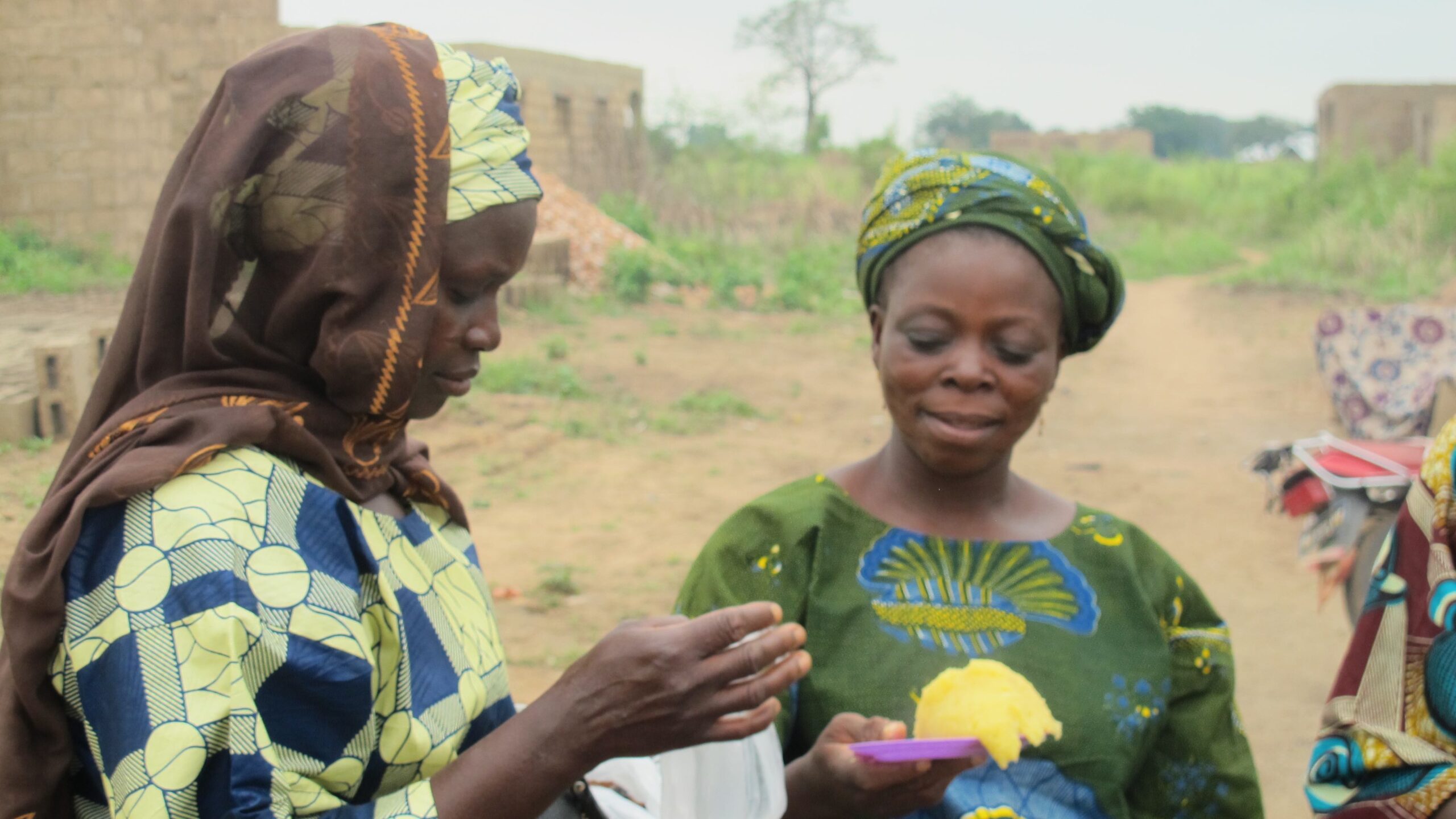
Mr. Mbogo, who is now a prosperous orange sweet potato farmer, used to grow other crops for home consumption until his farmers’ group became involved in a HarvestPlus project. Through this project, four different orange sweet potato varieties have been planted and harvested in three districts in Uganda, reaching more than 280 farmer groups and 7,500 households. The project also raises awareness about the nutritional value of biofortified sweet potato and promotes farmer adoption and consumer acceptance of the crop.
“I now have one acre in production…and we have sufficient orange sweet potato to consume every day,” said Mr. Mbogo proudly.
Because of the promising potential of biofortification, the CGIAR has designated it as one of its “best bets” for investment in agricultural research.
HarvestPlus, a Challenge Program of the CGIAR, is coordinated by IFPRI and the International Center for Tropical Agriculture (CIAT) and involves eight other CGIAR centers:
- Africa Rice Center (WARDA)
- Bioversity International
- CIMMYT – Centro Internacional de Mejoramiento de Maiz y Trigo
- CIP – Centro Internacional de la Papa
- ICARDA – International Center for Agricultural Research in the Dry Areas
- ICRISAT – International Crops Research Institute for the Semi-Arid Tropics
- IITA – International Institute of Tropical Agriculture
- IRRI – International Rice Research Institute
More information:
- International Agricultural Research for Food Security, Poverty Reduction, and the Environment
What to Expect from Scaling Up CGIAR Investments and “Best Bet” Programs
September 2008. IFPRI Booklet. </ LI> - Investing in Early Childhood Nutrition
November 2008. IFPRI Policy Brief. </ LI> - Agriculture and Health: What Is at Stake?
October 2008. IFPRI Forum Commentary.</ LI>