Myanmar monthly food price report – August 2026
KEY HIGHLIGHTS:
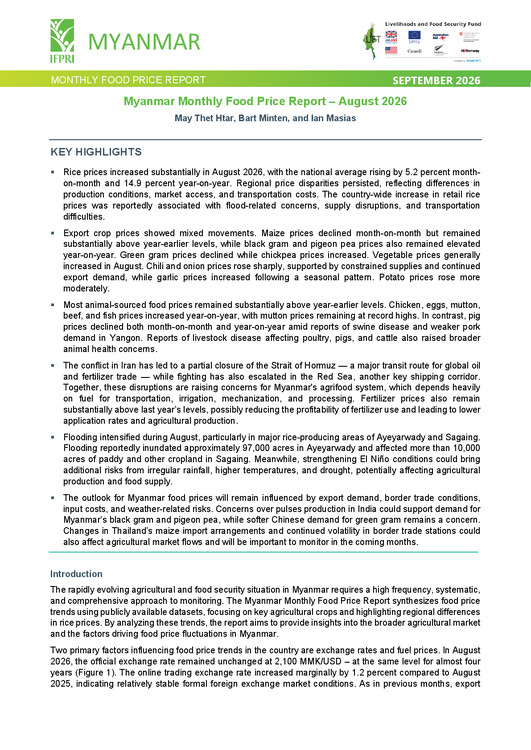
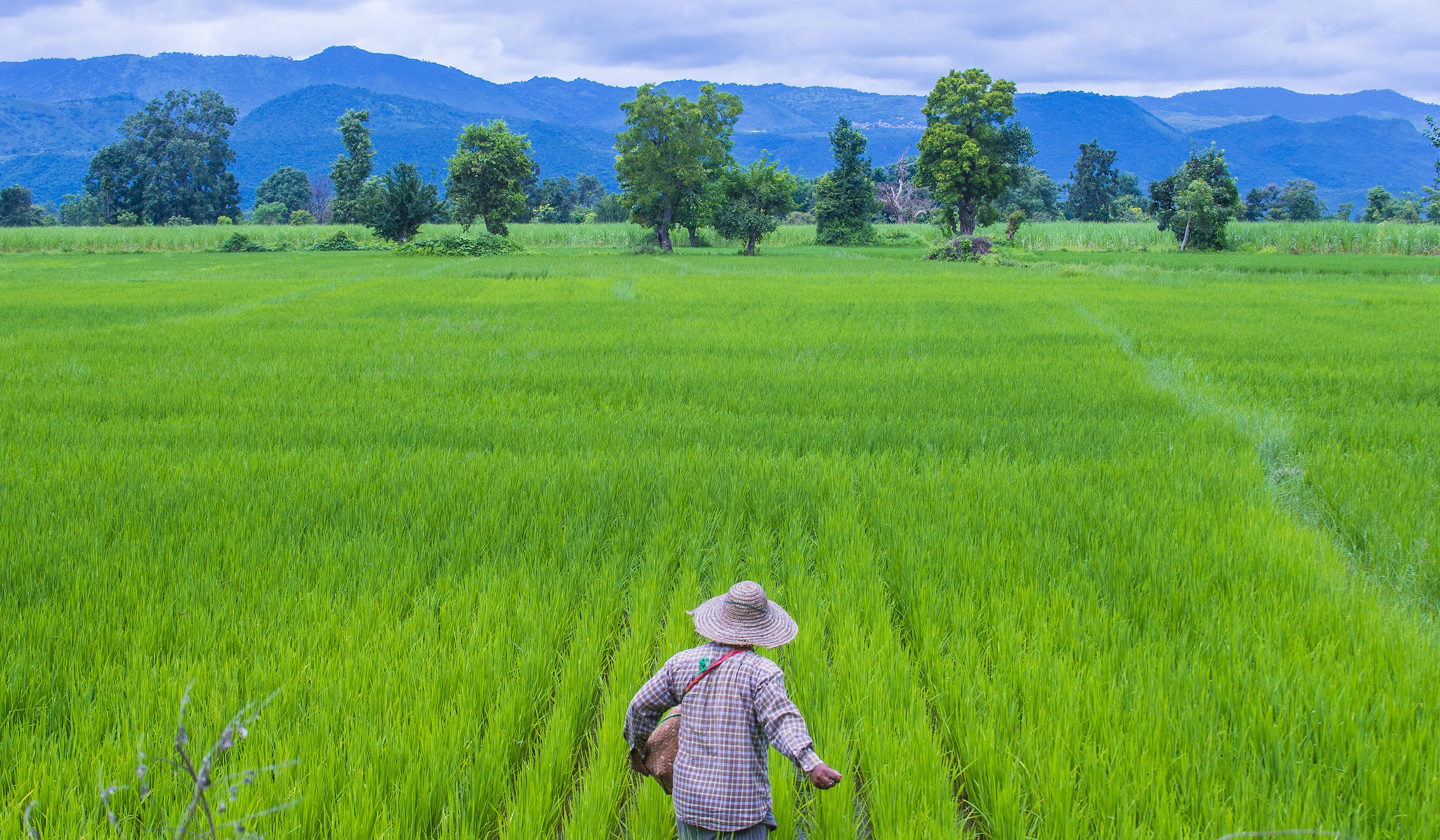
– Rice prices increased substantially in August 2026, with the national average rising by 5.2 percent monthon-month and 14.9 percent year-on-year. Regional price disparities persisted, reflecting differences in production conditions, market access, and transportation costs. The country-wide increase in retail rice prices was reportedly associated with flood-related concerns, supply disruptions, and transportation difficulties.
– Export crop prices showed mixed movements. Maize prices declined month-on-month but remained substantially above year-earlier levels, while black gram and pigeon pea prices also remained elevated year-on-year. Green gram prices declined while chickpea prices increased. Vegetable prices generally increased in August. Chili and onion prices rose sharply, supported by constrained supplies and continued export demand, while garlic prices increased following a seasonal pattern. Potato prices rose more moderately.
– Most animal-sourced food prices remained substantially above year-earlier levels. Chicken, eggs, mutton, beef, and fish prices increased year-on-year, with mutton prices remaining at record highs. In contrast, pig prices declined both month-on-month and year-on-year amid reports of swine disease and weaker pork demand in Yangon. Reports of livestock disease affecting poultry, pigs, and cattle also raised broader animal health concerns.
– The conflict in Iran has led to a partial closure of the Strait of Hormuz — a major transit route for global oil and fertilizer trade — while fighting has also escalated in the Red Sea, another key shipping corridor. Together, these disruptions are raising concerns for Myanmar's agrifood system, which depends heavily on fuel for transportation, irrigation, mechanization, and processing. Fertilizer prices also remain substantially above last year’s levels, possibly reducing the profitability of fertilizer use and leading to lower application rates and agricultural production.
– Flooding intensified during August, particularly in major rice-producing areas of Ayeyarwady and Sagaing. Flooding reportedly inundated approximately 97,000 acres in Ayeyarwady and affected more than 10,000 acres of paddy and other cropland in Sagaing. Meanwhile, strengthening El Niño conditions could bring additional risks from irregular rainfall, higher temperatures, and drought, potentially affecting agricultural production and food supply.
– The outlook for Myanmar food prices will remain influenced by export demand, border trade conditions, input costs, and weather-related risks. Concerns over pulses production in India could support demand for Myanmar’s black gram and pigeon pea, while softer Chinese demand for green gram remains a concern. Changes in Thailand’s maize import arrangements and continued volatility in border trade stations could also affect agricultural market flows and will be important to monitor in the coming months.
Authors
Htar, May Thet; Minten, Bart; Masias, Ian
Citation
Htar, May Thet; Minten, Bart; and Masias, Ian. 2026. Myanmar Monthly Food Price Report – August 2026. Myanmar Monthly Food Price Report August 2026. Washington, DC: International Food Policy Research Institute. https://hdl.handle.net/10568/185625
Keywords
Asia; South-eastern Asia; Food Prices; Food Security; Crops; Agricultural Marketing; Rice