



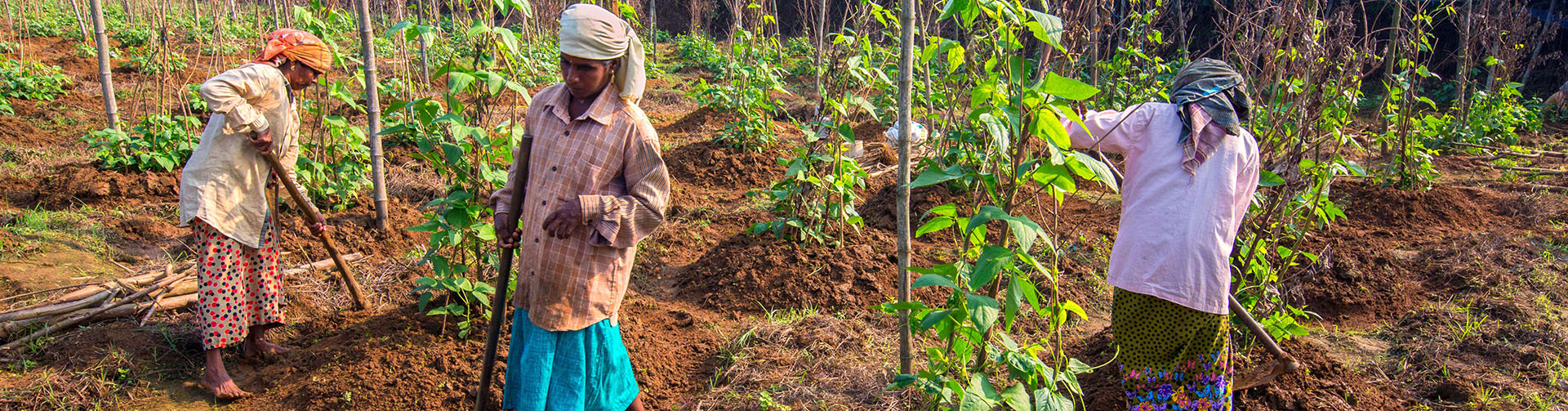

Achieving the goals of climate resilient agri-food systems, gender equality, and nutrition requires careful consideration of the synergies and tradeoffs across these objectives. To support the integration of these goals into policy, programs, and investments, IFPRI’s Gender, Climate Change and Nutrition Integration Initiative (GCAN) works with policymakers, implementing partners, and other stakeholders to enhance understanding of the linkages between climate, gender and nutrition toward enhanced resilience, women’s empowerment, and nutrition outcomes. GCAN also fills evidence gaps through research on the linkages among climate-smart agriculture (CSA), gender, and nutrition and provides demand-driven advisory services and capacity strengthening to support the integration of gender, climate change and nutrition in policy development and programming.
Since its inception in 2016, GCAN has published numerous research outputs, including journal articles, working papers, briefs, blog posts, and datasets.
GCAN works in 5 focal countries (Ethiopia, India, Kenya, Nigeria, and Senegal) to ensure that investments, policies, and actions on climate change fully integrate gender equality, women’s empowerment, and nutrition objectives in these countries. The initiative aims to achieve these outcomes through three workstreams: 1) capacity strengthening for governments and partners in the 5 focal countries to design, implement, and monitor climate change policies with a gender and nutrition lens, 2) technical assistance and advisory services to the Foundation and its partners, and 3) strategic research to support gender-responsive, nutrition-sensitive climate actions and investments.
Another key function of the GCAN project is to convene stakeholders across the three focal areas including donors, researchers, project implementers, and policymakers, including in the focal countries. GCAN also engages in global dialogues on gender, resilience, climate change, and nutrition, such as the UNFCCC conference of parties, and is a go-to resource for learning and evidence on the intersection of these topics.