





Key takeaways
- Women and girls in many countries are bearing the brunt of rising fuel and fertilizer prices triggered by the Iran war.
- Higher costs strain agrifood systems and exacerbate existing gender inequalities, further limiting women’s access to inputs, income, and food security.
- Gender-blind policy responses widen gender gaps. Subsidies and relief measures can exclude women, highlighting the need for more inclusive, long-term solutions.
A recent interview with a woman farmer in Kenya revealed the multiple challenges of higher fuel and fertilizer prices stemming from the closure of the Strait of Hormuz. As fuel prices have doubled, she said, farmers have been forced to sell their produce at higher prices to compensate for the increased cost of transporting goods to the market. That, in turn, has reduced demand, and with it, sales and incomes. Obtaining fertilizers has also become more challenging. Pointing to an illegal practice that has been highlighted in media reports, she noted that brokers quickly purchase subsidized fertilizer supplied by the National Cereals and Produce Board (NCPB) and then repackage and sell it at retail shops for more than double the price. As a result, farmers like her are reducing cultivated area, lowering their production, income, and, ultimately, food consumption. As she explained: “If I used to buy a kilo of meat for my home in a week, right now I cannot even buy … Even putting food on the table becomes a challenge.”
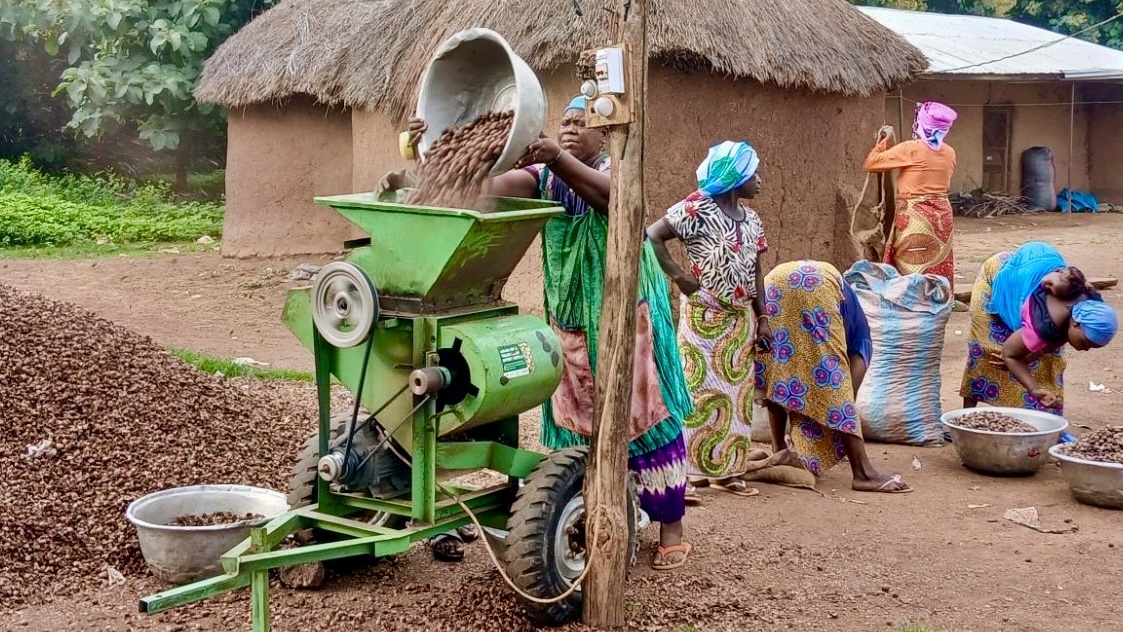
The energy price crisis is also affecting other agrifood workers beyond the farm. During a recent discussion with a women’s cooperative specializing in groundnut processing in Nigeria, one of the members observed, “Rising fuel and fertilizer costs have driven up raw groundnut prices from 3,000 to 4,000 naira [$2.20 to $2.94]. Consequently, our groundnut oil has jumped from 1,500 to 2,000 naira [$1.10 to $1.47] per measure. Because these price hikes affect every essential commodity with no alternatives, they have impacted on every aspect of our lives. We are just surviving day by day.”
Rising fuel and fertilizer prices resulting from the Iran war are disrupting agrifood systems around the world, hitting smallholder farmers and other agrifood workers in low- and middle-income countries particularly hard. Within smallholder farming communities, women and girls often bear the greatest burden when crises hit. Persistent inequalities in access to resources and services limit their capacity to respond, as do patriarchal norms restricting their economic opportunities, roles, mobility, and agency. Thus, the current shock threatens to erode the slow but steady global progress towards greater gender equality in agrifood systems.
In this post, we highlight the diverse problems women and girls face from the fertilizer and fuel crisis—sometimes the direct result of measures intended to help—and make recommendations on how countries can address these issues and use the current moment as an opportunity to build more equitable and resilient agrifood systems.
Impacts on agrifood systems
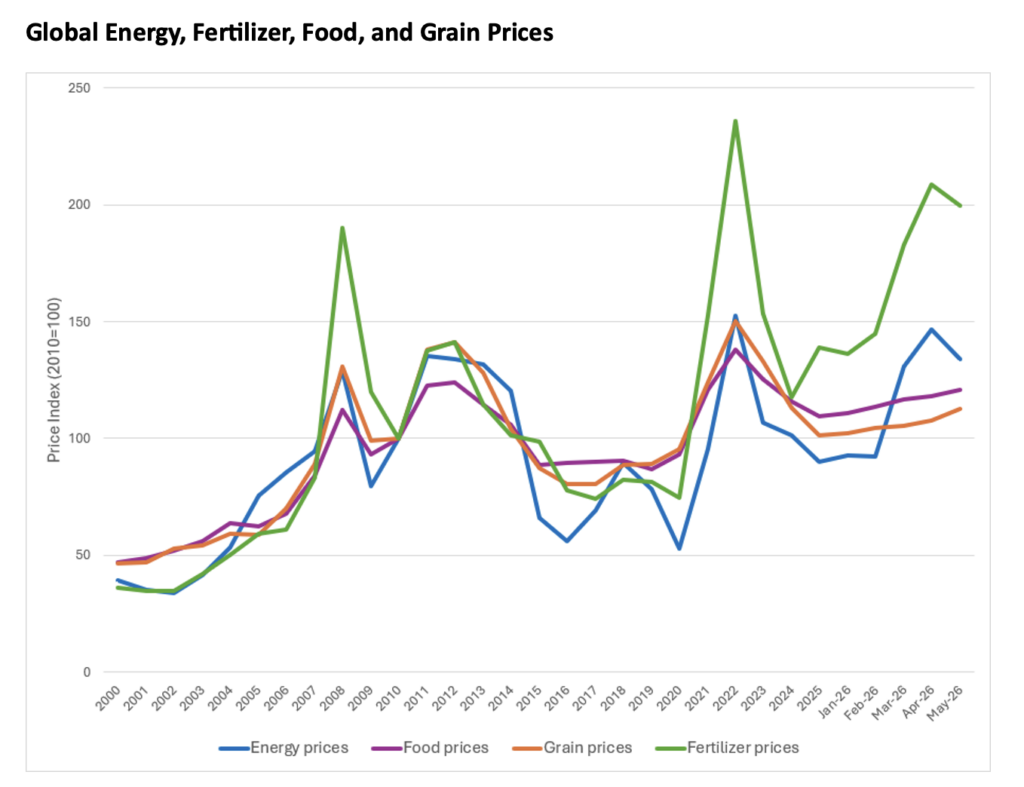
Fuel and fertilizer costs have spiked due to the interruption of supplies from the Persian Gulf region, a major global producer and transit point for both items. Agrifood systems rely on energy—principally fossil fuels—at every stage, from production to processing, transport, storage, retail, and food preparation, with estimates suggesting that these systems account for up to 30% of global energy use. Inorganic fertilizers, meanwhile, help to sustain agricultural production. Thus, the impacts of these high global prices and supply disruptions ripple across the food system, increasing domestic costs and reducing productivity at all stages of the value chain and ultimately increasing food prices (though the latter effect appears modest thus far). The result is rising poverty and food insecurity.
Figure 1
The crisis hits women and girls particularly hard
The rising fuel and fertilizer prices of the current crisis exacerbate existing inequalities in access to markets, inputs, and incomes, further reducing women’s agency in agrifood systems. For example, survey data from Uganda show that women use less inorganic fertilizer on plots that they manage, compared to plots managed by men. Furthermore, across countries, female-headed households also consistently have lower access to fertilizers than male-headed households. Rising fertilizer prices risk further widening this gap.
The impacts of the crisis vary across regions. With the growing season now starting in many Asian countries, high fertilizer and fuel prices are expected to hit these countries particularly hard. Women in these contexts are facing even greater constraints in accessing these essential inputs. In India, shortages of cooking gas have forced women to gather firewood. In Pakistan, school closures have increased women’s child care responsibilities. In the Philippines, crops have been left to rot in the fields due to unaffordable fuel and energy costs.
Importantly, the current energy crisis is not creating entirely new vulnerabilities; it is deepening inequalities spurred by other crises, both recent and ongoing. As development finance dwindles, low-income countries have yet to fully recover from the COVID-19 pandemic and the recent food price crisis triggered by the Russia-Ukraine war or adapt to growing geopolitical instability and climate threats. Many countries, like Nigeria, are still grappling with high food prices, which hit poor consumers hardest. The current energy price crisis is compounding these diverse effects and the risks for women and girls, who are often responsible for food provision and coping with food insecurity.
Gender inequities in short-term relief measures
Another problem is short-term relief measures that so far have been largely gender-blind and risk reinforcing the inequalities that undermine the long-term resilience of women and girls:
- Fuel price stabilization. Recent measures such as fuel subsidies, tax reductions, transport subsidies, and price stabilization funds have negative impacts that fall disproportionately on women. In Kenya, the government has reduced value-added taxes on fuel and drawn on the Petroleum Development Levy Fund to stabilize prices at the pump to blunt the impact on consumers. However, subsidies for kerosene were reduced, increasing costs—especially for women in low-income households who rely on kerosene for cooking. In India, subsidies for liquefied petroleum gas (LPG) have increased reliance on this fuel source, which has now become more scarce due to the energy crisis, and more households are having to rely on solid fuels with negative health implications for women.
- Fertilizer subsidies. Many governments are extending fertilizer subsidies originally expanded in response to the Russia-Ukraine war, which reduce prices for some farmers. However, obtaining them may require formal registration, access to digital platforms, land titles, and/or centralized distribution points—posing obstacles for many women and other marginalized farmers. For example, in Ethiopia, where agricultural production is heavily dependent on imported fertilizers, the government has made efforts to maintain supplies, yet rising fuel prices have increased transportation and distribution costs across the supply chain, contributing to delays and local shortages—disruptions likely to disproportionately affect women farmers. These problems are worse in remote rural areas, where transport disruptions and supply shortages are often most severe, and women may face additional mobility and time constraints.
- Fiscal tightening and reduced social and development spending. Fuel and fertilizer subsidies can drain public finances, especially when higher prices dramatically raise government outlays. In Senegal, fuel prices have been frozen since December 2024, and as global prices rise, the government must compensate for the growing difference. Such growing public debt burdens imperil the health, education, social protection, and related services that women and girls rely on.
- Promotion of regenerative and agroecological practices. Many governments are turning to these approaches to reduce dependence on imported fertilizers and to cope with the higher costs of operating agricultural machinery. For example, in Senegal, the government has a commitment to advance the agroecological transition by subsidizing the cost of green fertilizers by up to 90%. However, some of these practices, such as integrated soil fertility management and precision agriculture, may increase women’s labor burdens—particularly as machinery, which could provide some relief, goes unused due to high fuel prices.
While such short-term measures are essential to provide relief in a crisis, policymakers should make efforts to ensure they are gender responsive. Integrating rapid gender impact assessments before rolling out fuel, fertilizer, and fiscal stabilization policies can ensure that these policies do not exacerbate gender inequalities and ensure that women also benefit. This approach could support the redesign of fertilizer subsidy and distribution programs to better reach and benefit women farmers.
Lessons from previous crises
We’ve observed the uneven gender impacts of global shocks to food and energy systems before, most recently following the COVID-19 pandemic and the global food price crisis resulting from Russia’s war on Ukraine.
For example, during COVID-19, women’s unpaid care burden increased when children were kept home from school during lockdowns or when sick family members needed care. Women-led businesses were also more likely to close as a result of the pandemic. During food price crises, women often acted as shock absorbers, reducing their food intake to leave more for others or selling their assets first to smooth consumption. In many countries, adolescent girls are more vulnerable to being removed from school or given into early marriage amid shocks or crises.
Aside from their immediate effects on women’s income, diets, and/or autonomy, such impacts can have long-term implications for gender equality and the well-being of women and girls. Early marriage and reducing food intake can have long-term effects on the nutrition and health of women and their children. Yield losses due to more limited input use on women’s plots can widen existing gender productivity and earnings gaps, with cascading impacts on household expenditures on education and health.
Addressing the root causes of inequality to build resilience for the future
Despite these complex problems, the current crisis provides an opportunity to break the longstanding patterns that created them. Global shocks need not disproportionately affect poor rural women and girls. The solution is to build more resilient and equitable agrifood systems. Governments, donors and private sector actors should invest in solutions that address the root causes of inequality:
Address deep-seated gender inequalities. Over the long term, governments and other stakeholders should focus on reducing vulnerabilities of women and girls in the agrifood system by addressing the root causes of inequality and building the adaptive capacities of the most vulnerable. Some countries are taking steps in this direction. In Nigeria, the government recently revised its National Gender Policy on Agrifood Systems Transformation to ensure equitable access to resources, opportunities, and decision-making for men and women in the agriculture sector. In Ethiopia, a new gender policy that aims to foster women’s empowerment in the context of the changing socioeconomic and political landscape was revised and formally approved nearly two decades after the previous version was enacted.
Accelerate the transition to renewable energy systems and technologies. Expansion of diverse clean fuel sources for cooking and renewable energy technologies, such as solar irrigation, can reduce dependence on fossil fuels and their dramatic price fluctuations. Ethiopia has officially launched a gender-responsive E-Mobility Strategy and implementation plan for 2025-2030, marking a major step toward accelerating the adoption of electric vehicles and building a sustainable transport system. Senegal and other countries are accelerating the energy transition in response to the current crisis, focusing on diversifying the energy mix through further development of renewables and utilizing domestic national gas resources to strengthen energy sovereignty. However, women often face barriers in adopting renewable energy technologies and risk being excluded from the clean energy transition if there are no complementary interventions that address the constraints they face, such as lack of access to finance, land, and other productive resources, and information. Thus, the clean energy transition should be intentionally designed and implemented to ensure that women have access to affordable energy to reduce drudgery, increase productivity and incomes, and support food security and healthy diets. Examples of more accessible finance options include asset-based financing and loans bundled with insurance.
Expand social protection programs. This can buffer households against the negative impacts of shocks. Cash transfers, food assistance, and other safety net programs enable households to protect food consumption, preserve assets and savings, and avoid harmful coping strategies, such as pulling girls from school. To ensure that women and girls benefit, these transfers should be targeted to women to ensure that they are able to control the resources. Complementary interventions can be layered onto social protection programs to address the root causes of inequality and build long-term resilience capacities of women and girls. These include targeted trainings to support a clean energy transition and other forms of skill building, childcare services, and gender-transformative interventions to address harmful norms.
Develop more robust systems for collecting real-time, sex-disaggregated data during crises to monitor how shocks are affecting different population groups. While many countries do collect such data as part of their national statistical systems, it is often not systematically integrated into crisis response monitoring. Thus, many key indicators needed for effective decision-making and the design of evidence-driven interventions are not available. For example, the Kenya National Bureau of Statistics (KNBS) periodically produces sex-disaggregated data, yet data on who accesses fertilizer subsidies and how rising fuel and input costs affect men and women in the agrifood system are notably absent. Without stronger data systems and monitoring to enable deliberate gender targeting, interventions aimed at stabilizing national fuel and fertilizer markets may ultimately end up deepening social and gender inequalities.
Increase women’s access to financial products, information, and advisory services so that they are better equipped to respond when crises hit. Investing in reducing the digital divide—e.g., through expansion of digital technologies and digital literacy training—can ensure that digital tools designed to more easily and quickly reach agrifood workers won’t leave women behind. Strengthening women’s grassroots movements, collectives, and groups and supporting women’s leadership in decision-making at multiple scales can ensure that responses to crises reflect the needs and priorities of women in agrifood systems while also building their collective resilience capacities.
The current fuel and fertilizer crisis is a stark reminder that women and girls continue to bear the disproportionate impacts of global shocks. However, by calling attention to the weaknesses of existing systems, we hope to create momentum for change. Policymakers, donors, private sector actors, and implementing partners can move beyond short-term relief measures and tackle the structural inequalities that leave women and girls more vulnerable to shocks and stressors. Seizing this opportunity can help catalyze more equitable, resilient, and sustainable agrifood systems for the future.
Elizabeth Bryan and Muzna Alvi are Research Fellows with IFPRI’s Agrifood Innovation and Resilience (AIR) Unit; Marame Cisse is a Sociologist with the Initiative Prospective Agricole et Rural (IPAR); Faith Gikunda is a Communications Specialist and Gender Equality, Disability, and Social Inclusion Expert with the Centre for Inclusive Climate Change Adaptation for a Sustainable Africa (ICCASA); Eric Kirimi is an ICCASA Gender, Climate Change, and Nutrition Integration Expert; Hamza Muhammad works with the Environmental Care Foundation; Claudia Ringler is Director of IFPRI’s AIR Unit; Tirsit Sahledengil is with Addis Ababa University and the Forum for Social Studies; Bello Yakasai is a Visiting Fellow, Aliko Dangote University of Science and Technology (ADUSTech); Taddese Zerfu is a Research Fellow with IFPRI’s Development Strategies and Governance Unit. Opinions are the authors’.
This post is based on work by the IFPRI-led Gender, Climate Change, and Nutrition Integration Initiative (GCAN), supported by the Gates Foundation and linked to the CGIAR Climate Action Program and Gender Equality and Inclusion Accelerator.