





Key takeaways
- Youth participation is essential for lasting food security progress. Gen Z leaders are helping shape policies and programs that address hunger and strengthen food systems.
- Successful advocacy blends evidence with personal experience. Data and real-world stories can make a stronger case for policy action.
- Hands-on engagement builds confidence and leadership skills. Direct conversations with policymakers helped participants turn advocacy training into action.
According to the latest FAO Status of Youth in Agrifood Systems, 85% of the world’s young people live in low- and lower-middle-income countries where agrifood systems dominate the economy. These youth face rising food insecurity and unemployment rates amid economic volatility, extreme climate events, and other interconnected shocks. To create a future that addresses these urgent problems, global youth must have an active role in shaping the policies and programs that aim to enhance their skills, opportunities, and resilience—a key focus of International Youth Day (August 12).
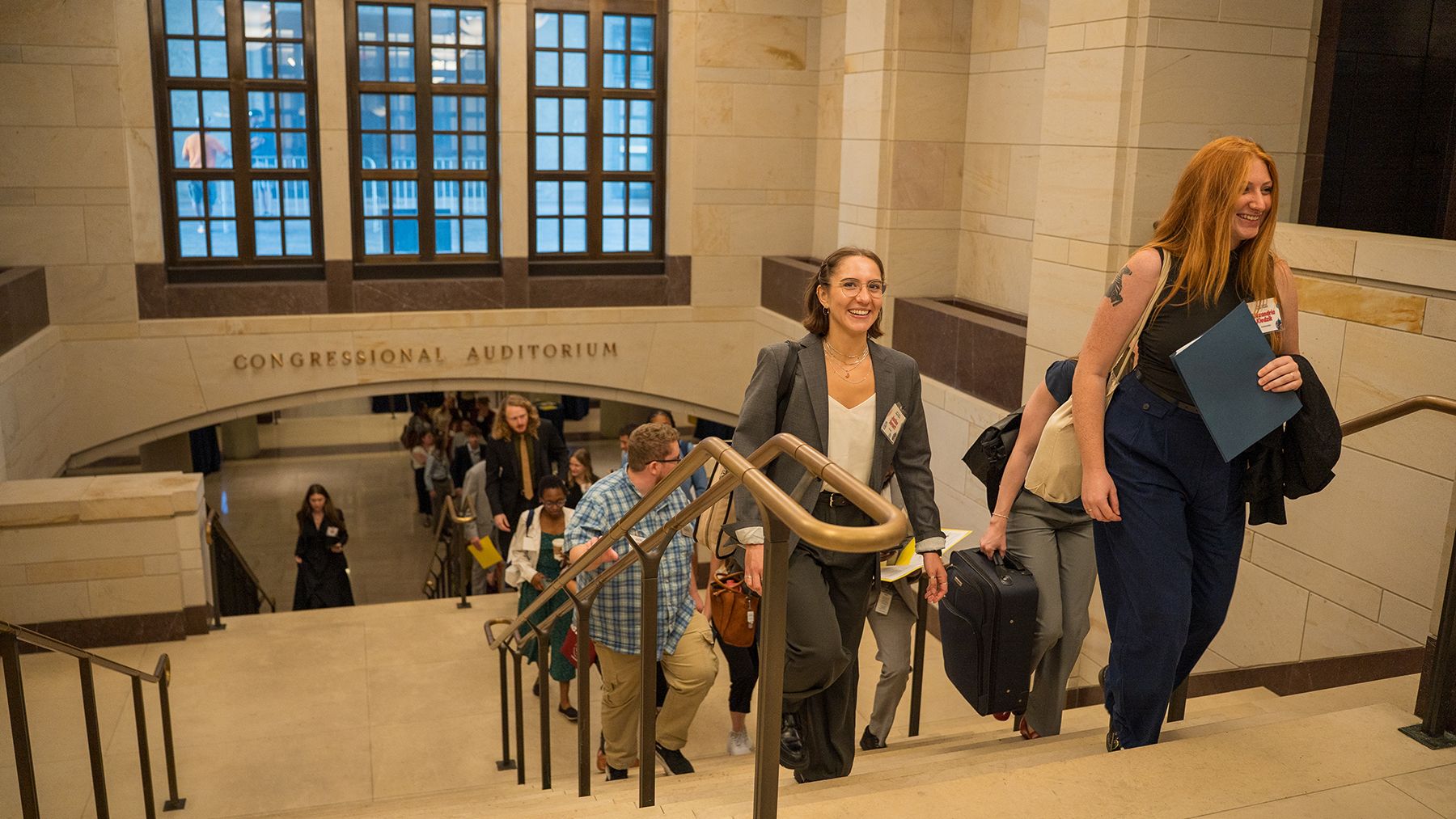
The fourth annual Gen Z Food & Hunger Summit, held July 14-15 in Washington, D.C., hosted by the Congressional Hunger Center and Food Systems Collaborative, gathered young people studying and working around the United States for two days of dialogue, training, and action on local and global food security. I joined nearly 170 of my Gen Z peers in gaining practical experience as emerging leaders advocating for a food-secure world.
Making food policy advocacy work
Attendees first convened for a day of learning and discussion on strategies for food policy advocacy. In an interview, Abby Maxman, President & CEO of Oxfam America, said that food security in the United States and abroad are interconnected issues that ultimately stem from societal inequalities. “Hunger is a product of human action and inaction,” she said, and we must not underestimate our power to use our collective voice and take strategic steps to combat the systemic drivers of food insecurity.
A panel of professionals outlined the most effective ways to tackle food insecurity. Securing the attention of business leaders is essential, said Roxanne Moore, Executive Director of the Sodexo Stop Hunger Foundation, as they have substantial influence in food systems and on food policies that often have a direct effect on their workforce. Tara Scully, associate professor and director of curriculum development of the Global Food Institute at George Washington University in Washington, D.C., reminded us to be succinct in our asks, and above all, “be prepared with data.” Bringing stories and evidence is just one part of practicing advocacy—the panel also reminded us to ask questions and provide space for discussion when interacting with stakeholders.
That afternoon, attendees split into smaller groups to familiarize themselves with the specific policy issue they would bring in visits to congressional offices the next day. My group would be asking senators to protect and strengthen investments in global food security during the fiscal year (FY) 2027 appropriations cycle currently underway. We targeted two key programs: Food for Peace, which provides emergency and non-emergency food assistance to countries affected by crises, and the McGovern-Dole International Food for Education and Child Nutrition Program, which supplies U.S. crops to support school meal and maternal and child nutrition programs in low-income countries. Both programs feature complementary technical assistance and capacity-building activities to support long-term economic development and have received decades of bipartisan support.
| IFPRI research played a role in shaping U.S. government programs for international food assistance IFPRI’s research on the food for education (FFE) program in Bangladesh in the 1990s helped to lay the groundwork for the current-day McGovern-Dole International Food for Education and Child Nutrition Program. Building on existing partnerships with IFPRI and the United States, in 1993 the government of Bangladesh asked IFPRI to monitor and evaluate the effectiveness of a new FFE program. Findings that the FFE program increased school participation rates, especially among girls, encouraged the U.S. government to pilot an international food for education program in 2000. In 2001, U.S. Senators George McGovern and Robert Dole personally commended IFPRI for its research and leadership in the area of school feeding. Find out more about IFPRI’s work on School Meals and School-based Actions for People and the Planet. |
Bringing the message to Capitol Hill
On day two, we had the chance to apply our skills on Capitol Hill through a series of legislative meetings with aides to U.S. Senators. Across 152 Senate meetings, we sat down with staffers to tell our stories and bring attention to several food security-focused bills. Each group was assigned an experienced volunteer to help navigate the Senate office buildings and give pointers on meeting decorum. With the help of our mentor, Andrew McNamee of the Alliance to End Hunger, my group rehearsed our talking points, shook off our nerves, and proceeded into our first of four meetings.
The day unfolded without a hitch. Thanks to our preparations, my group came equipped with evidence underscoring the benefits of the programs. Even so, staffers were most inclined to hear about what brought us to Capitol Hill and why we cared about global food security. Members of my group pointed to experiences operating food banks, engaging with nutrition assistance recipients, and supporting food security campaigns from California to North Carolina. I was proud to highlight my work with IFPRI and elaborate on the ways I have seen evidence-based food policy help to advance peace and prosperity around the world.
By the time we departed our final meeting of the day, I felt confident in my ability to approach elected officials about issues that concern me and my peers, near and far. None of our conversations unfolded exactly as rehearsed, but I saw that the messaging does not have to be perfect—making clear that we care is what matters. To our surprise, most of the legislative assistants we met were also Gen-Z, which enabled candid conversations. Every office we visited responded positively to our request to maintain FY26 funding levels for the Food for Peace and McGovern-Dole programs.
Looking forward
I am fortunate to have joined so many students and young professionals at the Gen Z Food & Hunger Summit who are participating in tangible actions to define our food systems and futures. Working at IFPRI has reinforced my understanding that evidence alone is not enough to end hunger. Advancing policies to sustainably improve food security entails navigating political processes and honing the practice of advocacy.
As the size of the global youth population grows, youth-led movements are showing that Gen Z has the will to center its needs and realities in food security and agricultural development agendas. The recent rise of Gen Z protests in Africa, after a protest in Kenya successfully halted proposed tax increases, shows that young people around the world are clamoring for a voice in their governments, economies, and civic life. Youth inclusion in food policies and the processes that shape them is fundamental for channeling that energy into lasting transformation of food systems and economies.
Maria DiGiovanni is a Research Analyst with IFPRI’s Director General’s Office. Opinions are the author’s.