



Steven Were Omamo
Director, Development Strategies and Governance (DSG); Director for Africa, Development
Strategies and Governance

Back
With research staff from more than 60 countries, and offices across the globe, IFPRI provides research-based policy solutions to sustainably reduce poverty and end hunger and malnutrition in developing countries.

researcher spotlight
Elodie Becquey is a Senior Research Fellow in the Nutrition, Diets, and Health Unit, based in IFPRI’s West and Central Africa office in Senegal. She has over 15 years of research experience in diet, nutrition, and food security in Africa, including countries such as Burkina Faso, Chad, Ethiopia, Ghana, Kenya, Mali, and Tanzania.

Back
Since 1975, IFPRI’s research has been informing policies and development programs to improve food security, nutrition, and livelihoods around the world.

Back
IFPRI currently has more than 600 employees working in over 80 countries with a wide range of local, national, and international partners.
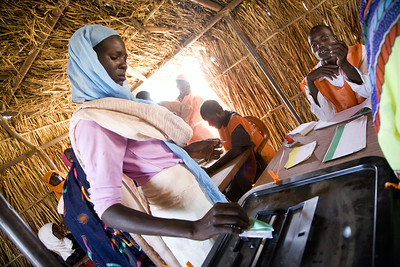
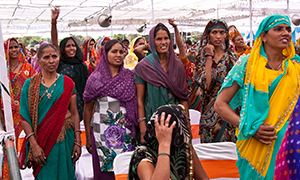
Governance refers to how power and authority are used to manage the collective affairs of a community, society, or nation. Institutions are the systems of formal and informal rules that enable the development of policies, cooperation, and innovation. While there is no singular definition of ‘good governance,’ it usually refers to governance systems that are capable of delivering on objectives, are socially inclusive, responsive to information and needs, efficient, and accountable to citizens.
Sound institutions and good governance—from the local to the global level—are central to the effective functioning of food systems, and more broadly to reducing rural poverty, hunger, malnutrition, and social inequality, as well as conserving natural resources. They are equally important for promoting civic participation in political affairs and mutual accountability between leaders and citizens. Poor governance can contribute to economic and social inequities, conflict and a lack of social cohesion, unsustainable and inefficient resource use, poor delivery of public services and infrastructure, and lack of accountability for governments and leaders, all of which can worsen food insecurity and poverty. Governance systems worldwide, meanwhile, are also under increasing pressure from the aftermath of the COVID-19 pandemic, debt and fiscal crises, climate change, and inequality.
IFPRI’s governance research focuses on property rights, collective action, and service delivery, as well as government accountability and elevating the voices and inclusion of marginalized groups in governance, including women. Our work analyzes the role of institutions and governance arrangements, as well as the related policy processes, in promoting food security and nutrition, poverty reduction, resilience to climate change, social cohesion, gender equality, and environmental health. These include policies for strengthening property rights (including land tenure), inclusive and effective collective action, multi-stakeholder deliberations and platforms, pro-poor public investments and policies, and how to improve service delivery. IFPRI’s work also analyzes the political economy of climate change governance and food systems transformation.


Book Chapter

Journal Article

Working Paper

Addressing systemic disadvantages.

Local actions can support global goals.

On the International Day of Rural Women, IFPRI research shows avenues for empowerment.

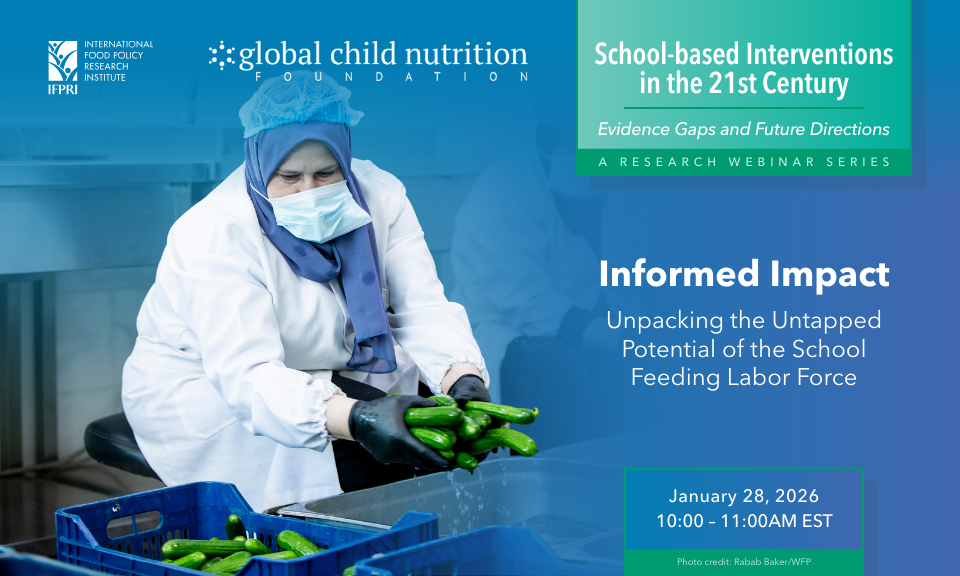
Home-Grown School Feeding (HGSF) has the potential to transform food systems, strengthen rural economies, and improve child nutrition. This webinar examines emerging evidence on the impacts of HGSF approaches, from local sourcing strategies to multisectoral coordination, with a focus on research from Gambia’s HGSF program and government insights and perspectives from Cambodia’s HGSF model. Speakers […]

The recent resurgence of armed conflicts in Africa is increasing the need and urgency for investments in shock-responsive humanitarian and social assistance programs. Armed conflicts both increase the need for aid and greatly complicate delivery of humanitarian services to vulnerable populations. In addition, humanitarian organizations are facing an increasing funding gap because of dwindling donor […]

Virtual Event: March 22, 2022 – 9:30 AM to 11:00 AM EDT. This event features a panel discussion on global governance, food security and nutrition, poverty reduction, and gender.
The International Food Policy Research Institute (IFPRI) is pleased to announce that Steven Were Omamo has been appointed IFPRI’s Director for Africa. Dr. Omamo will also continue to serve as IFPRI’s Director of the Development Strategies and Governance Unit (DSG). Based in IFPRI’s Nairobi, Kenya office, Omamo joined IFPRI in October 2024. “We are delighted […]
IFPRI is pleased to announce that Steven Were Omamo joins IFPRI as the new Director of the DSG Unit.
New UN report highlights urgent need to strengthen urban and peri-urban food systems for global food security and nutrition.

Director, Development Strategies and Governance (DSG); Director for Africa, Development
Strategies and Governance

Country Coordinator – SHIFT, Nutrition,
Diets, and Health

Senior Research Fellow, Innovation
Policy and Scaling

Research Fellow, Natural
Resources and Resilience

Research Fellow, Poverty,
Gender, and Inclusion

Senior Research Fellow, Development
Strategies and Governance

Project Manager, Development
Strategies and Governance

Senior Research Coordinator, Development
Strategies and Governance
Nonresident Senior Fellow, Nutrition,
Diets, and Health