



IFPRI’s Fragility to Stability Policy Seminar Series
The “Fragility to Stability” IFPRI Policy Seminar series is an initiative led by IFPRI’s research team on fragility and conflict, showcasing work from across IFPRI’s five research themes, with the goal of responding to the urgent need for evidence-based, collaborative strategies to strengthen food, land, and water systems in FCA settings. This platform aims to share research-based lessons on what works to improve the well-being of individuals and communities in these challenging environments, as well as what gaps remain and where further innovation is needed. This seminar series is led by Katrina Kosec, Kibrom Abay, and Kate Ambler, and co-curated by Lucia Carrillo and Gillian Hollerich.
The seminar series centers on three themes: Anticipate and Prevent (disaster risk reduction and early action), Respond (effective policies and programming to address crises), and Recover (policies for long-term resilience and sustainable livelihoods in fragile settings). Each session brings together a diverse set of stakeholders—including policymakers, researchers, donors, and implementers—to share experiences, insights, and questions. This fosters rich dialogue that not only reflects different perspectives but also surfaces actionable ideas and lessons learned. The Fragility to Stability seminar series thus provides a platform where participants can openly discuss what has worked, what hasn’t, and what is needed to strengthen food systems in fragile settings.
Seminars
-
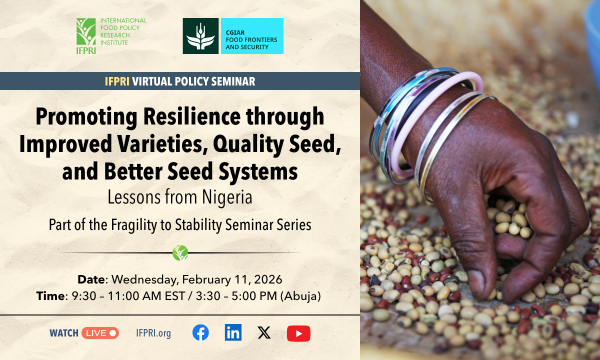 February 11, 2026, 9:30 – 11:00 am
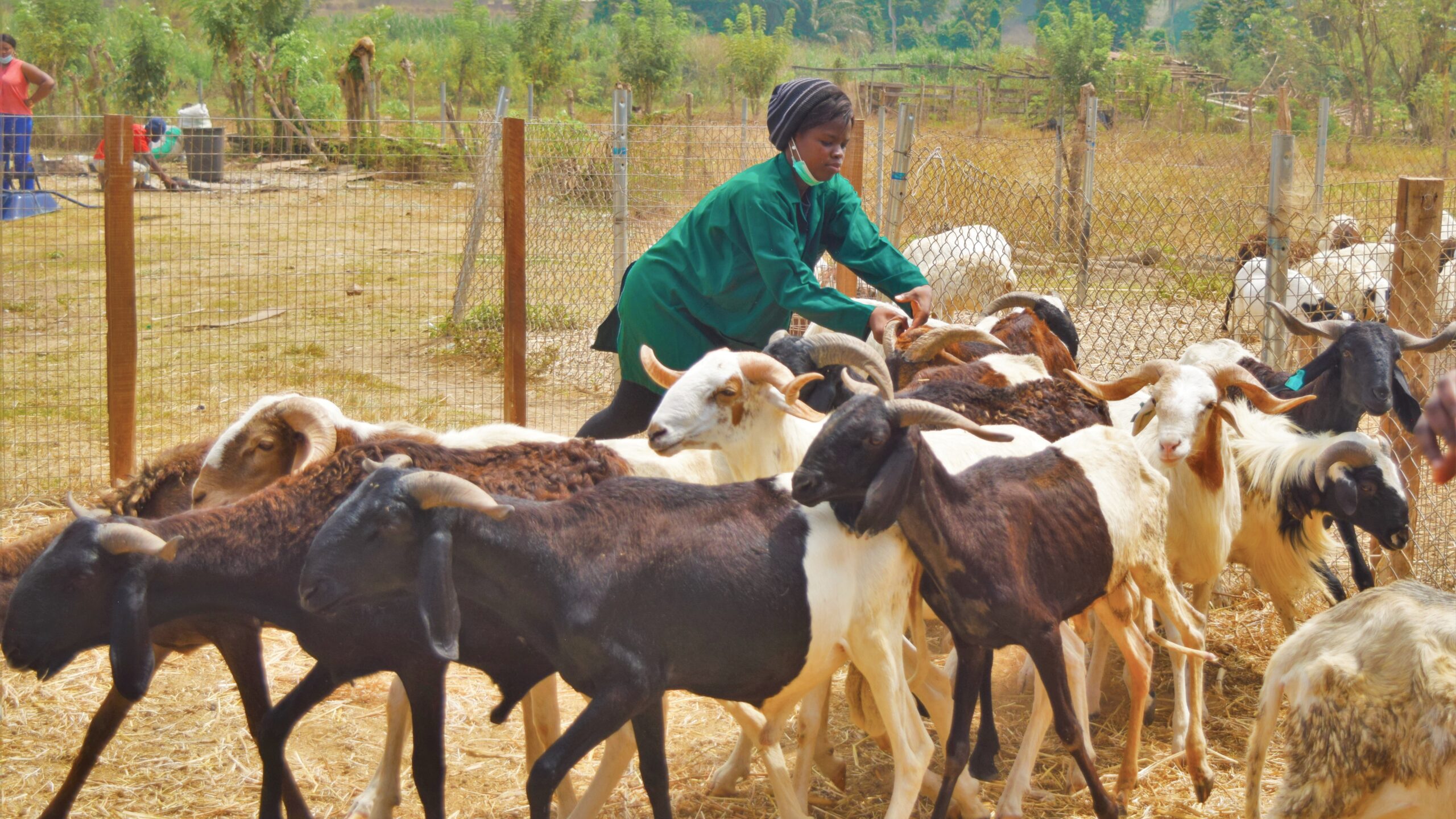
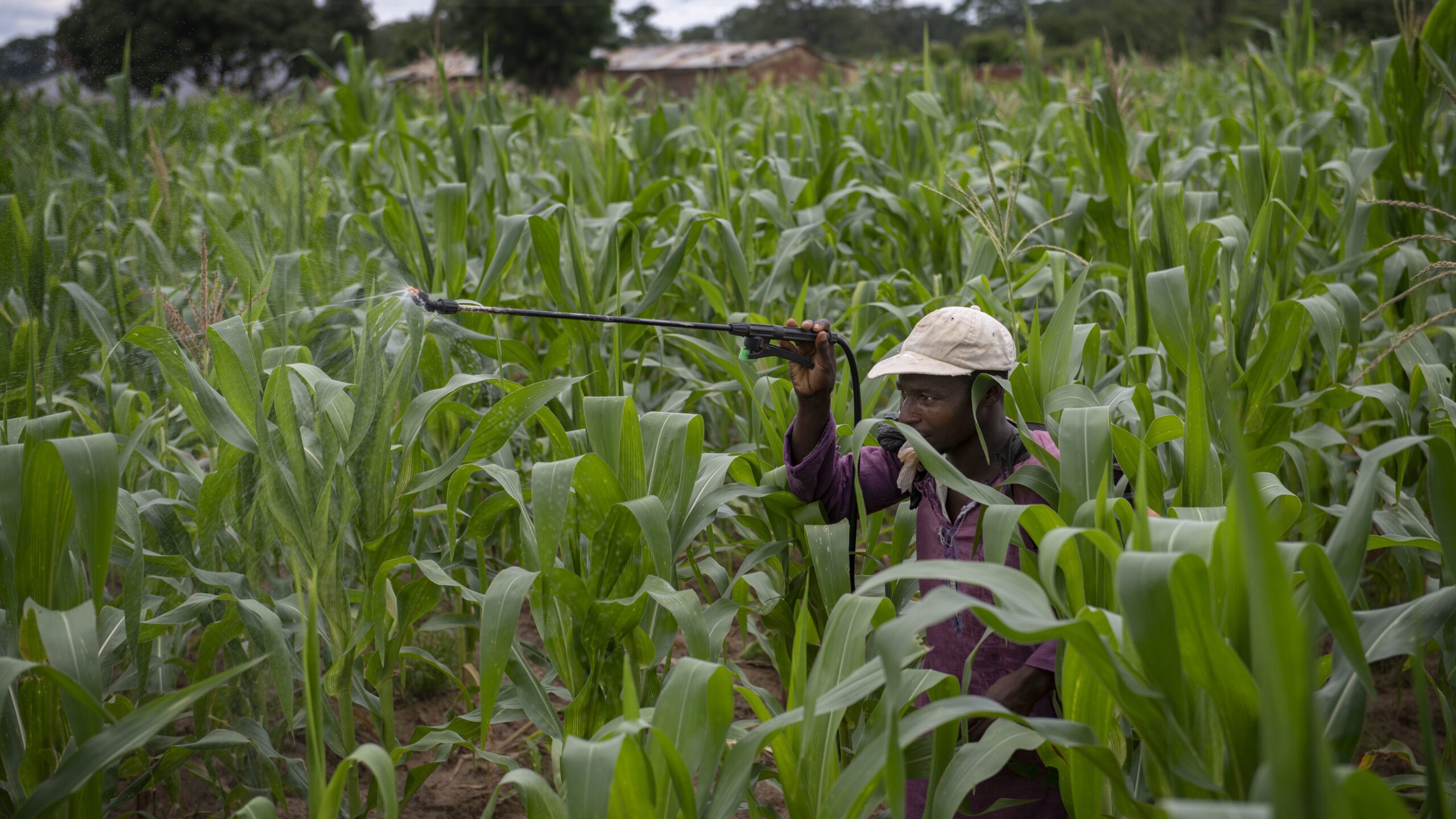
Promoting Resilience through Improved Varieties, Quality Seed, and Better Seed Systems: Lessons from Nigeria
Across sub-Saharan Africa, small-scale, resource-poor farmers are disproportionately affected by climatic and market shocks. Providing them with the tools and technologies to manage these shocks is critical to building resilience,…
-
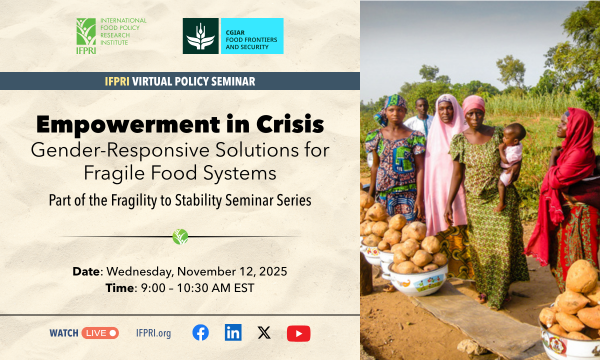 November 12, 2025, 9:00 – 10:30 am
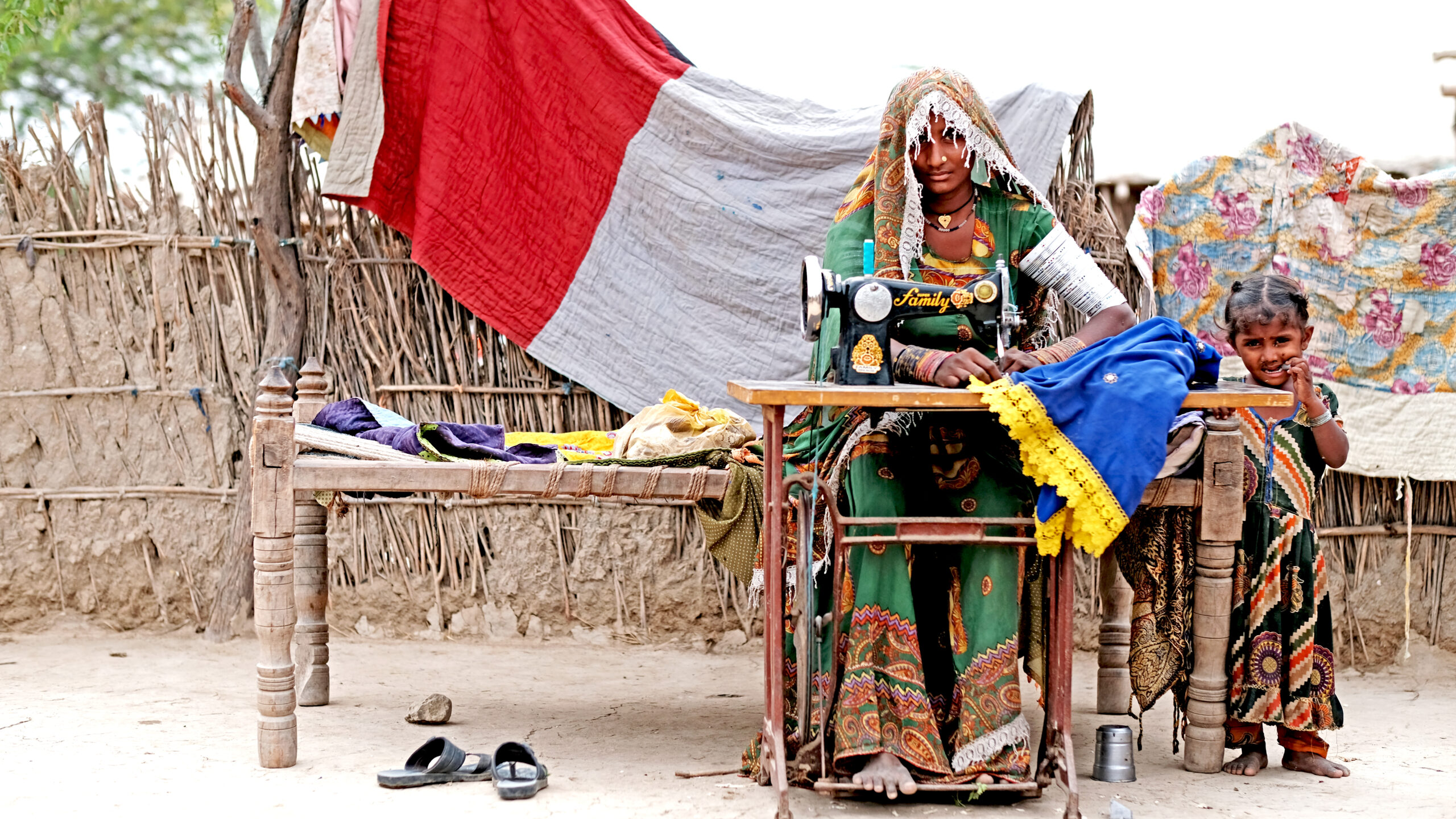
Empowerment in Crisis: Gender-Responsive Solutions for Fragile Food Systems
Crises—whether driven by conflict, climate shocks, or economic instability—rarely affect everyone equally. Women and girls often bear the heaviest burdens, facing heightened food insecurity, disrupted livelihoods, and increased risks to…
-
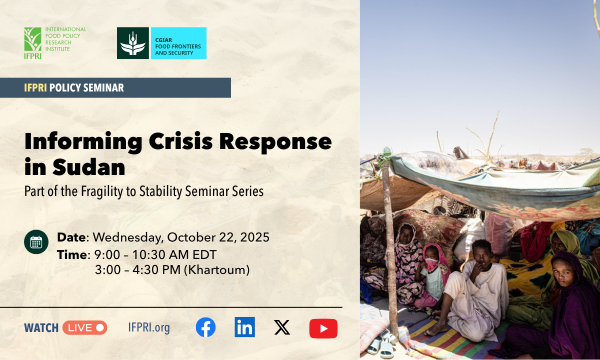 October 22, 2025, 3:00 – 4:30 pm
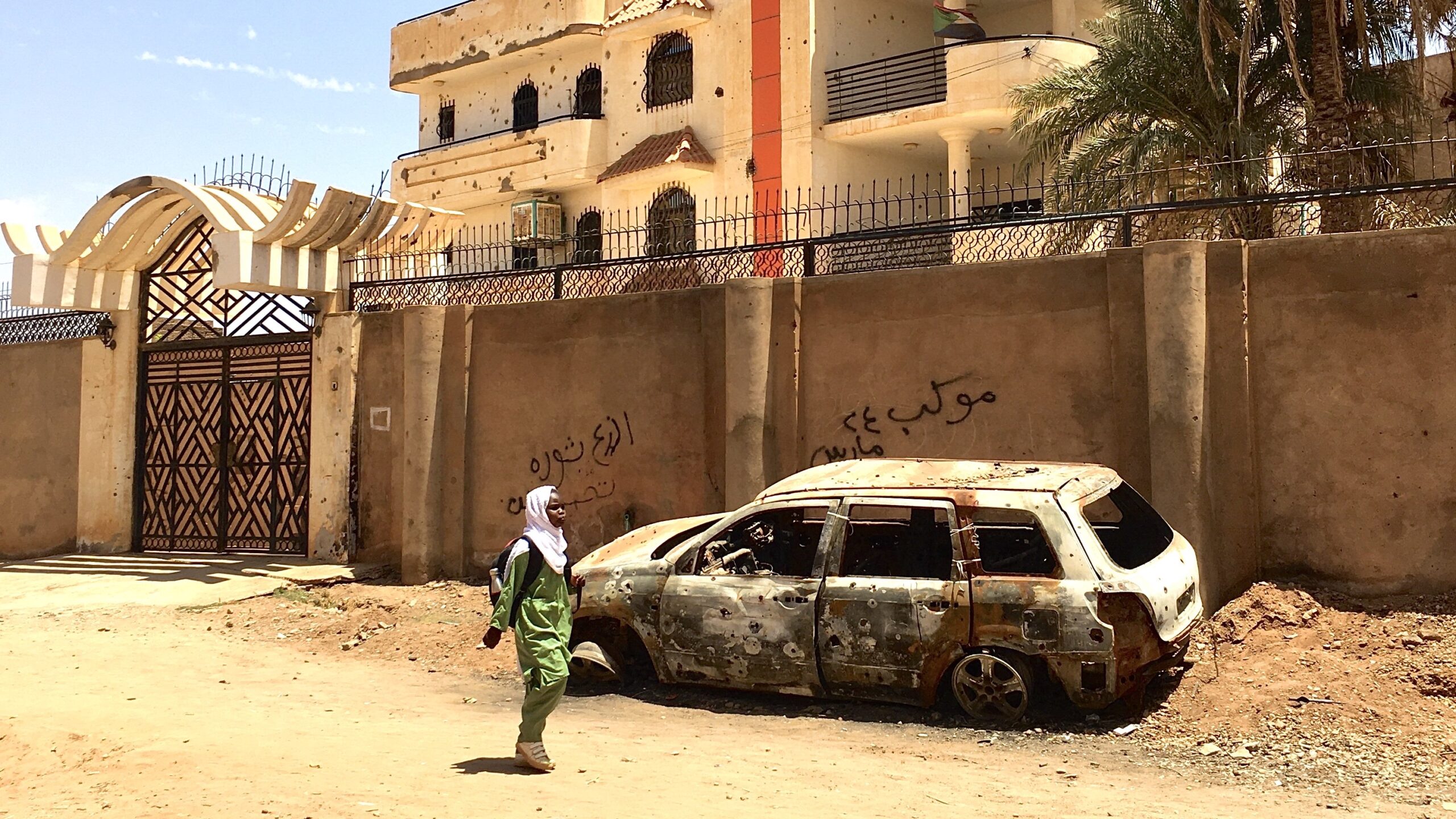
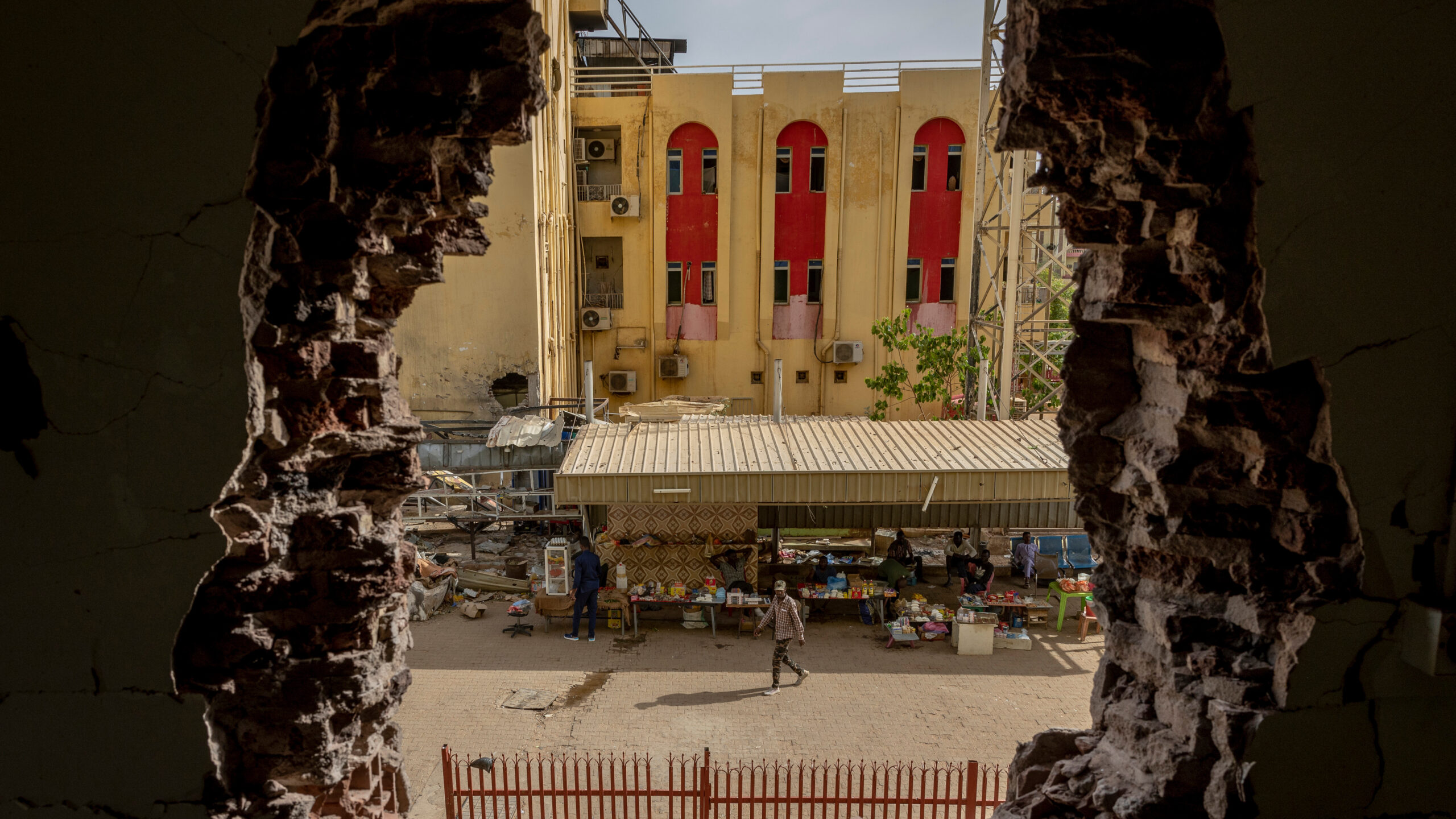
Informing Crisis Response in Sudan
The recent resurgence of armed conflicts in Africa is increasing the need and urgency for investments in shock-responsive humanitarian and social assistance programs. Armed conflicts both increase the need for…
-
 September 18, 2025, 9:30 – 11:00 am
Mobility in a Fragile World: Evidence to Inform Policy
Migration today reflects a complex interplay of demographic pressures, conflict, poverty, climate change, and economic shocks. Worldwide, one in every seven people is a migrant—that is, someone who changes his…
-
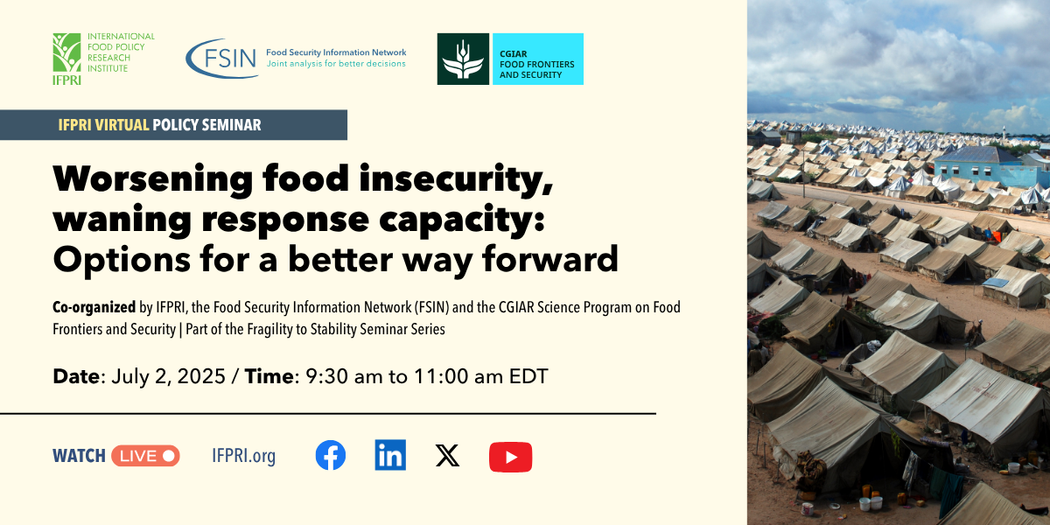 July 2, 2025, 9:30 – 11:00 am
Worsening food insecurity, waning response capacity: Options for a better way forward
Food crises arise from the complex interplay of conflict, poverty, climate variability, and economic shocks, resulting in acute food insecurity among vulnerable populations. According to the latest Global Report on…
Related Blogs


This IFPRI Policy Seminar series represents a continuation of the Fragility to Stability, with CGIAR podcast series, launched in 2024. Our new format allows for more extensive engagement with partners, showcasing of visuals, deeper explanations of policy relevance, and interactive audience Q&A.