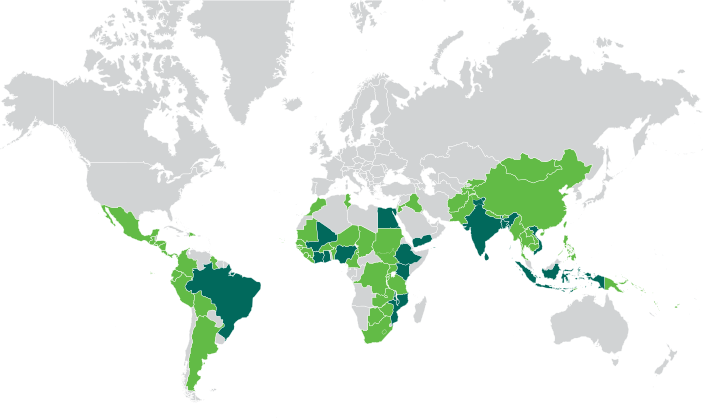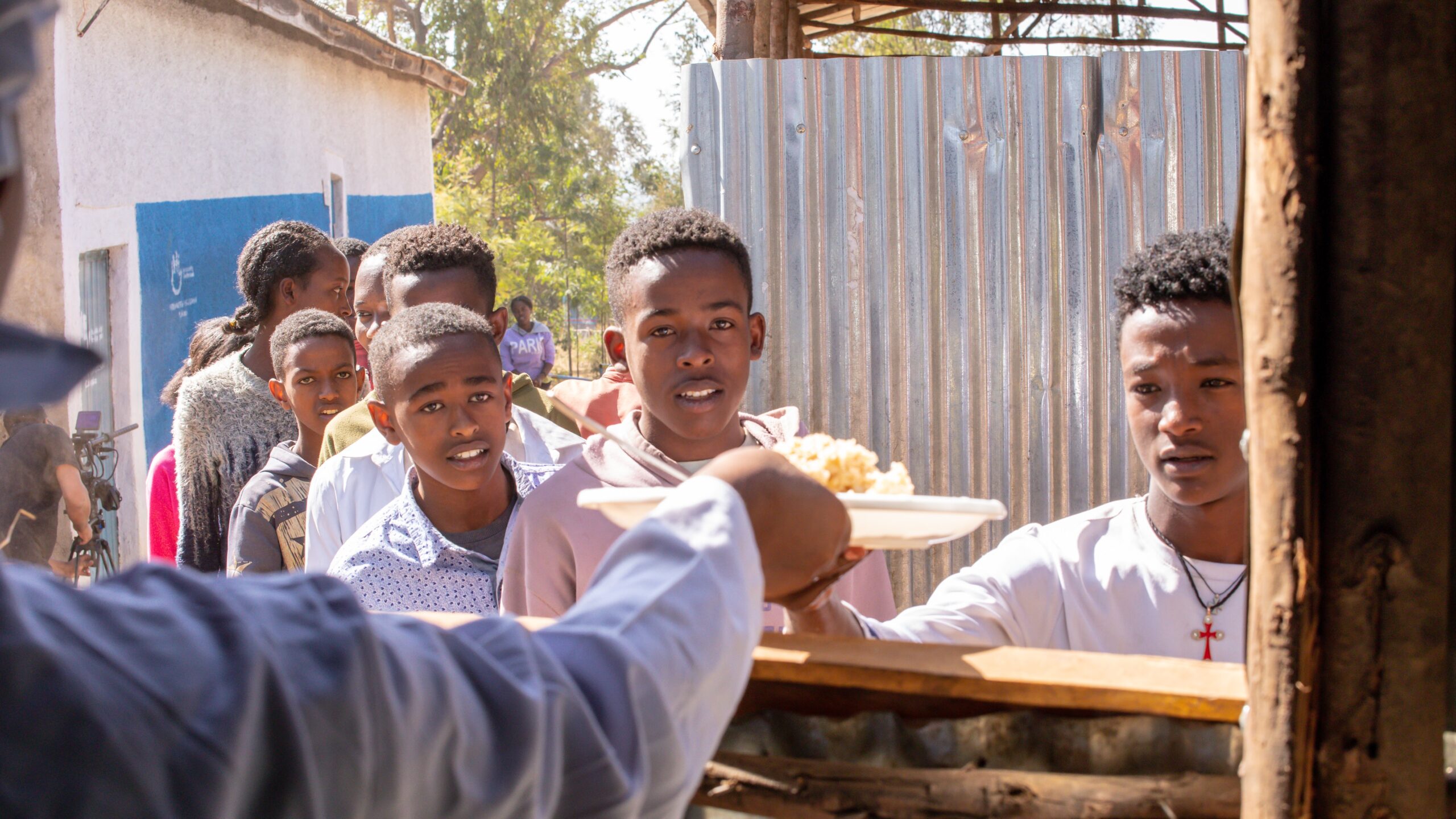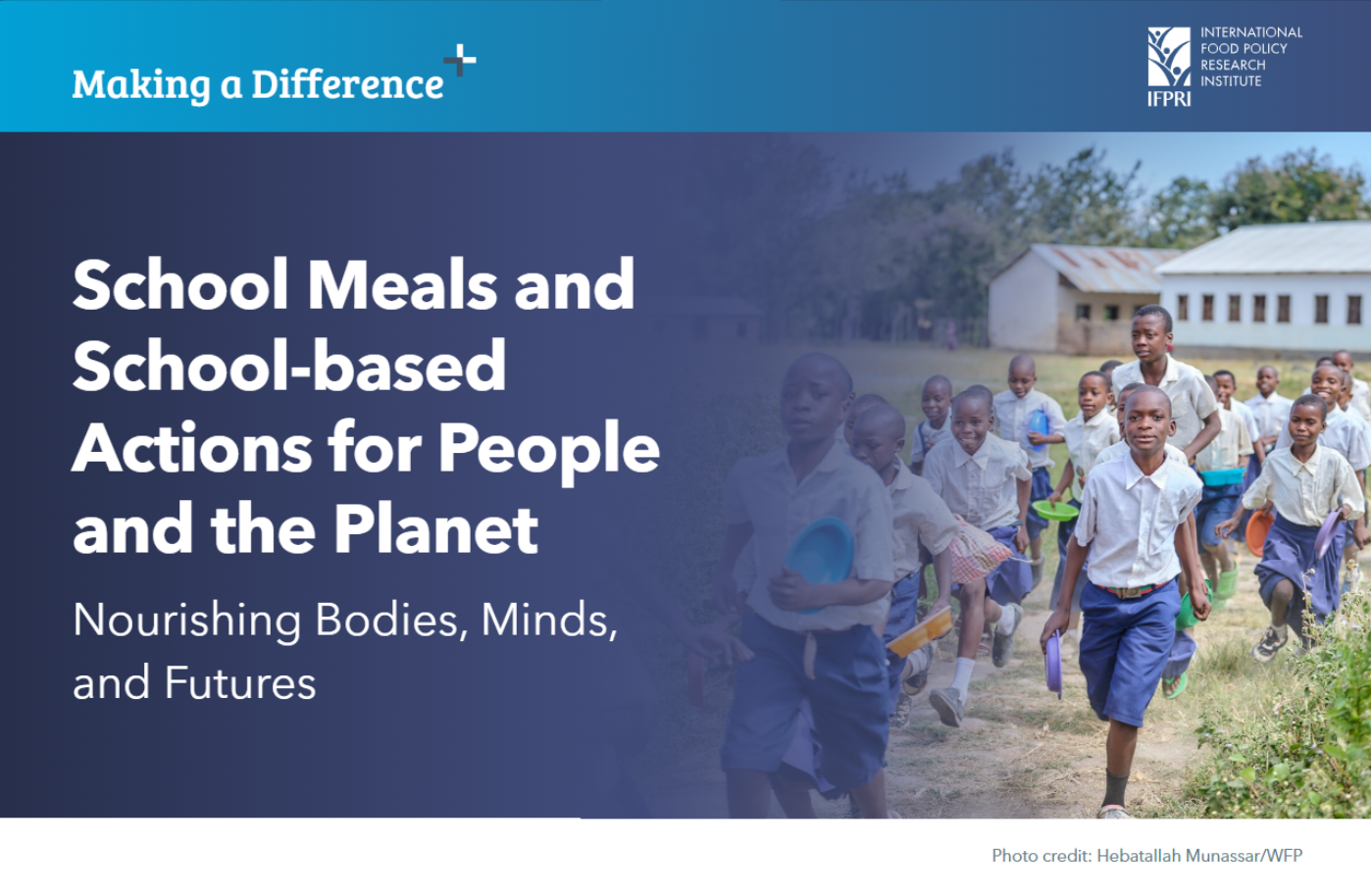




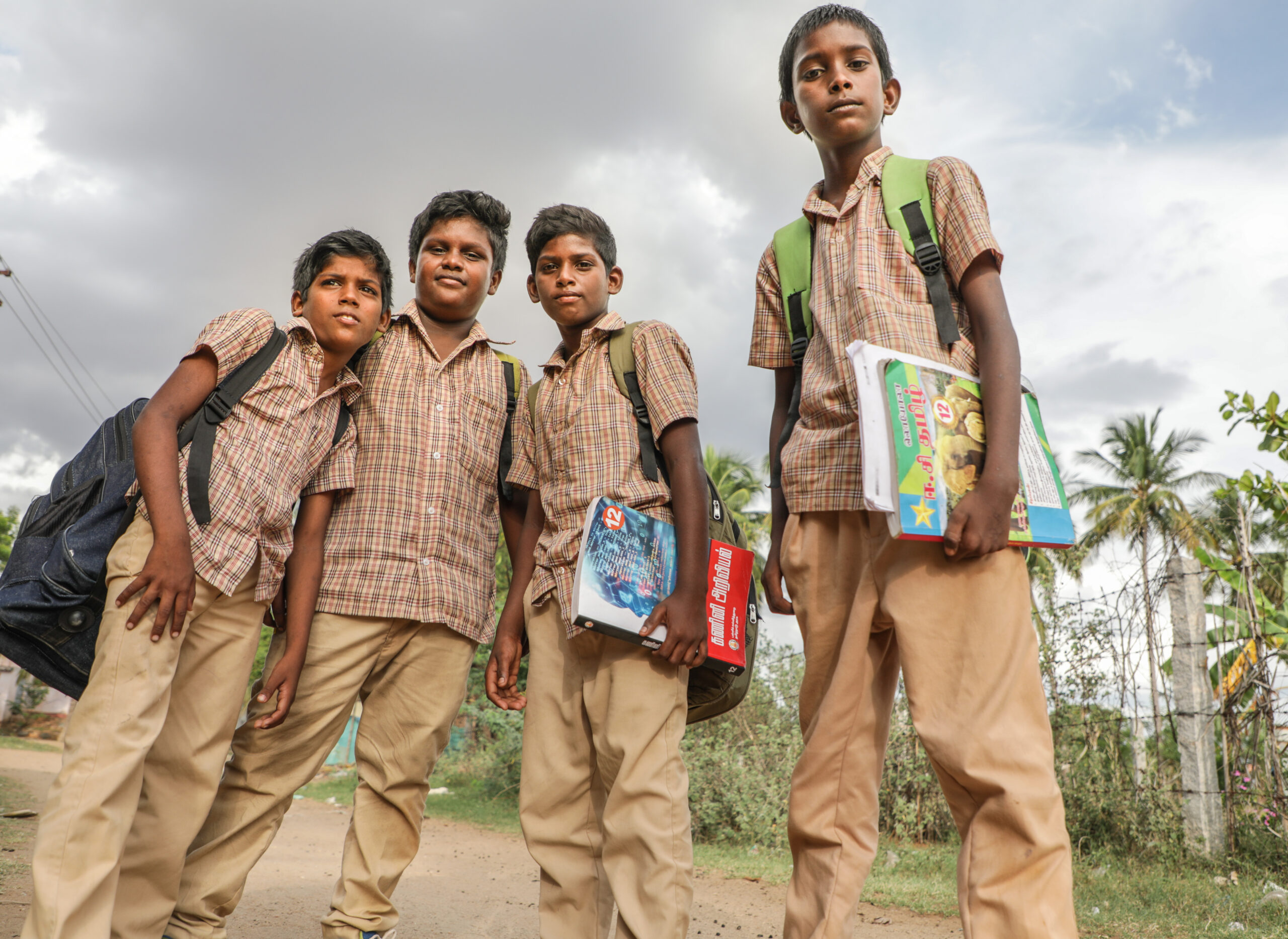

School meals are among the world’s most widely implemented social programs, reaching more than 400 million children globally each year. Beyond their proven benefits for learning and nutrition, school meal programs can be powerful entry points for multisectoral action, including strengthening local food systems, creating jobs, promoting gender equality, and building resilience to climate and economic shocks. Annual investments in school meals approach US$70 billion. However, important evidence gaps remain in understanding how to optimize the cost-effectiveness of programs operating in different contexts across the globe.
Drawing on nearly five decades of leadership in food policy research, IFPRI works in partnership with governments and organizations to understand how school meals and complementary school-based actions—such as providing nutrition education in schools, and making food environments in and near schools healthier—improve nutrition, learning, and livelihoods. Critically, IFPRI’s work aims to strengthen the evidence base to make these programs more effective, equitable, and sustainable.
With interdisciplinary expertise spanning nutrition, agriculture, education, gender, and social protection, IFPRI’s comparative advantage lies in connecting the dots across sectors, transforming school meals from a feeding intervention into a catalyst for inclusive, climate-smart, and economically sustainable food systems.
Collaborative work across countries has demonstrated wide-ranging benefits—from better learning and healthier diets to stronger livelihoods and more resilient local economies.
Current Initiatives and Shared Learning
Across countries, IFPRI and its partners are advancing a growing portfolio of work that explores how school-based interventions can shape diets, markets, and local food systems:
- Emerging evidence on regenerative agriculture and school meals highlights opportunities to link school feeding programs to climate-smart production, strengthening farmer livelihoods and environmental sustainability.
- Insights into how school meals influence long-term food choices illustrate the broader potential of school-based actions to support healthier diets and resilient local food economies.
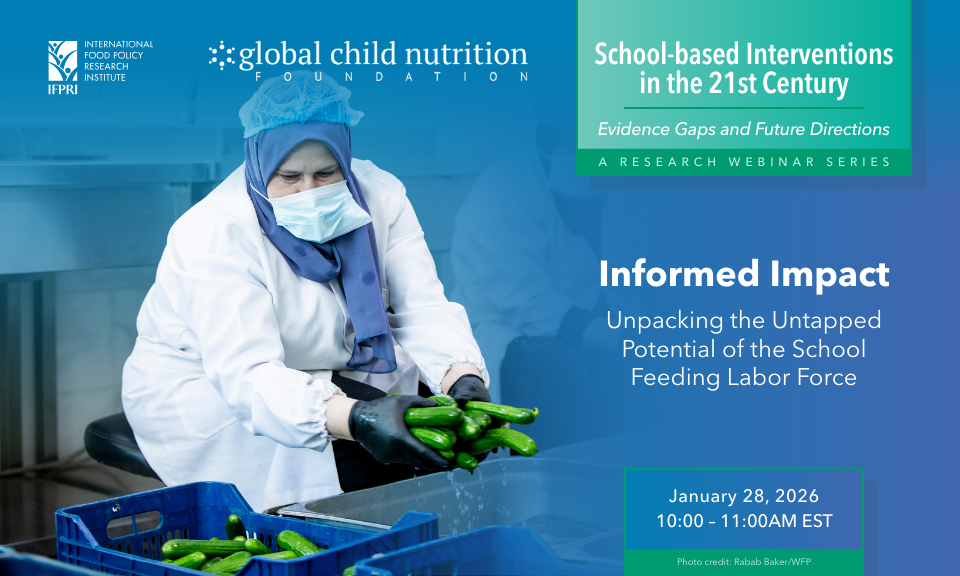
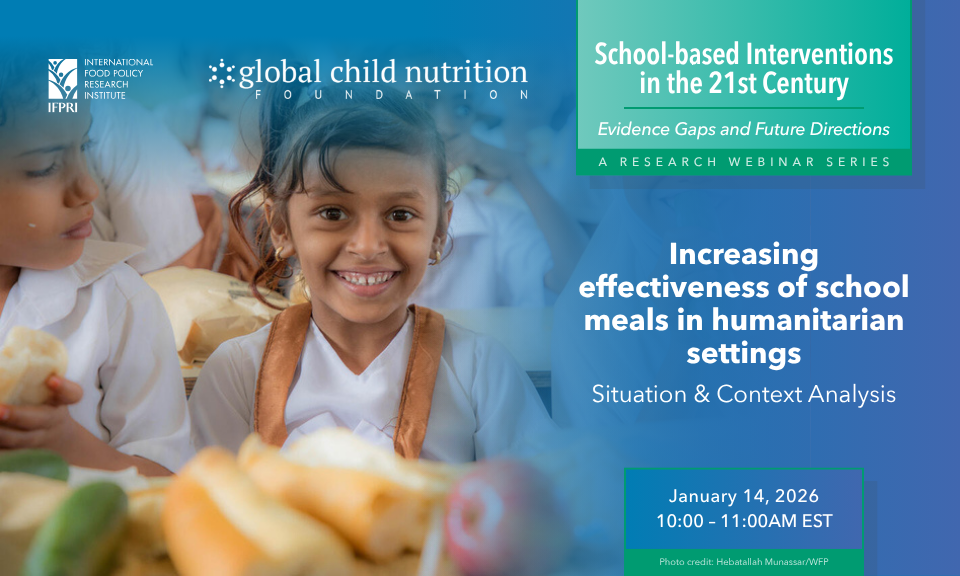
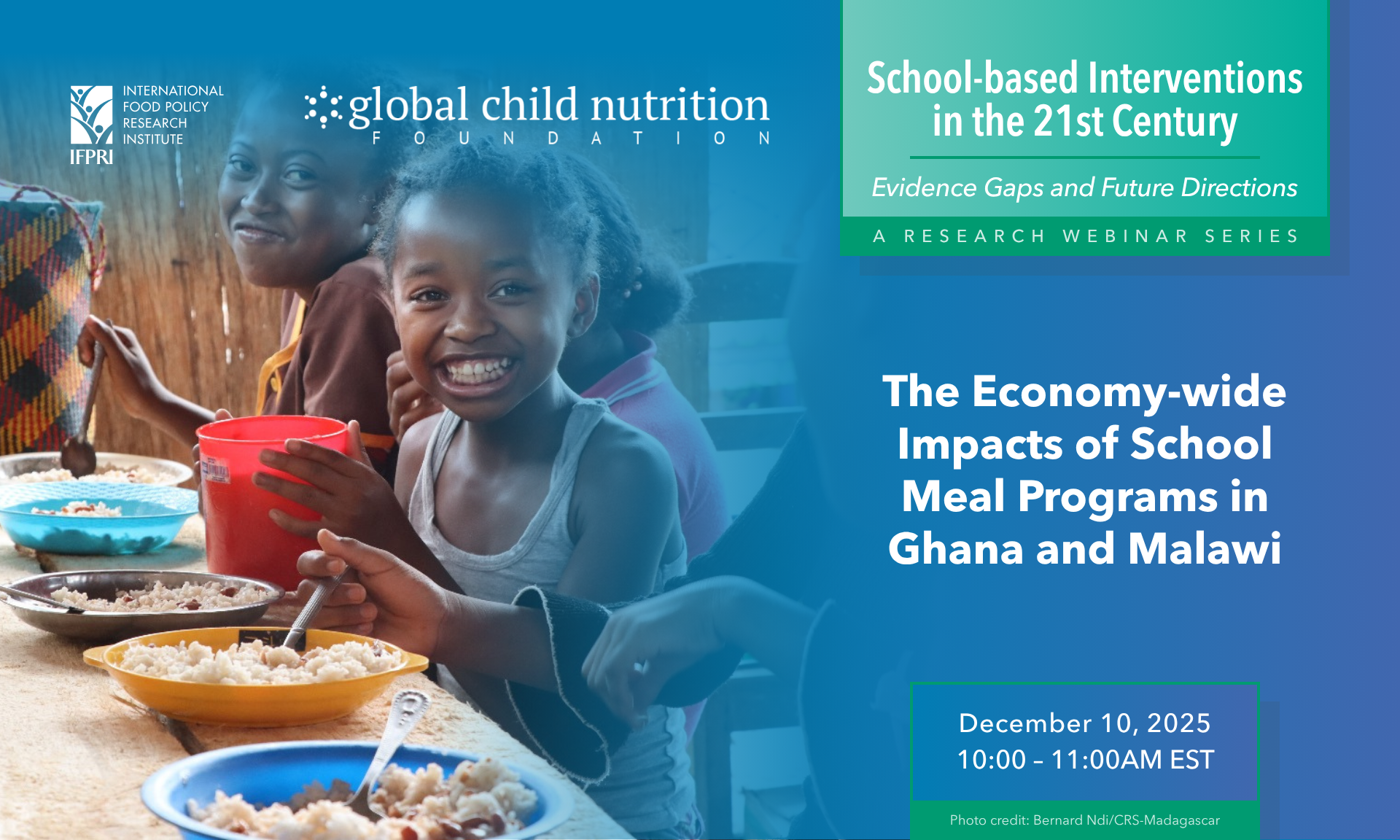
- School-Based Interventions in the 21st Century, an ongoing webinar series co-hosted with global partners, brings together policymakers, practitioners, and researchers to share lessons, identify evidence gaps, and co-develop priorities for future action..
Along with other initiatives, these efforts reflect IFPRI’s commitment to co-learning, partnership-driven innovation, and collaborative design, ensuring that school meal programs—and the broader school food environment—continue to evolve as powerful levers for improving well-being today and shaping sustainable food systems for the next generation.