





Key takeaways
- Addressing small bottlenecks in managing transboundary water resources is key to realizing the broad goals elaborated in formal agreements.
- Rapid assessments help identify realistic solutions. A case in Central Asia found strong day-to-day cooperation but outdated rules, unclear responsibilities, and limited stakeholder engagement.
- Inclusive institutions make water governance more resilient. Multistakeholder platforms help build trust, improve decision-making, and support long-term cooperation.
As climate change, competing water demands, and geopolitical uncertainty place increasing pressure on shared rivers and aquifers, countries sharing water resources face a common challenge: how can transboundary water agreements remain effective under rapidly changing conditions? While legal frameworks provide the foundation for cooperation, management must also evolve alongside changing environmental conditions, emerging digital technologies, and the needs of the people they serve.
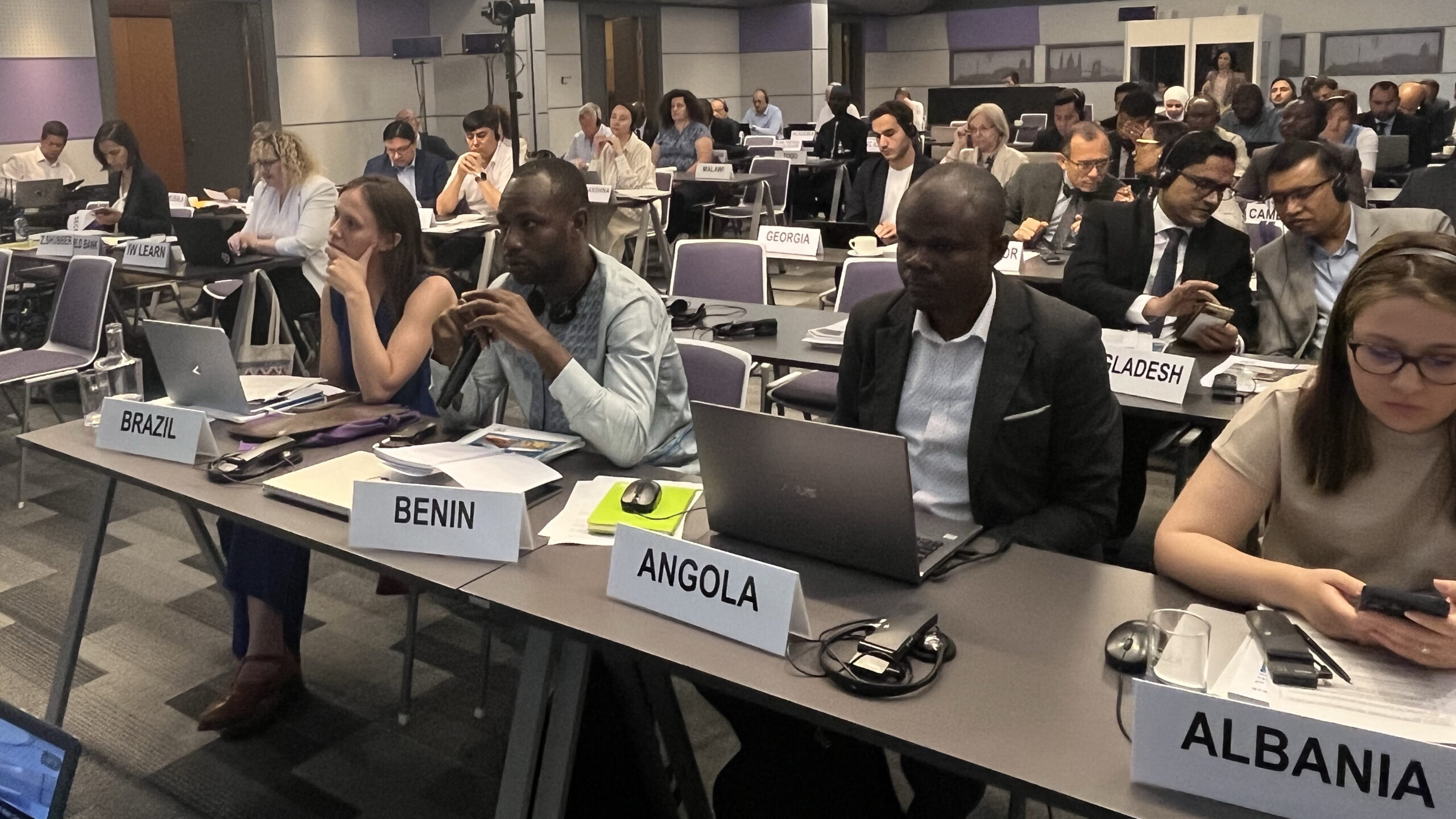
This challenge was at the heart of discussions during a United Nations Economic Commission for Europe event in Budapest June 22-23: the UNECE Global Workshop on Agreements and Other Arrangements for Transboundary Water Cooperation. Bringing together government representatives, river basin organizations, researchers, and development partners from 35 countries, the workshop focused on practical approaches to developing, revising, and strengthening agreements to respond to challenges such as climate change, groundwater governance, and pollution, while exploring emerging opportunities such as digital technologies in water management.
Effective transboundary management requires inclusive processes and targeted interventions to overcome stalemates. This was the focus of two presentations outlined here. The first, by Bunyod Holmatov (International Water Management Institute or IWMI), outlined a rapid assessment process (RAP) that helps countries identify quick-win solutions for enhancing cooperation. The second, by Ryan Nehring (IFPRI), explored how multistakeholder platforms (MSPs) can create more inclusive and resilient transboundary water governance.
Applying the rapid assessment process (RAP) in Central Asia
Achieving cooperation amid these complex challenges depends on building ongoing technical collaboration, routine data exchange, trusted working relationships, and the ability to cope with change—for example, evolutions in river flow or sectoral water demands. Focusing on these individual aspects of cooperation may reveal levers to unblock stalled processes. Thus, it is important to strategically identify measures to address common obstacles—from outdated agreements to weak stakeholder participation or fragmented data systems.
The RAP offers a practical way to bridge this gap by providing a quick, focused diagnostic exercise that assesses how well cooperation is working in practice. This was applied in the Ferghana Valley of Central Asia, where cooperation on small transboundary tributaries often relies on agreements from the 1980s, even though water demand, irrigated areas, hydrometric, and climate conditions have changed drastically since then.
The assessment examined cooperation between Kyrgyzstan and Uzbekistan. The two tributaries in question are small compared to the main rivers receiving most international policy attention, but they matter greatly to the communities who depend on them for their livelihoods. Rather than undertaking lengthy institutional reviews, the RAP combined document analysis, stakeholder interviews, and validation workshops to quickly build a snapshot of what was working, what was holding cooperation back, and which levers could be pulled to enhance cooperation.
The RAP revealed a clear divide between what is working and what isn’t. Technical cooperation between water managers remains strong, supported by regular communication, harmonized measurement practices, and shared operational experience. In practical terms, this means that people responsible for on-the-ground water management often know how to work with one another, how to communicate, exchange information, and solve ad hoc issues. Yet formal governance arrangements lag behind. Existing agreements are outdated, stakeholder participation remains limited, and institutional responsibilities are not always clearly defined. The result is differences between cooperation as it happens on the ground and cooperation as reflected in formal rules and institutions.
Perhaps equally important, the assessment itself became part of the cooperation process. By bringing together practitioners from both countries to jointly identify challenges and priorities, RAP helped create a safe space for comparing perspectives and building trust around practical solutions. The process produced actionable recommendations and also showed that cooperation can be strengthened through modest but targeted steps such as improving data exchange, clarifying roles, and involving a wider group of stakeholders. This approach means stakeholders don’t need to wait years for comprehensive institutional reform, while policymakers and development partners can employ RAP as both a tool for analysis and to identify realistic entry points for strengthening cooperation.
Building institutional cooperation in southern Africa
Understanding governance gaps, however, is only the first step. Sustained cooperation also requires institutions that create opportunities for stakeholder participation that extends beyond governments—the topic of the second presentation.
Multistakeholder platforms bring together government agencies, river basin organizations, civil society, researchers, community representatives, and the private sector to exchange information, build trust, and contribute to basin-wide decision-making. As transboundary governance becomes increasingly complex, these platforms offer a way to ensure that multiple perspectives inform water management in partnerships with existing intergovernmental institutions, enabling increased resilience in transboundary water management and legitimacy of governance structures.
Drawing lessons from the Mekong, Nile, and Zambezi basins, the presentation explored how these experiences could inform the development of an MSP in the Incomati River Basin of southern Africa. The various examples show that there is no single model for success. In some basins, MSPs operate independently from river basin organizations (RBOs) while maintaining close collaboration through formal agreements. In others, stakeholder engagement is integrated directly into the governance structures of RBOs. Each approach reflects different political contexts, funding arrangements, and institutional histories.
Across these diverse experiences, several common lessons emerged. First, stakeholder engagement works best when it is institutionalized rather than project-based. Second, platforms need clear relationships with existing RBOs to ensure that stakeholder dialogue informs decision-making without duplicating institutional mandates. Finally, long-term sustainability depends on stable financing and continued commitment from both governments and development partners.
Conclusion
The discussions in Budapest reinforced an important message for policymakers. Strengthening transboundary water cooperation under external and internal pressures does not always require negotiating new agreements. In many cases, progress begins by better understanding how existing arrangements function in practice and by building more inclusive institutions capable of adapting to future challenges. As countries prepare for the 2026 UN Water Conference (December 8-10 in Abu Dhabi, United Arab Emirates) and continue implementing the global Water Convention on shared water resources, practical innovations such as rapid assessments and multistakeholder platforms can help ensure that cooperation remains effective, resilient, and responsive in an increasingly uncertain world.
Bunyod Holmatov is Research Group Leader—Water, Food, Energy Nexus with the International Water Management Institute (IWMI); Ryan Nehring is a Research Fellow with IFPRI’s Agrifood Innovations and Resilience Unit. Opinions are the authors’.
This research was supported by the CGIAR Policy Innovations Science Program. The RAP work also drew on IWMI’s wider experience in transboundary water cooperation, including the U.S. State Department-funded Global Partnership for Sustainable Cooperation on Shared Waters; the EU Horizon 2020-funded Hydro4U and WE-ACT projects; and other initiatives that generated lessons on collaboration, dialogue, and shared water management.
References
Holmatov, Bunyod, Jonathan Lautze, Matthew McCartney, Botirjon Abdurakhmanov, and Isomiddin Akramov. 2026. Rapid Assessment as a Tool for Transboundary Water Governance: Proof-of-Concept Evidence from the Ferghana Valley. IWMI Research Report 196. International Water Management Institute (IWMI). https://doi.org/10.5337/2026.210.
Nehring, R., Lautze, J., & Mgudlwa, M. (2025). What is the role for multistakeholder platforms in transboundary basin governance? Distilling lessons from three cases and applying them in the Incomati Basin. Water International, 50(7), 746–770. https://doi.org/10.1080/02508060.2025.2529122