





Key takeaways
- Women’s microenterprises are growing fast but underperform, an analysis of survey data shows. They expand rapidly yet earn less, with lower productivity and income than men’s businesses.
- Food microenterprises show stronger, productivity-led growth. They offer better earnings potential and opportunities, especially for women.
- Better-targeted policies can unlock women’s potential. Support must address constraints like limited control over resources, mobility, and household responsibilities.
This year marks the 10th annual observance of Micro, Small, and Medium Enterprises (MSME) Day (June 27)—intended to raise awareness and recognize the role of MSMEs toward the achievement of sustainable development goals. MSMEs are the backbone of low- and middle-income countries, driving employment, income, and growth. As of 2025, MSMEs accounted for ~70% of employment and 50% of share in GDP globally.
In India—the world’s most populous country with the largest number of poor—microenterprises hold a unique position in terms of their economic importance, providing a key source of employment and, with policy interventions, a path out of poverty.
India’s microenterprises have been growing in recent years, particularly in the food sector, according to our analysis of the government’s Annual Survey of Unincorporated Sector Enterprises (ASUSE). While women face continuing obstacles in business due to economic and cultural constraints, food microenterprises appear to offer a promising avenue for expanding their employment and income in India’s transitioning food system.
This post—based on a quantitative analysis of the 2021-22, 2022-23, and 2023-24 rounds of ASUSE and supplemented by international evidence—explores the differences in growth patterns in microenterprises, barriers to inclusive and sustainable growth, and how institutional support may help in building resilience for women-owned enterprises.
Growth of informal sector microenterprises
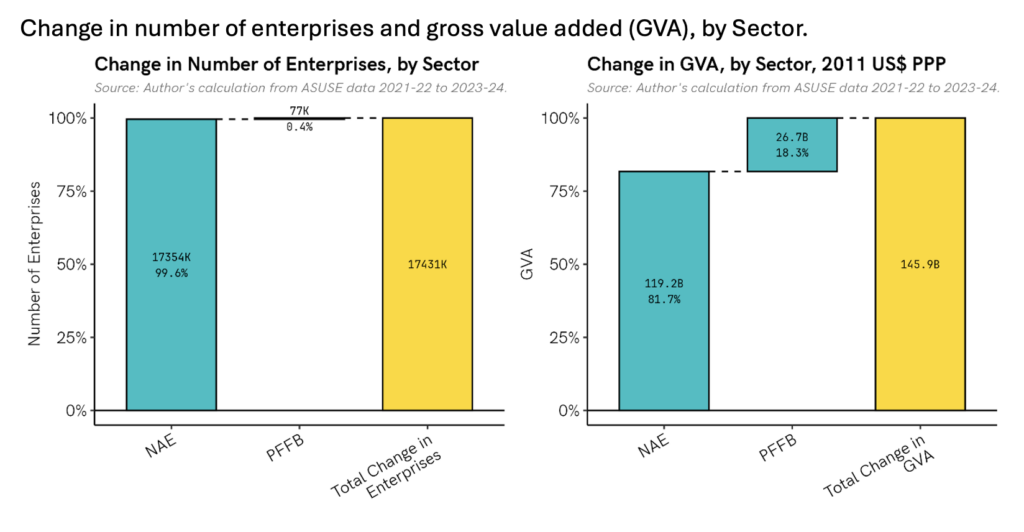
The microenterprise sector has expanded rapidly in recent years, with the number of enterprises achieving a 14% compound annual growth rate (CAGR), and real gross value added (GVA)—microenterprises’ contribution to GDP—growing at 13% from 2021-22 to 2023-24. Importantly, post-farmgate food businesses (PFFBs)—enterprises across the value chain, from food processing to sales—are expanding rapidly: they accounted for 18% of overall GVA growth in the same period, despite representing only 0.4% of the growth in number of businesses (Figure 1).
Figure 1
Across both the food and non-food sectors, women entrepreneurs are driving growth in the number of enterprises. The number of female-owned enterprises is growing at 21% CAGR, nearly double the 11% growth for male-owned businesses post-COVID (between 2021-22 and 2023-24). The MSME female workforce grew correspondingly.
Yet, while a quarter of informal enterprises are owned by women, they account for only 10% of the sector’s GVA. This corroborates findings from studies in Latin America and sub-Saharan Africa that women-run microenterprises report lower sales, profits, assets and earnings than those run by men. Evidence suggests this gap in performance is connected to women’s greater participation in household responsibilities.
Productivity has improved steadily among food enterprises and declined for non-food enterprises
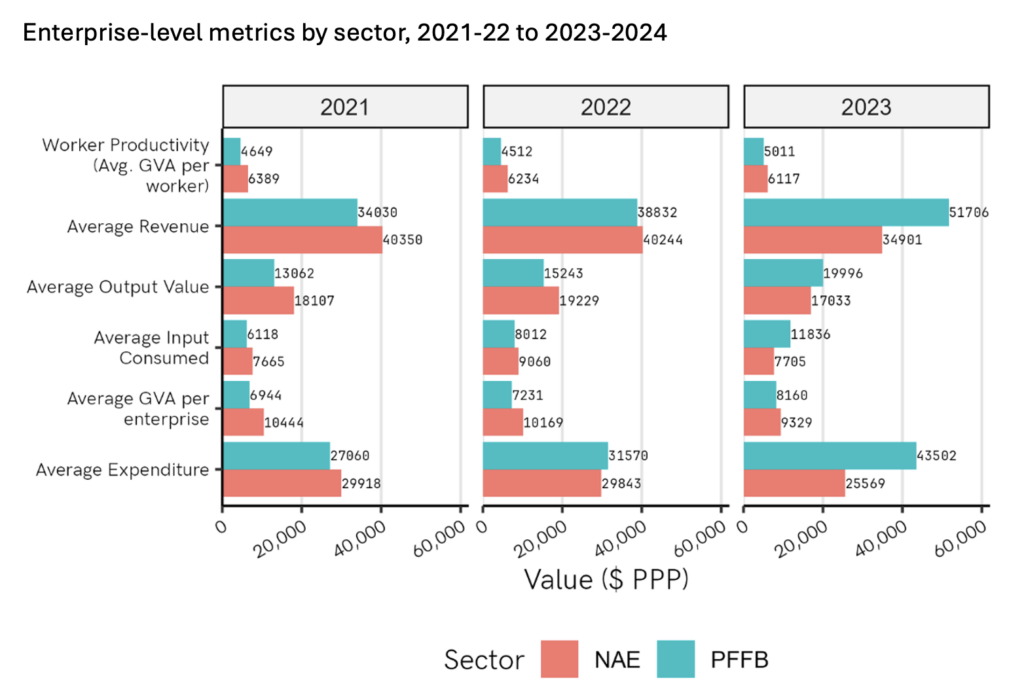
A striking finding that might be unique for Indian microenterprises is that between 2021-22 to 2023-24, non-agrifood enterprises’ (NAE) real GVA grew by $119 billion (in purchasing power parity or PPP), but this growth was driven predominantly by an increase in the number of enterprises (the extensive margin) (Figure 2). This means that enterprises shrank in terms of average firm size and productivity (Figure 3). Sectors such as personal transport and household grooming and maintenance experienced the most growth in the number of enterprises.
Figure 2
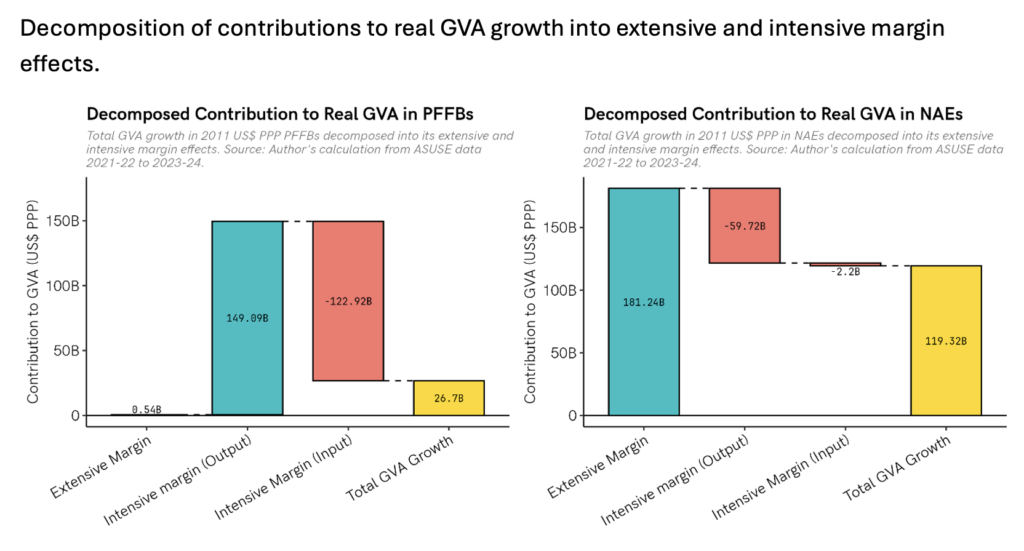
Figure 3
Meanwhile, PFFBs in India tell a near-opposite story. For PFFBs, 98% of real GVA growth came from per-firm production growth (intensive margin) rather than increasing numbers (new entrants contributed just 2% to overall growth in numbers of firms). Notably, the number of manufacturing and retail PFFBs shrank by nearly 907,000, yet these still contributed 25% of real overall GVA growth. All PFFB activities except for wholesale trade experienced an increase in average GVAPE between 3% and 18% CAGR.
Real GVA from manufacturing and retail PFFBs totaled $6.7 billion in PPP terms in 2023-24 (Figure 4), indicative of consolidation and more productive firms remaining in the market.
Figure 4
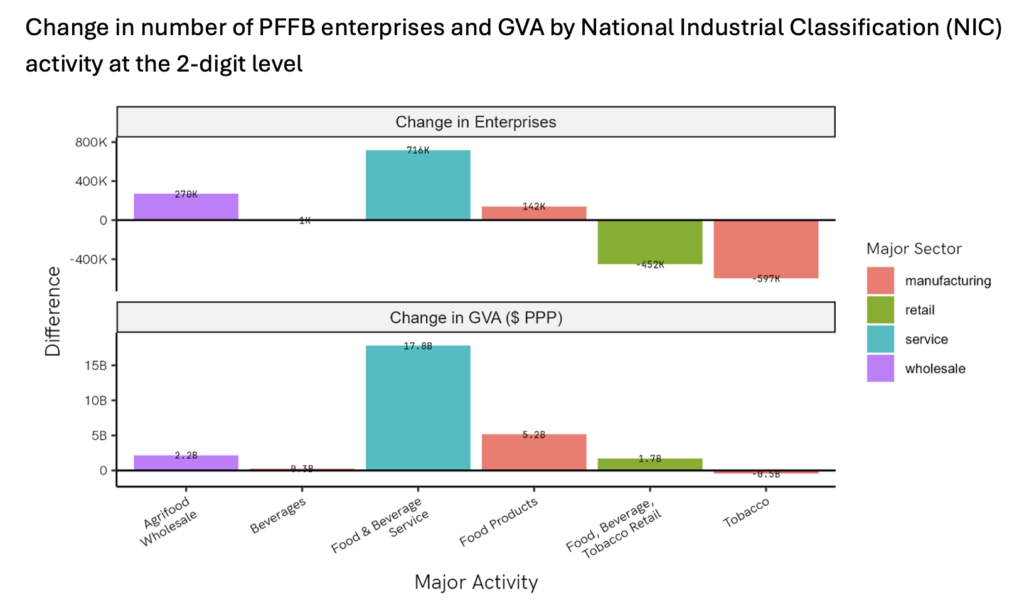
Note: a negative value in change in number of enterprises is indicative of firm deaths in that activity.
Employment of last resort or entrepreneurs by opportunity?
With so much firm death, a central question in the informal microenterprise literature is whether pursuing entrepreneurship (i.e., running one’s own business) is by choice or by necessity compared to other options such as wage employment. The “segmentation hypothesis” in informal employment literature states that it’s a strategy of last resort to avoid unemployment, while the “comparative advantage” hypothesis sees it as a voluntary choice reflecting the desire to earn higher income and gain autonomy (Gunther and Launov 2012).
Evidence from a panel data study on Kenyan enterprises and assessed for low- and middle-income countries (LMICs) more generally indicates that the transition from self-employment towards wage employment is relatively higher in LMICs, suggesting a preference for the latter. However, contrasting evidence from studies in Ghana and Uganda indicates that people prefer entrepreneurship over wage employment.
Using ASUSE data, we explore this issue of “necessity vs. choice” by comparing earnings with mandated minimum wages, possibly the next best option by enterprise and gender.
The percentage of sole-proprietor NAEs earning below minimum wage increased from ~23% (12.6 million) to ~29% (16.2 million). For food businesses, the picture was once again brighter: the percentage fell from 40% (8.6 million) to 30% (6.6 million). Meanwhile, women face disadvantages in both sectors. In both NAEs and PFFBs, ~63% of female-owned enterprises and ~52% of manufacturing enterprises earned less than minimum wage in 2023-2024.
The increase in distress NAE employment was driven by female-owned manufacturing and both male- and female-owned service enterprises. Meanwhile, in PFFBs, the decline in sub-minimum wage employment came from an overall reduction in female-owned manufacturing PFFBs (most of which earn below minimum wage) and a reduction in male-owned retail PFFBs earning less than minimum wage (Figure 5).
Even though an increasing share of sole proprietorships earn below the minimum wage, the number of enterprises continues to grow. This suggests that people are continuing to enter and remain in these low-return activities despite poor earnings, indicating that enterprise ownership is likely driven more by livelihood necessity than by opportunity. Yet the question of “choice” is complex, as the dataset does not include information on motivations or alternative employment options.
Figure 5
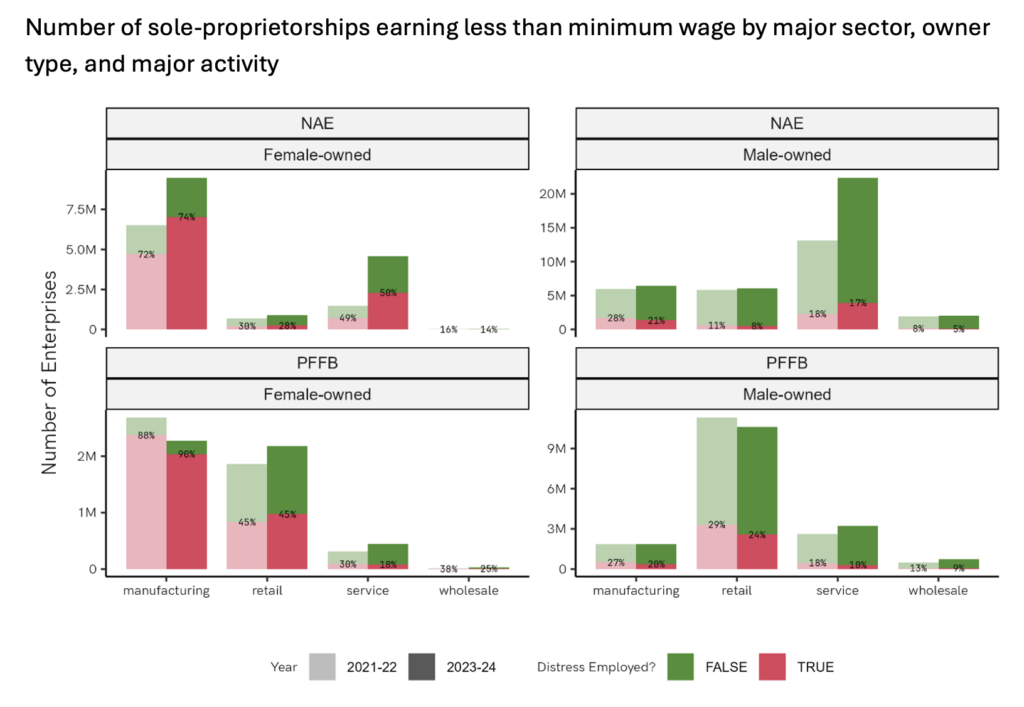
Note: Text annotation denotes share of firms earning less than minimum wage in %.
The importance of microenterprises for women’s participation in markets and the agrifood system
Overall, data suggest that women continue to face disadvantages in business. Findings indicate that female-owned businesses are more likely to be own-account enterprises (OAEs, i.e., operating without other employees); have attained lower education; exhibit distress employment; have restricted mobility operating from their household premises; have limited input consumption; and produce a quarter of the output of their male counterparts (Figures 6 and 7).
What accounts for these conditions? Recent literature suggests that differences in women’s enterprise outcomes cannot be explained by limited access to capital and training. Women’s productivity is also shaped by restricted mobility, household responsibilities, limited decision-making power on usage of capital, and social norms that often confine them to home-based self-employment.
Figure 6
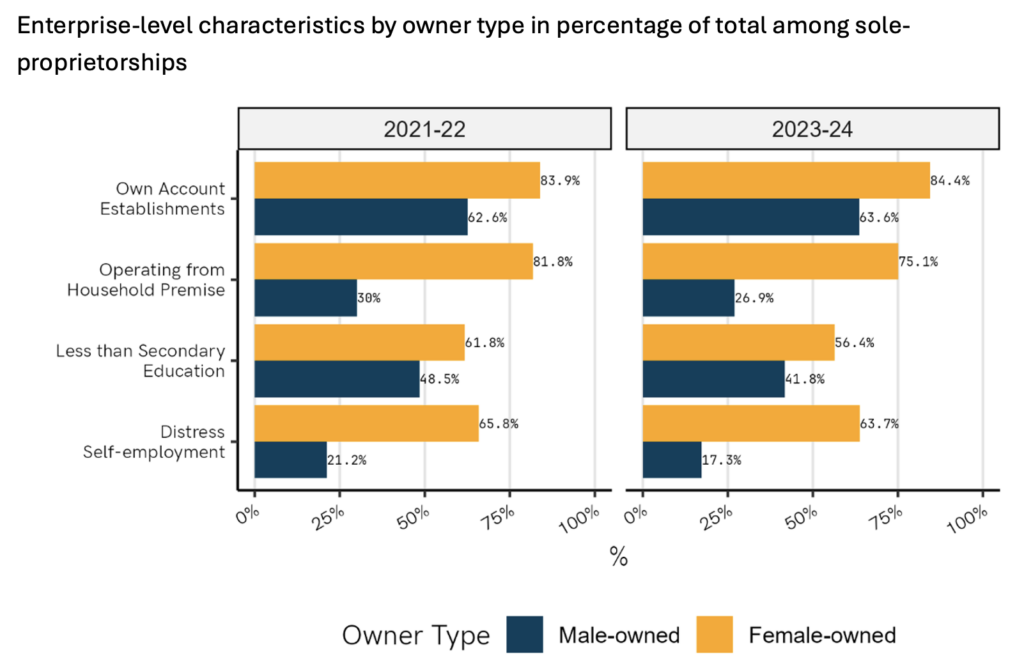
Figure 7
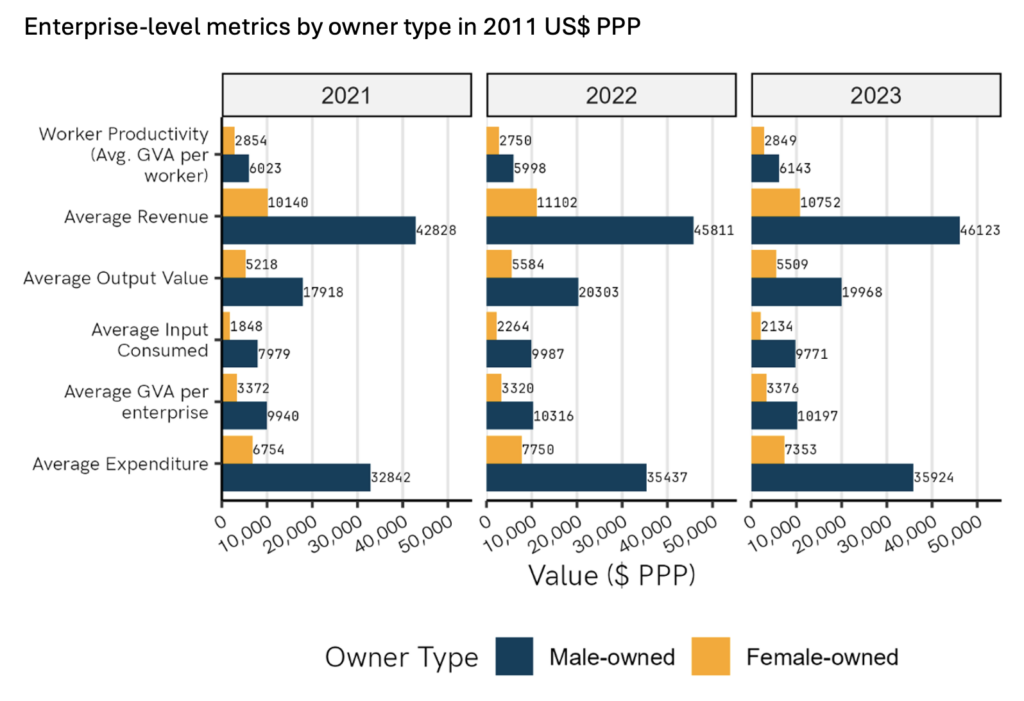
Yet our analysis shows that for women in India, food enterprises offer a relatively promising opportunity. As the agrifood sector moves towards the transitional stage of food system transformation, PFFBs increase rapidly, creating employment opportunities and attracting more women and poor men because of low barriers to entry in terms of skills and capital investment (Tschirley et al. 2016).
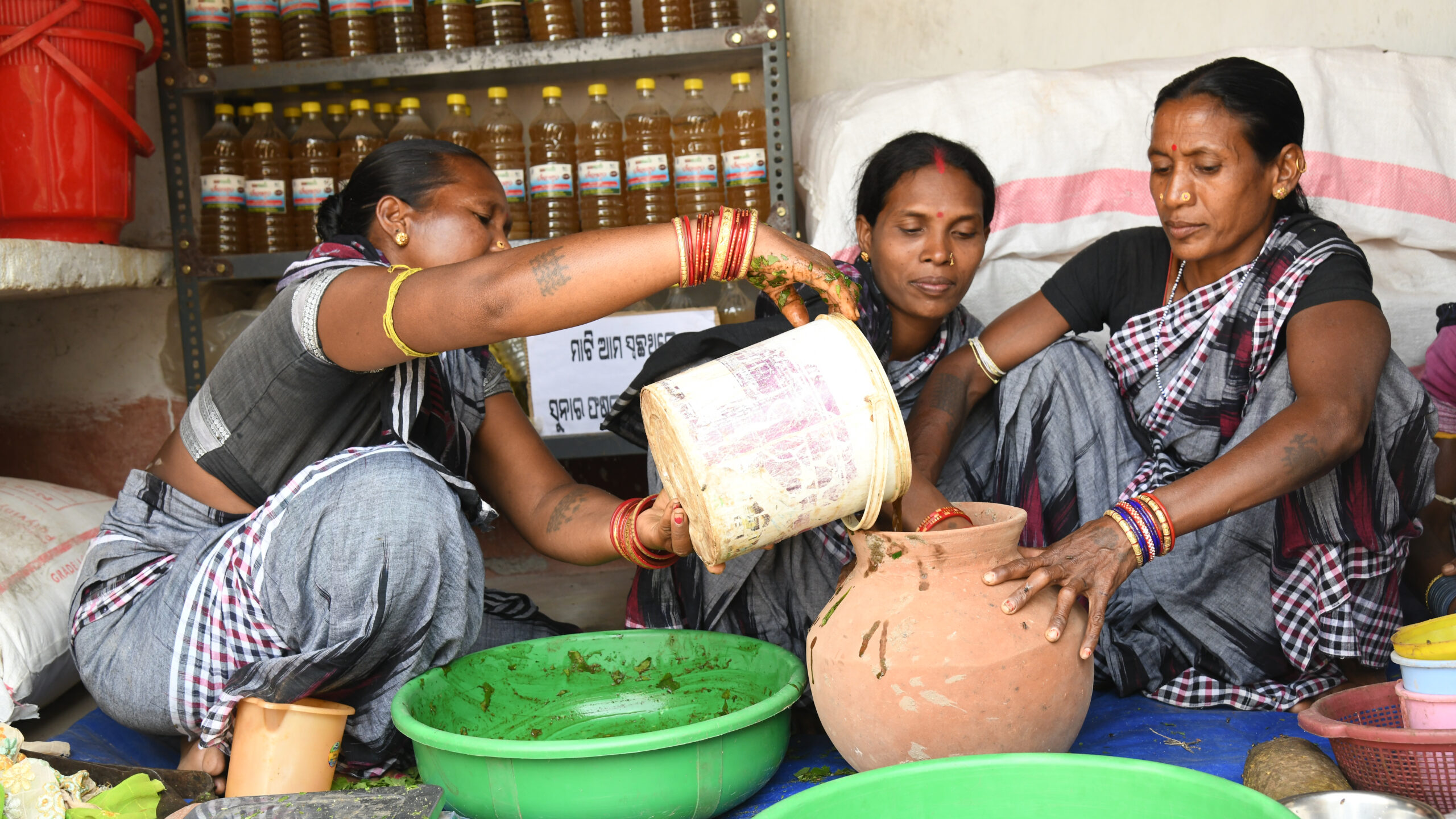
Food enterprises are particularly attractive to women because they can often be started with minimal investment, rely on skills already familiar through household food preparation, and can be managed from home while balancing other responsibilities (Gupta et al. 2023).
The data reflects this pattern: women in PFFBs are performing relatively better than women in the NAE sector. The growth in real average GVA per enterprise (GVAPE) was ~9% CAGR for both female- and male-owned food enterprises, while women’s businesses in the NAE sector were faring worse and also worse than men’s NAEs (-3.6% vs. -2.7% CAGR). In 2023-24, female-owned PFFB average GVA was 40% that of their male counterparts, compared to only 31% for female-owned NAEs, suggesting they are relatively better positioned in PFFBs.
Recognizing sectoral and gender differences in policy design
What lessons can policymakers seeking to increase both business growth and women’s participation take from these results? PFFBs display more productivity-driven growth representative of “constrained gazelles” or “gung-ho entrepreneurs”: they tend to be high-ability but constrained enterprises rather than being driven by distress employment. In other words, they tend to reflect the “choice” more than the “necessity” motivation.
Evidence from studies in Sri Lanka, Uganda, and Mexico have shown that providing cash grants to microenterprises leads to an increase in profits and returns to capital for this type of business, though no significant effect was observed for female-owned enterprises.
Even though fewer firms are realizing the benefits of microcredit/grants, firms under study showed a significant improvement in their performance, with profits increasing by 50% in Mexico and by 60% in Sri Lanka. Thus, to strengthen the credit system, it is imperative to identify high-performing microenterprises based on observable traits. A study in Nigeria used a business competition, while in India, community peer rankings were shown to be quite accurate in identifying gazelles to award grants to, boosting their profits and earnings.
For NAEs, whose growth reflects an increase in distress employment, microcredit or grants might not be helpful. A study from Sri Lanka revealed that for the majority of OAEs unlikely to grow, this is due to a lack of ability rather than finance. Policies for this subset should instead focus on income growth; however, evidence of effective interventions remains scant.
The experimental data from India, Sri Lanka, and Ghana suggests that policy support targeting women entrepreneurs should address socioeconomic realities and household dynamics. Evidence shows that while providing capital grants to men leads to higher returns for an enterprise than giving them to women, this effect is due largely to women’s grants being invested in their husbands’ enterprises.
Thus, interventions should prioritize ensuring women retain control of access and usage of loans and grants, given family pressures that blur business and household financial decisions. Alternatives like in-kind grants are often observed to be more beneficial for women entrepreneurs. A randomized control trial (RCT) in Ghana showed that in-kind transfers led to higher profits than cash transfers for female-owned microenterprises. However, policies like cash grants, loans, and training can be effective if supplemented with an enabling environment that understands the intertwined dynamics of women’s business and their households.
Adnaan Shah is a Research Analyst with IFPRI’s Development Strategies and Governance (DSG) Unit based in New Delhi; Vandana Vidhani is a DSG Research Analyst, based in Bhubaneswar, Odisha, India; Devesh Roy is a DSG Senior Research Fellow based in New Delhi. Mamata Pradhan is a DSG Senior Research Coordinator based in New Delhi. This post is based on research that is not yet peer-reviewed. Opinions are the authors’.