





A new report, External Assessment of Outcomes from IFPRI’s Causal Impact Evaluation Research 2012–2022, authored by independent consultant Sarah Lowder, details the outcomes of IFPRI’s wide portfolio of causal impact evaluations on policies, investments, and interventions. It highlights the ways in which high-quality research design can serve as the backbone for addressing food insecurity, malnutrition, and other development challenges worldwide.
In a world marked by increasingly scarce resources for development, it is important to know whether pro-poor investments are cost-effective or not. Causal impact evaluation (CIE) methodologies answer this question by measuring the benefits attributable to specific projects, investments, or programs relative to a (counterfactual) world in which the intervention did not occur. CIE methods include randomized controlled trials (RCTs) as well as quasi-experimental methods such as regression discontinuity designs and matching methods.
IFPRI uses CIEs to test, adapt, and then scale solutions that can generate impact in nutrition, social protection, agriculture, and governance. These solutions are often linked to innovations, such as technologies or specific new processes (for example, new types of seeds and agricultural extension through technology), or relevant programs and policies (such as cash transfers and integrated nutrition programs).
CIEs form one of IFPRI’s core impact pathways: By demonstrating whether an observed outcome is attributable to a particular policy or program, they provide actionable evidence for implementers, funders, and policymakers. If an intervention has achieved its intended aims, it could be continued, scaled up, or replicated. Even if a CIE does not show positive results, a well-designed evaluation can inform implementers about what adjustments could improve outcomes. IFPRI uses CIEs to examine pilot projects that its researchers helped design, and it also serves as a trusted independent evaluator for external partners, including donors, governments, NGOs, and private sector firms.
IFPRI first undertook CIEs in the late 1990s, including a well-known multisectoral RCT evaluation of Mexico’s PROGRESA social protection program. RCTs allow researchers to conduct policy experiments: the trials measure the impact of interventions by comparing outcomes for two similar populations—one group that was included in an intervention and another group that was not. Nutrition-focused researchers conducted the first of these trials at IFPRI, but impact evaluation designs, especially RCTs, were soon adopted by other IFPRI researchers as part of the “credibility revolution” in the early 2000s that gave RCTs a central role in development and agricultural economics. This shift elevated and improved empirical work, helped by the availability of higher-quality data and a stronger focus on research design.
IFPRI’s CIE studies have been published in leading journals in economics, nutrition, and other fields, including the Journal of Development Economics, the American Journal of Agricultural Economics, and The Journal of Nutrition. Among the papers published between 2012 and 2022, 10 have more than 200 citations, while 45 papers garnered more than 50 citations, suggesting a strong IFPRI contribution to the academic literature.
More important than the academic impact, IFPRI strives to inform and shape decisions made by governments, funders, nongovernmental organizations (NGOs), and others. While impacts of IFPRI’s early CIE work are relatively well-documented, the influence of the larger body of CIE studies conducted more recently has not been measured to the same extent. To address this knowledge gap, the Institute recently commissioned an independent impact assessment of its CIE work. This blog post summarizes some of the findings, looking at impacts on governments, funders and/or NGOs, and the private sector.
Impacts on government decisions
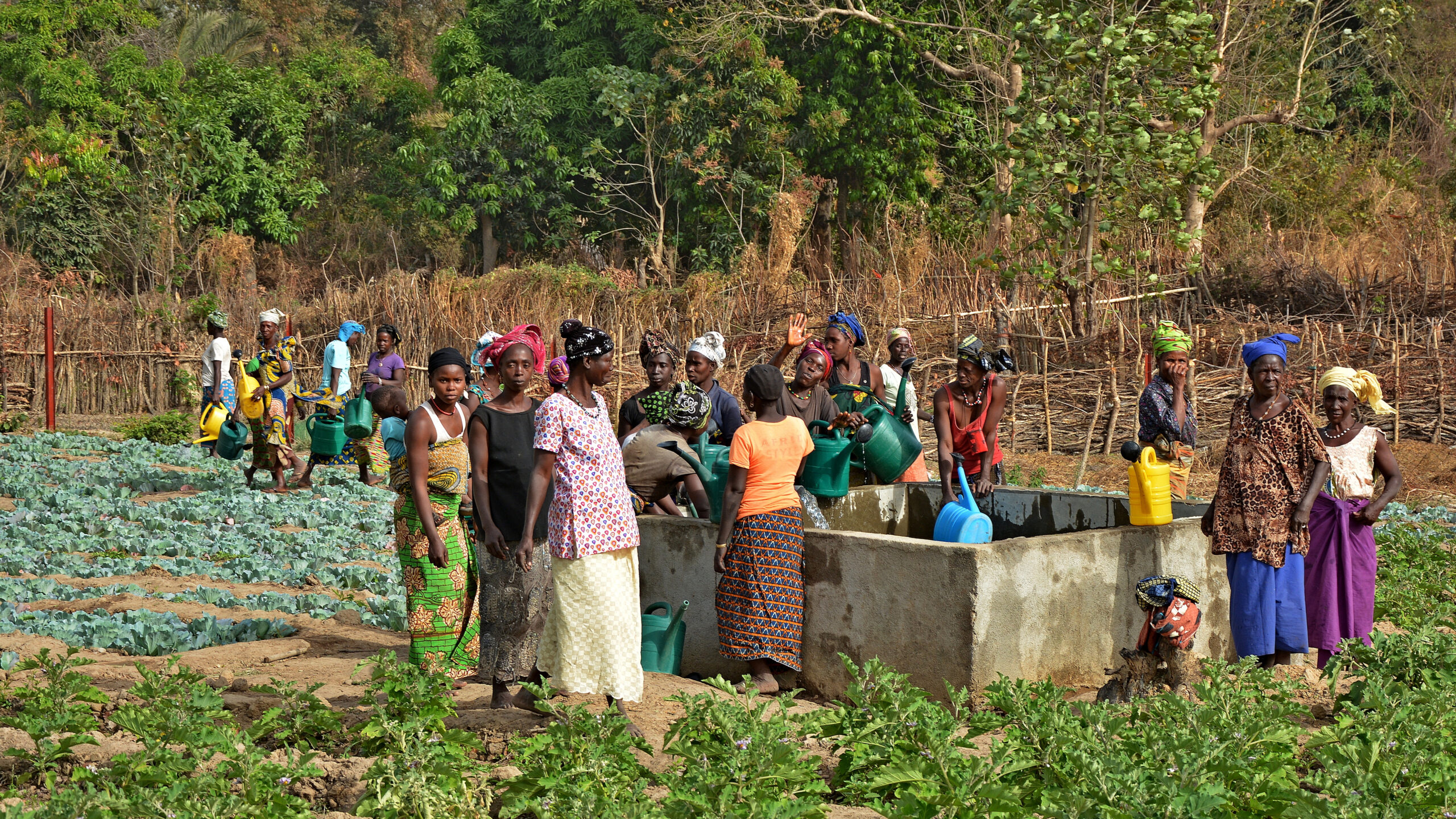
IFPRI’s impact evaluations relating directly to policy go beyond the initial focus on nutrition and social protection, having covered policies related to agriculture, governance, and other topics, often with substantial influence. For example, the Developing Local Extension Capacity (DLEC) project, conducted in collaboration with Digital Green, demonstrated the value of digital agricultural advisory services to the government of Ethiopia. As a result, video extension was incorporated into university syllabuses for agricultural extension courses, and the Gates Foundation and Ethiopia’s government funded a US$20 million follow-up project.
Results from an RCT-based evaluation of the Alive and Thrive program, which used a nutrition-focused behavior change communication strategy targeting mothers and young children, influenced decisions of Bangladesh’s Ministry of Health and Family Welfare and Ministry of Women and Children Affairs, including development of national guidelines and their integration into primary healthcare. Also in Bangladesh, IFPRI designed and evaluated the Agriculture, Nutrition, and Gender Linkages (ANGeL) pilot project managed by the Ministry of Agriculture between 2015 and 2018. Strong evaluation results likewise convinced the government to scale up those activities, but the plans were disrupted by the COVID-19 pandemic.
IFPRI researchers have continued to help governments evaluate social protection programs using CIEs. An evaluation of Egypt’s Takaful cash transfer program, which provides transfers to women with the aim of increasing their decision-making power, led the Minister of Social Solidarity to expand the program and improve its design after results showed that the existing cash transfers were insufficient to change intrahousehold dynamics. The World Bank referenced the impact evaluation in its recommendation to increase funding for the program by $500 million. In accordance with the evaluation results, the government of Egypt also added more complementary programming on women’s empowerment to Takaful and increased outreach and communications campaigns related to the program.
Impacts on funders and NGOs
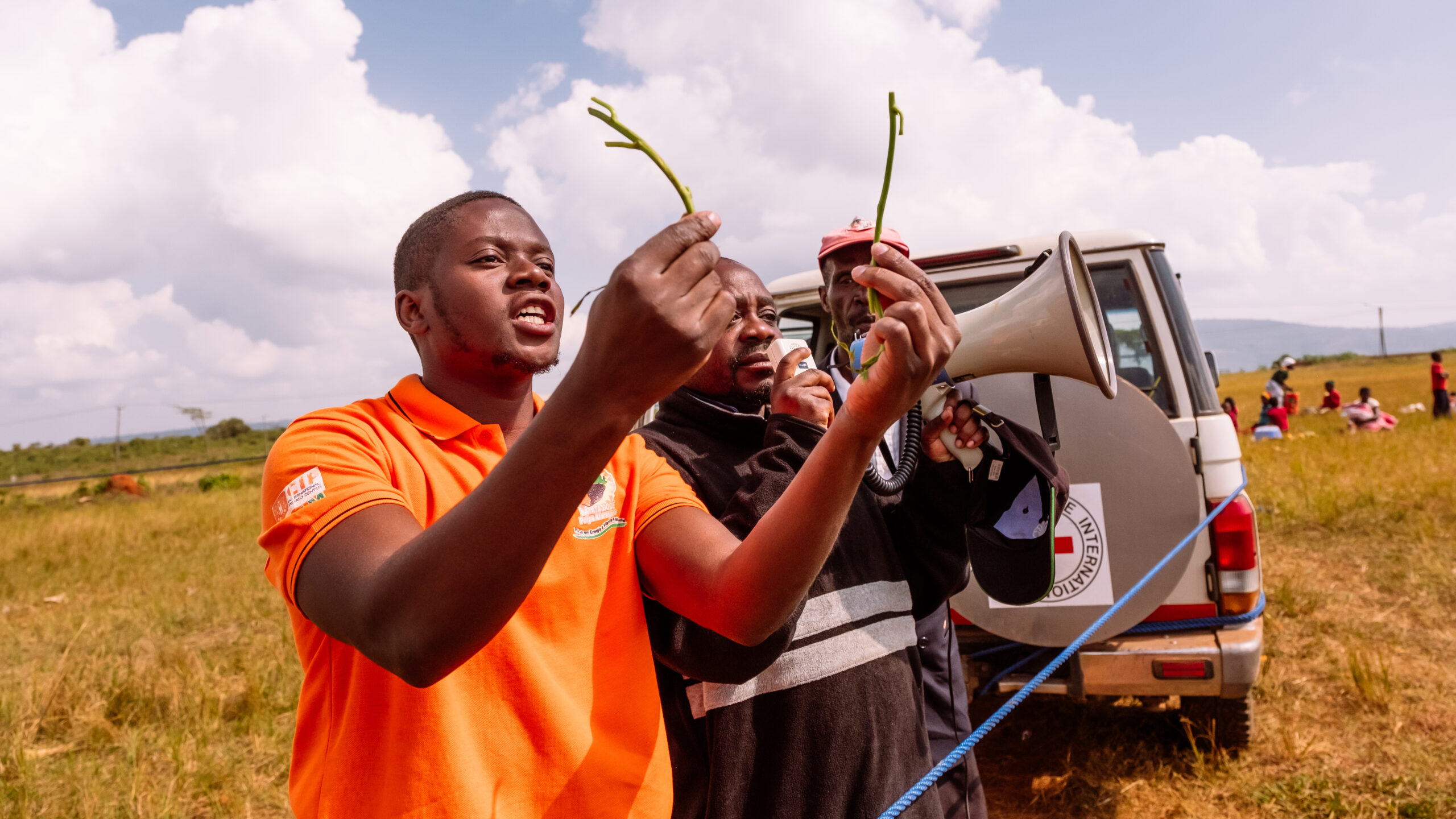
IFPRI’s CIE research has also had clear impacts on funder priorities. An excellent example is the impact evaluation of the HarvestPlus Reaching End Users (REU) program, which showed that an integrated approach to distributing vitamin A-biofortified orange sweet potato vines, building markets for the potatoes, and promoting their consumption in Uganda and Mozambique could reduce vitamin A deficiency among children under 5 years of age who were already deficient. Results from the evaluations were used to justify a substantial scale-up of HarvestPlus activities by the Gates Foundation and the European Commission, contributing to the mainstreaming of biofortification in breeding in 41 countries.
IFPRI evaluations also regularly shape the design of projects managed by NGOs. For example, IFPRI conducted an evaluation of the Innovative Approaches for the Prevention of Childhood Malnutrition (PROMIS) program carried out by Helen Keller International (HKI) in West Africa between 2014 and 2017. To improve screening and treatment of child wasting, the program tested how a new nutrient supplement could function both as an incentive and for prevention: it induced caregivers of children suffering from wasting to return to clinics and served as a preventive treatment for children at risk of acute malnutrition. After the results were publicized at national workshops and international nutrition conferences, the evaluation led the African NGO ALIMA to mimic the program design in a vaccination program.
Impacts on the private sector
Recent CIE-based research by IFPRI has been conducted in partnership with private sector firms offering smallholder insurance in several countries. IFPRI partnered with the Dvara E-Registry in India to pilot picture-based insurance, which allows for payouts based on farmers’ own photos of their fields. The promising results encouraged the social enterprise to continue offering the product. Another pilot study partner in Kenya, the Agriculture and Climate Risk Enterprise Africa (ACRE Africa), began offering picture-based insurance after testing and evaluating it with IFPRI. Future impacts are likely as IFPRI expands its portfolio of impact evaluations in collaboration with the private sector. For example, in recent years, IFPRI has worked closely with small-scale financial firms to test digital finance innovations in Africa and Asia.
The future of causal impact evaluation
IFPRI continues to run multiple impact evaluations every year, even beyond the policy and innovation areas described above, such as an evaluation of governance and education programs in Uganda. The impact assessment report summarized here provides more detail on these and other areas vital to improving food security and nutrition and reducing poverty.
The outcomes of high-quality CIEs conducted by IFPRI and others suggest that rigorous and thoughtful impact evaluation should be a key prerequisite of scaling programs. Without a clear understanding of the benefits of programs, relative to a counterfactual, scaling efforts could mistakenly emphasize technologies, processes, or policies with a high cost and relatively low impact. Looking ahead, information technology has great potential to reduce the cost of measuring some outcomes of programs and policies, which should reduce the cost of CIEs in the future. Nonetheless, with development aid becoming increasingly uncertain, it is imperative to spend the available resources both cost-effectively and sustainably to reduce poverty and malnutrition.
Alan de Brauw is a Senior Research Fellow with IFPRI’s Markets, Trade, and Institutions (MTI) Unit. Opinions are the author’s.
Reference:
Lowder, Sarah K. 2025. External assessment of outcomes from IFPRI’s causal impact evaluation research 2012–2022. Independent Impact Assessment Report 47. Washington, DC: International Food Policy Research Institute. https://hdl.handle.net/10568/176067