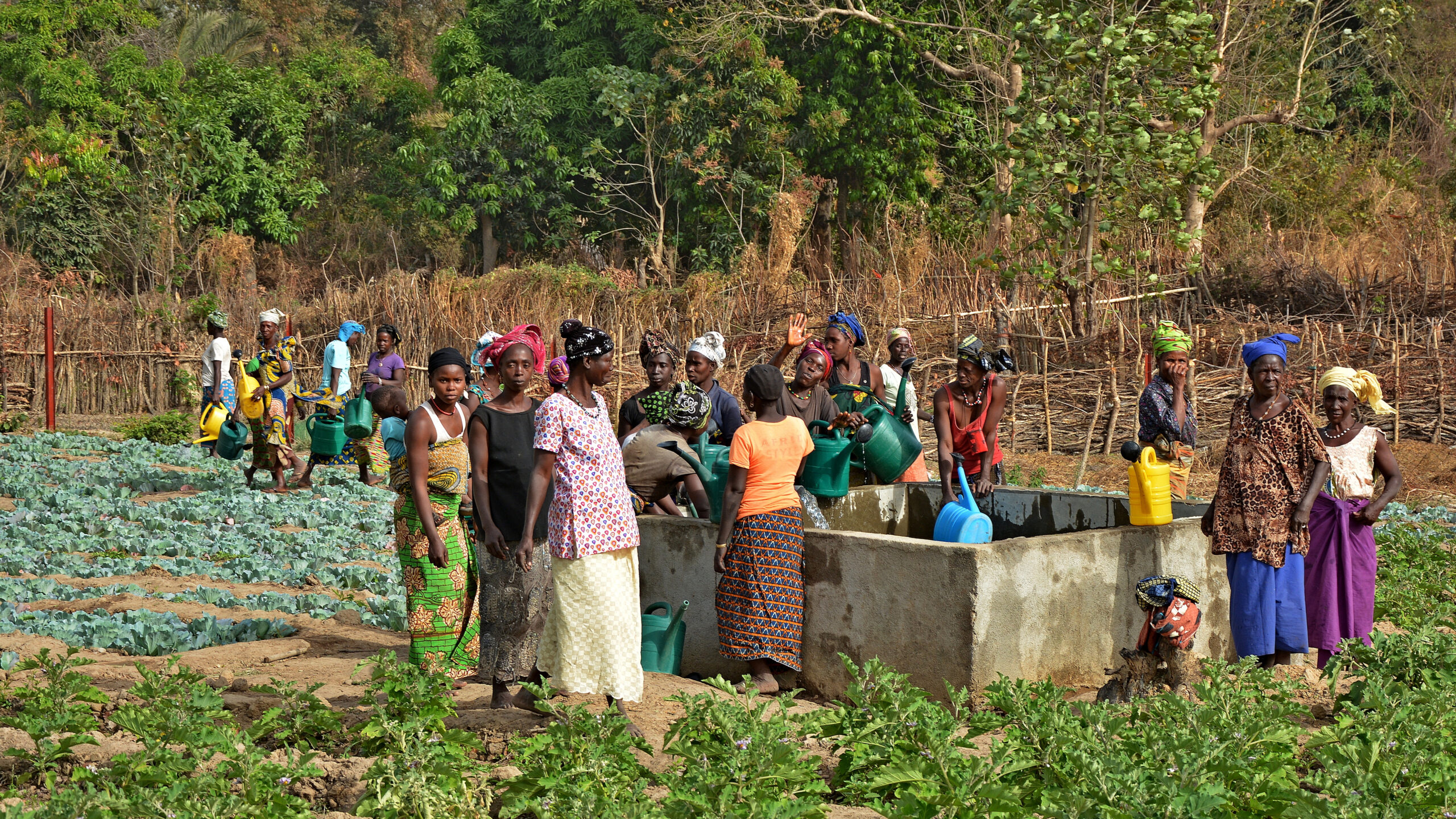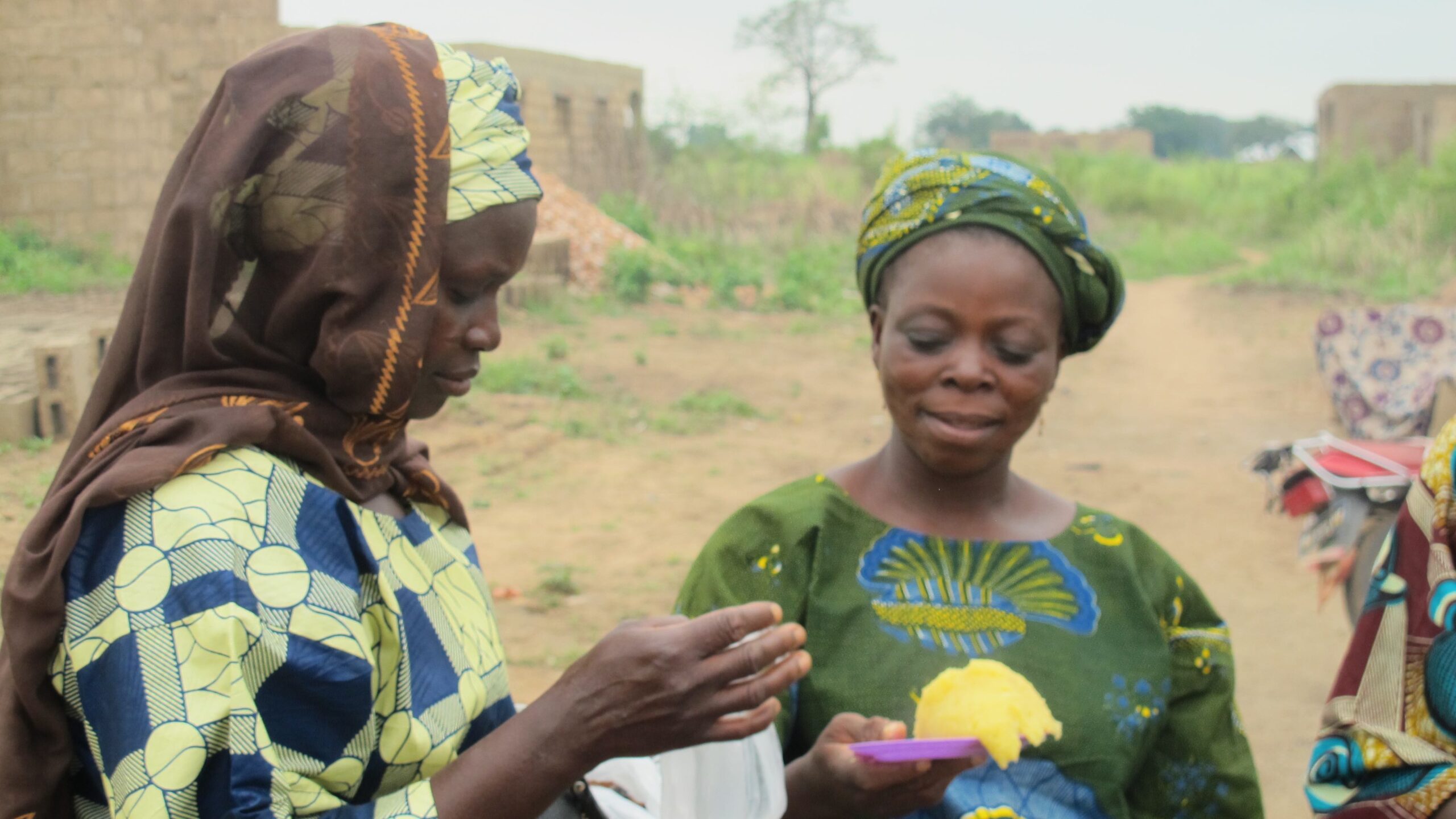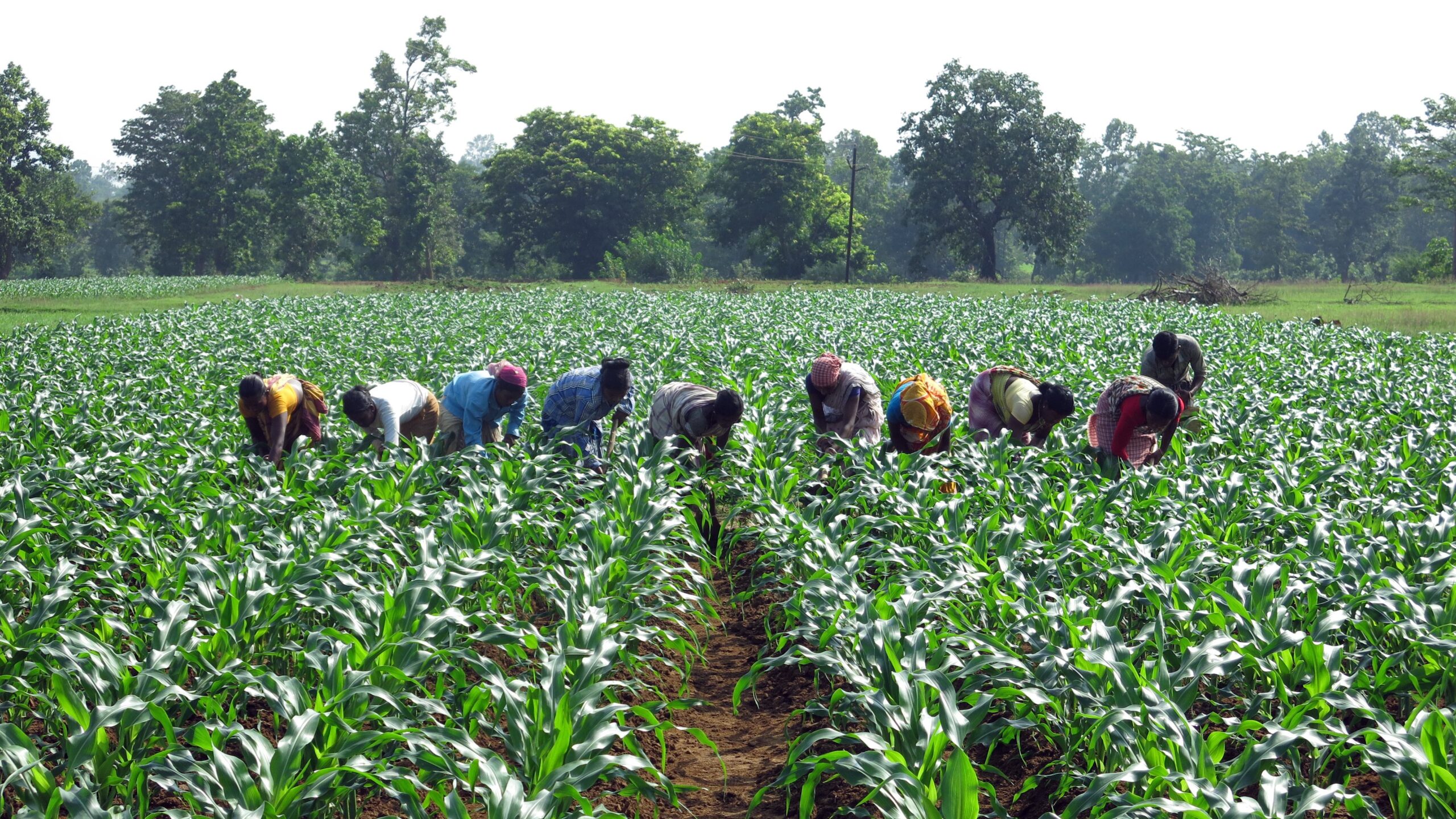






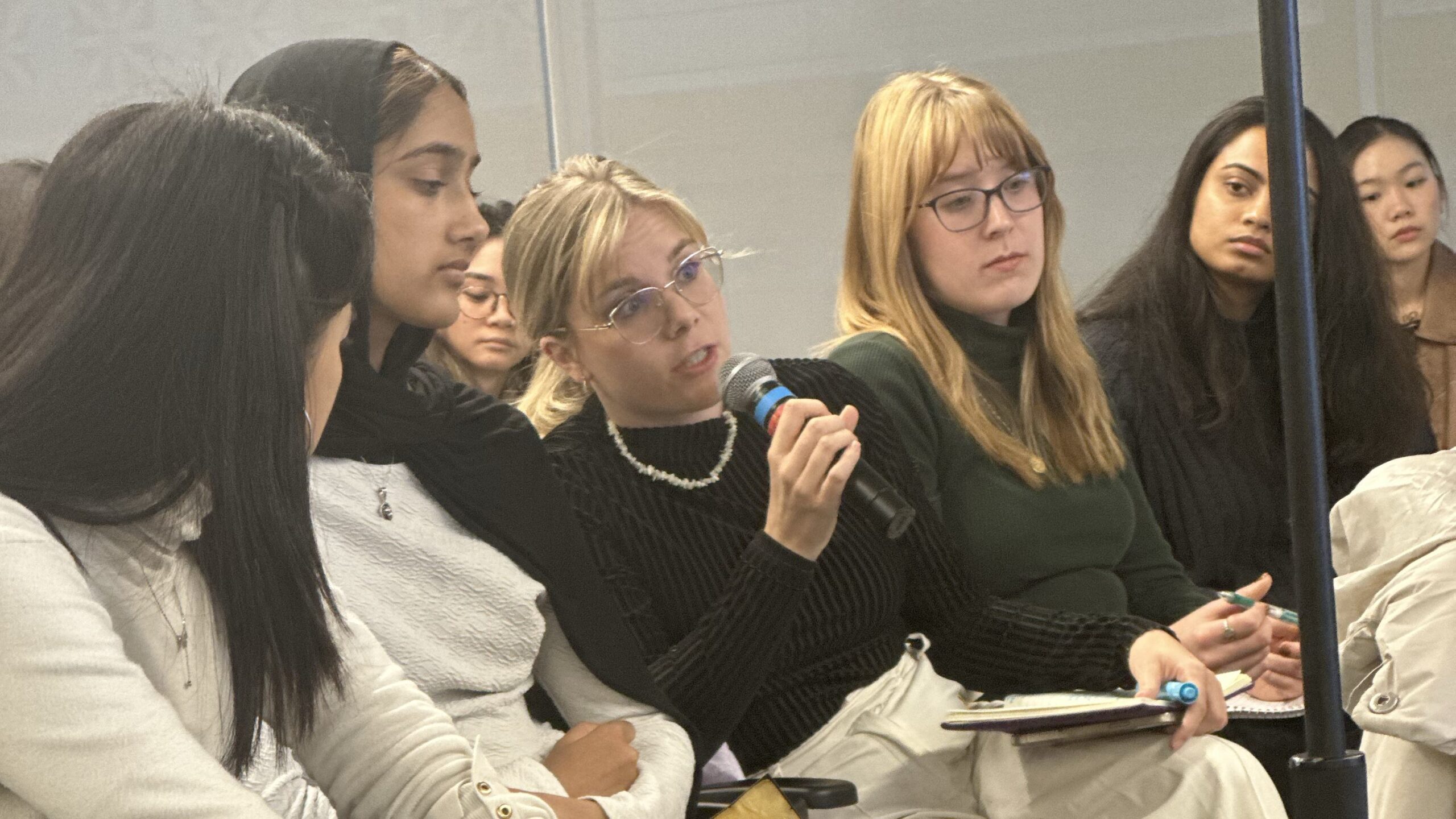
On November 13, 2025, nearly 50 students from Georgetown University and George Washington University convened at IFPRI headquarters in Washington, D.C., for a hands-on learning visit focused on the Women’s Empowerment in Agriculture Index (WEAI). The survey-based tool measures women’s inclusion and empowerment across agricultural and food systems and is widely used in research, policy, and development programming.
The students learned directly from the WEAI team—Senior Research Fellow Jessica Heckert, Senior Research Coordinator Hazel Malapit, Senior Research Analysts Emily Myers and Flor Paz, and Senior Program Manager Ara Go—who shared insights on incorporating gender into research and development projects, the many dimensions of women’s empowerment, and how the WEAI can be applied to assess progress toward gender equality. The exchange highlighted IFPRI’s commitment to capacity building by equipping the next generation of researchers and practitioners with practical, evidence-based tools.
The visit offered students an opportunity to connect academic coursework in agriculture, development, gender studies, and environmental policy with real-world research applications. Daniel Lam, a Georgetown University Environment & International Affairs graduate student enrolled in Professor Ekin Birol’s course, “Agri-Food Systems and Economic Development,” noted, “The visit to IFPRI reinforced one of the key lessons of Prof. Birol’s class—that food system transformation and progress on the UN’s sustainable development goals are mutually reinforcing, especially when it comes to women’s empowerment.”
For Sammie Chai, a graduate student in Georgetown University’s Global Human Development (GHD) program, the IFPRI visit reflected her belief in the importance of recognizing women-led wisdom as a key part of cultural identity. “Through IFPRI’s suite of gender research tools, I was able to place my family’s rural Malaysian livelihoods in a broader context,” she reflected. “It helped me see how the women in my family served as leaders in their villages’ agrifood systems, driving change without realizing it, while also facing the burden of time poverty, one of the many challenges we learned about at IFPRI.”
Lam and Chai were joined by other Georgetown graduate students, as well as undergraduates from the course “Population, Gender and the Environment and Pathway to Food Security,” taught by Professor Patricia Biermayr-Jenzano. George Washington University students participated through the Global Food Institute’s course “Global Agriculture, Climate Change, and Gender,” taught by Professor Taryn Devereux.
One of Devereux’s students, senior Carolyn Pierson, said, “Stepping into IFPRI and learning about pro-WEAI provided great behind-the-scenes context to what we’ve been studying this semester,” referring to one of several WEAI variants designed to measure women’s empowerment in agricultural development projects.
“I appreciated the perspective that both quantitative and qualitative methods play an essential role in this research,” Pierson continued, “given the profoundly personal subjects discussed, such as food security and gender-based violence.”
What empowerment really means
To deepen students’ understanding of how empowerment unfolds in practice, the IFPRI team introduced the Reach-Benefit-Empower-Transform (RBET) framework, which emphasizes moving beyond participation toward lasting change.
At the Reach stage, women are included in program activities but may not experience tangible benefits. Moving a step further to the Benefit stage, material improvements to women’s well-being can be measured on indices like food security, income, or health. However, empowerment goes further than just benefiting. Reaching the Empower stage means that women are able to make and act on strategic life choices. Finally, fulfilling the Transform stageachieves real shifts in norms and systems that promote gender parity and more sustainable development outcomes.
Reflecting on this framework, GHD student María Alejandra Salinas observed, “Using a gender lens in research is not just desired, but required if we want policies that truly respond to women’s needs.”
Beyond the classroom
In follow-up discussions, Malapit stressed the imperative of studying the challenges faced by women in agriculture and encouraged students to integrate gender analysis in their work. “The more people trying to solve these issues, the better,” she said.
Devereux echoed this perspective, describing the visit as a springboard toward the future. “‘Gender’ has been a valuable framework and method in the social sciences for over 50 years,” she noted. “My hope is that the next generation continues to expand and innovate how we conduct research.”
Malapit also noted that gender considerations are sometimes sidelined in development programs due to limited awareness of how they intersect with other fields. To address this, she encouraged interdisciplinary dialogue and urged students to use their communication skills as digital-native youth to serve as interlocutors helping different disciplines understand each other, bridging gaps between research and development communities.
“Regardless of what sector you land in, you can bring this [gender] lens with you and the sector will be better for it,” Malapit argued, reinforcing core objectives of gender integration and mainstreaming introduced at the start of the workshop.
Several students have already started thinking about ways to incorporate what they learned at IFPRI in their academic and professional pursuits. Georgetown University McDonough School of Business MBA student Michael Wysong said the material would be “very applicable to future papers or briefs I may write,” underscoring the cross-disciplinary relevance of gender analysis.
Aaliyah Ibrahim, a GHD student, plans to apply empowerment frameworks in her work on farmer-herder conflicts, noting that women’s roles in food systems during times of crises remain underexplored in peace-building efforts.
“Because in the end, we all have the same social goals,” Malapit concluded. “We’re all trying to make sure everybody has the same opportunities.”
Samantha Chai is a graduate student in Georgetown University’s Global Human Development (GHD) program; Daniel Lam is a graduate student in Georgetown University Environment & International Affairs program. Opinions are the authors’.