




On the opening day of the conference Three Years of Conflict: What the Evidence Tells Us and What Recovery Requires in Cairo, Egypt, the International Food Policy Research Institute (IFPRI) today launches a new peer‑reviewed book examining the humanitarian, economic, and social impacts of Sudan’s ongoing conflict and the options for stabilization and recovery.
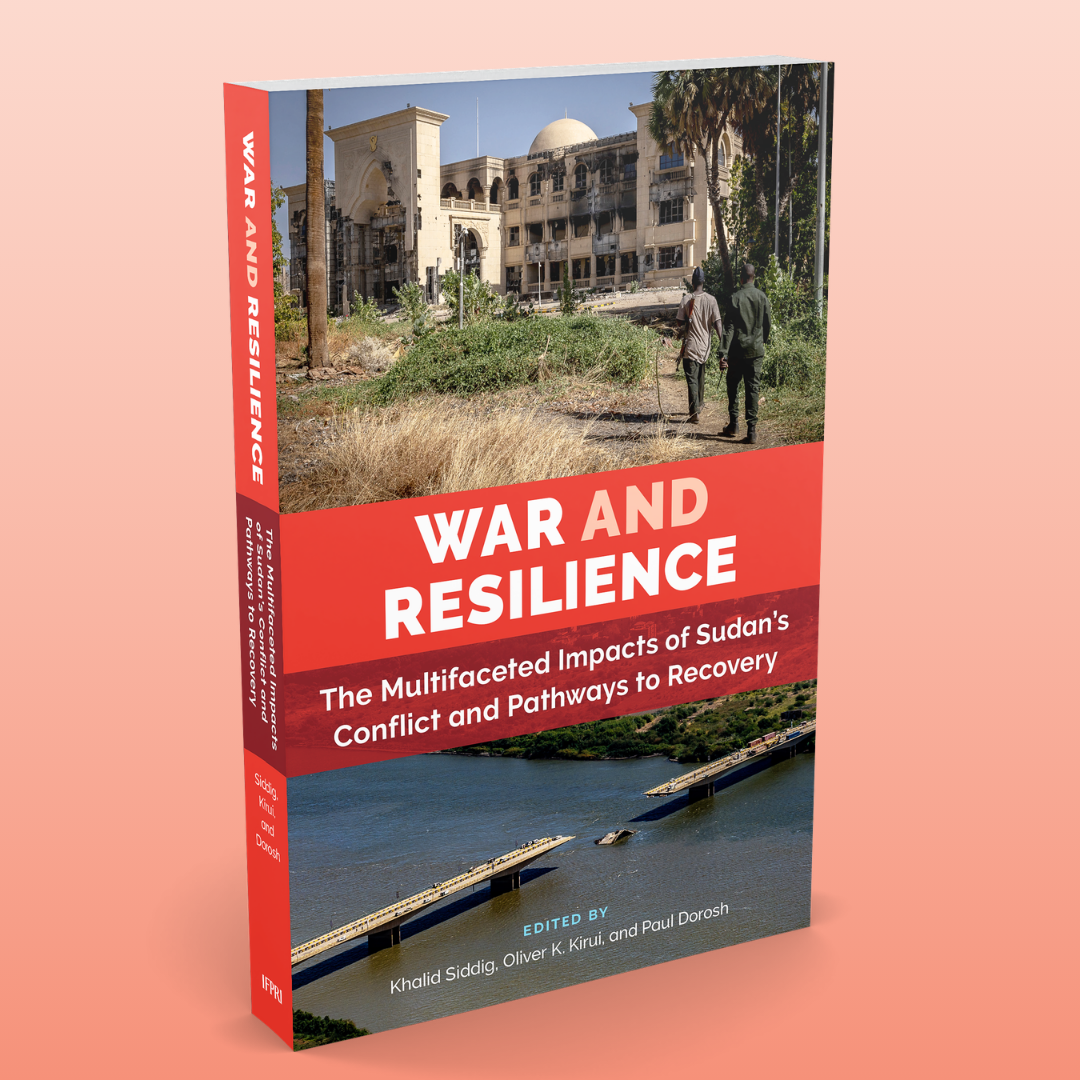
The book, War and Resilience: The Multifaceted Impacts of Sudan’s Conflict and Pathways to Recovery, edited by Khalid Siddig, Oliver K. Kirui, and Paul Dorosh, brings together extensive empirical evidence on how the civil war that erupted in April 2023 has reshaped livelihoods, markets, and institutions across Sudan.
“The book delivers clear, evidence‑based insights into the scale of Sudan’s crisis and the urgent actions needed to prevent further deterioration,” said Khalid Siddig, Senior Research Fellow and Country Program Leader for Sudan and Kenya at IFPRI. “It also shows where resilience persists and how recovery can be supported, even under highly constrained conditions.”
Drawing on recent household and enterprise surveys, satellite and remote‑sensing indicators, market price data, and economywide modeling, the volume documents a crisis of unprecedented scale. By early 2026, nearly 12 million people—around one‑third of Sudan’s population—have been displaced, including more than 4 million refugees who have fled to neighboring countries. The conflict has also reshaped Sudan’s economic geography, creating separate economic zones under rival control and severely inhibiting trade flows.
The book shows that income losses have been widespread across both rural and urban areas. Food consumption and dietary diversity have declined sharply, and analysis using the Food Insecurity Experience Scale indicates that the share of food‑secure households fell from roughly half before the war to between 9 and 20 percent after the conflict began. Satellite‑based indicators reveal major reductions in economic activity in Khartoum and surrounding cities, alongside shifts in activity in areas receiving internally displaced populations.
Public services have been deeply affected. Access to health care has deteriorated dramatically, especially in conflict‑affected regions, while school dropout rates have risen across the country, with particularly severe consequences for girls. Market fragmentation has further compounded these shocks, with transport disruptions, insecurity, and higher marketing costs contributing to large price differences between regions and irregular trade flows.
Despite these impacts, War and Resilience also documents significant patterns of resilience. Households have relied on social networks, remittances, informal support systems, and a range of coping strategies to manage the effects of the conflict. Women’s participation in informal economic activities has played an important role in sustaining household consumption, while evidence on digital cash transfers highlights their potential for delivering assistance more safely amid insecurity.
The final chapters assess recovery scenarios and policy options. Economywide modeling shows that integrated recovery packages—combining support for agriculture, targeted transfers to households, and measures to revitalize enterprises—are more effective than isolated interventions. Sustained recovery, the book concludes, will also require addressing longstanding political and economic inequalities and reducing the dominance of armed actors in the economy.
“With its unique data and insights into the impact of the conflict in Sudan, this book will be essential reading for any organization working to support recovery efforts, both in Sudan and other conflict-affected countries,” said Johan Swinnen, IFPRI Director General.
“While this book focuses on evidence from within Sudan, the scale of displacement and disruption to trade highlighted here underscores why Sudan’s recovery matters to the wider region as well,” said Steven Were Omamo, IFPRI Director for Africa.
Read the book synopsis in English and Arabic and download the full book.
About IFPRI: The International Food Policy Research Institute (IFPRI) provides research-based policy solutions to sustainably reduce poverty and end hunger and malnutrition. IFPRI’s strategic research aims to identify and analyze alternative international and country-led strategies and policies for meeting food and nutrition needs in low- and middle-income countries, with particular emphasis on poor and vulnerable groups in those countries, inclusive development, and sustainability. It is a research center of CGIAR, a worldwide partnership engaged in agricultural research for development. www.ifpri.org
Media inquiries: Evgeniya Anisimova, e.anisimova@cgiar.org